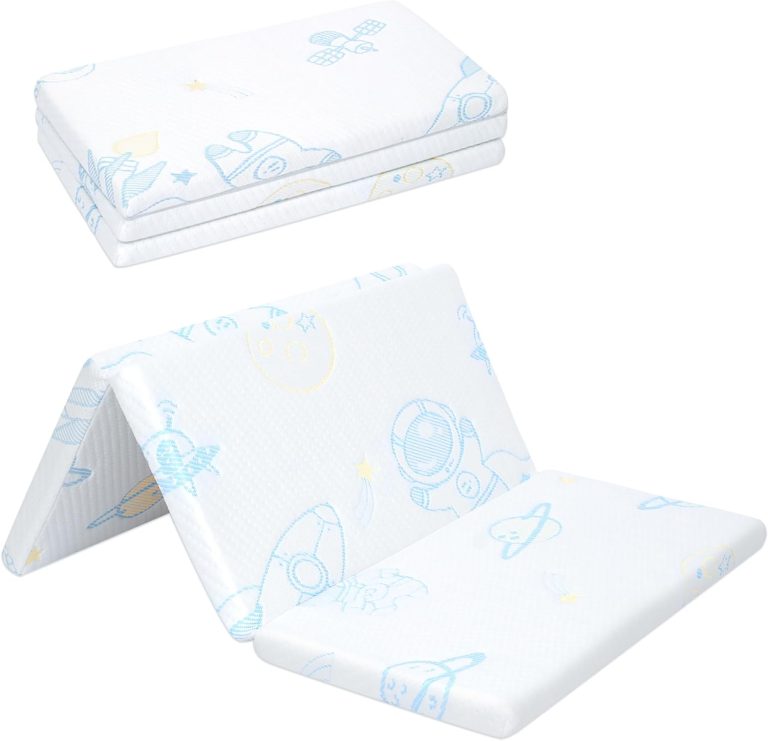
Can Emma Mattress Be Folded? Facts & Alternatives
No, you cannot fold an Emma mattress in the traditional sense of creasing or bending it. Emma mattresses are made with multiple foam layers and a pocket spring core (in hybrid models), and folding them can cause permanent damage to the support system. The only exception is their compressed and rolled packaging, which is how it arrives at your door—but that’s a controlled roll, not a fold.
We found that many people ask this when they’re trying to move, store, or squeeze the bed through a tight hallway. It makes total sense—mattresses are bulky and awkward. However, the foam layers need to stay flat to keep their shape and support. Bending or folding them can create permanent creases, weaken the springs, and void your warranty. The good news is there are safe, simple ways to move or store your Emma without harming it.
- Short answer: No, folding an Emma mattress will damage it.
- Why: Foam layers and springs can get permanently creased or warped.
- Moving tip: Use a mattress bag and carry it flat or on its side.
- Storage tip: Store it flat on a clean, dry surface—never bent.
- Warranty: Folding it can void your coverage, so avoid it at all costs.
Below, we break down exactly why folding is risky, what to do instead, and how to handle your Emma mattress like a pro—so you can keep it comfy for years to come.
Why Folding an Emma Mattress Causes Permanent Damage
We found that the biggest misunderstanding about Emma mattresses is thinking they behave like a camping pad or a cheap foam topper. They don’t. Emma mattresses are engineered with multiple dense foam layers and, in hybrid models, a network of individually wrapped pocket springs.
When you fold any of these components, you’re forcing materials to bend in ways they were never designed to. Think of it like bending a steel wire back and forth. It weakens at the crease. The same principle applies to the foam and springs inside your mattress.
What Happens to the Foam Layers
The top comfort layers of an Emma mattress are made from viscoelastic memory foam and proprietary cold foam. These are pressure-relieving materials that rely on maintaining an even, flat structure.
Folding creates a sharp pressure point. That pressure point doesn’t bounce back fully. Over time, you’ll get a permanent crease or dip. That dip translates to a visible ridge you can feel every single night. Sleep research shows that a worn or deformed sleep surface can lead to poor spinal alignment and increased tossing and turning (National Institutes of Health).
What Happens to the Pocket Springs
Emma hybrid models have hundreds of individual springs, each wrapped in its own fabric pocket. These springs are designed to compress vertically under weight.
Folding bends them horizontally. That motion forces the wire coils to stretch or collapse sideways. Many experts point out that a bent spring loses its tension and can become permanently noisy or lumpy. You might end up with a mattress that feels like it has a hard ridge straight through the middle.
Safe Ways to Move an Emma Mattress Without Folding It
Moving is the number one reason people search for folding techniques. We get it. Mattresses are clunky, heavy, and awkward. But you have better, safer options that protect your sleep investment.
The rule of thumb is simple: keep the mattress as flat as possible. If you must tilt it, use the long edge, never the short end.
Carrying It Flat or Vertical
Grab a friend or two. We found that carrying the mattress flat with one person at each corner is easiest on your back and the mattress. If your hallway is narrow, tip it onto its long side and walk it through like a tall door.
Never bend it in the middle to navigate a staircase. Instead, flex it slightly along the long side if absolutely necessary, but avoid creating a sharp angle. A gentle curve is okay. A 90-degree fold is not.
Using a Mattress Bag for Protection
Before moving, protect the surface from dust, moisture, and tears. A standard zippered mattress bag is cheap and widely available at moving supply stores.
- Slide the bag over the mattress while it’s flat.
- Use packing tape to seal the opening tightly.
- Carry it with two or more people.
- Never drag it across the floor on its corner.
- Keep it away from sharp furniture edges.
- Unwrap it immediately after the move to let it breathe.
Can You Store an Emma Mattress on Its Side or Bent?
Storing a mattress sounds harmless, but the way you store it matters a lot. We found that long-term storage is where people accidentally ruin a perfectly good Emma.
Storing flat is the only recommended method. If you have space under a bed or in a spare room, keep it flat on a clean surface. If you absolutely must store it vertically, lean it against a wall using its long edge, and never for more than a few weeks.
Risks of Vertical Storage
Standing a mattress on its end puts unnatural pressure on the bottom edge. The foam and springs compress under the full weight of the mattress. Over months, that edge will flatten and lose support.
Research into mattress durability suggests that foam materials need to rebound fully to maintain their structural integrity (Sleep Research Society). A compressed edge may never fully recover.
Risks of Curling or Bending During Storage
Some people try to tuck a mattress into a small closet by bending it into a U-shape. This is one of the worst things you can do. The tension on the internal layers is extreme, and the damage is often immediate and irreversible.
Moving Tips for Tight Hallways and Narrow Stairs
We understand that some homes have staircases that seem impossible. We found that using two simple techniques can save your mattress and your sanity.
First, measure your hallway and stairwell doorways. Mattresses are less flexible than they look. Second, use a two-person pivot technique where one person guides the top while the other supports the bottom.
The Foolproof Pivot Method
Walk the mattress up or down stairs on its long side. The person at the top pulls gently upward. The person at the bottom supports the weight and prevents sagging. Keep the mattress relatively straight, allowing for a natural curve but never a sharp bend.
When a Mattress Needs to Flex Slightly
If your stairwell has a landing and a 90-degree turn, you may need to flex the mattress slightly. Flexing along the long side is less damaging than folding across the width. Do this slowly and only for a few seconds. Never hold the mattress in a bent position while you rest.
| Scenario | Allowed? | Why |
|---|---|---|
| Gentle flex along the long side | Yes, occasionally | Minor stress, quick rebound |
| Sharp fold across the middle | Never | Permanent crease and spring damage |
| Rolled tightly (as shipped) | No, not after arrival | Only factory machines do this safely |
| Stored flat | Yes | Ideal for long-term support |
| Stored vertically | Short-term only | Long-term edge compression |
Understanding the Compressed and Rolled Packaging
You might be wondering, “If it comes rolled in a box, why can’t I fold it?” That’s a fair question. The difference is in the process and the equipment.
Emma mattresses are compressed using industrial machinery that applies even, controlled pressure. The mattress is then rolled, not folded. Rolling distributes the compression evenly across the entire surface. There’s no single sharp crease point.
Why DIY Rolling or Folding Is Different
When you fold a mattress by hand, you create a concentrated stress point at the fold line. That stress point is where the foam and springs are squeezed to a fraction of their normal thickness.
We found that even trying to re-roll an Emma mattress at home for storage is a bad idea. Without the vacuum compression equipment, you can’t achieve the even pressure needed. You will end up with a lumpy, deformed mattress.
How Folding Affects Your Emma Warranty
Emma provides a standard warranty that covers manufacturing defects and normal wear. But that warranty has limits. We found that structural damage caused by improper handling is almost always excluded.
If you fold the mattress and it develops a crease or broken springs, the warranty provider will likely deny the claim. The damage is classified as user-caused, not a manufacturer defect.
What the Warranty Covers
The warranty covers things like sagging under normal use, broken zippers, and defective foam. It does not cover physical damage from bending, dropping, or cutting.
Many experts recommend reading the exact warranty terms before moving or storing your mattress. The safest approach is to treat the mattress as a flat-only item after it has been unpacked.
Final Thoughts on Keeping Your Emma Mattress in Top Shape
We get it. Mattresses are bulky and moving is stressful. But the simple rule is to keep your Emma flat at all times.
Quick Checklist Before You Move or Store
- Measure all doorways and stairwells first.
- Buy a zippered mattress bag for protection.
- Always carry it with at least two people.
- Never create a sharp fold across the width.
- Store flat on a clean, dry surface if possible.
- Avoid vertical storage for more than a few weeks.
The right preparation means your mattress stays just as comfortable as it was on day one. Protecting your Emma is easier than fixing it. A few extra minutes of careful handling will save you from a ruined mattress and an expensive replacement.
Conclusion
Your Emma mattress is a serious investment in your sleep. Folding it is the fastest way to ruin that investment. It creates permanent creases in the foam, damages the pocket springs, and voids your warranty.
Keep it flat. Carry it with help. Store it on a clean, dry surface. If you must move it through tight spaces, use the gentle flex method along the long side and never a sharp fold.
Take a moment to measure your doorways and grab a mattress bag before you move. That simple prep takes five minutes and protects your bed for years to come. Treat your Emma like the premium product it is, and it will keep supporting you night after night.
Frequently Asked Questions
Can I roll my Emma mattress back up to store it?
You should not try to re-roll your Emma mattress at home. The factory uses heavy machinery to apply even compression. Without that equipment, you will create uneven pressure points and permanent lumps.
What should I do if my Emma mattress gets accidentally folded?
Unfold it immediately and lay it completely flat on the floor. Give it 24 to 48 hours to try to rebound. If a crease remains after a few days, the damage is likely permanent and you may need to contact customer support.
Can I stand my Emma mattress against a wall for a few days?
Yes, but only for short periods. Lean it on its long edge, not the short end. Keep it to under two weeks. Long-term vertical storage will compress the bottom edge and flatten that section permanently.
Does moving my Emma mattress with a bend in the middle void the warranty?
Yes, it can. The warranty covers manufacturing defects, not physical damage from mishandling. If you create a sharp fold and it causes creases or broken springs, your claim will likely be denied as user-caused damage.
Can I use a mattress vacuum bag to compress my Emma for moving?
No, avoid this at all costs. Consumer vacuum bags apply uneven suction that can crush the foam layers and bend the pocket springs. The factory compression process is controlled and precise. Household bags are not safe for your mattress.