Front Load vs Top Load Washers: Which Is Best For You
When choosing between a front load vs top load washing machine, the front loader generally offers better energy efficiency and gentler cleaning for your clothes. While top loaders can be quicker and cheaper upfront, front loaders often use less water and detergent, saving you money over time. For those prioritizing fabric care and long-term savings, a front load washer is usually the superior choice.
Deciding on a new washing machine involves weighing several factors that impact both your laundry routine and your utility bills. Top load washers have long been a staple in many homes for their ease of use and accessibility. However, research shows that front load machines are often more effective at cleaning and have a higher spin speed, which can lead to shorter drying times and reduced energy consumption overall.
- Front loaders save water and energy.
- They are gentler on clothes, reducing wear.
- Top loaders are often cheaper and faster.
- Consider your budget and fabric care needs.
We’ve gathered the key differences to help you make the best choice for your home. Let’s dive into the pros and cons of each type so you can confidently decide which washing machine fits your needs.
Front Load vs. Top Load Washers: Making the Right Choice
Choosing a new washing machine can feel like a big decision. You want something that cleans well, lasts, and doesn’t break the bank on utility bills. We’ve found that understanding the key differences between front load and top load washers can make this choice much clearer. Let’s break down what makes each type tick, so you can feel confident in your decision.
How Front Load Washers Work and Why They Shine
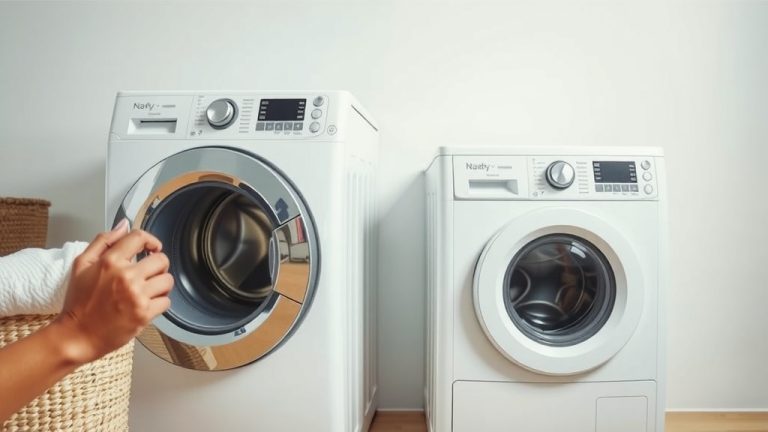
Front load washers are designed with the drum positioned horizontally. Your clothes tumble from the top to the bottom as the drum rotates, using gravity to help with the cleaning action. This method is generally gentler on your fabrics. It also allows for higher spin speeds, which can mean less time in the dryer.
The Advantages of Going Front Load
Many studies show that front loaders are exceptionally good at cleaning. They use less water per cycle compared to many top load models. This can lead to noticeable savings on your water bill over time. Plus, using less water often means using less detergent, which is another way to save money.
We’ve also found that the higher spin speeds in front loaders extract more water from your clothes. This can significantly cut down on drying time. Shorter drying times mean your dryer uses less energy, contributing to lower electricity bills. It’s a win-win for your wallet and the environment.
Potential Downsides to Consider
While front loaders offer great efficiency, they can sometimes be slower to complete a wash cycle. Some people also find that they need to bend down to load and unload clothes. If you have back issues, this might be something to think about. You can often get pedestals to raise the machine, but this adds to the overall cost.
Another point many people mention is the potential for mold or mildew to build up around the door gasket. This is usually due to moisture being trapped. Experts suggest leaving the door slightly ajar between washes and wiping down the gasket regularly to prevent this. It’s a simple maintenance step that keeps your machine fresh.
Exploring Top Load Washers: Simplicity and Speed
Top load washers have the drum positioned vertically. They typically use an agitator or an impeller in the center to move clothes around in the water. This design has been around for a long time and is familiar to many households. They offer a straightforward way to get your laundry done.
The Appeal of Top Loaders
One of the biggest draws for top loaders is their ease of use. You can toss clothes in without bending over, which is a big plus for many. If you forget to add a stray sock, you can usually pause the cycle and add it in easily. This convenience is hard to beat.
Top load washers also tend to have shorter wash cycles. If you’re in a hurry, this can be a significant advantage. Many models are also less expensive to purchase upfront. If your budget is a primary concern, a top loader might be your first choice. We’ve seen many reliable top load models that offer great value.
Where Top Loaders Might Fall Short
When it comes to water and energy efficiency, top loaders often lag behind their front load counterparts. They typically use more water because the drum needs to fill up completely to submerge the clothes. This increased water usage can lead to higher utility bills, as many environmental agencies point out (Energy Star). Some high-efficiency top loaders do use less water, but they still might not match the efficiency of a front loader.
We also found that the washing action in a top loader can be rougher on clothes, especially those with an agitator. This can lead to more wear and tear over time. Think of it like clothes rubbing against each other more vigorously. If you have delicate items, this might be a concern for your wardrobe.
Comparing Key Features Side-by-Side
To help you visualize the differences, let’s look at some of the main factors: performance, efficiency, capacity, and cost.
| Feature | Front Load Washer | Top Load Washer |
|---|---|---|
| Cleaning Performance | Excellent, gentle on clothes. | Good, can be rougher on clothes (agitator models). |
| Water Efficiency | High – uses less water. | Moderate to Low – uses more water. |
| Energy Efficiency | High – less energy for washing and drying. | Moderate – dryer time can be longer. |
| Spin Speed | Higher – extracts more water. | Lower – clothes are wetter. |
| Cycle Time | Longer cycles. | Shorter cycles. |
| Ease of Loading | Requires bending. | Easy, no bending. |
| Upfront Cost | Generally higher. | Generally lower. |
| Long-Term Cost | Lower (utilities). | Higher (utilities). |
| Capacity | Often larger drum capacity. | Varies, some large capacities available. |
Making Your Final Decision: What’s Best for You?
So, how do you choose? Consider your priorities. If saving water and energy is paramount, and you want your clothes to last longer, a front loader is likely your best bet. We found that the long-term savings on utility bills can offset the higher initial cost. Plus, the gentle cleaning action is great for all your garments.
However, if you need a machine that’s quicker, simpler to load, and easier on your budget upfront, a top loader might be the way to go. Many people appreciate the convenience and speed they offer. If you’re not overly concerned about water usage or the gentlest fabric care, a top loader can be a perfectly good choice.
Quick Checklist for Your Decision:
- How important is water and energy savings to you?
- What is your budget for the initial purchase?
- Do you have any physical limitations that make bending difficult?
- How much wear and tear do you want to minimize on your clothes?
- Are you looking for the fastest wash cycles available?
- How much capacity do you typically need for your laundry loads?
Conclusion
Choosing between a front load and top load washer boils down to your personal priorities. If you’re aiming for long-term savings on utilities and want the most gentle care for your clothes, a front loader is often the smarter investment. We’ve seen that their efficiency can really add up over time. On the other hand, if you need a machine that’s budget-friendly upfront and offers quick, simple operation, a top loader remains a solid choice for many households. Before you buy, consider what matters most in your laundry room.
Frequently Asked Questions
Do front load washers really clean better?
Yes, research and user experiences consistently show front load washers are more effective at cleaning. Their tumbling action, aided by gravity, is gentler yet provides a deeper clean. This method also helps lift dirt more efficiently from fabrics.
Can I add clothes mid-cycle to a front load washer?
Generally, it’s more difficult to add clothes mid-cycle to a front loader once the cycle has started and the door is locked. Some newer models offer a pause and add feature, but it’s less common than with top loaders. You’ll want to double-check the specific model’s capabilities.
How can I prevent mold and odors in my front load washer?
To prevent mold and odors, we recommend leaving the door slightly ajar between washes to allow air circulation. Wiping down the rubber door seal with a cloth after each use also helps remove moisture. Running a cleaning cycle with hot water and vinegar or a special washer cleaner periodically is also effective.
Are top load washers still a good option for saving water?
While top load washers generally use more water than front loaders, there are high-efficiency (HE) top load models available. These use significantly less water than older traditional models. However, they still tend to use more water than comparable front load machines.
Which type of washer is better for large loads?
Both types offer models with large capacities. However, front load washers often have a more uniform drum space, which can sometimes accommodate bulkier items like comforters more easily. You’ll want to check the specific cubic feet capacity for any model you consider.