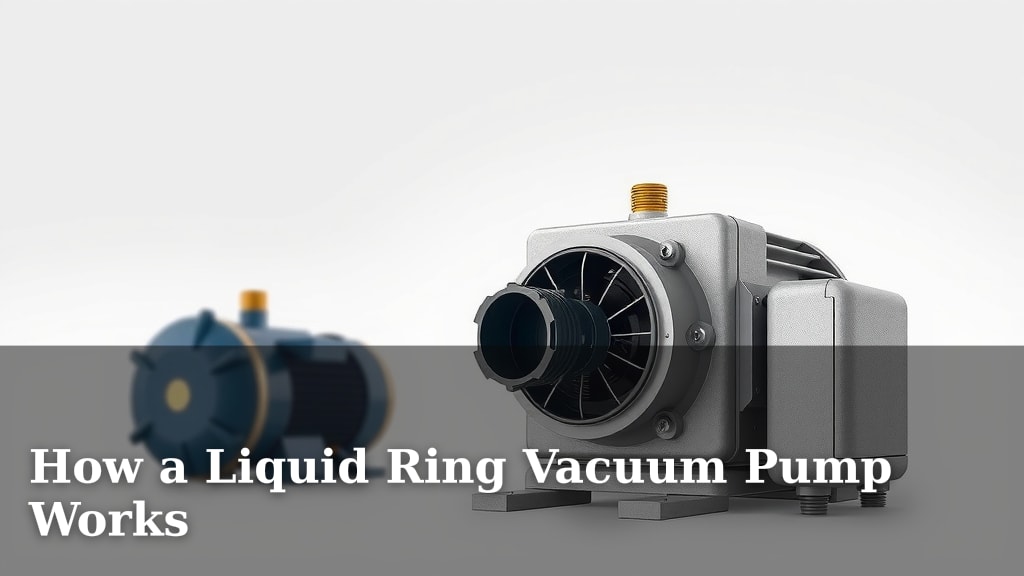
How a Liquid Ring Vacuum Pump Works
A liquid ring vacuum pump works by using a rotating impeller to push a liquid seal against the pump casing. This creates a void that draws in air or gas, then forces it out. It’s a clever design that’s surprisingly simple yet effective.
You might be wondering why this design is so popular. We found that its simplicity leads to a robust and reliable operation, making it a go-to choice for many industries. It handles tough conditions well and doesn’t require much fuss.
- It uses a rotating impeller and a liquid seal.
- This creates a void to suck in air or gas.
- The design is known for being tough and dependable.
- It’s a common choice for many industrial jobs.
Ready to get a clearer picture? Let’s walk through exactly how a liquid ring vacuum pump does its job, step by step.
“`htmlUnderstanding How a Liquid Ring Vacuum Pump Operates
You’re probably curious about the inner workings of these machines. We’ve researched how liquid ring vacuum pumps achieve their impressive performance. They use a really smart mechanical principle. It’s based on a rotating impeller and a liquid seal. This simple setup is key to their dependability.
The Core Components and Their Roles
Let’s break down the essential parts. Understanding these will help you visualize the process. It’s not as complicated as you might think!
The Impeller: The Heart of the Pump
The impeller is a rotor with a series of blades. It’s mounted off-center within the pump casing. Think of it like a paddlewheel, but designed for a specific purpose. As the impeller spins, its blades move the liquid seal.
The Casing: The Pump’s Housing
The pump casing is a cylindrical chamber. It’s precisely shaped to work with the off-center impeller. This shape is absolutely critical for creating the vacuum effect. The space between the impeller and the casing changes continuously.
The Working Liquid: More Than Just a Seal
You’ll need a working liquid. This is usually water, but other liquids can be used. It serves two main jobs. First, it forms the seal. Second, it helps cool the pump. Many sources, like engineering handbooks, highlight this dual function.
The Step-by-Step Vacuum Creation Process
Now, let’s follow the magic as it happens. Imagine the impeller starting to turn. This is where the action really begins.
Phase 1: Gas Suction
As the impeller rotates, the blades push the working liquid outward due to centrifugal force. Because the impeller is mounted off-center, the liquid forms a ring against the casing wall. This creates larger spaces between the impeller blades on one side. These expanding volumes draw in gas or air from the inlet port. You can picture it as sucking air into a growing balloon.
Phase 2: Gas Compression
As the impeller continues to spin, the blades move to the side where the impeller is closer to the casing. Here, the spaces between the blades become smaller. This shrinks the volume. The trapped gas is compressed. This compression increases the pressure of the gas. It’s similar to squeezing that balloon you imagined.
Phase 3: Gas Discharge
Finally, the compressed gas reaches the discharge port. The pressure is now high enough to push the gas out of the pump. The working liquid also gets pushed out with the gas. This continuous cycle of expansion and contraction draws gas in and pushes it out efficiently. The constant motion keeps the process going.
Key Advantages of This Design
This operating principle leads to several benefits. We found these make liquid ring pumps so popular in many industries.
Robustness and Reliability
A major advantage is their simplicity. There are very few moving parts. This means less wear and tear. Many industrial applications require equipment that can run for long periods without issues. These pumps often fit the bill perfectly.
Handling Difficult Conditions
Liquid ring vacuum pumps are known for their ability to handle vapors and liquids. They can also deal with dust and debris. The working liquid helps to cool the pump and absorb some of the contaminants. This is a big deal compared to other vacuum pump types. Some sources even mention their suitability for hazardous environments.
Quiet and Smooth Operation
Because there are no metal-to-metal contacts inside the pumping chamber, they tend to run smoothly. They also produce less noise than many other vacuum technologies. This can improve the working environment.
Comparing Liquid Ring Pumps to Other Technologies
You might wonder how they stack up. We looked at some common comparisons.
| Feature | Liquid Ring Pump | Dry Screw Pump | Centrifugal Blower |
|---|---|---|---|
| Handles Liquids/Vapors | Excellent | Poor to Moderate | Poor |
| Simple Design | Yes | Moderate | Moderate |
| Maintenance Needs | Low | Moderate | Low to Moderate |
| Operating Temperature | Cooler (due to liquid) | Hotter | Moderate |
As you can see, their ability to handle liquids and vapors is a standout feature. This is a key reason for their wide adoption.
Quick Checklist for Understanding
Let’s recap the main points. Did you grasp these key takeaways?
- The impeller rotates off-center.
- A liquid seal is formed against the casing.
- Gas is trapped and compressed between impeller blades.
- The working liquid helps with cooling and cleaning.
- They are great for wet or dirty applications.
- Fewer moving parts mean greater reliability.
Conclusion
You’ve learned how a liquid ring vacuum pump uses its simple yet robust design to create a vacuum. The interplay between the off-center impeller and the working liquid seal is key to its efficient operation. This design makes it a reliable choice for many demanding industrial jobs, especially those involving moisture or debris. Now that you understand the mechanics, you can better appreciate where these pumps fit into industrial processes. Consider your specific application needs to see if this dependable technology is the right fit for you.
Frequently Asked Questions
What happens if the working liquid runs out in a liquid ring pump?
If the working liquid supply is interrupted, the pump can quickly overheat. This lack of liquid means the seal is lost, and there’s no cooling. You should shut down the pump immediately to prevent damage to the impeller and casing.
Can you use any liquid as a working seal?
While water is most common, you can use other liquids if they suit your process. The liquid needs to be compatible with the gas being handled and the pump materials. It should also have a low vapor pressure for optimal vacuum performance.
How often do liquid ring vacuum pumps need maintenance?
Liquid ring pumps are known for their low maintenance requirements. Most upkeep involves checking the working liquid level and quality. You’ll also want to inspect seals and bearings periodically. This simplicity contributes greatly to their reliability.
Are liquid ring pumps noisy?
Compared to some other vacuum pump types, liquid ring pumps tend to operate more quietly. This is because there are fewer metal-to-metal contacts within the pumping chamber. The liquid seal also helps to dampen noise.
What is the main advantage of a liquid ring pump over a dry pump?
The biggest advantage is their superior ability to handle liquids, vapors, and particulate matter. Dry pumps can be damaged by these substances, whereas the liquid seal in a liquid ring pump helps to flush them away and cool the system.

![7 Best Handheld Vacuum For Sofa [2026]](https://bathroomexplorer.com/wp-content/uploads/2026/05/7-best-handheld-vacuum-for-sofa-2026-featured-768x432.jpg)