Stackable Washer Dryer Depth: What You Need to Know
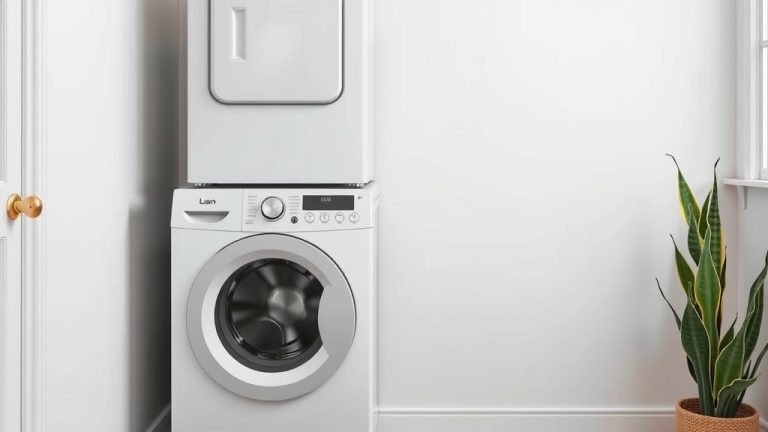
Stackable washer and dryer depths can vary, but most models typically measure between 28 to 34 inches deep. This measurement usually includes the hoses and any protruding parts. Understanding the exact depth is essential for ensuring a proper fit in your laundry space. Don’t forget to measure your doorway too, to make sure it will even get to its new home!
When shopping for a stackable unit, you’ll find a range of dimensions. Standard depths are a good starting point. However, some compact or high-capacity models might fall outside this range. Always check the manufacturer’s specifications before buying to avoid surprises. We’ve found that sometimes the advertised depth doesn’t include the water hookups, so always double-check!
- Most stackable units are 28-34 inches deep.
- Depth includes hoses and protruding parts.
- Check manufacturer specs for exact dimensions.
- Measure doorways before purchasing.
- Compact and high-capacity models vary.
Let’s walk through exactly what you need to consider regarding the depth of stackable washer and dryer units, so you can make the best choice for your home.
Measuring the Footprint: Understanding Stackable Washer & Dryer Depths
So, you’re looking at a stackable washer and dryer. That’s a smart move for saving space! But before you fall in love with a particular model, you’ve got to talk about depth. It’s not just about fitting it into a nook; it’s about making sure your laundry routine flows smoothly. We’ve found that people often overlook the depth, focusing only on width and height.
What Does “Depth” Really Mean for Stackables?
When manufacturers list the depth of a stackable unit, they’re usually talking about the measurement from the very front of the appliance to the very back. Think of it as the appliance’s overall footprint from front to back. This number is key for planning your laundry room layout. You need enough clearance for doors to open and for you to access the machines comfortably. We found that many units are designed with this measurement in mind, but it’s always wise to double-check.
The Included Space: Hoses and Protrusions
Here’s a little detail that can trip people up: the stated depth often includes any parts that stick out. This means things like the control panel, door handles, and especially the back of the unit where the hoses connect. These are the bits that can push the appliance further from the wall. Many experts recommend leaving a few inches of clearance behind the machine for ventilation and hose access. We found that not accounting for these protrusions can lead to a tight squeeze.
Typical Depth Ranges to Expect
Most standard stackable washer and dryer units tend to fall within a pretty consistent depth range. You’ll typically see depths between 28 and 34 inches. This is a good starting point for your measurements. For instance, a common depth we’ve observed is around 30 inches. This range usually accommodates the internal workings and the necessary external components without being overly bulky.
Compact vs. Full-Size Stackables: A Depth Difference?
Just like their standalone counterparts, stackable units come in different sizes. Compact models are designed for even tighter spaces and might be a bit shallower. On the other hand, some high-capacity stackables offer larger drums but can sometimes be a tad deeper to accommodate the increased capacity. We found that if you need to wash bulky items like king-size comforters, you might need to look at models with a slightly larger depth.
Why Accurate Depth Measurement is Non-Negotiable
Let’s be honest, nobody wants to buy a beautiful new appliance only to find it won’t fit. The depth measurement directly impacts how much space you have to walk around the unit. Is there enough room to load and unload laundry easily? Can you open the dryer door fully without it hitting a wall? These are the kinds of questions that accurate depth measurements help you answer. Many homeowners have learned the hard way that this simple measurement prevents a lot of headaches.
The Crucial Clearance: Behind the Machine
We can’t stress this enough: you need space behind your stackable unit. This isn’t just for aesthetics; it’s functional. The water hoses for the washer and the vent hose for the dryer need room to connect. Furthermore, appliances need airflow to operate efficiently and prevent overheating. Many appliance installation guides suggest leaving at least 4-6 inches of space at the back. This is where things can get tricky if your available space is very limited.
Navigating Manufacturer Specifications: Your Best Friend
Every manufacturer will provide detailed specifications for their appliances. This is where you’ll find the most accurate depth measurement for any specific model you’re considering. Don’t just glance at it; really look at it. Pay attention to whether the depth listed is “overall” or “cabinet depth.” Cabinet depth usually refers to the main body of the unit, not including doors or controls. Many experts recommend checking the product manual or the manufacturer’s website for these details. We found that this step is the most reliable way to get precise information.
| Appliance Type | Typical Depth Range (inches) | Key Considerations |
|---|---|---|
| Compact Stackable Units | 25 – 29 inches | Ideal for very small spaces; check hose clearance. |
| Standard Stackable Units | 28 – 34 inches | Most common; allows for good capacity and features. |
| High-Capacity Stackable Units | 30 – 36+ inches | Larger drums, might need extra rear clearance. |
Don’t Forget the Journey: Doorway Dimensions
You might have the perfect spot measured out, but can the unit actually get there? This is a common oversight that can cause major frustration. Always measure the width of your doorways, hallways, and any stairwells the appliance needs to pass through. Stackable units can be surprisingly long and awkward to maneuver. We found that it’s a good idea to add the depth of the appliance to its width and see if that total is less than your narrowest doorway. This gives you an idea of how it might need to be tilted or turned.
The Toilet Test: A Practical Analogy
Think of your laundry space like a tiny bathroom. You wouldn’t put a toilet right up against the wall with no room to sit, would you? The same principle applies to your washer and dryer. You need functional space around them. For stackables, the depth dictates not only how much room is in front but also how much clearance you have at the back for essential connections and airflow. Many plumbing codes, for instance, require specific clearances around water connections, underscoring the need for space.
Your Stackable Depth Checklist:
- Measure the full depth of potential models, including hoses.
- Add 4-6 inches for rear clearance (hoses and ventilation).
- Check manufacturer specs for “overall” vs. “cabinet” depth.
- Measure all doorways and hallways for delivery.
- Consider how you’ll maneuver the unit into place.
- Ensure enough front space for loading and unloading.
Conclusion
You’ve learned that stackable washer and dryer depth matters for more than just fitting them in. It impacts usability, ventilation, and even delivery. Most units are between 28 and 34 inches deep, but always check the manufacturer’s specs. Remember to account for hoses, door handles, and that vital rear clearance. Don’t let a surprise measurement derail your laundry room plans!
Before you buy, make sure you’ve measured your doorways, hallways, and the entire path the appliance will take. Taking these steps now will save you a lot of hassle later. Your next step is to grab your tape measure and start checking those dimensions against your available space!
Frequently Asked Questions
How much space do I *really* need behind a stackable washer and dryer?
We’ve found that a minimum of 4-6 inches is recommended behind your stackable unit. This space is essential for connecting hoses and allowing proper airflow. Without it, you risk kinks in your water lines or dryer vent issues, and the machines could overheat.
Is “cabinet depth” different from “overall depth” for stackables?
Yes, it can be! Cabinet depth usually refers to the main body of the appliance, excluding doors, handles, and control panels. Overall depth includes all these protruding parts, which is the measurement that truly affects how much space your unit takes up. Always check which measurement the manufacturer is providing.
Can I push my stackable washer and dryer completely flush against the wall?
Generally, no, you shouldn’t push your stackable unit completely flush against the wall. As we’ve researched, you need space for the water hoses, dryer vent, and crucial airflow. Pushing them tight can lead to appliance damage, reduced efficiency, and potential safety hazards.
Will compact stackable units always be shallower than standard ones?
Compact stackable units are often designed to be shallower to fit into tighter spaces, but this isn’t always a guarantee. While many are, some might have the same depth but a smaller width. Always verify the specific depth listed in the product specifications for any compact model you’re considering.
What if my doorway is narrow? How do I get a deep stackable unit through?
This is where careful planning comes in! You might need to tilt or turn the appliance. We recommend measuring not just the doorway width but also the depth of the unit plus its width to see if it can be maneuvered. Sometimes, a slightly shallower model might be your only option if your pathways are extremely tight.