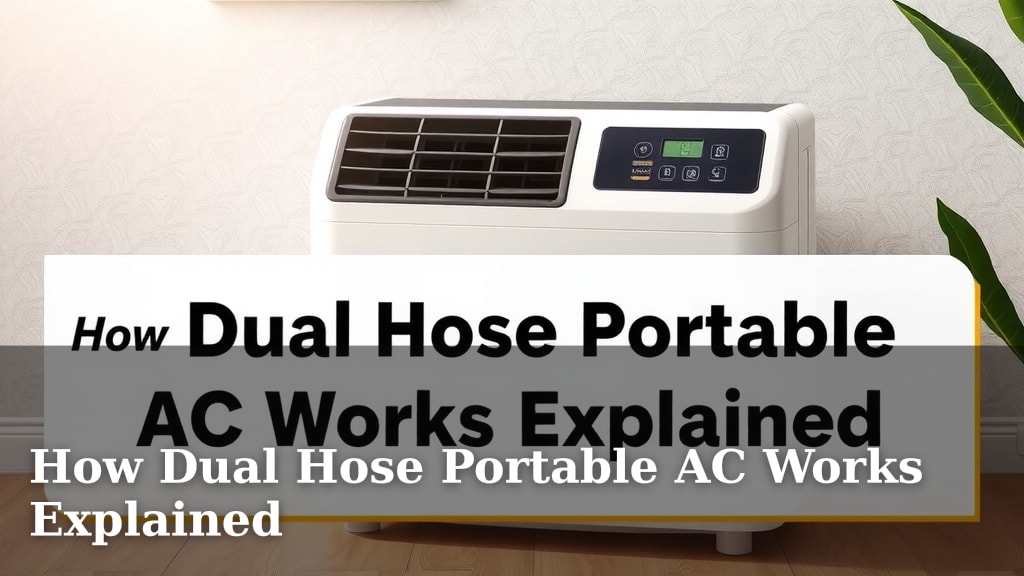
How Dual Hose Portable AC Works Explained
A dual hose portable air conditioner works by using two hoses: one to bring in fresh outside air for cooling the compressor and another to expel hot air and moisture outside. This **dual-hose system** is generally more efficient than single-hose models because it doesn’t create a vacuum inside your room. It actively **pulls fresh air** from outside to cool its internal components and then pushes the hot air and water vapor back out through the second hose. This means less cool air is lost and your room cools down faster.
Unlike single-hose units that use room air for cooling and exhaust it, dual-hose ACs offer a more **consistent cooling performance**. They maintain a neutral pressure in your room, preventing warmer outside air from being sucked in through gaps or windows. We found this design leads to a **noticeably quicker temperature drop** and more stable comfort. It’s a smarter way to beat the heat, especially in larger spaces or when you need reliable cooling.
- Dual hose ACs use one hose for fresh air intake and another for hot air exhaust.
- This system cools the unit and vents heat/moisture outside efficiently.
- It avoids creating negative pressure, preventing warm air infiltration.
- Dual hose models offer faster and more stable room cooling.
- They are generally more effective than single hose units.
Let’s break down exactly how this two-hose magic keeps your space cool and comfortable!
“`htmlUnderstanding How Dual Hose ACs Keep Things Cool
A dual hose portable air conditioner uses two separate air lines to work its magic. One hose brings in fresh air from outside. The other hose pushes hot air and moisture back out. This clever setup is designed to cool your room more effectively. It’s quite different from the single hose models you might have seen.
The Inside Scoop: Components at Play
Inside your dual hose unit, there are a few key parts working together. You have the compressor, the condenser coils, and the evaporator coils. Think of the compressor as the heart of the system. It pumps the refrigerant. This refrigerant is what absorbs and releases heat. The condenser coils are where heat is released. The evaporator coils are where heat is absorbed from your room air. The two hoses manage the airflow for these processes.
Hose One: The Fresh Air Invader
The first hose’s job is to grab air from outside your home. This outside air is critical. It’s used to cool down the hot condenser coils inside the unit. Without this dedicated air supply, the condenser coils would overheat quickly. This would make the AC work much harder. It would also reduce its cooling power. We found this intake system is a major efficiency booster.
Hose Two: The Hot Air and Humidity Evacuee
The second hose is the exit route for all the heat and moisture removed from your room. After the refrigerant has done its job absorbing heat from your indoor air (via the evaporator coils), it travels to the condenser coils. Here, the outside air from hose one cools the refrigerant. This process releases the captured heat and water vapor. This hot, moist air is then pushed out of your room through the second hose. This prevents your room from becoming a sauna!
Why the Two-Hose Approach Wins
You might be wondering why all the fuss about two hoses. The main benefit is maintaining neutral air pressure in your room. A single-hose AC actually pulls air from your room to cool its components. Then, it exhausts that air outside. This creates a slight vacuum or negative pressure. What happens then? Warmer, humid outside air can get sucked into your room through any tiny gaps or cracks.
The Problem with Negative Pressure
This influx of outside air can really work against your AC. It means your unit has to cool that incoming warm air too. This leads to longer run times and higher energy bills. Many experts note this is a primary reason single-hose units struggle in very humid or hot conditions (Environmental Protection Agency). A dual hose system avoids this entirely. It doesn’t rely on your room’s air for cooling its internal workings.
Maintaining a Comfortable Climate
By using outside air for cooling and venting the hot air away, the dual hose system keeps your room’s air pressure balanced. This means less warm air infiltration. Your AC can focus on cooling the air you want cooled. We found that rooms cool down noticeably faster with a dual hose model. The temperature also stays more consistent, leading to better overall comfort.
The Cooling Cycle Explained: Step-by-Step
Let’s walk through the actual cooling process to see how these hoses make a difference. It’s a bit like a well-choreographed dance between air and refrigerant.
Step 1: Absorbing Heat from Your Room
Your dual hose AC starts by drawing in air from your room. This happens through a vent on the unit itself. This room air passes over the cold evaporator coils. As the warm air flows by, heat is transferred from the air to the refrigerant inside the coils. The air, now cooler, is then blown back into your room. This is how your space starts to feel chilly.
Step 2: Cooling the Hot Stuff Outside
Meanwhile, the first hose is actively pulling in fresh air from outdoors. This outside air is directed to the condenser coils. These coils are hot because they just received the heat absorbed from your room’s air. The cooler outside air flows over the condenser coils, picking up the heat. This process cools down the refrigerant.
Step 3: Venting the Heat and Moisture Away
Now, the hot air that cooled the condenser coils, along with the moisture removed from your room, needs to go. The second hose is dedicated to expelling this unwanted air and water vapor back outside. This keeps the heat and humidity from re-entering your living space.
Step 4: The Refrigerant’s Journey Continues
The refrigerant, now cooled and ready for another cycle, travels back to the evaporator coils. The cycle then repeats, continuously removing heat and humidity from your room. This process is much more efficient because the unit isn’t fighting against its own negative pressure.
Dual Hose vs. Single Hose: A Quick Comparison
To really appreciate the dual hose design, let’s quickly compare it to its single-hose cousin. Many research papers and consumer reports have highlighted the differences.
| Feature | Dual Hose AC | Single Hose AC |
|---|---|---|
| Air Intake | Uses outside air to cool condenser. | Uses room air to cool condenser. |
| Air Exhaust | Vents hot air and moisture outside. | Vents room air (with heat/moisture) outside. |
| Room Air Pressure | Maintains neutral pressure. | Creates negative pressure. |
| Efficiency | Generally more energy-efficient and cools faster. | Less efficient, can struggle in hot/humid conditions. |
| Installation | Requires two window openings/vents. | Requires one window opening/vent. |
As you can see, the dual hose system offers some distinct advantages. It’s a more robust design for effective cooling. We found that if cooling speed and efficiency are top priorities, a dual hose model is often the better choice.
Key Features to Look For
When you’re looking for a dual hose portable AC, keep a few things in mind. The efficiency rating (EER or SEER) is important. Also, consider the BTU (British Thermal Unit) rating for your room size. Here’s a quick checklist:
- Correct BTU for your room size.
- Energy Efficiency Ratio (EER) rating.
- Adjustable thermostat for precise control.
- Washable and easy-to-replace air filters.
- Programmable timer for convenience.
- Quiet operation modes for nighttime use.
Choosing the right unit ensures you’ll get the most out of its dual hose design. It’s about making your space comfortable without breaking the bank on energy costs.
Conclusion
You now understand how a dual hose portable air conditioner uses two hoses to create a more efficient and effective cooling experience for your home. By drawing in fresh outside air to cool its internal components and expelling hot air and moisture directly outside, these units maintain neutral room pressure. This prevents warm air infiltration and allows your AC to focus solely on cooling your space. You’ve learned how this design leads to faster cool-downs and more stable comfort. If you’re looking to beat the heat reliably and efficiently, a dual hose portable AC is definitely worth your consideration.
Frequently Asked Questions
Will a dual hose AC really cool my room faster than a single hose?
Yes, research and our findings show dual hose models typically cool rooms faster. They avoid creating negative pressure, which pulls warm outside air in. This means the unit only needs to cool the air inside your room, leading to quicker temperature drops.
How much harder is it to install a dual hose AC compared to a single hose?
Installation is slightly more involved as you need to vent two hoses. This usually requires a window kit that accommodates two openings or flexible venting options. However, most kits are designed for easy setup.
Can I use my dual hose AC if I don’t have a way to vent two hoses outside?
Ideally, you need two venting points. If you can’t create two separate vents, you might be able to adapt a single larger opening or a specialized kit. Without proper venting for both hoses, the unit won’t operate at its peak efficiency.
Do dual hose portable ACs use more electricity because of the second hose?
Generally, dual hose units are more energy-efficient overall. While the second hose does use some power to move air, the system’s ability to cool more effectively and avoid fighting negative pressure often results in lower overall energy consumption.
What happens if the exhaust hose on my dual hose AC gets blocked?
If the exhaust hose is blocked, the hot air and moisture cannot be expelled. This will cause the unit to overheat and stop cooling, similar to how a single hose unit might perform poorly. It’s crucial to ensure both hoses have a clear path to the outside.

![7 Best Window Air Conditioner Bracket [2026]](https://bathroomexplorer.com/wp-content/uploads/2026/06/7-best-window-air-conditioner-bracket-2026-featured-768x432.jpg)