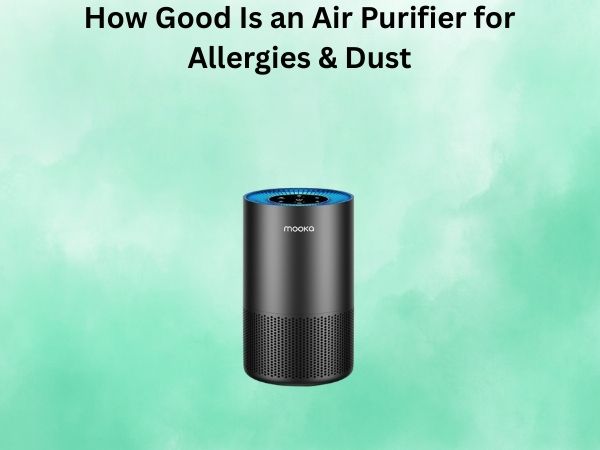
How Good Is an Air Purifier for Allergies & Dust? A Complete Guide
So, you’re eyeing an air purifier? Maybe spring allergies have you reaching for tissues, or perhaps you’re tired of battling an endless supply of dust. You’ve probably encountered numerous sleek units online, all promising a home filled with clean, fresh air. But here’s the crucial query: do they actually deliver on their promises, or are you looking at an expensive dust collector?
The truth is, air purifiers can be genuinely effective, but their performance depends on several factors that most marketing materials conveniently gloss over. Let me walk you through what I’ve learned about these devices, because understanding how they work is the first step toward making a smart purchase decision.
What Makes an Air Purifier Work?
Think of an air purifier like a bouncer at a nightclub. Its job is to let the good stuff through (clean air) while keeping the bad stuff out (pollutants, allergens, dust). But just like not all bouncers are equally effective, not all air purifiers perform the same way.
At its core, an air purifier works by drawing air through a series of filters. As the air passes through these filters, particles get trapped. The purified air then gets released back into your room. Sounds simple, right? The complexity comes down to what types of particles the filters can actually catch and how efficiently they do it.
The Basic Mechanism Behind Air Purification
Every air purifier has a few essential components. First, there’s an intake that pulls air from your room. Then the air passes through one or more filters designed to trap different types of particles. Finally, a motor pushes the cleaned air back out into your living space. The entire cycle repeats continuously, and the more times air cycles through the purifier, the cleaner it becomes.
Most quality air purifiers can complete multiple air changes per hour in a room, which is crucial for effectiveness. If the device is too weak for your room size, it won’t be able to clean the air fast enough to make a noticeable difference.
Types of Air Purifiers and Their Capabilities
Not all air purifiers are created equal. There are several different technologies out there, and each has its strengths and weaknesses.
HEPA Filters: The Gold Standard
HEPA stands for High-Efficiency Particulate Air, and these filters are the Rolls Royce of air filtration. A true HEPA filter can capture 99.97% of particles that are 0.3 microns or larger. That’s incredibly small—we’re talking about particles that are nearly invisible to the naked eye.
Here’s why this matters: dust, pollen, pet dander, and most allergens fall within this size range. So if you’re dealing with allergies or dust issues, a HEPA filter is genuinely one of your best friends. However, I need to be honest with you—not every air purifier with “HEPA-like” or “HEPA-type” filters is actually using true HEPA technology. Many companies use misleading language to sound more impressive than they actually are.
Activated Carbon Filters
These filters excel at removing odors and chemical pollutants. If you live near a busy road or have stubborn cooking smells that won’t go away, activated carbon can be helpful. However, they’re not particularly effective at trapping physical particles like dust or pollen. Think of them as specialized workers—great at their specific job, but not a complete solution on their own.
Ionizers and Ozone Generators
These devices work differently than mechanical filters. They release negative ions that attach to particles, causing them to fall out of the air. Sounds clever, but here’s the catch: the EPA has raised concerns about ozone generators, noting that they can actually create harmful byproducts. Some ionizers are fine, but ozone-producing models might do more harm than good. I’d recommend steering clear of these unless you really know what you’re doing.
UV Light Technology
Some purifiers use ultraviolet light to kill bacteria and viruses. While UV can be effective at neutralizing certain pathogens, it doesn’t actually remove particles from the air. It’s like killing the germs but leaving the bodies lying there. Most experts recommend UV technology as a supplement to mechanical filtration, not a replacement.
How Well Do Air Purifiers Handle Allergens?
If you’re an allergy sufferer, this is probably the question keeping you up at night. Can an air purifier actually reduce your sneezing, itching, and general misery?
The short answer is yes, but with important caveats. Air purifiers can significantly reduce airborne allergens like pollen, dust mite feces, and pet dander. Studies have shown that using a HEPA filter can lead to measurable reductions in these allergens within a room.
What Allergens Can Air Purifiers Handle?
- Pollen from trees, grasses, and flowers
- Dust mite allergens and their droppings
- Pet dander from cats and dogs
- Mold spores
- Some bacteria and viruses
The Limitation You Need to Understand
Here’s where air purifiers fall short: they can only filter the air that actually passes through them. If you have allergens settling on your furniture, bedding, or floor, the air purifier can’t touch them until they become airborne again. This is why allergists typically recommend using air purifiers alongside other strategies like regular vacuuming, washing bedding in hot water, and minimizing dust-collecting items in your bedroom.
Additionally, air purifiers work best when doors and windows are closed. If you’re constantly opening your windows or living in a space where air leaks in from outside, the purifier will be fighting an uphill battle. It’s like trying to bail water out of a boat with a hole in the bottom—you can work hard, but you’re fighting a losing battle.
Dust Removal: What You Really Need to Know
Dust is one of the most common reasons people buy air purifiers, so let’s dig into whether these devices are actually good at handling it.
Dust particles vary greatly in size. Some are large enough to see easily, while others are microscopic. A quality air purifier with a HEPA filter can definitely capture the smaller dust particles that usually cause the most trouble for allergy sufferers and asthma patients.
Where Air Purifiers Excel with Dust
Air purifiers are excellent at reducing suspended dust in the air. If you notice dust swirling in sunlight coming through your windows, an air purifier can significantly reduce that visible dust. This happens relatively quickly—often within a few hours of running the device in a room.
Where Air Purifiers Fall Short with Dust
The dust that’s already settled on your surfaces, inside your air vents, or in your carpet isn’t going anywhere with an air purifier alone. This dust needs to be cleaned manually or become airborne again before the purifier can do anything about it. Many people get disappointed with air purifiers because they expect them to reduce dust on every surface, but that’s not how they work.
Combination Approach for Best Results
The most effective way to reduce dust is combining an air purifier with other dust-fighting strategies. Regular vacuuming with a HEPA-filter vacuum, dusting with damp cloths, and minimizing dust-trapping items like heavy curtains and upholstered furniture all play a role. The air purifier handles the airborne dust while these other methods address dust at its source.
HEPA Filters: The Game Changer
I want to dive deeper into HEPA filters because they’re genuinely important if you want an air purifier that actually works.
HEPA filters were originally developed for military and medical applications, which tells you something about their effectiveness. They’re made from a dense mat of fibers arranged randomly, creating a labyrinth that traps particles. The filter works through several mechanisms: some particles get tangled in the fibers, others get trapped through electrostatic attraction, and some collide with fibers and stick.
Why HEPA Filters Are Worth the Investment
When you’re shopping for an air purifier and see that 99.97% efficiency rating, that’s no joke. HEPA filters are regulated and certified by standards organizations. They’re not marketing fluff—they’re genuine engineering specifications. If a purifier has a certified HEPA filter, you can be reasonably confident it will perform as advertised.
The Replacement Cost Reality
Here’s something to consider before buying: HEPA filters aren’t cheap, and they need replacing regularly. Depending on your air quality and how much you run the purifier, you might need to replace them every 6 to 12 months. That’s an ongoing cost you need to factor into your budget. If you’re looking at a $200 air purifier, factor in another $50-100 per year for filter replacements.
Room Size and Coverage Matters
This is where many people make a critical mistake with air purifiers. They buy a device designed for a small bedroom and expect it to clean the air in their entire home. That’s not going to work.
Air purifiers are rated by their Clean Air Delivery Rate (CADR), which measures how much air they can clean per minute. The manufacturer will also specify the room size they’re designed for. This rating is important—it’s not just a suggestion, it’s fundamental to performance.
Understanding Room Size Specifications
When a manufacturer says an air purifier is suitable for a 300 square foot room, they’ve calculated how many air changes per hour it can deliver in that space. Most experts recommend at least 4 to 5 air changes per hour for effective purification. If you use the purifier in a larger room than recommended, you’ll get fewer air changes per hour, which means less effective cleaning.
Calculating Your Needs
To determine what size air purifier you need, calculate your room’s square footage by multiplying length by width. Then look for a purifier rated for at least that size, preferably rated for slightly larger. For bedrooms, many people opt for purifiers rated for a slightly larger space since you want effective cleaning while you sleep.
Real-World Performance vs. Marketing Claims
Let me be blunt: not everything marketing departments claim about air purifiers is entirely accurate. They’re not lying exactly, but they’re certainly emphasizing the best possible scenarios.
When a manufacturer claims their air purifier removes 99.97% of particles, they’re right—but only in controlled laboratory conditions. Real-world performance depends on multiple factors: your room layout, whether doors and windows are sealed, the starting pollution level, and how long you run the device.
What to Expect Realistically
In your actual home, with actual doors and windows and imperfect sealing, you’ll see noticeable but not complete air quality improvement. Most people report feeling a reduction in allergies and dust within the first week of using an air purifier, but they usually don’t achieve the dramatic transformation that marketing videos suggest.
The Hype Around Specific Claims
Be skeptical of purifiers claiming to eliminate specific illnesses or diseases. While air purifiers can reduce airborne pathogens, saying they’ll prevent you from getting the flu is overstated. They’re helpful, but they’re not a substitute for other preventive measures like vaccinations or hand washing.
Common Misconceptions About Air Purifiers
Misconception 1: Air Purifiers Clean Everything
As I’ve mentioned, air purifiers only clean the air that passes through them. They’re not magic—they can’t clean your furniture, walls, or carpets. You still need to clean your home regularly.
Misconception 2: One Purifier Can Clean Your Entire Home
Unless you live in a very small space or buy a commercial-grade purifier, one device won’t effectively clean air throughout your entire home. Closed doors significantly reduce air circulation between rooms. If you want clean air in multiple rooms, you’ll need a purifier in each space or a whole-home system connected to your HVAC.
Misconception 3: Air Purifiers Work Instantly
Air purification takes time. It’s not like turning on a light switch. Even with an appropriate-sized purifier, it typically takes several hours to noticeably improve air quality in a room. This is why people who run their purifier for 30 minutes and then turn it off don’t see good results.
Misconception 4: You Don’t Need to Maintain Them
Air purifiers require regular maintenance. Filters get clogged, and their efficiency drops significantly when they’re loaded with particles. Running a purifier with a clogged filter is like trying to drink through a straw that’s nearly blocked—not very effective.
Choosing the Right Air Purifier for Your Needs
Step 1: Identify Your Main Concern
Are you dealing with allergies? Pet odors? Dust? General air quality? Your specific concern should guide your choice. For allergies and dust, focus on HEPA filters. For odors, prioritize activated carbon. For multiple concerns, look for a multi-stage filter system.
Step 2: Measure Your Space
Calculate your room’s square footage accurately. Don’t underestimate the size—it’s better to buy a slightly oversized purifier than one that’s too small.
Step 3: Check the CADR Rating
Look for published CADR ratings for smoke, dust, and pollen. The higher the numbers, the faster the purifier can clean the air. Compare purifiers within the same price range by their CADR ratings.
Step 4: Consider Noise Levels
Air purifiers produce noise, especially on higher settings. If you’re planning to run it in your bedroom, check decibel ratings. Anything under 50 decibels is relatively quiet, while 60+ decibels might disturb your sleep.
Step 5: Factor in Long-Term Costs
Don’t just look at the upfront cost. Calculate annual filter replacement expenses and electricity costs. A cheaper purifier that requires frequent filter changes might end up being more expensive overall.