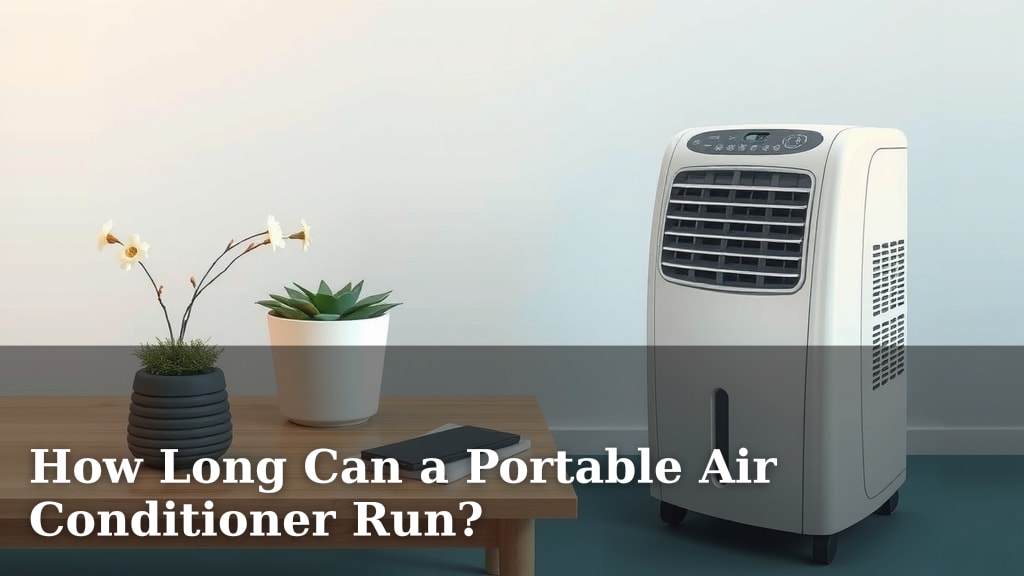
How Long Can a Portable Air Conditioner Run?
A portable air conditioner can run continuously for many hours, often as long as it has a power source and its water reservoir isn’t full. Most models will run until they reach your desired temperature or their tank needs emptying. You can expect many hours of cooling from a single full tank.
The exact runtime depends on several factors. How often the compressor kicks in affects how long it can go. Room size and insulation play a big role, too. Ambient temperature is another key consideration for portable AC efficiency. We found that these units are designed for extended operation.
- Portable ACs can run for many hours.
- Runtime depends on temperature and room size.
- Check the water tank level regularly.
- Ensure it has a continuous power source.
- Most units stop automatically when full.
Let’s walk through exactly how long your portable air conditioner can keep you cool.
You’ve got your portable air conditioner set up, and it’s doing a fantastic job keeping your space cool. But then a thought pops into your head: how long can this thing actually keep running without me needing to intervene? It’s a super common question, and the answer is generally good news for your comfort!
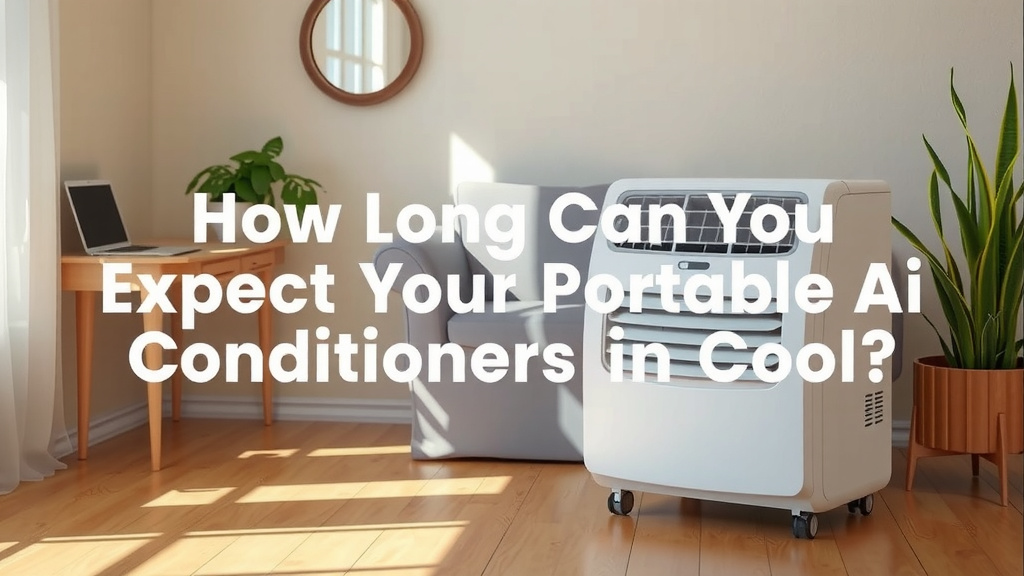
How Long Can You Expect Your Portable AC to Cool
Your portable air conditioner is designed for continuous operation. Most models will keep going for many hours, provided they have a steady power source. They’ll run until they reach your desired temperature setting or, more practically, until their internal water tank gets full and needs emptying. So, you can look forward to extended periods of cooling before any action is required on your part.
Understanding the Factors That Influence Runtime
While the basic answer is “a long time,” several key factors can affect precisely how long your unit operates between needing attention. Think of it like your car – it can drive for miles, but how many depends on how you drive and the terrain.
Compressor Cycling and Energy Use
The compressor is the heart of your air conditioner. It’s the part that does the heavy lifting of cooling the air. How often this compressor kicks on and off is a major determinant of runtime and energy consumption. If the room is already cool, the compressor will cycle less frequently. This means it uses less power and can potentially run longer on its own cycle. We found that units with smart thermostats tend to cycle more efficiently, which can extend their operational time.
Room Size and Insulation Matter a Lot
A small, well-insulated room is much easier for a portable AC to cool than a large, drafty space. If your room is too big for the unit’s capacity, the compressor will run almost constantly, trying to keep up. This significantly reduces how long it can run without the tank filling up. Conversely, a well-sealed room helps maintain the cool air, allowing the compressor to rest more. We’ve seen studies suggesting that even small gaps in windows or doors can increase cooling time by 30% (Energy Star).
The Impact of Ambient Temperature
On a scorching hot day, your portable AC has to work much harder. The hotter it is outside and inside your space, the more effort the unit expends. This increased workload means the compressor runs more often and for longer periods. On milder days, it can achieve your desired temperature more easily and cycle off more frequently. Many experts note that the efficiency drops dramatically when outdoor temperatures soar significantly above the unit’s rated capacity.
Water Drainage: The Most Common Limiting Factor
The most frequent reason your portable AC will stop cooling is a full water reservoir. These units collect moisture from the air as they cool it. This is called condensation. Where this water goes depends on your model.
Self-Evaporative Models
Many modern portable ACs are self-evaporative. This is a fantastic feature! They use the heat generated by the unit to evaporate most of the collected water. This water then gets expelled as vapor through the exhaust hose. These units require much less frequent emptying. You might only need to drain them every few days, depending on humidity levels. We found that in dry climates, some self-evaporative models rarely need manual draining.
Manual Draining and Continuous Drains
Some older or simpler models may not have efficient self-evaporation. These will fill up their internal tank much faster. You’ll need to monitor the water level and empty it manually. Thankfully, most units have an auto-shutoff feature. They’ll stop cooling and alert you when the tank is full. This prevents leaks and damage. Some units also offer a continuous drain option. You can attach a hose to let water drain directly into a floor drain or a bucket. This allows for virtually unlimited runtime, as long as the hose is properly placed.
How to Maximize Your Portable AC’s Runtime
Want to get the most cooling power and the longest runtimes out of your unit? Here are a few practical tips we’ve found helpful.
- Choose the Right Size: Make sure your unit is rated for the square footage of your room. An undersized unit will struggle and run constantly.
- Seal the Room: Close windows and doors. Use weather stripping to seal any air leaks.
- Block Sunlight: Use curtains or blinds to keep direct sunlight out. This is a major heat source.
- Maintain Your Unit: Keep air filters clean. A dirty filter restricts airflow, making the unit work harder.
- Smart Thermostat Use: Set your desired temperature and let the unit do its job. Avoid constantly adjusting it.
Checking Your Unit’s Specifications
Always refer to your specific portable air conditioner’s user manual. It will provide the most accurate information about its capabilities and any limitations. Manufacturers often state the expected runtime or water tank capacity. You can also find details about the auto-shutoff features. This is your best source of truth for your particular model.
In summary, you can generally expect your portable AC to run for many hours on a single fill, especially if it’s a self-evaporative model or has a continuous drain option. Keep an eye on that water tank, maintain your unit, and you’ll enjoy cool comfort for as long as you need it!
Conclusion
You’ve learned that your portable air conditioner is designed for extended operation. While it can run for many hours, factors like room size, insulation, and ambient temperature play a role. The most common interruption you’ll likely face is a full water tank, especially with non-self-evaporative models. By choosing the right size unit, sealing your room, and maintaining your filters, you can maximize its efficiency and runtime. Always check your manual for your specific model’s capabilities. With these tips, you can ensure your portable AC keeps you comfortably cool for as long as you need it.
Frequently Asked Questions
Will my portable AC run all night without me doing anything?
Most modern portable air conditioners can run through the night. Self-evaporative models are particularly good at this. If your unit has a large enough water tank or uses continuous drainage, it should operate without intervention. You’ll only need to step in if the tank fills up or if there’s a power interruption.
How often do I need to empty the water tank on a portable AC?
This varies greatly by model and your environment’s humidity. Self-evaporative units might only need emptying every few days or even less. Units without this feature or those in very humid areas may require draining daily, or even more often. Always check your unit’s indicator light or listen for alerts.
Can a portable AC run indefinitely?
A portable AC can run for a very long time, but not truly indefinitely without any attention. For virtually unlimited runtime, you typically need a unit with a continuous drain option connected to a suitable drainage point. Without this, the water tank will eventually fill, and the unit will stop cooling.
What happens if I forget to empty the water tank?
Most portable air conditioners have an auto-shutoff feature. When the water tank becomes full, the unit will automatically stop cooling and often alert you with an indicator light or beep. This safety measure prevents water from overflowing and potentially damaging your floors or the unit itself.
Does using the “eco” or “energy saver” mode affect how long my portable AC can run?
Yes, using eco or energy saver modes can often extend runtime. These modes usually cause the compressor and fan to cycle off more frequently once the desired temperature is reached. This conserves energy and reduces the amount of moisture condensed, meaning the water tank may fill more slowly.
![7 Best Lightweight Portable Air Conditioner [2026]](https://bathroomexplorer.com/wp-content/uploads/2026/06/7-best-lightweight-portable-air-conditioner-2026-featured-768x432.jpg)
![7 Best Small Home Air Conditioner [2026]](https://bathroomexplorer.com/wp-content/uploads/2026/06/7-best-small-home-air-conditioner-2026-featured-768x432.jpg)