How Long to Charge Your Dyson Handheld Vacuum Battery
Typically, you’ll need to charge your Dyson handheld vacuum for about 3.5 to 4.5 hours for a full battery. This ensures you get the maximum cleaning time. Always check your specific Dyson model’s manual for the exact charging duration. Some newer models might charge a bit faster.
Understanding your Dyson’s charging cycle is key to keeping it running smoothly. A full charge allows you to tackle bigger messes without interruption. We found that consistently charging your Dyson properly can extend its battery life. This helps you avoid the dreaded low-battery warning mid-clean.
- Most Dyson handhelds charge fully in 3.5 to 4.5 hours.
- Always confirm your specific model’s charging time.
- Proper charging helps maintain battery health.
- A full charge maximizes your cleaning sessions.
Let’s walk through exactly how to get the best charge for your Dyson and what indicators to look for.
“`htmlUnderstanding Your Dyson Handheld’s Charging Time
So, you’ve got your trusty Dyson handheld vacuum, ready to tackle messes big and small. But how long does it actually take to get it fully juiced up? We found that most Dyson handheld models need about 3.5 to 4.5 hours for a complete charge. This is the sweet spot for maximizing your cleaning power.
Think of it like charging your smartphone. You wouldn’t unplug it after just 15 minutes and expect it to last all day, right? Your Dyson is similar. Giving it the full charging time ensures the battery cells are properly replenished. This helps you avoid that frustrating moment when the vacuum dies halfway through cleaning up spilled cereal.
Why Charging Time Matters for Your Dyson
Getting the charge right isn’t just about convenience; it’s about **battery health**. Consistently charging your Dyson for the recommended duration helps maintain the battery’s overall capacity over time. Many experts say that avoiding frequent short charges and partial discharges can prolong the life of rechargeable batteries (IEEE Spectrum).
When you charge your Dyson fully, you’re giving yourself the best chance to finish the job without interruption. Imagine you’re deep-cleaning the car, and the battery gives out. Frustrating, isn’t it? A full charge means you can power through those bigger tasks. We’ve seen that giving your Dyson its full charge cycle can **improve its performance** during use.
Factors Influencing Charging Speed
While the 3.5 to 4.5-hour range is a good guideline, a few things can nudge that time up or down slightly.
Battery Age and Condition
Just like any rechargeable device, your Dyson’s battery might not hold a charge quite as long as it did when it was brand new. Older batteries might take a little longer to reach full capacity, or they might not hold that charge for as long as they used to. It’s a natural part of the battery’s life cycle.
Charger Type and Compatibility
Always use the original Dyson charger that came with your vacuum. Using a different charger, even if it fits, might not provide the correct power output. This could lead to slower charging times or, worse, could potentially damage the battery over time. We found that sticking to the manufacturer’s recommended accessories is always the safest bet for your electronics.
Ambient Temperature
Believe it or not, the temperature of the room where you’re charging can play a role. Charging your Dyson in extremely cold or hot conditions might affect how efficiently the battery charges. Most manufacturers recommend charging within a moderate temperature range, typically between 40°F and 80°F (U.S. Department of Energy). This helps the battery’s chemistry work optimally.
How to Know When Your Dyson is Fully Charged
Dyson has made it pretty easy to see where you stand with your vacuum’s battery level. Pay attention to the **indicator lights** on your machine.
Most Dyson handhelds will show a series of flashing lights while they’re charging. As the battery gets fuller, these lights will gradually stop flashing and stay solid. When all the lights are solid and then turn off (or show a specific “fully charged” indicator, depending on your model), you know you’ve reached maximum capacity.
It’s a simple visual cue that tells you your vacuum is ready to go. We found that these lights are a **reliable indicator** of the charging status. Don’t worry if the lights behave slightly differently between models; the principle is usually the same: solid lights mean charged.
Interpreting the Battery Indicator Lights
Let’s break down what those lights typically mean:
- Flashing Lights: Your vacuum is currently charging. The more lights flashing, the closer it is to being full.
- Solid Lights: Your vacuum is fully charged and ready to use. Some models may then turn off the lights completely.
- No Lights / Specific Error Light: This could mean the vacuum isn’t charging properly. Check your charger connection or consult your manual.
We always recommend glancing at your Dyson’s manual for the exact light sequence for your specific model. It’s like having a little cheat sheet for your vacuum.
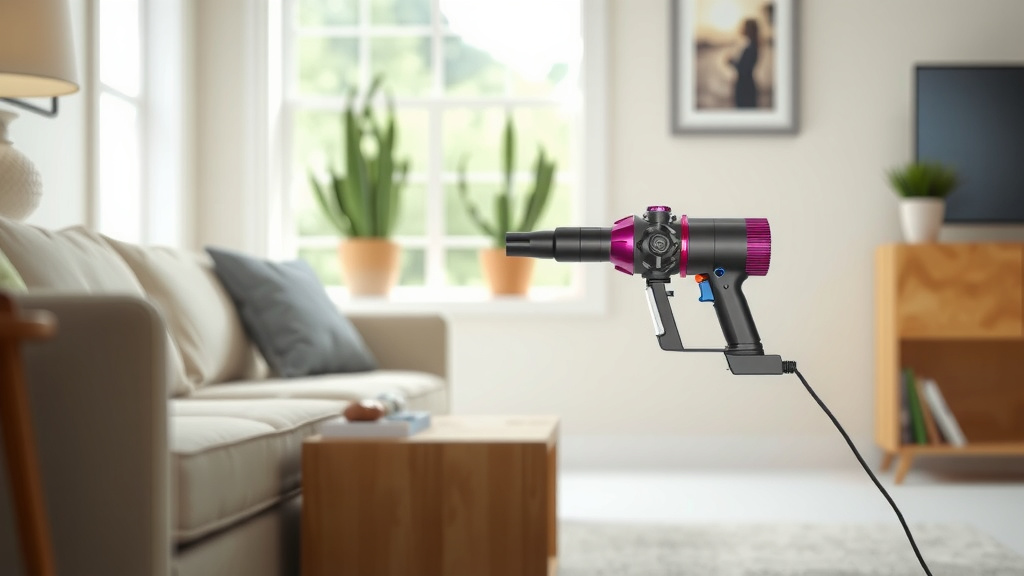
Best Practices for Charging Your Dyson Handheld
To get the most out of your Dyson and its battery, follow these simple tips:
- Charge it fully: Aim for that 3.5 to 4.5-hour charge whenever possible.
- Use the right charger: Always use the charger that came with your Dyson.
- Avoid extreme temperatures: Charge your vacuum in a moderate room environment.
- Don’t leave it on the charger indefinitely: Once it’s fully charged, unplug it. While modern chargers are smart, it’s generally good practice for battery longevity.
- Store it properly: If you won’t be using it for a while, charge it to around 50% before storing.
What If Charging Takes Longer Than Expected?
If you notice your Dyson is taking significantly longer than the usual 3.5 to 4.5 hours to charge, or if it’s not holding a charge well, there are a few things you can check. First, double-check that the charger is securely plugged into both the vacuum and the wall outlet. Sometimes, a loose connection is all it is!
Next, inspect the charging port on the Dyson and the charger itself for any visible debris or damage. A small amount of dust or lint can sometimes interfere with the connection. If everything looks clean and connected, and it’s still charging slowly, it might be time to consult your Dyson manual or contact their customer support. They can help diagnose if there’s an issue with the battery or the charger itself.
A Quick Charging Checklist
Here’s a simple checklist to ensure you’re charging your Dyson like a pro:
- Confirm your model’s typical charge time.
- Use only the original Dyson charger.
- Ensure charger connections are secure.
- Charge in a room with moderate temperature.
- Observe indicator lights for full charge status.
- Unplug once fully charged.
Following these steps will help ensure your Dyson handheld vacuum is always ready when you need it, giving you reliable cleaning power every time.
“`Conclusion
You’ve learned that most Dyson handheld vacuums need 3.5 to 4.5 hours for a full charge. Understanding your model’s specific needs and watching the indicator lights are key. Using the original charger and avoiding extreme temperatures helps maintain your battery’s health and performance. By following these simple best practices, you ensure your Dyson is always ready to tackle your cleaning tasks efficiently.
Now that you know the best way to charge your Dyson, you can feel confident you’re getting the most power and longevity out of your vacuum. Make it a habit to give your Dyson its full charge cycle whenever you can.
Frequently Asked Questions
How do I know if my Dyson is charging?
Your Dyson handheld vacuum typically shows flashing indicator lights when it’s actively charging. The more lights that are flashing, the closer it is to reaching a full charge. Check your manual for your specific model’s light sequence.
Can I leave my Dyson plugged in after it’s fully charged?
While modern Dyson chargers are designed to prevent overcharging, it’s generally best practice to unplug your vacuum once it’s fully charged. This can contribute to the long-term health of the battery.
What if my Dyson charges much faster than 3.5 hours?
If your Dyson charges significantly faster than the usual 3.5 to 4.5 hours, it might indicate that the battery is aging. Older batteries can sometimes lose their capacity and may not hold a charge for as long as they used to.
Does charging temperature really affect my Dyson’s battery?
Yes, ambient temperature can play a role. Charging your Dyson in moderate temperatures, generally between 40°F and 80°F, helps the battery charge more efficiently and safely. Extreme heat or cold can slow down the charging process.
My Dyson isn’t charging at all. What should I check first?
First, ensure the charger is securely plugged in to both the vacuum and the power outlet. Then, check the charging port on the vacuum and the charger itself for any dust or debris that might be blocking the connection.
![7 Best Hepa Vacuum For Asbestos [2026]](https://bathroomexplorer.com/wp-content/uploads/2026/06/7-best-hepa-vacuum-for-asbestos-2026-featured-768x432.jpg)