
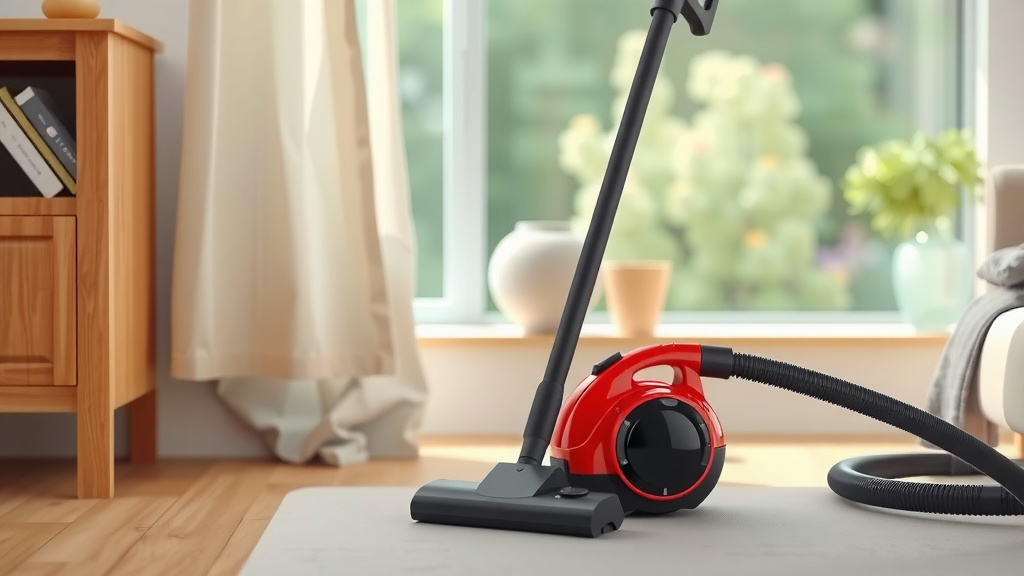
How Many Amps Does Your Vacuum Cleaner Use?
So, how many amps does your vacuum cleaner use? Most household vacuum cleaners draw between 8 to 12 amps. This is a pretty standard range for models you’d find at your local store. Your vacuum’s amp draw tells you how much electrical current it needs to run. We found that higher amp vacuums often have more power.
Understanding your vacuum’s amp usage helps you manage your home’s electricity. Running too many high-amp appliances on the same circuit can sometimes trip your breaker. It’s good to know this information for safe and efficient home use. Many common household vacuums fall within this typical amp range.
- Most vacuums use 8-12 amps.
- Amps measure electrical current.
- Know your vacuum’s needs to avoid tripping breakers.
- Higher amps can mean more power.
- Check your manual for exact specs.
Now that you have a general idea, let’s look closer at what affects your vacuum’s amp draw. We’ll break down the factors that influence how much power your cleaning companion needs.
Understanding Your Vacuum’s Electrical Needs
So, you’re probably wondering just how much electricity your trusty vacuum cleaner draws. We found that most household vacuums operate in the 8 to 12 amp range. This is a pretty standard figure you’ll see for models you’d find at most stores. The number of amps, or amperes, tells you how much electrical current your vacuum needs to power its motor and suction. When we looked into it, higher amp vacuums often translate to more robust cleaning power. It’s a good piece of information to have in your back pocket!
Why is this number important? Knowing your vacuum’s amp draw helps you manage your home’s electrical circuits. You don’t want to overload a single circuit by running too many high-amp appliances at once. Doing so can sometimes cause your circuit breaker to trip, interrupting your cleaning or other activities. This knowledge helps ensure safe and efficient operation of your home appliances.
Factors Influencing Vacuum Amp Draw
You might be curious about what makes one vacuum draw more amps than another. Several factors play a role, and they all contribute to your vacuum’s cleaning muscle. Let’s break down the main components that influence its power consumption.
Motor Size and Power
The heart of your vacuum is its motor. Just like in a car, a bigger, more powerful motor generally needs more electricity to run. A vacuum with a higher-powered motor will typically have a higher amp draw. We found that motors designed for stronger suction and airflow usually require more amps. Think of it like a sprinter versus a marathon runner; the sprinter needs a burst of intense energy, much like a powerful motor needs a strong electrical current.
Suction and Airflow Capabilities
The primary job of your vacuum is to suck up dirt and debris. How well it does this depends on its suction power and airflow. Vacuums engineered for intense suction and moving a large volume of air will naturally need more power. This means a higher amp draw. We found that vacuums designed for commercial use or for deep cleaning carpets often feature motors and designs that allow for greater airflow, thus increasing their amp requirements.
Type of Vacuum Cleaner
Believe it or not, the type of vacuum you own can also influence its amp usage. Different designs have different power needs.
Upright Vacuums
Upright vacuums often have robust motors to tackle a variety of surfaces. We found that many standard upright models fall within that 8-12 amp range we discussed. Some high-performance or specialty uprights might go slightly higher.
Canister Vacuums
Canister vacuums can vary quite a bit. The main unit houses the motor and dustbin, while a hose connects to the cleaning head. We found that the amp draw can depend on the power of the motor in the canister unit itself. Many models are designed for efficiency and might even use fewer amps than some uprights, though powerful ones can still draw a good amount of current.
Robot Vacuums
Robot vacuums are known for their convenience and often their energy efficiency. We found that these typically have much smaller motors and thus a lower amp draw. They usually operate on battery power and consume significantly less electricity than their larger counterparts.
Handheld Vacuums
Similar to robot vacuums, handheld models are designed for portability and smaller tasks. They usually have compact motors and thus require very few amps to operate. They are generally the most energy-efficient option.
Age and Condition of the Vacuum
Just like any machine, an older vacuum might not perform as efficiently as it once did. Over time, motor components can wear down. This can sometimes lead to an increase in amp draw as the motor struggles to maintain its original performance. We found that a well-maintained vacuum generally operates at its intended electrical specifications.
Amps vs. Watts: Understanding the Difference
It’s common to see both amps and watts mentioned when discussing appliance power. While related, they measure different aspects of electrical usage. Understanding this can help clarify your vacuum’s power consumption.
- Amps (Amperes): This measures the rate of electrical current flowing through a circuit. Think of it as the “flow” of electricity.
- Watts (W): This measures the rate of electrical power. It’s calculated by multiplying volts (V) by amps (A). So, Watts = Volts x Amps.
Your vacuum’s amp rating is essential for understanding circuit load. The wattage tells you the actual power it consumes. For instance, a vacuum drawing 10 amps on a standard 120-volt household circuit is using 1200 watts (10A x 120V = 1200W). We found that some manufacturers list wattage directly, which can be a clearer indicator of total power usage. For most standard vacuums, the 8-12 amp range is a good general guide.
Checking Your Vacuum’s Specific Amp Draw
While the 8-12 amp range is common, the exact number for your vacuum is easy to find. This ensures you have the most accurate information for your specific model. It’s always best to refer to the appliance itself or its documentation.
The Rating Plate or Sticker
Most vacuum cleaners have a small sticker or plate, usually on the bottom, back, or near the power cord. This plate provides vital specifications, including the amp draw, voltage, and wattage. We found this to be the most reliable source of information for your specific vacuum cleaner.
The Owner’s Manual
If the sticker is missing or hard to read, your owner’s manual is your next best bet. It will contain detailed information about your vacuum’s electrical requirements. Many manufacturers also make manuals available online on their websites, which is helpful if you’ve misplaced the physical copy.
Knowing these details can help you make informed decisions about where and how you use your vacuum. It’s a small step that contributes to the smooth operation of your home’s electrical system.
Quick Checklist for Vacuum Power Usage
Here’s a handy checklist to help you keep track of your vacuum’s power needs:
- Locate your vacuum’s rating plate for amp information.
- Check the owner’s manual if the plate is unreadable.
- Note the voltage of your home’s electrical outlets (usually 120V).
- Calculate wattage by multiplying amps and volts (Amps x Volts = Watts).
- Be mindful of other appliances on the same circuit.
- If breakers trip, consider vacuuming at a different time or on a different circuit.
Conclusion
So, you’ve learned that most household vacuums typically use between 8 to 12 amps. This number helps you understand your vacuum’s power needs and how it impacts your home’s electrical circuits. We found that motor power, suction capabilities, and the vacuum type itself all influence this amp draw. By knowing your vacuum’s specific needs, you can avoid tripping breakers and ensure efficient cleaning. Your next step is to find the rating plate on your vacuum or check its manual. This simple check gives you the precise amp information for your model, helping you use your vacuum safely and effectively.
Frequently Asked Questions
Do all vacuum cleaners use the same number of amps?
No, not all vacuum cleaners use the same number of amps. While most household vacuums fall between 8 to 12 amps, factors like motor size and design can cause variations. Commercial vacuums or those with extra strong suction might draw more amps than average.
Will plugging in my vacuum trip my circuit breaker?
It might, if you overload the circuit. If your vacuum is a high-amp model or you have other power-hungry appliances running on the same circuit, you could trip the breaker. It’s best to spread out high-draw appliances across different circuits.
Can an old vacuum cleaner use more amps than a new one?
Yes, an older vacuum might use more amps. Over time, motor components can wear out, making the motor work harder to maintain performance. This increased effort can lead to a higher amp draw than when the vacuum was new.
How do I know if my vacuum is using too many amps?
If your circuit breaker trips frequently when you use your vacuum, it’s a sign. You can also check your vacuum’s rating plate or manual for its specific amp draw. Compare this to the amperage limit of your home’s circuits.
Is a higher amp vacuum always better?
Not necessarily. While higher amps often mean more power, they also mean higher energy consumption and a greater chance of overloading circuits. The “best” vacuum depends on your cleaning needs, not just its amp rating. A lower-amp vacuum might be perfectly sufficient for your home.
![7 Best Dyson Vacuum For Carpet And Hardwood Floors [2026]](https://bathroomexplorer.com/wp-content/uploads/2026/05/7-best-dyson-vacuum-for-carpet-and-hardwood-floors-2026-featured-768x432.jpg)


![7 Best Chamber Vacuum Sealer For The Money [2026]](https://bathroomexplorer.com/wp-content/uploads/2026/05/7-best-chamber-vacuum-sealer-for-the-money-2026-featured-768x432.jpg)