How Many Square Feet Does a Dyson Air Purifier Cover? A Complete Guide
When shopping for an air purifier, whether online or in-store, you’re bound to encounter a variety of technical specs. Among the most crucial is the coverage area, usually expressed in square feet. If a Dyson air purifier is on your radar, a common question immediately comes to mind: just how many square feet do these high-tech devices effectively purify? The answer involves more nuance than a single number, and I’m here to provide that detailed explanation.
Understanding Air Purifier Coverage: What You Really Need to Know
Think of air purifier coverage like the spray pattern of a garden hose. Just because a hose can reach twenty feet doesn’t mean it’ll effectively water your entire lawn if you only have one hose and a massive yard. Similarly, when manufacturers list square footage for air purifiers, they’re typically referring to the maximum area where the device can effectively filter air when operating under ideal conditions.
The coverage area depends on several interconnected factors that work together like gears in a machine. You’ve got air changes per hour, room layout, ceiling height, and filter efficiency all playing important roles. Understanding these elements will help you make an informed decision about whether a particular Dyson model suits your space.
What Does Square Footage Actually Mean for Air Purifiers?
When a manufacturer says their air purifier covers 800 square feet, they’re essentially saying that the device can circulate and filter all the air in that space several times per hour. This measurement assumes certain conditions that don’t always reflect real-world scenarios. Most ratings are based on the concept of air changes per hour, often abbreviated as ACH.
In practical terms, if your bedroom is 200 square feet and your air purifier is rated for 800 square feet at five air changes per hour, that device can theoretically process all the air in your bedroom five times in sixty minutes. That’s quite efficient, but only if everything is working perfectly and nothing is blocking the airflow.
Dyson Air Purifier Models and Their Coverage Specifications
Dyson offers several air purifier models, and each one has different coverage capabilities. Let’s explore the main players in their lineup and understand what spaces they’re designed to handle effectively.
The Dyson Pure Hot Plus Cool: Coverage and Performance
This isn’t just an air purifier—it’s a three-in-one device that purifies, heats, and cools. The Dyson Pure Hot Plus Cool can effectively cover spaces up to approximately 900 square feet when operating at maximum settings. This makes it suitable for larger bedrooms, living rooms, or open-concept areas in smaller homes.
What I find particularly interesting about this model is that it uses HEPA and activated carbon filters working in tandem. The HEPA filter captures particles as small as 0.1 microns, while the activated carbon handles odors and gases. It’s like having two bouncers at the door of your air quality—one checking IDs for particles, the other for invisible troublemakers.
The Dyson Pure Cool: A Versatile Option
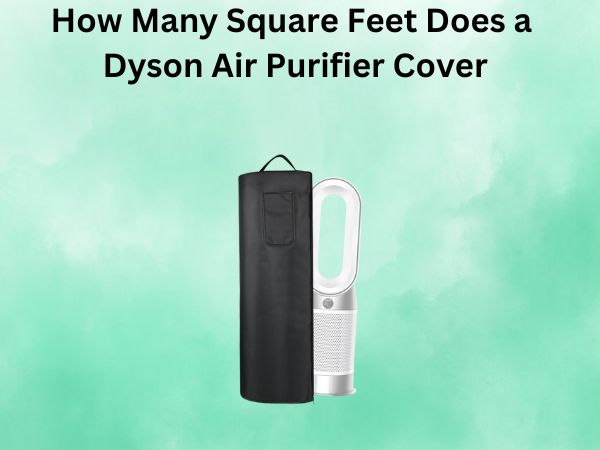
The Dyson Pure Cool comes in both tower and desk versions, which explains why their coverage areas differ. The tower model can handle up to 800 square feet, making it ideal for spacious bedrooms or medium-sized living areas. The desk version, on the other hand, is designed for smaller spaces and covers approximately 250 to 300 square feet.
This distinction is crucial because you wouldn’t want to rely on the desk model to purify your entire master bedroom if it’s 400 square feet. You’d end up with partial purification rather than comprehensive air cleaning, which defeats the purpose of owning an air purifier in the first place.
The Dyson Pure Cool Me: Personal Air Purification
This model represents Dyson’s foray into personal air purification technology. It’s designed to create a focused stream of purified air directed at an individual rather than attempting to purify an entire room. The coverage isn’t measured in traditional square footage because it works differently from conventional purifiers.
Instead of cleaning the air in a defined area, the Pure Cool Me delivers purified air to you wherever you’re sitting. It’s perfect for desks, nightstands, or anywhere you want a personal air quality bubble. Think of it as the difference between a central air conditioning system and a personal fan on your desk.
How Room Size Actually Affects Air Purifier Effectiveness
Here’s where things get interesting. The square footage listed for an air purifier assumes a standard eight-foot ceiling height. But what if your room has cathedral ceilings that reach sixteen feet? Or what if you live in one of those modern apartments with nine-foot ceilings? The volume of air that needs to be purified changes dramatically.
Calculating Real Coverage for Your Space
To get a true sense of whether a Dyson will work for your room, you need to think in terms of cubic feet rather than just square feet. If your bedroom measures 400 square feet with standard eight-foot ceilings, that’s 3,200 cubic feet of air. With nine-foot ceilings, it jumps to 3,600 cubic feet. That extra 400 cubic feet might seem small, but it impacts the efficiency of your air purifier.
Most air purifier manufacturers recommend selecting a model that can handle at least four to five air changes per hour for optimal effectiveness. If you want to be conservative and ensure excellent air quality, you might want a purifier that can handle even more changes per hour, especially if you suffer from allergies or asthma.
Layout and Obstruction Considerations
Here’s something that often gets overlooked: the layout of your room matters tremendously. Imagine placing a Dyson air purifier in a corner of a large living room where it’s blocked by a couch and several pieces of furniture. The air nearest to the device will get purified efficiently, but air on the far side of the room might not circulate to the purifier as quickly.
The best placement for any Dyson air purifier is in a central, unobstructed location where air can flow freely around the device. If you must place it against a wall, ensure there’s adequate space on at least two sides for air to be drawn in and expelled.
Comparing Dyson Coverage to Industry Standards
How do Dyson’s coverage ratings stack up against other premium air purifier brands? Generally speaking, Dyson’s coverage specifications are comparable to what you’d find from other high-end manufacturers like Coway or IQAir. However, Dyson tends to prioritize design and additional features alongside pure filtration power.
Why Premium Brands Sometimes Rate Coverage Differently
Some manufacturers are more conservative with their square footage claims, while others are more aggressive. Dyson tends to fall somewhere in the middle. They provide realistic coverage figures based on standard testing conditions, but they don’t always account for the variables you’ll encounter in your actual home.
This is why reading reviews from actual users is invaluable. When someone with a 600 square foot apartment says a particular Dyson model works great for their space, that’s more reliable than purely trusting the manufacturer’s specifications. Real-world experience reveals how these devices perform when air is stagnant, when windows are open, or when someone’s cooking with the stove.
Factors That Reduce Effective Coverage
Several variables can reduce the effective coverage area of your Dyson air purifier. Understanding these factors helps you choose the right model and use it optimally.
Airflow Obstruction and Room Configuration
As I mentioned earlier, furniture placement matters. Sofas, beds, bookcases, and entertainment centers can block airflow patterns. If you have a cluttered room with items pushed against walls, your air purifier won’t achieve its rated square footage effectively. You might need to go up a size category to compensate for your room’s layout.
Door and Window Openings
Every time someone opens a window or door, fresh air comes in—which is good for ventilation but bad for your purifier’s efficiency. The device has to work harder to maintain air quality when you’re introducing outside pollutants. If you live in an urban area with significant outdoor pollution or suffer from pollen allergies during certain seasons, you might need a more powerful Dyson model than the square footage alone suggests.
Filter Condition and Maintenance
A clogged filter is like trying to breathe through a coffee filter. As your Dyson’s filter accumulates particles, dust, and pollutants, the airflow decreases and the device can’t process air as efficiently. Regular maintenance is crucial. Dyson recommends checking filters monthly and replacing them according to their guidelines, typically every six to twelve months depending on usage and air quality.
Humidity Levels and Air Density
Here’s something many people don’t consider: humidity and air density affect how air purifiers work. In extremely humid conditions, air is heavier and doesn’t circulate as easily. At high altitudes where air is thinner, the same amount of work moves more cubic feet of air. These variables are subtle but real.
Choosing the Right Dyson Model for Your Space
Now that we’ve covered all the variables, how do you actually choose which Dyson is right for you? The process involves a bit more consideration than simply matching your square footage to the manufacturer’s rating.
Measuring Your Space Accurately
First, measure your room carefully. If you’re purifying a single room, measure length times width. If you’re trying to purify an open-concept space, divide it into sections and add them together. Don’t round down—it’s better to overestimate.
Next, consider your ceiling height. If you have standard eight-foot ceilings, you’re golden. If you have higher ceilings, acknowledge that you might need a slightly more powerful model than the base square footage suggests.
Considering Your Air Quality Needs
Are you purchasing the air purifier because you have allergies, asthma, or pet dander issues? If so, you want a model that can handle more than four air changes per hour. You might want to choose a Dyson rated for 900 square feet even if your room is 700 square feet, just to ensure you get superior air quality.
Similarly, if you live in an area with high outdoor pollution or during wildfire season, having extra purification capacity provides a safety margin. It’s like choosing a car—you might want more horsepower than you strictly need just to ensure reliable performance under demanding conditions.
Evaluating Budget and Feature Set
Dyson air purifiers aren’t inexpensive, so you want to make sure you’re getting the right features for your situation. Do you need the heating and cooling functions of the Pure Hot Plus Cool, or is the Pure Cool sufficient? Do you want Wi-Fi connectivity and smartphone app control, or is that unnecessary for you?
Sometimes the most expensive model isn’t the best choice for your specific needs. The Pure Cool might cover everything you need at a lower price point than its larger siblings.
Real-World Performance Expectations
Let’s talk about what to actually expect when you bring home a Dyson air purifier. The manufacturer’s coverage area represents optimal conditions, but your experience might differ slightly.
Air Quality Improvements You’ll Notice
Within the first few days of use, many people notice reduced dust accumulation on surfaces. You might find that you’re dusting less frequently, which is one of the most obvious signs that the air purifier is working. If you have allergies, you might notice fewer symptoms, especially at night when your bedroom doors are closed and the Dyson can thoroughly process that air.
Pet owners often report reduced pet dander in the air and a fresher-smelling home overall. The activated carbon filter in most Dyson models handles odors beautifully, making a significant difference in spaces where cooking smells, smoke, or other odors are issues.
Noise Levels at Different Settings
Dyson air purifiers are relatively quiet compared to some competitors, but they’re not silent. At the lowest setting, you might barely notice them. At maximum settings for full-room coverage, they produce more noticeable sound. Most users find this acceptable, especially since they can run the device at lower settings during the day and ramp it up at night.
Understanding ACH Ratings and What They Mean
Let’s circle back to air changes per hour because this is truly the foundation of understanding air purifier coverage. ACH is measured in terms of how many times per hour the device can completely process all the air in a given space.
Recommended ACH Levels for Different Purposes
- General residential use: 3-4 ACH is acceptable for maintaining basic air quality
- Allergy and asthma relief: 5+ ACH is recommended for noticeable improvement in symptoms
- Smoke or heavy pollution removal: 6-8 ACH may be necessary for rapid air quality improvement
- Medical-grade purification: 10+ ACH is found in hospital-grade filtration systems
When you see a Dyson rated for 800 square feet, that’s typically calculated at a standard 4-5 ACH rate. If you want higher ACH for your space, you’d want to select a larger model or run it at a higher fan speed, which uses more energy.
Maintenance and Long-Term Coverage Effectiveness
One aspect that doesn’t get discussed enough is how maintenance affects the coverage area over time. A brand-new Dyson with a pristine filter will perform at its rated capacity. But as months pass and the filter accumulates particles, the effective coverage area decreases.
Filter Replacement Schedule and Its Impact
Dyson provides filter life estimates, but these are highly dependent on your air quality and usage. If you live in a dusty area or have pets, you might need to replace filters more frequently than the standard recommendation. Some users with poor air quality replace filters every four to six months instead of the suggested twelve months.
The investment in regular filter replacement is an investment in maintaining your purifier’s rated coverage. Ignoring this maintenance is like ignoring oil changes in your car—eventually, performance suffers significantly.
Comparing Dyson Models: Coverage at a Glance
Let me give you a quick reference guide for the main Dyson air purifier models currently available:
- Pure Cool Tower: Approximately 800 square feet
- Pure Cool Desk: Approximately 250-300 square feet
- Pure Hot Plus Cool: Approximately 900 square feet
- Pure Cool Me: Personal purification (not room-based coverage)
These figures assume standard eight-foot ceilings and unobstructed placement. Your actual coverage might be somewhat less if conditions aren’t ideal.
Making Your Final Decision
When you’re ready to purchase a Dyson air purifier, here’s my recommendation for the decision-making process. First, measure your space accurately and honestly. Second, consider your air quality needs and whether you want above-average purification for health reasons. Third, account for your room layout and potential obstructions. Finally, factor in your budget and desired features.
If you’re between two models, I’d recommend going with the larger option. Air purifiers run continuously, and the minimal extra energy cost is worth the insurance of superior air quality. You’ll enjoy better performance and longer filter life since the device won’t have to work as hard to achieve the same air quality standards.
Conclusion
So, how many square feet does a Dyson air purifier cover? The answer depends on which model you’re considering, but generally,