How Long Does It Take for Dyson to Purify Air? A Complete Guide
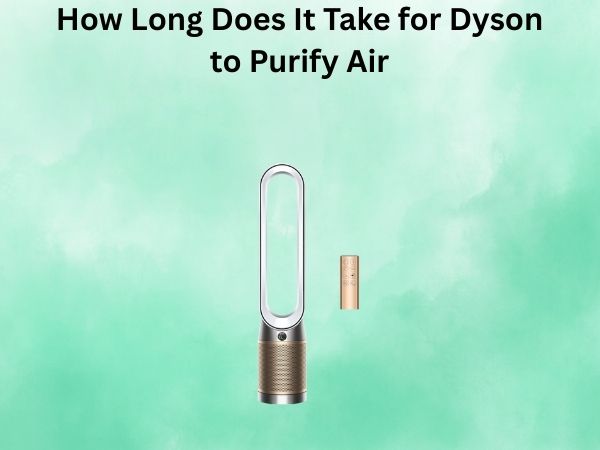
When the topic of air purification comes up, many people immediately picture large, cumbersome machines more suited for a clinical setting. However, Dyson has brilliantly redefined the very essence of what an air purifier should be. These aren’t just static devices quietly cleaning the air; they are dynamic appliances actively enhancing your indoor environment, seamlessly combining purification with powerful fan functionality.
Here’s the thing: most people don’t realize that air purification isn’t a simple on-and-off process. It’s not like turning on a light switch and suddenly all the pollutants vanish. Instead, it’s a continuous cycle that depends on multiple variables working together.
So, How Long Does It Actually Take?
The straightforward answer? It typically takes a Dyson air purifier between 20 to 60 minutes to purify a room, depending on several critical factors. But before you think that’s the complete story, let me break down what influences this timeline.
The Role of Air Changes Per Hour (ACH)
Think of air purification like changing the water in a fish tank. You can’t purify all the water instantly—you have to cycle it through a filter over time. The same principle applies to air purification, and this is measured using a metric called Air Changes Per Hour, or ACH.
Most Dyson air purifiers are designed to achieve an ACH of 4 to 5, which means the entire volume of air in your room gets filtered and recirculated four to five times per hour. Sounds impressive, right? But what does this mean in practical terms?
- An ACH of 4 means 25 minutes per complete air change
- An ACH of 5 means 12 minutes per complete air change
- Higher ACH rates mean faster purification
- Room layout and furniture placement affect actual ACH performance
Room Size: The Primary Factor
Let’s talk about room dimensions because this is where the timing gets really interesting. Dyson air purifiers come in different models designed for various room sizes. A compact bedroom isn’t the same as an open-concept living area, and that’s exactly why one-size-fits-all answers just don’t work here.
For a small bedroom (around 100 square feet), you’re looking at roughly 15-20 minutes for significant purification. But jump up to a medium living room (250-300 square feet), and you’re probably waiting 30-40 minutes. Large open spaces? That could extend to an hour or more.
What Makes Air Purification Time Variable?
Air Quality Starting Point
Here’s something people often overlook: the initial air quality in your room dramatically affects how you perceive purification speed. If your room already has moderate pollution levels from cooking or pet dander, you might notice improvements almost immediately. But if you’re dealing with severely compromised air quality, the process takes longer because there’s simply more to filter out.
Dyson’s sensors can detect particulate matter in real-time, and the device adjusts its fan speed accordingly. So when you first turn on your purifier in a dusty room, it kicks into overdrive, working harder than it would in a relatively clean space.
Filter Condition and Maintenance
Imagine trying to drink water through a straw that’s partially clogged—it’s slower, right? The same happens with air purifiers. A new, clean filter can purify air much faster than one that’s been in use for six months. Over time, as filters accumulate dust and particles, they become less efficient, which means longer purification times.
Dyson recommends replacing filters annually, but the actual timeline depends on your environment. If you live in an area with high pollution or have pets, you might need to change filters more frequently.
Fan Speed Settings
Dyson air purifiers typically offer multiple fan speed settings. Running on the highest setting will purify your air much faster than the quiet, low-speed mode. However, there’s a trade-off: higher speeds mean more noise and more energy consumption. It’s like choosing between a quick shower and a leisurely one—both clean you up, but one’s faster.
Room Layout and Air Circulation
The arrangement of your furniture matters more than you’d think. Open spaces allow air to circulate freely, while rooms cluttered with furniture, curtains, and decorations create dead zones where air doesn’t flow as efficiently. If your Dyson is tucked away in a corner with a couch blocking its airflow, purification will take longer than if it’s in an open position.
Real-World Timelines for Different Dyson Models
Dyson Pure Hot+Cool (HP Series)
These multifunctional devices are designed for rooms up to 600 square feet. In an average-sized living room of about 300 square feet with moderate air pollution, you can expect noticeable air quality improvement within 30-45 minutes. The HEPA filter and activated carbon work together to tackle both particulates and gaseous pollutants.
Dyson Pure Cool (TP Series)
The Pure Cool line is excellent for summer months when you want a fan without the heating capability. These models perform similarly to the HP series in terms of purification speed, achieving air cleaning in 25-50 minutes depending on room size and pollution levels.
Dyson Pure Humidify+Cool
When you add humidity control to the equation, the purification speed remains consistent, though the device is working harder overall. These models maintain the same ACH rating while simultaneously adjusting moisture levels.
Maximizing Your Dyson’s Purification Speed
Optimal Placement Strategy
Where you position your Dyson significantly impacts how quickly it purifies. Place it in a central location, away from walls and obstacles. Think of it as creating a clear pathway for air to flow. If you can position it at least 12 inches away from walls, you’ll see faster purification times.
Regular Filter Maintenance
Here’s your action plan for maintaining maximum purification efficiency:
- Check your filter every month for visible dust accumulation
- Gently tap the filter to release trapped particles (don’t wash it)
- Replace filters annually or sooner if needed
- Use the app notification system to track filter life
- Keep your device away from excessive dust sources like printers or fireplaces
Utilizing Smart Features
Modern Dyson purifiers come with app connectivity and intelligent sensors. These features aren’t just fancy—they’re functional. The auto mode adjusts fan speed based on real-time air quality, which can actually optimize purification time by running at maximum speed only when necessary.
Closing Doors to Contain Purification
If you want faster visible results, purify one room at a time rather than trying to clean an entire open floor plan. Closing bedroom doors or keeping your purifier in a specific room concentrates the purification effort, dramatically reducing the time needed for noticeable improvement.
Understanding CADR Ratings
You’ll often see something called CADR (Clean Air Delivery Rate) when comparing air purifiers. This number represents how many cubic feet of air can be cleaned per minute. A higher CADR means faster purification. Dyson models typically have strong CADR ratings, particularly for particulate matter like dust and pollen.
If a Dyson has a CADR of 400 for particles, and your room has 2,000 cubic feet of volume, you can do some quick math to understand purification speed better. This metric helps explain why some models work faster than others.
Common Misconceptions About Air Purification Speed
Myth: Larger Purifiers Always Work Faster
Size doesn’t necessarily equal speed. A larger device might look more powerful, but what matters is the motor efficiency and filter technology. Dyson’s engineering often means their compact models perform as well as or better than bulkier competitors.
Myth: Purification Happens Instantly
Air purification is a process, not magic. Even the best purifiers need time to cycle air through filters. If someone promises instant results, they’re not being honest about how air quality actually works.
Myth: Once Air is Clean, You Can Turn Off Your Purifier
This is dangerously misleading. New pollutants enter your space constantly—from cooking, breathing, walking around with outdoor clothes, and general activity. Your purifier needs to run continuously or at least regularly to maintain clean air.
Seasonal Variations in Purification Time
Did you know that seasonal changes affect how long purification takes? During spring and summer, pollen counts skyrocket, which means your purifier has to work harder. Winter tends to have less outdoor pollution entering homes, so purification might seem faster.
Similarly, if you heat or cool your home, the HVAC system can work in conjunction with your Dyson to improve overall air circulation and purification efficiency. Understanding these seasonal patterns helps you set realistic expectations.
The Science Behind Dyson’s Filtration Technology
HEPA Filters Explained
Dyson uses true HEPA filters that capture 99.97% of particles as small as 0.3 microns. This includes common allergens like dust mites, pet dander, and pollen. The “H” in HEPA stands for “High Efficiency,” and it’s a standard recognized worldwide.
Activated Carbon Filters
Beyond particulates, Dyson purifiers include activated carbon layers that trap gases, odors, and volatile organic compounds. This dual-layer approach means purification addresses multiple pollutant types simultaneously, which is why Dyson is particularly effective.
How to Monitor Purification Progress
Most modern Dyson models include LCD displays and app connectivity that show real-time air quality metrics. You can see particulate levels measured in micrograms, watch the air quality index change, and even receive notifications about filter status. This visibility helps you understand exactly how long purification is taking and when improvement occurs.
The app typically shows Air Quality Index (AQI) readings, particulate matter (PM) levels, and volatile organic compound (VOC) measurements. Watching these numbers decrease in real-time can actually be quite satisfying!
Comparing Purification Speed Across Different Room Conditions
Normal Home Environment
In a typical home with average pollution levels (cooking occasionally, some dust), a Dyson purifier can achieve 80% purification in about 30 minutes for a 250-square-foot room.
High-Pollution Scenario
If you’ve just cooked something pungent, burned toast, or have a guest who brought in outdoor air pollution, initial purification might take 45-60 minutes because the particulate load is higher.
Very Clean Starting Point
If your air is already relatively clean, maintenance purification might only take 15-20 minutes to maintain those quality levels.
Energy Efficiency and Continuous Operation
Running your purifier continuously might sound energy-intensive, but Dyson’s designs are surprisingly efficient. Many models use less electricity than a standard incandescent light bulb, especially when running on lower fan speeds. This makes continuous operation practical for most households.
If you’re concerned about electricity costs, using the auto mode is smart. The device ramps up when needed and dials back during cleaner periods, balancing purification effectiveness with energy conservation.
Installation and Initial Setup Impact
How you set up your Dyson initially affects its performance. Make sure you’re removing all protective films from the filter, positioning the device correctly, and reading any specific guidance for your model. Poor setup can reduce efficiency by 20-30%, which means longer purification times than necessary.
Long-Term Benefits Beyond Speed
While we’ve focused on how long purification takes, it’s worth noting that consistent use provides benefits beyond quick air cleaning. Over weeks and months, continuous or regular purification reduces overall indoor pollution levels, which means your allergen exposure decreases and air quality naturally improves.
Troubleshooting Slow Purification
If your Dyson seems to be taking longer than expected to purify air, here are some diagnostic steps:
- Check your filter for excessive dust and replace if necessary
- Verify the device is in an optimal position with good airflow
- Ensure doors and windows are closed during purification
- Check the app to see what fan speed is being used
- Look for unusual sounds or error messages indicating mechanical issues
- Confirm your room dimensions match your device’s recommended capacity
Conclusion
So, how long does it take for Dyson to purify air? The honest answer is: it depends. But based on everything we’ve discussed, expect roughly 20 to 60 minutes for effective purification of most home environments. Small rooms can see results in under 20 minutes, while larger spaces might need an hour.
The key is understanding that purification speed depends on room size, initial air quality, filter condition, fan speed settings, and room layout. By optimizing these factors—maintaining your filter, placing your device strategically, and using the smart features available—you can maximize your Dyson’s efficiency.
Remember that air purification is an ongoing process, not a one-time event. The best approach is consistent operation, especially in bedrooms before sleep and in living areas during waking hours. Your Dyson air purifier isn’t just about speed; it’s about sustained improvement in your indoor air quality, which contributes to better health, cleaner living spaces, and peace of mind knowing you’re breathing cleaner air.
Frequently Asked Questions
Can I run my Dyson air purifier 24/7, or will it damage the device?
Dyson air purifiers are engineered for continuous operation. Running yours 24/7 won’t damage it, though you’ll want to replace filters more frequently if you do. Most people find that running it regularly during the day and all night in bedrooms provides excellent results without excessive filter wear. The device includes thermal protection and is built for sustained use.
Why does my Dyson seem slower some days than others?
Several factors cause day-to-day variations in perceived purification speed. Air pollution levels fluctuate based on outdoor conditions, cooking activity,