How Much Electricity Does a Small Air Purifier Use? A Complete Guide to Energy Consumption
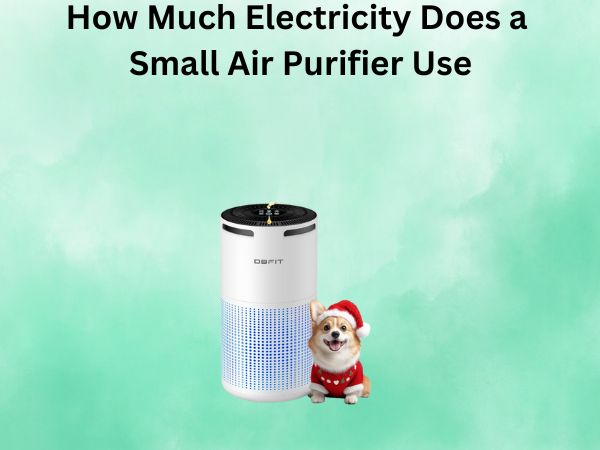
Curious about the impact your air purifier has on your monthly electricity bill? You’re not the only one. While many of us invest in air purifiers for better indoor air quality, the energy cost of continuous operation is often overlooked. This complete guide will explore air purifier energy consumption in detail, providing clarity on what you’re paying and if the investment truly makes sense.
Let me be honest—when I first bought my small air purifier, I had no idea how much electricity it was consuming. I simply plugged it in and forgot about it. It wasn’t until I noticed my electricity bill spike that I decided to investigate. And let me tell you, what I discovered was quite revealing. Most people operate their air purifiers without understanding the energy dynamics at play, and that’s exactly what we’re going to change today.
Understanding Air Purifier Power Consumption Basics
Before we get into the specifics of small air purifiers, we need to understand how power consumption works in these devices. Think of your air purifier like a fan in your home—the harder it works, the more electricity it consumes. Air purifiers operate on different fan speeds, and each speed level draws a different amount of power from your electrical outlet.
A small air purifier typically ranges from 30 watts to 200 watts, depending on the model and fan speed settings. This might sound confusing right now, but by the end of this article, you’ll understand exactly how to calculate your own device’s consumption and what it means for your wallet.
What Factors Affect Power Consumption?
Several elements influence how much electricity your small air purifier will use. Understanding these factors is crucial because they determine whether you’re looking at minimal energy costs or something more significant. Let me break down the main culprits:
- Fan speed settings—lower speeds consume less power, while maximum speed settings draw significantly more
- Filter type and condition—clogged filters force the motor to work harder, increasing consumption
- Purifier size and design—compact models generally use less energy than larger units
- Additional features—air quality sensors, ionizers, and UV lights add to the overall power draw
- Runtime—how many hours per day you operate the device dramatically affects monthly consumption
Typical Wattage for Small Air Purifiers
Now let’s talk numbers. Most small air purifiers fall into a specific power consumption range, and knowing this range helps you evaluate any model you’re considering. When manufacturers design compact air purifiers for bedrooms or small offices, they typically keep the wattage relatively low to maintain consumer appeal.
On the lowest fan speed, a small air purifier might draw anywhere from 20 to 40 watts. Think of this like using the lowest setting on your bathroom exhaust fan—it’s barely noticeable, but it’s still doing work. When you bump up to medium speed, you’re looking at roughly 50 to 100 watts. And when you kick it into high gear on maximum speed, some small units can pull 150 to 200 watts or even higher.
Entry-Level Small Purifiers
Budget-friendly air purifiers, typically priced under fifty dollars, usually consume between 25 and 60 watts on their lowest and highest settings respectively. These devices are perfect if you’re looking for a trial run with air purification without breaking the bank on electricity costs.
Mid-Range Small Purifiers
Mid-range options that cost between fifty and two hundred dollars generally use 40 to 120 watts depending on the fan speed. These models often include better filtration systems and more refined motor designs that are somewhat more efficient than their cheaper counterparts.
Premium Small Purifiers
Premium compact air purifiers can use anywhere from 50 to 200 watts, but here’s the interesting part—the higher cost doesn’t always mean higher consumption. Many premium models actually incorporate energy-efficient technology that keeps power draw reasonable despite advanced features.
Calculating Your Monthly Electricity Cost
Here’s where things get practical. You probably want to know how much this is actually going to cost you. Let me walk you through the calculation, and you can apply it to your specific situation.
The formula is straightforward: (Watts × Hours Used Per Day × 30 Days) ÷ 1000 = Monthly Kilowatt-Hours (kWh). Then multiply your kWh by your local electricity rate, which you can find on your utility bill.
Let’s say you have a small air purifier that uses 60 watts on average, and you run it eight hours per day. That’s (60 × 8 × 30) ÷ 1000 = 14.4 kWh per month. If your electricity costs twelve cents per kilowatt-hour, you’re looking at about $1.73 per month, or roughly $20.74 per year.
Low-Usage Scenario
If you run a 40-watt purifier on low speed for just four hours daily, you’re consuming only 4.8 kWh monthly. At standard electricity rates, this costs approximately fifty cents per month or six dollars annually. This is the kind of scenario where someone truly concerned about energy consumption might operate their device.
Medium-Usage Scenario
Running a 100-watt purifier on medium speed for ten hours daily burns 30 kWh monthly. Depending on your location and electricity rates, this translates to three to four dollars monthly or thirty-six to forty-eight dollars yearly. This is more typical of someone who wants clean air but isn’t obsessive about running their device constantly.
High-Usage Scenario
If you’re running a 150-watt purifier on maximum speed for twenty-four hours daily, you’re looking at 108 kWh monthly. That’s roughly ten to fifteen dollars monthly or one hundred twenty to one hundred eighty dollars annually. This scenario represents someone who either lives in a very polluted area or wants to ensure absolutely pristine air quality at all times.
Comparing Small Air Purifiers to Other Household Appliances
To put air purifier consumption into perspective, let’s compare it to other devices you probably have running in your home. This comparison really helps you understand whether you should be concerned about the energy cost.
A typical ceiling fan uses about 15 to 90 watts depending on speed. A refrigerator runs continuously and uses about 600 to 800 watts average. A window air conditioning unit pulls 750 to 3500 watts. When you look at these numbers, a small air purifier consuming 50 to 150 watts seems quite modest, doesn’t it?
In fact, your air purifier likely uses less energy than your television, which typically draws 50 to 150 watts while in use. This means your air purifier is among the more energy-efficient appliances you probably own, especially if you’re concerned about improving your indoor environment.
Energy-Efficient Features to Look For
Not all small air purifiers are created equal when it comes to energy efficiency. If you’re concerned about minimizing electricity consumption, there are specific features you should prioritize when shopping for a device.
- Smart sensors that adjust fan speed based on air quality readings, reducing unnecessary running at high speeds
- Eco mode or quiet mode that operates at optimal efficiency during low-pollution periods
- Timer functions that let you schedule operation for specific hours rather than running continuously
- Energy Star certification, which ensures the device meets strict efficiency standards
- Brushless motor technology that’s inherently more efficient than traditional brush motors
- Sleep mode that reduces fan speed to minimal levels during nighttime hours
Smart Technology and Energy Savings
Modern air purifiers increasingly incorporate smart technology that can dramatically reduce your electricity costs. Imagine having a device that only ramps up to high speed when the air actually gets dirty, rather than running constantly at full blast. That’s exactly what air quality sensors do.
A purifier with real-time air quality monitoring might use only 30 watts most of the time, automatically increasing to 100 watts only when pollution levels spike. Over a month, this could save you several dollars compared to a device that runs at constant maximum speed.
Does Running Your Air Purifier 24/7 Make Sense?
Here’s a question I get asked frequently: should you run your air purifier all day and night? The answer depends on several factors, and it’s not a simple yes or no.
Running your purifier continuously certainly ensures the cleanest possible air at all times. However, you’re paying for that benefit in electricity costs. The real question is whether the health benefit justifies the expense and energy consumption.
If you have respiratory issues, severe allergies, or live in a heavily polluted area, continuous operation might be worth it. If you’re simply trying to maintain generally good air quality in a reasonably clean environment, running your purifier for eight to twelve hours daily is probably sufficient and much more economical.
Optimal Operating Schedules
Consider running your air purifier during times when you’re actually using the space. If it’s a bedroom purifier, run it for one to two hours before bed and during the night. If it’s a living room purifier, operate it during daytime hours when you’re home and the space is being used. This balanced approach keeps your air reasonably clean while minimizing energy waste.
The True Cost of Air Purification
When evaluating whether an air purifier is worth the investment, you need to consider the complete financial picture, not just the purchase price.
A small air purifier might cost you anywhere from thirty to three hundred dollars upfront. Then you need to factor in filter replacement costs, which typically range from twenty to one hundred dollars depending on the model, and replacement frequency varies from three to twelve months. On top of that, there’s the electricity cost we’ve calculated throughout this article.
Let’s do a real-world calculation. Say you buy a one hundred dollar air purifier that uses an average of 75 watts. You run it ten hours daily at a cost of twelve cents per kilowatt-hour. You replace the filter every six months at forty dollars per replacement. Over one year, you’re spending one hundred dollars (purchase) plus eighty dollars (two filters) plus about twenty-seven dollars (electricity) equals roughly two hundred seven dollars total.
For many people concerned about indoor air quality, this is absolutely worth the investment. For others operating on a tight budget, it might feel excessive.
Tips to Reduce Your Air Purifier’s Energy Consumption
If you’ve already purchased an air purifier and want to minimize its electricity impact, there are practical strategies you can implement right now.
- Use lower fan speeds whenever possible—reserve maximum speed for times when air quality is genuinely poor
- Keep filters clean and replace them on schedule to prevent the motor from working harder
- Use timer functions to prevent unnecessary running during times when nobody’s home
- Position your purifier strategically for optimal air circulation, reducing the need for high speeds
- Combine your air purifier with other air-quality measures like opening windows when weather permits
- Use sleep mode or eco mode features that most modern purifiers include
- Maintain your home to prevent excessive dust, pollen, and pollutants that increase the purifier’s workload
Maintenance That Saves Energy
One often-overlooked aspect of energy efficiency is proper maintenance. A clogged pre-filter forces your air purifier’s motor to work significantly harder, increasing power consumption by twenty to thirty percent in some cases. By cleaning your pre-filter every two weeks and replacing the main filter on schedule, you’re not just ensuring better air quality—you’re also reducing your energy costs.
Comparing Different Air Purifier Technologies
Not all air purification technologies consume electricity at the same rate. Understanding these differences helps you make an informed choice.
HEPA Filter Purifiers
Traditional HEPA filter purifiers require an electric motor to push air through the filter medium. These typically use 40 to 150 watts depending on size and speed settings. They’re reliable, proven, and their energy consumption is relatively predictable.
Ionic Air Purifiers
Ionic purifiers emit charged particles that collect pollutants without using much motor force. They often use only 10 to 30 watts because they don’t require powerful fans. However, effectiveness varies, and many people question whether they’re as reliable as HEPA alternatives.
UV and Combination Systems
Air purifiers that combine HEPA filters with UV light or ionization technology add extra power requirements. These might consume 80 to 250 watts depending on how many technologies they include. The additional features provide broader purification but at a cost to your electricity bill.
Making Your Decision: Is It Worth It?
After reviewing all this information about electricity consumption, you’re probably wondering whether buying or keeping an air purifier makes sense for your situation. Here’s my honest take based on my own experience and research.
If you suffer from allergies, asthma, or respiratory issues, the health benefits almost certainly outweigh the modest electricity costs. We’re talking about maybe twenty to fifty dollars annually to breathe cleaner air—that’s a bargain for better health.
If you live in an area with poor air quality due to pollution, wildfire smoke, or industrial activity, an air purifier is genuinely useful, and the electricity cost becomes negligible compared to the health benefits.
If you simply want to maintain generally good air quality in an already-clean environment, you might achieve similar results by opening windows periodically, vacuuming regularly, and being mindful of dust sources. The electricity cost might not justify the benefit in this scenario.
Conclusion
After we’ve explored the ins and outs of air purifier electricity consumption, the answer to “how much electricity does a small air purifier use” is clear: typically between 30 and 200 watts depending on the model and speed setting, resulting in monthly costs ranging from less than a dollar to fifteen dollars for most household usage patterns.
A small air purifier is generally one of the more energy-efficient appliances in your home, comparable to running a television or fan. The monthly electricity cost is unlikely to cause a noticeable impact on your utility bill unless you’re running multiple units constantly at maximum speed.
The real question isn’t whether the electricity is expensive—it’s not. The real question is whether the air quality improvement justifies the combined costs of the device, filters, and electricity. For people with health concerns or those living in polluted areas, the answer is almost certainly yes. For others, the decision depends on personal priorities and budget constraints.
Whatever you decide, you now have the knowledge to calculate your specific costs and make an informed choice that’s right for your situation. Don’t let uncertainty about electricity consumption prevent you from investing in your respiratory health if that’s something you value. The costs are modest, and the benefits can be substantial.
Frequently Asked Questions
What is the average wattage of a small bedroom air purifier?
Most small bedroom air purifiers use between 40 and 100 watts on average settings. On the lowest speed, they might use as little as 20 watts, while maximum speed could push toward 150 watts. The actual consumption depends on the specific model, filter type, and fan motor design. If you’re shopping for a bedroom purifier, aim for models with energy efficiency ratings and smart speed adjustment features to minimize consumption while maintaining air quality.
How much does it cost to run an air purifier for a year?
For a typical small air purifier using 75 watts on average, running ten hours daily at twelve cents per kilowatt-hour, the annual electricity cost is approximately twenty-