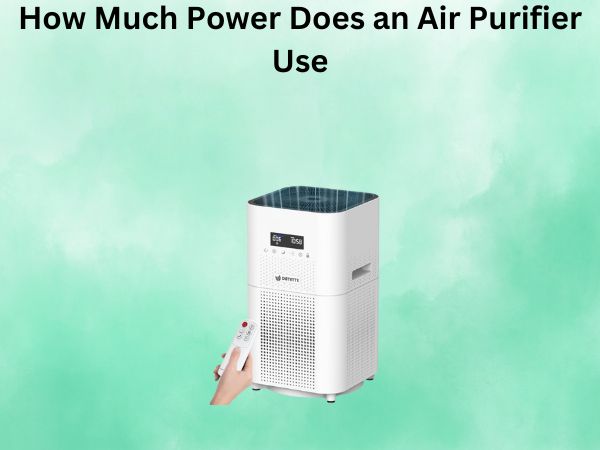
How Much Power Does an Air Purifier Use? A Comprehensive Energy Consumption Guide
Ever found yourself gazing at your air purifier, wondering about more than just its quiet hum? While it’s busy scrubbing allergens and pollutants from your home, a common question often surfaces: what’s the real cost to your electricity bill? This post aims to demystify that very topic. Grasping the actual energy consumption of an air purifier is essential, whether you’re contemplating a purchase or looking to make your current unit more energy-efficient.
Understanding Air Purifier Wattage and Power Consumption
Let me start with the basics. When we talk about power consumption, we’re really talking about watts. A watt is a unit of power that measures how much electricity a device uses at any given moment. Think of it like water flowing through a pipe—the wattage is how fast the water flows.
Air purifiers are electrical devices that need power to operate their fans and filtration systems. Just like your refrigerator runs continuously to keep food cold, your air purifier needs electricity to keep your indoor air clean. The amount of power it uses depends on several factors, which I’ll break down for you shortly.
What Does Wattage Really Mean?
When a manufacturer tells you their air purifier uses 50 watts, they’re saying that at that moment, it’s drawing 50 watts of electrical power from your wall outlet. However, most air purifiers don’t run at maximum power all the time. They adjust their fan speed based on the air quality in your room, which means their actual power consumption fluctuates throughout the day.
Typical Power Ratings Across Different Air Purifier Models
Here’s where things get interesting. Air purifiers aren’t created equal, and neither is their power consumption. The wattage varies dramatically depending on the model, size, and technology used.
Compact Personal Air Purifiers
If you’re looking at small personal air purifiers designed for a single room or office space, you’re typically looking at power consumption between 5 to 30 watts. These tiny devices are perfect for desks, bedrooms, or small apartments. They use less electricity because they have smaller motors and cover a limited area. It’s like comparing a desk lamp to a ceiling fan—the desk lamp uses much less power because it has a simpler job to do.
Mid-Range Air Purifiers
The middle ground of the market consists of air purifiers designed for medium-sized rooms, typically covering 300 to 500 square feet. These units generally consume between 30 to 60 watts. This is the sweet spot for most households because they offer a good balance between cleaning power and energy efficiency.
Large and Industrial-Grade Air Purifiers
If you need to purify the air in a large house, office building, or commercial space, you’ll be looking at air purifiers that consume 60 to 200 watts or even more. These heavy-duty machines have powerful motors and advanced filtration systems designed to handle large volumes of air. Some commercial-grade units can exceed 300 watts when operating at maximum speed.
Factors That Influence Energy Usage
Now here’s the thing—the rated wattage isn’t the whole story. Several factors will determine how much power your specific air purifier actually uses in real-world conditions.
Fan Speed Settings
This is probably the most significant factor affecting power consumption. Most air purifiers come with multiple speed settings: low, medium, and high. When you run your purifier on the lowest setting, it might use only 15 watts. Bump it up to medium, and you’re looking at 35 watts. Go full throttle on high speed, and it could jump to 70 watts or more. It’s not a linear relationship either—doubling the fan speed doesn’t just double the power consumption; it uses significantly more energy.
Filter Condition
Here’s something people often overlook. As your air purifier’s filter accumulates dust and particles, it becomes more restrictive. This forces the motor to work harder to push air through the clogged filter, which increases power consumption. It’s similar to breathing through a pillow versus breathing through a thin cloth—one requires much more effort. This is why regularly replacing or cleaning your filters isn’t just good for air quality; it’s also important for energy efficiency.
Room Size and Air Quality
The air quality in your room also matters. Some advanced air purifiers have sensors that detect pollution levels and automatically adjust fan speed accordingly. If your air is relatively clean, the purifier will run at lower speeds, consuming less power. But if you’ve just cooked something or have a lot of dust, the sensor will kick the fan speed up, using more electricity.
Motor Type and Efficiency
Not all motors are created equal. Newer air purifiers often feature brushless motors and more efficient designs that accomplish the same job while using less electricity. Older models might need to work harder to achieve similar results, consuming more power in the process.
Calculating Your Monthly and Annual Electricity Costs
Alright, let’s get to the practical question: how much is this going to cost you? The answer depends on your local electricity rates and how much you run your purifier.
The Basic Formula
To calculate your costs, you’ll need three pieces of information: the wattage of your purifier, how many hours per day you run it, and your local electricity rate (usually measured in cents per kilowatt-hour). Let me show you how this works.
Let’s say you have a 50-watt air purifier that you run for 8 hours per day. That’s 400 watt-hours, or 0.4 kilowatt-hours per day. If your electricity costs 12 cents per kilowatt-hour, that’s roughly 4.8 cents per day. Over a month of 30 days, you’re looking at about $1.44. Over a year, that’s roughly $17.52 just for running that air purifier.
Real-World Scenarios
Let me give you some concrete examples with different usage patterns:
- A 30-watt purifier running 24/7 costs approximately $26.28 per year (at 12 cents per kilowatt-hour)
- A 50-watt purifier running 12 hours daily costs approximately $26.28 per year
- A 100-watt purifier running 8 hours daily costs approximately $35.04 per year
- A 150-watt purifier running 24/7 costs approximately $131.40 per year
Speed Settings and Their Impact on Power Consumption
Let me dive deeper into how speed settings work because this is where you can actually save money.
Low Speed Settings
Running your air purifier on low speed is like putting your car in cruise control on a residential street instead of the highway. It gets the job done efficiently. Most air purifiers on low speed consume 30 to 40 percent of their maximum power rating. If your unit is rated at 100 watts on high, it might only use 30 to 40 watts on low. For a room with moderate air quality, this setting is often sufficient and will save you significant money over time.
Medium Speed Settings
The medium setting is where many people find their sweet spot. It uses roughly 60 to 70 percent of maximum power while still providing effective air cleaning. This is ideal for most daily use because it balances performance with energy consumption.
High Speed Settings
High speed is your heavy hitter. It uses 100 percent of the rated wattage and is best reserved for situations where you really need to clean your air quickly, like after cooking something particularly pungent or when air quality levels spike.
Smart Auto Mode
Many modern air purifiers come with an auto mode that automatically adjusts fan speed based on detected air pollution levels. This can actually be more energy-efficient than manually controlling the speed because the purifier never runs faster than necessary. It’s like having an automatic transmission in your car—it finds the most efficient gear automatically.
Energy-Efficient Air Purifier Options
If you’re concerned about energy consumption, you’re not alone. Fortunately, the market has responded with increasingly efficient options.
HEPA Filters and Efficiency
True HEPA filters are highly effective but they do create more resistance to airflow, which requires more motor power. However, they’re worth it because they’re so effective at capturing particles that your purifier doesn’t need to run at high speeds as often.
Activated Carbon Efficiency
Activated carbon filters are great for odor removal but don’t create as much resistance as HEPA filters. This means the motor doesn’t work as hard, resulting in lower power consumption. Some purifiers combine both technologies, which requires finding the right balance between effectiveness and energy use.
Looking for Energy Star Certification
When shopping for an air purifier, look for Energy Star certification. These units have been tested and proven to use significantly less electricity than comparable non-certified models while maintaining the same cleaning performance. It’s like the difference between a fuel-efficient car and a gas guzzler—both get you where you’re going, but one is much easier on your wallet.
Comparing Air Purifier Power Use to Other Appliances
Let’s put air purifier power consumption into perspective by comparing it to appliances you probably use every day.
- An incandescent light bulb uses approximately 60 watts
- A laptop computer uses between 30 to 100 watts
- A television uses 50 to 150 watts
- A microwave uses 600 to 1000 watts
- A washing machine uses 300 to 2000 watts during operation
- A refrigerator uses 600 to 800 watts but runs intermittently
- An air conditioner uses 3000 to 6000 watts
As you can see, air purifiers are actually quite modest in their power consumption compared to most household appliances. Running an air purifier 24/7 uses roughly the same amount of electricity as leaving a laptop charger plugged in all day.
Ways to Reduce Your Air Purifier’s Energy Consumption
Now that you understand how much power your air purifier uses, let me share some practical strategies to minimize that consumption.
Keep Your Filters Clean
I mentioned this earlier, but it bears repeating. A clean filter means your motor doesn’t have to work as hard. Check your filters regularly and clean or replace them according to the manufacturer’s recommendations. Most filters should be replaced every 6 to 12 months, depending on air quality in your area.
Choose the Right Room Size
Here’s a mistake people make all the time: they buy a massive air purifier for a small room, or vice versa. If you buy a purifier rated for 500 square feet but use it in a 200 square foot bedroom, it’s working much harder than necessary and consuming more power. Match the purifier’s capacity to your actual room size for optimal efficiency.
Optimize Fan Speed Usage
Unless you’re in an emergency air quality situation, there’s rarely a reason to run your purifier on high speed constantly. Stick with medium or low speed during normal daily use. Save high speed for when you really need it, like after cooking or when the air quality index is particularly high.
Maintain Proper Air Circulation
Position your air purifier in a central location where it can effectively circulate the cleaned air throughout your room. Placing it in a corner or against a wall forces it to work harder and use more power because it has to pull air from farther away.
Close Doors and Windows
This seems obvious, but it’s important. If you have doors and windows open while running your air purifier, you’re essentially fighting against outside air coming in. The purifier has to work much harder, using significantly more electricity. Keep your space sealed while the purifier is running for maximum efficiency.
The True Cost of Running an Air Purifier
Let me help you understand the real financial picture of running an air purifier. When people ask about the cost, they usually only think about electricity. But there are other expenses involved too.
Electricity Costs
As we’ve calculated, electricity costs are relatively modest. For most typical use scenarios, you’re looking at $15 to $50 per year in increased electricity costs.
Filter Replacement Costs
This is where the real ongoing expense lies. Replacement filters can cost anywhere from $30 to $100 each, depending on the type and quality. If you need to replace filters annually, you’re looking at $30 to $100 per year in filter costs. Over 5 years, that could total $150 to $500, which is actually much more significant than the electricity costs.
Maintenance and Repairs
Quality air purifiers can last 10 years or more with proper maintenance. You might need occasional cleaning or repairs, but if you buy a reputable brand with good warranty coverage, these costs should be minimal.
Total Cost of Ownership
When you factor everything together, running an air purifier is quite affordable. You’re looking at roughly $50 to $150 per year in total operating costs, including both electricity and filter replacement. For the air quality benefits you receive, most people consider this a worthwhile investment.
Smart Features That Help Monitor Power Usage
Modern air purifiers often come equipped with smart features that can help you monitor and manage power consumption.
Air Quality Sensors and Auto Mode
These sensors detect pollution levels and automatically adjust fan speed. This prevents unnecessary high-speed operation when low speed would suffice, keeping power consumption in check.
Timer Functions
Many air purifiers have built-in timers that allow you to schedule when the unit runs. If you only need it during certain hours, you can set it to turn on automatically and off at specific times. This prevents running it unnecessarily when you’re away or sleeping.
Smart Home Integration
Some newer air purifiers connect to