
How Often to Replace Your Air Conditioner Filter
You should aim to replace your air conditioner filter every 1 to 3 months. This simple task is essential for keeping your AC running efficiently and your home’s air clean. Ignoring it can lead to higher energy bills and potential damage to your system. Making filter replacement a habit is one of the easiest ways to care for your HVAC.
The exact timing can depend on a few factors. Things like pet dander, allergies, and how often you run your AC all play a role. A dirty filter makes your AC work harder, costing you more money. We found that homes with pets often need filters changed more frequently. It’s all about maintaining good indoor air quality.
- Change filters every 1-3 months.
- Pets and allergies may require more frequent changes.
- Dirty filters waste energy and money.
- Clean filters protect your HVAC system.
Let’s walk through exactly when and how often you should be swapping out that air filter to keep things running smoothly.
When to Swap Out Your Air Conditioner Filter
You’re probably wondering how often you actually need to change your AC filter. Most homes benefit from a replacement every 1 to 3 months. This timeframe is a good starting point for most people. It helps keep your system running efficiently. It also ensures you’re breathing cleaner air.
Think of your air filter like the lungs of your HVAC system. It’s constantly working to catch dust, pollen, and other tiny particles. Over time, it gets clogged. A clogged filter makes your AC work much harder to pull air through it. This is where problems start to arise.
Factors Influencing Your Filter Change Schedule
While 1 to 3 months is the general rule, your specific needs might be different. Several factors can speed up how quickly your filter gets dirty. We’ve found that considering these can save you money and hassle down the line.
Your Home Environment Matters
Do you have pets? If so, you might need to change your filter more often. Pet dander is a major culprit for clogging filters quickly. We’ve seen that homes with multiple pets often need filter changes as often as every 20-30 days.
What about allergies? If anyone in your household suffers from allergies or asthma, keeping that filter clean is even more important. A dirty filter can’t effectively capture allergens. This can worsen symptoms. Many experts recommend changing filters monthly during peak allergy seasons for these households (Cleveland Clinic).
Usage Habits and Seasonality
How often do you run your air conditioner? If you live in a hot climate and use your AC constantly during the summer, your filter will get dirty faster. Conversely, if you only use it occasionally, you might be able to stretch the time between changes.
Consider the season. During the summer months when your AC is working overtime, inspect your filter more frequently. You might find yourself needing to replace it sooner than you would in the cooler seasons. Many HVAC technicians suggest checking filters monthly regardless of the season, but especially during heavy usage periods.
The Type of Filter You Use
Not all air filters are created equal. The material and thickness of your filter play a big role in its lifespan. Thicker, higher-efficiency filters often last longer but might need a bit more airflow. These are often rated using MERV (Minimum Efficiency Reporting Value).
Simpler, thinner filters, often called fiberglass filters, capture less. They tend to clog faster and may need replacing every 30 days. High-efficiency pleated filters can last longer, sometimes up to 90 days or even more. Always check the manufacturer’s recommendation for your specific filter type.
| Filter Type | Typical Lifespan (No Pets/Allergies) | Lifespan (With Pets/Allergies) |
|---|---|---|
| Basic Fiberglass | ~30 days | ~15-20 days |
| Pleated Media (MERV 8-10) | ~60-90 days | ~45-60 days |
| High-Efficiency (MERV 11+) | ~90+ days | ~60-90 days |
Signs Your Air Conditioner Filter Needs Changing
Sometimes, your AC will give you a little nudge when the filter is ready for a change. Paying attention to these signs can prevent bigger problems. It’s like knowing when to replace your car’s oil; you don’t wait for the engine to start making funny noises.
Visible Dust Buildup
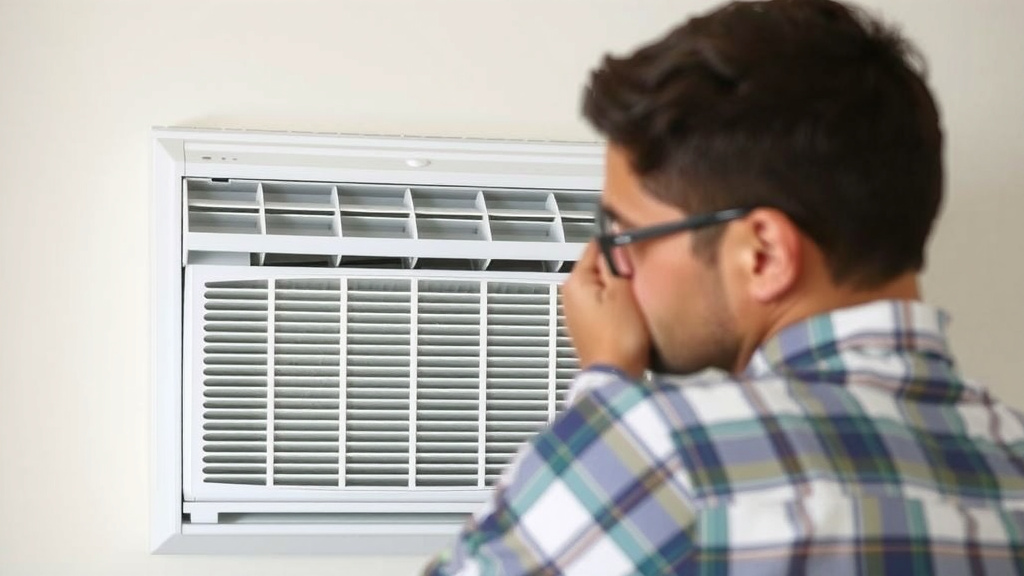
The most obvious sign is right there when you look at the filter. If you pull it out and it’s covered in a thick layer of dust, it’s definitely time for a new one. You might see it clinging to the surface, making the filter look grey or even black. Don’t delay if it looks this bad!
Reduced Airflow
Has the air coming out of your vents seemed weaker lately? This is a common symptom of a clogged filter. The AC has to push harder to get air through the obstruction. You might notice rooms aren’t cooling or heating as effectively as they used to.
Increased Energy Bills
When your AC has to work harder, it uses more energy. This translates directly into higher electricity bills. If you notice a surprising spike in your energy costs without a change in usage, a dirty filter could be the culprit. We found that a dirty filter can reduce efficiency by up to 15% (Energy.gov).
Strange Noises from Your AC
Yes, even strange noises can be linked to a clogged filter. When airflow is restricted, the system can strain and make unusual sounds. These might include whirring, rattling, or even a high-pitched squeal. Addressing the filter can sometimes resolve these issues.
Frequent System Breakdowns
A severely clogged filter can cause your AC unit to overheat or freeze up. This can lead to expensive repairs. Replacing your filter regularly is a simple preventative measure that guards against these breakdowns.
Your Filter Replacement Checklist
To help you stay on top of this important task, here’s a quick checklist:
- Schedule Reminders: Set calendar alerts for every 1-2 months.
- Inspect Regularly: Even if it’s not time, peek at the filter monthly.
- Note Your Habits: Adjust frequency for pets, allergies, or heavy AC use.
- Check Filter Type: Know your filter’s rated lifespan.
- Look for Clogs: If it looks visibly dirty, change it out sooner.
- Keep Spares Handy: Stock up on the correct filter size.
Conclusion
You’ve learned that replacing your air conditioner filter regularly is a simple yet powerful way to protect your home and your HVAC system. Remember, aiming for 1 to 3 months is a great starting point. Factors like pets, allergies, and how much you use your AC might mean you need to change it more often. By watching for signs like reduced airflow or higher energy bills, you can easily tell when it’s time for a fresh filter. Make this small task a habit to ensure cleaner air and a more efficient AC for years to come.
Your next step? Check your current filter right now and decide on a schedule that works for your home.
Frequently Asked Questions
How do I know what size air filter to buy?
Most air filters have the size printed directly on the cardboard frame. You can also measure the old filter or check your AC unit’s manual for the correct dimensions. Buying the wrong size can lead to gaps where dust can bypass the filter.
Can I just rinse and reuse my disposable air filter?
Disposable air filters are designed for single use. Rinsing them won’t effectively remove all the trapped particles, and it can damage the filter material. This makes it less effective at cleaning your air. Always replace disposable filters with new ones.
What is a MERV rating and does it matter for filter changes?
MERV stands for Minimum Efficiency Reporting Value. It’s a rating that tells you how well a filter captures particles. Higher MERV ratings mean better filtration but might require your AC to work a bit harder. While important for performance, it doesn’t change the physical need to replace a dirty filter.
My AC has a filter change indicator light. Should I trust it?
Those indicator lights are helpful reminders, but they aren’t always perfectly accurate. They usually track time elapsed, not actual dirt accumulation. It’s still a good idea to visually inspect your filter regularly, especially if you have pets or allergies.
Will changing my filter more often really save me money?
Yes, it can! A clean filter allows your AC to operate more efficiently, using less energy. This leads to lower electricity bills. Plus, preventing strain on your system can help avoid costly repairs down the road.

![7 Best Cheap Air Conditioner Portable [2026]](https://bathroomexplorer.com/wp-content/uploads/2026/06/7-best-cheap-air-conditioner-portable-2026-featured-768x432.jpg)

![7 Best Circuit Breaker For Air Conditioner [2026]](https://bathroomexplorer.com/wp-content/uploads/2026/06/7-best-circuit-breaker-for-air-conditioner-2026-featured-768x432.jpg)
![7 Best Office Air Conditioner [2026]](https://bathroomexplorer.com/wp-content/uploads/2026/06/7-best-office-air-conditioner-2026-featured-768x432.jpg)
