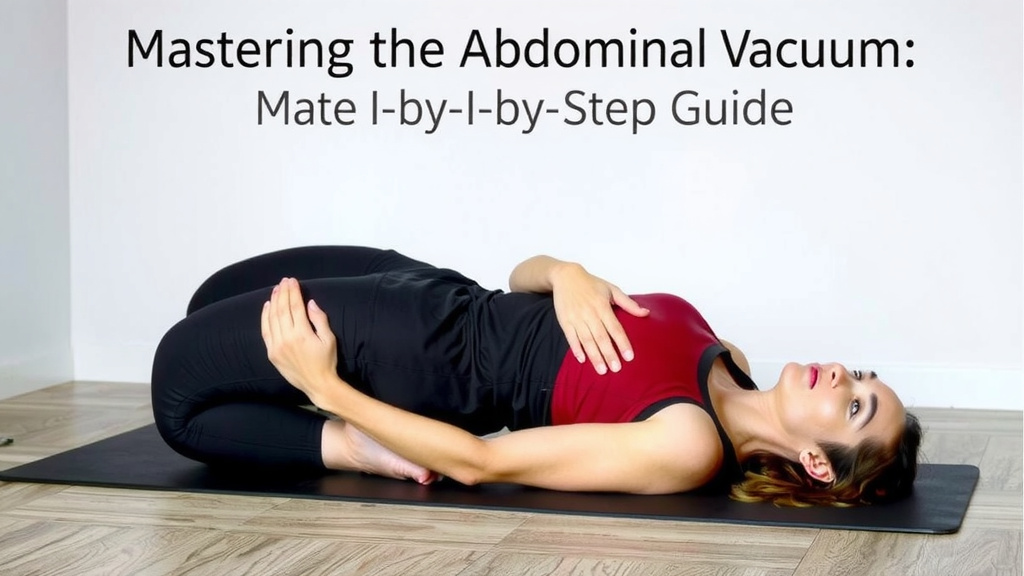
Master the Abdominal Vacuum: A Step-by-Step Guide
The abdominal vacuum, also known as stomach vacuuming, is a breathing exercise that can help strengthen your deep core muscles. You perform it by exhaling all the air from your lungs and then pulling your belly button towards your spine. Many fitness experts and studies confirm its effectiveness for improving posture and potentially reducing waist size when practiced consistently.
This technique targets the transverse abdominis, a deep muscle often overlooked in standard ab workouts. Engaging this muscle can offer amazing benefits for spinal stability and core control. It’s a simple yet powerful way to build a stronger, more supportive core from the inside out. Think of it as a hidden strength builder for your midsection.
- Exhale completely.
- Pull your belly button towards your spine.
- Hold the contraction.
- Breathe shallowly while holding.
Ready to give it a try? Let’s walk through exactly how to perform the abdominal vacuum safely and effectively, step by step.
Mastering the Abdominal Vacuum Technique
So, you’ve read about the amazing benefits of the abdominal vacuum, and now you’re ready to learn exactly how to do it. It’s simpler than you might think, and with a little practice, you’ll be pulling your belly button towards your spine like a pro. This exercise is a fantastic way to strengthen your deep core muscles, particularly the transverse abdominis.
Getting Started: The Best Positions
For beginners, the easiest way to learn the abdominal vacuum is by lying down. This position uses gravity to your advantage, making it easier to feel and control the muscles involved. Once you’re comfortable here, you can progress to standing or even kneeling.
Lying Down: Your Foundation
Find a comfortable spot on the floor. Lie on your back with your knees bent and your feet flat on the ground. This stable position helps you focus on the movement. It’s a great starting point because it reduces the effort needed to engage your core.
Standing Up: Taking It to the Next Level
When you’re ready to challenge yourself a bit more, try standing. Stand with your feet shoulder-width apart. You can place your hands on your thighs for a little support if needed. This position requires more muscle engagement to hold the vacuum.
The Step-by-Step Guide to Performing the Vacuum
Let’s break down the actual movement. It’s all about breath and control. Remember to focus on feeling the muscles deep inside your abdomen working.
Step 1: Exhale Fully
This is the most critical step. You need to empty your lungs as much as possible. Take a deep breath in, and then exhale completely through your mouth. Imagine you’re trying to push every last bit of air out. This creates the necessary pressure difference to pull your belly in.
Step 2: Pull Your Belly Button In
Once your lungs are empty, the magic happens. Without inhaling, try to pull your belly button directly towards your spine. You should feel your abdominal muscles tightening inward and upward. It’s not about sucking in your stomach with your abs; it’s a diaphragmatic breath action. Think of it as drawing your navel deep into your back.
Step 3: Hold the Contraction
Hold this inward pull for about 10 to 20 seconds. The goal is to maintain the contraction. If you can’t hold it that long initially, that’s perfectly fine. Start with whatever feels manageable and gradually increase the duration as you get stronger. Consistency is key here.
Step 4: Breathe Shallowly (Optional but Recommended)
While holding the vacuum, you’ll need to breathe. Since your diaphragm is working hard, you’ll likely be breathing shallowly through your nose or mouth. This prevents you from losing the contraction. It feels a bit unnatural at first, but it’s how you sustain the position.
Step 5: Relax and Repeat
Slowly release the contraction and inhale normally. Take a few normal breaths to recover. Then, repeat the entire process. Aim for 3 to 5 repetitions per set. As you get more experienced, you can increase the number of sets.
Common Pitfalls and How to Avoid Them
It’s common to encounter a few challenges when you’re first learning. Let’s address some of them so you can move past them quickly.
Not Exhaling Enough
If you don’t exhale fully, you won’t be able to create enough space to pull your belly button in effectively. Make sure you’re really pushing that air out. It might feel like you have nothing left, but keep going. Many guidelines for breathing exercises stress the importance of a complete exhale (National Institutes of Health).
Using the Wrong Muscles
You might feel tempted to just ‘suck in’ your stomach using your outer abdominal muscles. The vacuum exercise targets the deep transverse abdominis. You should feel a hollowing sensation deep within your belly, not a tight flexing of your six-pack muscles.
Holding Your Breath Entirely
While you are exhaling and holding the contraction, you still need to breathe. You can’t hold your breath for the entire duration. As we mentioned, it’s a shallow breath. Research shows that proper breathing mechanics are essential for core engagement (American Physical Therapy Association).
Integrating the Abdominal Vacuum into Your Routine
When should you do this exercise? And how often? Consistency is more important than intensity.
Best Times to Practice
Many people find it easiest to do the abdominal vacuum first thing in the morning before eating. Your stomach is typically flatter then, making it easier to focus on the muscle contraction. You can also do it before or after workouts, or even at your desk if you can find a quiet moment. The key is to make it a habit.
Frequency and Duration
Start by aiming for 3-5 repetitions, holding each for 10-20 seconds, once a day. As you build strength and endurance, you can increase the hold time to 30 seconds or more, or add more repetitions and sets. Listen to your body; there’s no need to push too hard too soon.
What to Expect: Progress and Results
Be patient with yourself. The abdominal vacuum is a subtle exercise. You might not see dramatic changes overnight. However, consistent practice can lead to noticeable improvements in your core strength and posture. Some people report a slimmer-looking waistline over time, as the transverse abdominis acts like an internal corset.
Your Abdominal Vacuum Checklist
To help you remember the key steps, here’s a quick checklist:
- Find a comfortable position (lying down is best to start).
- Exhale all the air from your lungs.
- Gently pull your belly button towards your spine.
- Hold the contraction for 10-20 seconds.
- Breathe shallowly to maintain the hold.
- Relax, inhale normally, and repeat.
Conclusion
You’ve learned that the abdominal vacuum is a simple yet effective exercise for building deep core strength. By focusing on your transverse abdominis, you can improve your posture and potentially achieve a more toned midsection. Remember, consistency is key! Start in a comfortable position and focus on proper technique, especially a full exhale and controlled pull. Make this exercise a regular part of your day, and you’ll be well on your way to a stronger, more stable core.
Your next step? Try performing 3-5 repetitions today, holding each for at least 10 seconds. Feel the difference!
Frequently Asked Questions
How often should I do abdominal vacuums?
For best results, aim to practice abdominal vacuums once a day. Consistency is more important than doing many repetitions at once. Start with 3-5 repetitions and gradually increase as you feel stronger and more comfortable.
Can abdominal vacuums help me lose belly fat?
Abdominal vacuums primarily strengthen your deep core muscles, including the transverse abdominis. While they can help create a tighter, flatter appearance by engaging these muscles, they are not a direct fat-burning exercise. Fat loss typically requires a combination of diet and overall physical activity.
Is it okay to feel a slight strain when doing vacuums?
You should feel a contraction deep within your abdominal muscles, not a painful strain. If you experience discomfort, it’s a sign you might be using the wrong muscles or holding your breath incorrectly. Focus on a gentle, controlled pull rather than forcing it.
What’s the difference between a stomach vacuum and just sucking in my stomach?
A stomach vacuum targets your deep transverse abdominis by exhaling completely and drawing your navel towards your spine. Simply “sucking in” usually engages your superficial abdominal muscles, like your rectus abdominis (your six-pack muscles), which is less effective for core stability.
How long should I hold the vacuum contraction?
As a beginner, aim to hold the contraction for 10 to 20 seconds. As your core strength improves, you can gradually increase the hold time up to 30 seconds or more. Focus on maintaining the contraction with shallow breaths rather than just holding your breath.

![7 Best Handheld Vacuum For Hard Floors [2026]](https://bathroomexplorer.com/wp-content/uploads/2026/05/7-best-handheld-vacuum-for-hard-floors-2026-featured-768x432.jpg)