How to Drain Water From Air Conditioner: A Complete DIY Guide
Why Does Your Air Conditioner Produce Water?
Think of your air conditioner like a dehumidifier. When your AC runs, it’s pulling moisture out of the air inside your home. That humid air passes over cold evaporator coils, and the moisture condenses into water droplets—much like how water forms on a cold glass of iced tea on a hot day. This is a natural byproduct of the cooling process, and it needs somewhere to go.
The Science Behind AC Condensation
Your air conditioner works by circulating refrigerant through a cycle that creates extremely cold surfaces. When warm, moist indoor air comes into contact with these cold coils, the water vapor in that air transforms into liquid water. This condensation is essential for the cooling process to work effectively. Without it, your AC wouldn’t be able to remove the humidity from your space, and you’d feel uncomfortable even if the temperature was cool enough.
The amount of water your air conditioner produces depends on several factors including the humidity level in your home, how often you run the unit, outdoor temperatures, and the efficiency of your system. During hot, humid summers, you might notice significantly more drainage than during cooler seasons.
Signs That Your AC Drainage System Needs Attention
How do you know when there’s a drainage problem? Let me share some warning signs that should prompt you to take action:
- Water pooling inside or outside your unit – If you see standing water around your AC, something’s blocking the drain line
- Musty or moldy smells – These odors indicate moisture buildup and bacterial growth
- Reduced cooling performance – A clogged drain can affect your unit’s efficiency
- Water damage on walls or ceilings – This suggests water is escaping from where it should be contained
- Hissing or gurgling sounds – These noises often mean water isn’t flowing properly through the drain
- Ice buildup on the indoor unit – Blocked drainage can cause the system to freeze
Tools and Materials You’ll Need
Before you start working on your air conditioner drainage, gather these essential items. Having everything ready beforehand makes the job faster and safer.
Basic Supplies for Drain Maintenance
- Wet/dry vacuum or small hand pump
- Bucket or pan for catching water
- Garden hose or flexible tubing
- Wire brush or pipe cleaner
- Distilled white vinegar
- Baking soda
- Pipe snake or plumbing auger
- Towels or rags
- Work gloves
- Safety glasses
- Flashlight or headlamp
- Duct tape (optional but helpful)
How to Drain Water From Window Air Conditioners
Window units are the most common type of air conditioner in apartments and smaller homes. The good news? They’re often the easiest to maintain yourself.
Step One: Safety First
Before doing anything, unplug your window air conditioner from the electrical outlet. Never work on an AC unit while it’s powered on. Wait a few minutes for any residual electricity to dissipate, and make sure your hands are dry.
Step Two: Locate the Drain Pan
Most window units have a drain pan at the bottom. Look underneath the unit, both inside and outside. The pan collects the condensation water. In some models, you might need to remove the front cover or filter to access it properly. Check your unit’s manual if you’re unsure about the exact location.
Step Three: Empty and Clean the Drain Pan
Carefully pull out the drain pan and empty any water into a bucket. While you’re at it, wipe out the pan with a damp cloth to remove any debris, dust, or mold that might have accumulated. Rinse it thoroughly with clean water. This is important because a dirty pan can become a breeding ground for bacteria and mold, causing those musty smells we mentioned earlier.
Step Four: Check and Clear the Drain Hole
Look for a small hole in the drain pan. This is where water should flow out. Use your finger or a small tool to check if it’s blocked. If you find debris, gently remove it. You can use a toothpick or small wire to clear stubborn blockages.
Step Five: Reinstall and Test
Once the pan is clean and the drain hole is clear, carefully slide the pan back into place. Make sure it’s sitting level and secure. Plug in your air conditioner and let it run for a few minutes. You should see water flowing out through the drain opening. If water isn’t draining, check that the pan is positioned correctly—it needs to have a slight slope toward the drain hole.
Draining Central Air Conditioning Systems
Central air systems are more complex than window units, but the basic principle remains the same. Water condenses on the indoor evaporator coil and needs to drain away.
Locating Your Condensate Drain Line
With a central air system, the condensate drain line typically runs from your indoor air handler unit to either a floor drain, a sump pump, or directly outside your home. It’s usually made of PVC pipe and about three-quarter inches in diameter. You’ll often find it running along the wall or through your crawl space, basement, or attic.
Identifying Blockages
The most common cause of drainage problems in central systems is a clogged condensate line. Over time, algae, mold, and debris accumulate inside the pipe, restricting water flow. Here’s how to clear it:
Method One: Using a Wet Vacuum
Find where your condensate line exits your home. Place a wet/dry vacuum over the opening and create a tight seal. Turn on the vacuum and let it run for several seconds. This suction can dislodge many blockages. You should hear water being pulled up into the vacuum. This is completely normal and safe.
Method Two: The Vinegar and Baking Soda Approach
This is my favorite method because it’s gentle and uses household items. Pour about a cup of distilled white vinegar down the condensate line opening. Wait thirty minutes to an hour. The acidity in vinegar helps dissolve algae and mold buildup. Follow this with a cup of baking soda, which will fizz and help break up any remaining debris. Finally, flush the line with hot water. This natural solution is safe for your pipes and environmentally friendly.
Method Three: Using a Pipe Snake
For stubborn blockages, a plumbing snake or auger can be effective. Carefully insert it into the condensate line and work it back and forth to break up the clog. Don’t force it, as you don’t want to damage the PVC pipe. Gently does it.
Checking Your Condensate Pump
Some central systems use a condensate pump to move water upward and out of the unit. If your system has one, make sure it’s functioning properly. Listen for a clicking sound when the AC is running—this indicates the float switch is working. If you don’t hear it or if water is pooling around the pump, it might need replacement.
Managing Split System Air Conditioners
Ductless split systems are becoming increasingly popular. These units have an indoor wall-mounted head connected to an outdoor compressor unit.
Understanding Split System Drainage
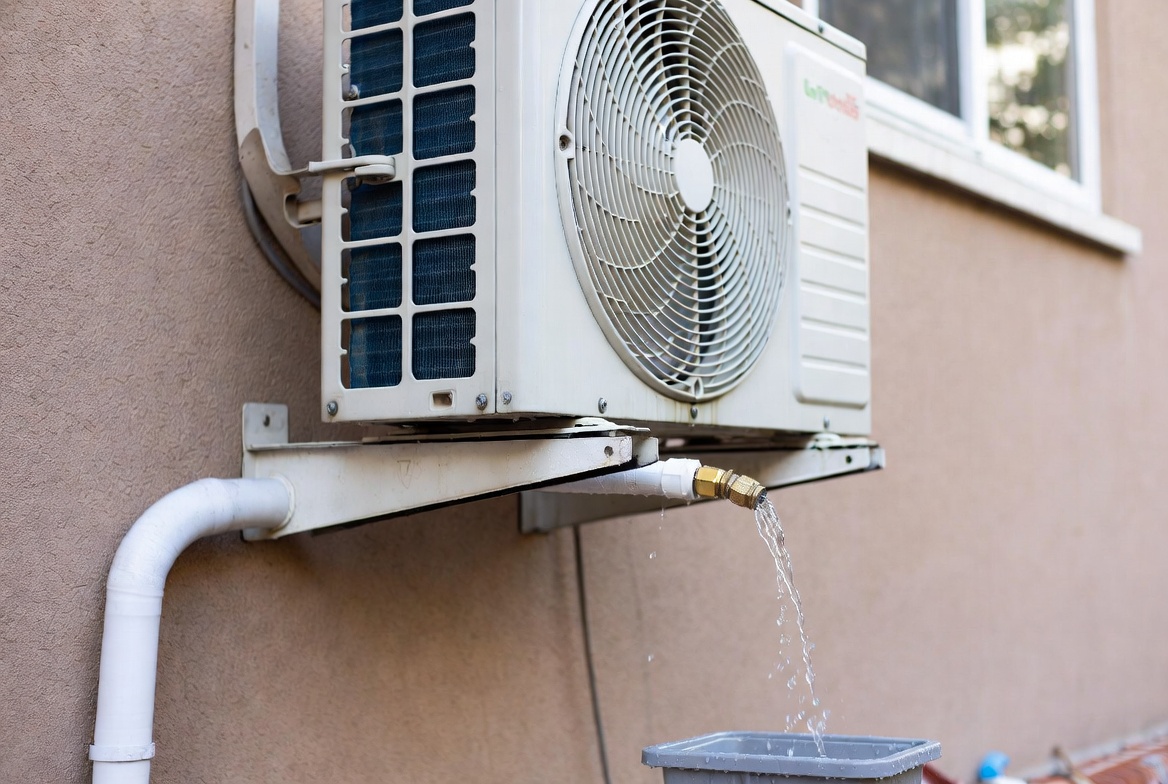
The indoor unit collects condensation in a small drain pan. Water flows through a drain line that runs alongside the refrigerant lines going to the outdoor unit. From there, it should drain away from your home.
Cleaning the Indoor Unit Drain Pan
Start by unplugging your system. The indoor unit typically has an access panel. Remove it to reveal the drain pan. Empty any standing water and clean the pan thoroughly. Use a soft brush to gently clean the surface, removing any mold or debris.
Flushing the Drain Line
Locate where the drain line exits your home, usually on the exterior wall. Use your vinegar and baking soda method, or flush it with a garden hose to clear any blockages. Make sure water flows freely from the exit point.
Preventive Maintenance: Keep Problems From Happening
The best approach to AC drainage issues is prevention. Regular maintenance can save you money and headaches down the road.
Monthly Maintenance Tasks
- Check your drain pan – Even if water seems to be draining fine, a quick visual inspection takes seconds
- Clean or replace air filters – A clean filter helps your system run efficiently and reduces condensation problems
- Listen for unusual sounds – Dripping, hissing, or gurgling might indicate developing problems
- Look for visible water damage – Check walls, ceilings, and around your unit for signs of moisture
Seasonal Maintenance Recommendations
At the beginning of each cooling season, flush your condensate lines with vinegar and water. This preventive treatment keeps algae and mold from building up. During the off-season, if your system sits idle for months, you might want to run it occasionally to keep the drain line clear.
When Humidity Is High
During particularly humid periods, your AC will produce more water than usual. This is normal, but monitor your drain system more frequently during these times. The increased water volume stresses the drainage system more heavily, making blockages more likely to occur.
When to Call a Professional Technician
While many drainage issues are DIY-friendly, some situations require professional attention. Know when to call in the experts:
- Persistent drainage problems after your cleanup attempts – Multiple blockages might indicate a deeper issue
- Water damage to your home structure – Professionals can identify the root cause and prevent future damage
- Frozen evaporator coils – This requires specialized diagnostic equipment
- Condensate pump failure – Pump replacement is best left to professionals
- Unusual noises or smells persisting after maintenance – These might indicate refrigerant leaks or other serious problems
- If you’re uncomfortable working on your AC – There’s no shame in hiring someone who knows their way around these systems
A professional technician can perform comprehensive inspections and repairs that go beyond basic drain cleaning. They have specialized tools and knowledge that make them invaluable for complex issues.
Common Mistakes to Avoid
Let me share some mistakes I’ve seen homeowners make that either create problems or make existing ones worse:
Forgetting to Unplug Your Unit
This is a safety issue. Always disconnect power before working on your air conditioner. Electricity and water are a dangerous combination.
Using Chemical Drain Cleaners
Those harsh chemical drain cleaners you use for sink clogs? They can damage PVC pipes used in air conditioner systems. Stick with vinegar, baking soda, or gentle mechanical methods instead.
Forcing Blockages
If you encounter a stubborn clog, resist the urge to shove something through it forcefully. You risk creating cracks in the pipe, which leads to leaks and expensive repairs.
Ignoring Small Problems
A little water pooling or a small drip today becomes a big water damage problem tomorrow. Address drainage issues as soon as you notice them.
Skipping Regular Maintenance
Many people only think about their AC when something goes wrong. Regular maintenance prevents most problems from developing in the first place.
Troubleshooting Guide for Specific Situations
Let’s tackle some specific scenarios you might encounter:
Water Leaking Inside Your Home
This is urgent. First, turn off your air conditioner to prevent further water damage. The problem likely stems from a severely clogged drain line or a broken drain pan. Check if the drain pan is cracked or if the line is disconnected. If you’ve recently tried to clear the drain yourself, make sure you haven’t accidentally kinked or damaged the line.
No Water Coming Out at All
Ironically, this can be as problematic as too much water. If your AC isn’t producing condensation at all, your system might not be cooling properly. This could indicate a refrigerant leak or a malfunctioning compressor. Call a professional for diagnosis.
Moldy Smell from Your Unit
Mold loves moist environments. The drain system and drain pan are prime real estate for mold growth. Beyond cleaning these areas, consider using a UV light installation or having your ductwork professionally cleaned. You might also benefit from running your fan setting without cooling to dry out the system periodically.
Ice Forming on Your Indoor Unit
While this seems cold-related, it often points to drainage problems. When water backs up and can’t drain properly, it can freeze on the coils. Turn off your AC and let it defrost. Then address the drainage blockage.
Tools for Long-Term Drainage Management
Beyond basic maintenance, consider these upgrades:
Condensate Drain Line Tablets
These tablets dissolve slowly in your drain line, preventing algae and mold growth. Pop one in monthly during cooling season. They’re inexpensive and effective.