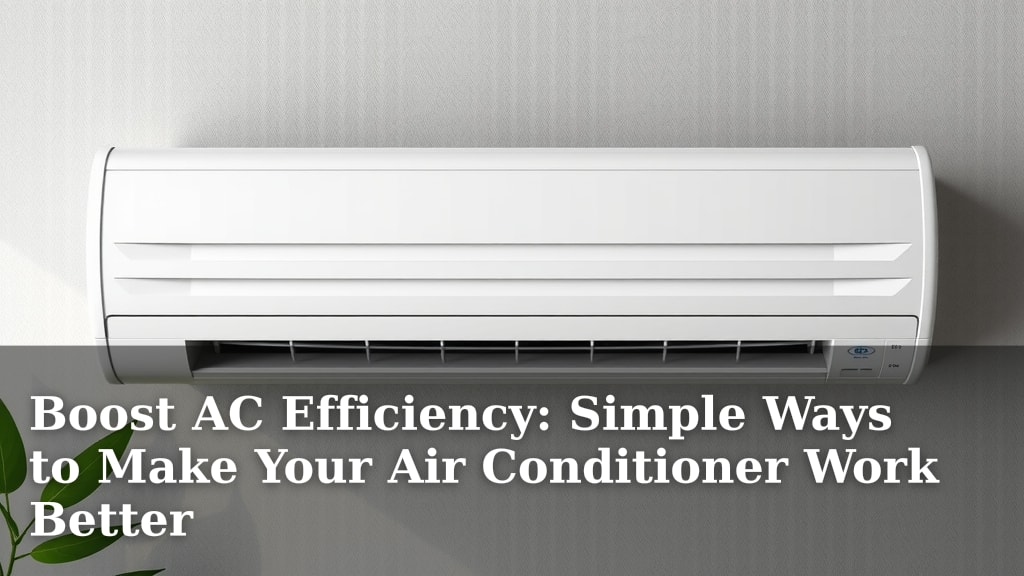
Boost AC Efficiency: Simple Ways to Make Your Air Conditioner Work Better
You can make your air conditioner work better by focusing on a few key maintenance tasks. Regularly cleaning or replacing your air filter is the most impactful step you can take. This simple action helps your AC run more efficiently and can lower your energy bills. Keeping your outdoor unit clear of debris also helps it function properly.
When your air conditioner runs smoothly, it doesn’t have to work as hard to cool your home. This means less wear and tear on the unit and a more comfortable indoor temperature. We found that consistent upkeep can even extend the lifespan of your AC system. Addressing minor issues promptly prevents them from becoming major, expensive problems.
Here’s a quick look at how to get your AC running better:
- Change your air filter regularly.
- Keep the outdoor unit clean.
- Ensure good airflow around the unit.
- Check for leaks in your ductwork.
- Schedule professional tune-ups.
Let’s walk through the simple steps you can take to get your air conditioner running at its best.
Boosting Your Air Conditioner’s Performance
Want to keep your home cool and comfortable without breaking the bank on energy bills? You’re in the right place! Making your air conditioner run better is totally achievable. It often comes down to simple, consistent maintenance. We found that tackling a few key areas can make a big difference in both efficiency and how long your AC unit lasts.
Think of your AC like your car. If you never change the oil or check the tires, it’s going to struggle, right? Your air conditioner is no different. Regular attention means smoother operation and less stress on the system. Let’s get started on making your AC a cooling champion!
The Air Filter: Your AC’s First Line of Defense
The air filter is perhaps the single most important part you can maintain. It’s like the lungs of your AC system. Its job is to trap dust, pollen, pet dander, and other tiny particles floating around your home. When this filter gets clogged, your AC has to work much harder to pull air through it.
Imagine trying to breathe through a thick wool blanket. Not easy, right? That’s what a dirty filter does to your air conditioner. This extra strain not only wastes energy but also puts a lot of wear and tear on your system. We found that simply keeping your filter clean can improve efficiency by 5% to 15%.
How Often Should You Change It?
This is a common question, and the answer can vary. For most homes, checking your air filter once a month is a good habit. If it looks dirty, change it. If you have pets, allergies, or live in a dusty area, you might need to check and change it more often, perhaps every 2-3 weeks.
Some newer homes or those with high-efficiency HVAC systems might have filters that can last longer, up to 90 days. Always check the manufacturer’s recommendations for your specific filter. The good news is that most filters are inexpensive and very easy to replace yourself. We found that a clean filter contributes directly to better air quality too!
What Type of Filter is Best?
Filters come with different ratings, often called MERV (Minimum Efficiency Reporting Value). A higher MERV rating means the filter captures smaller particles, which is great for air quality. However, very high MERV filters can sometimes restrict airflow too much for certain AC systems.
For most standard residential systems, a MERV rating between 8 and 13 is often recommended. It offers a good balance between filtering out common allergens and allowing sufficient airflow. Always consult your AC unit’s manual or a professional if you’re unsure. We found that using the right filter protects both your system and your family’s health.
Keeping the Outdoor Unit Happy and Healthy
Your air conditioner has a vital outdoor component, often called the condenser unit. This is where your system expels heat from your home. Just like the indoor filter, the outdoor unit needs clear pathways to do its job effectively.
We found that debris like leaves, grass clippings, dirt, and even stray playground toys can block airflow around the condenser. This makes the unit less efficient and can cause it to overheat. Keeping this area clean is surprisingly impactful. It helps your AC cool your home more effectively and prevents potential damage.
Clear the Area Around the Unit
Make sure there’s plenty of open space around your outdoor AC unit. Experts recommend at least 2 feet of clearance on all sides. Trim back any bushes or plants that have grown too close. Remove any clutter or items stored near the unit.
Also, keep an eye out for falling leaves or debris, especially during autumn. A quick sweep or rake can prevent big problems later. We found that a clear perimeter allows the unit to “breathe” properly, which is essential for efficient heat transfer.
Gently Clean the Condenser Coils
Over time, the metal fins on the outside of your condenser unit can accumulate dirt and grime. This buildup acts as an insulator, preventing efficient heat release. You can clean these coils yourself, but it requires a gentle touch.
First, make sure the power to the unit is turned off at the breaker box for safety. Then, you can use a garden hose with a gentle spray setting to rinse the fins from the inside out if possible, or from top to bottom. Avoid using a high-pressure washer, as this can bend the delicate fins. Many DIY guides suggest a specialized coil cleaner, but water alone can do wonders. We found that a clean coil surface significantly boosts heat exchange efficiency.
Ensuring Proper Airflow Through Your Home
Now that we’ve looked at the heart of the system (the filter) and its lungs (the outdoor unit), let’s talk about how the cool air gets to you. Airflow is king when it comes to AC performance. Blocked vents or poorly functioning fans can make your cool air get stuck.
Your AC system relies on a network of ducts to distribute cooled air throughout your house. If these ducts have leaks or are obstructed, you’re essentially losing cool air before it even reaches your rooms. This means your AC runs longer trying to reach your desired temperature, wasting energy and making your home feel unevenly cooled.
Keep Vents and Registers Clear
Walk through your home and locate all the supply and return air vents. Make sure they aren’t blocked by furniture, curtains, rugs, or anything else. Your AC needs both supply vents (where cool air comes out) and return vents (where air is pulled back into the system) to be clear.
If you notice a room that’s consistently warmer or cooler than others, check the vents in that area. Sometimes, simply repositioning a sofa or a rug can make a surprising difference. We found that unobstructed vents ensure even temperature distribution throughout your home.
Inspect Your Ductwork
Ductwork, usually hidden in attics, crawl spaces, or walls, can develop leaks over time. These leaks can be from damaged seams, loose connections, or even small holes. The U.S. Department of Energy estimates that homes can lose 20% to 30% of their conditioned air through duct leakage.
Visually inspecting accessible ductwork for obvious damage is a good start. You might notice dust patterns on the outside of the ducts, which can indicate a leak. For a thorough check, you might need to hire a professional who can perform a duct leakage test. Sealing small leaks with mastic sealant or specialized metal tape can significantly improve efficiency. We found that addressing duct leaks is a key step for optimal AC performance.
When to Call the Professionals
While there are many maintenance tasks you can do yourself to make your AC work better, some issues require expert attention. Don’t hesitate to call a qualified HVAC technician for regular check-ups or if you suspect a more serious problem.
Annual tune-ups are highly recommended. A professional can spot minor issues before they become major, costly repairs. They have specialized tools and knowledge to ensure your system is running optimally and safely. We found that professional maintenance can prevent breakdowns during peak cooling season.
What Professionals Can Do
During a tune-up, an HVAC technician will typically:
- Check refrigerant levels.
- Inspect electrical connections.
- Lubricate moving parts.
- Test the thermostat.
- Clean internal components.
- Assess overall system performance.
This comprehensive check helps ensure your system is in top shape. We found that these check-ups can improve energy efficiency and prolong the life of your AC unit.
Signs You Might Need a Pro
Listen to your AC. Is it making strange noises like grinding, squealing, or rattling? Is it blowing warm air, or not blowing air at all? Are your energy bills suddenly much higher than usual?
These are all signs that something isn’t right. Don’t ignore them! For example, low refrigerant levels usually indicate a leak that needs professional repair. Ignoring strange noises can lead to more severe damage. We found that early detection and professional repair save you money and keep your home comfortable.
Quick AC Performance Checklist
Here’s a handy checklist to keep your AC running at its best:
- Check/Change air filter: Monthly or as needed.
- Clear outdoor unit: Ensure 2ft clearance and clean away debris.
- Inspect vents: Make sure they are unobstructed.
- Look for duct leaks: Seal any visible issues.
- Listen for odd noises: Address any new sounds promptly.
- Schedule annual tune-up: Keep up with professional maintenance.
Conclusion
You’ve learned that keeping your air conditioner running efficiently doesn’t require a professional for every task. Simple maintenance like regularly changing your air filter and clearing debris from your outdoor unit can significantly boost performance. Ensuring clear airflow through your home and checking for duct leaks also make a big difference. By implementing these steps, you’re not just keeping your home cooler but also saving energy and extending your AC’s lifespan. Start with the easiest step today: check your air filter!
Frequently Asked Questions
How often should I really check my air conditioner’s filter?
We found that checking your air filter monthly is a great general rule. If you have pets or allergies, you might need to inspect and change it every 2-3 weeks. Always refer to your filter’s manufacturer for specific guidance.
What’s the best MERV rating for my home’s AC filter?
For most homes, a MERV rating between 8 and 13 is a good balance. It effectively captures common allergens while allowing your AC system to breathe easily. If you’re unsure, consulting your AC manual or a technician is wise.
Is it safe to clean my outdoor AC unit myself?
Yes, you can gently clean the outdoor unit. Always turn off the power at the breaker first. Use a garden hose on a low setting to rinse the coils, avoiding high pressure that could damage them.
My AC is making a strange rattling noise, what should I do?
Strange noises like rattling often signal a problem that needs attention. We recommend not ignoring this and scheduling an HVAC technician to inspect the unit. Early detection can prevent more costly repairs down the line.
Can I really save money on my energy bill by doing AC maintenance?
Absolutely! Research shows that a clean air filter alone can improve efficiency by 5% to 15%. Keeping your outdoor unit clear and your ductwork sealed also reduces the energy your AC uses to cool your home.