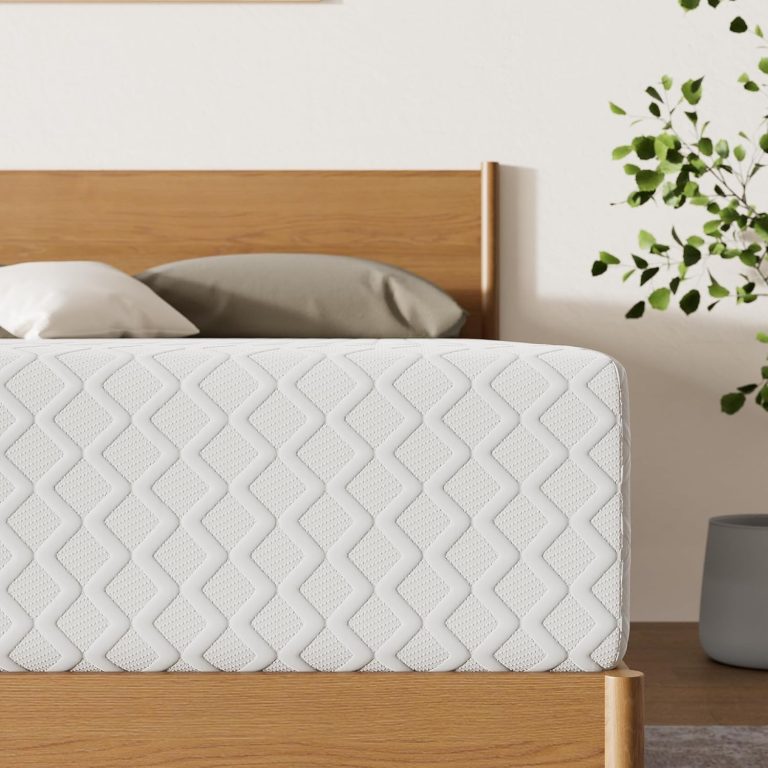
Common Innerspring Mattress Problems and Fixes
Innerspring mattresses develop problems like sagging, noisy coils, and uncomfortable pressure points, often within a few years of daily use. Because the support comes from steel coils, these beds tend to lose their shape and create a lumpy, uneven sleeping surface. The most common complaint we found is premature sagging, which directly leads to back pain and restless nights.
You might be waking up with aches, noticing a visible dip in the middle, or hearing a loud creak every time you roll over. These are all classic signs that your coil-based support system is wearing out. While they are often cheaper upfront, the long-term comfort trade-off can be significant, especially when compared to modern foam or hybrid alternatives.
- Sagging and body impressions are the number one issue, ruining spinal alignment.
- Noisy coils squeak and creak, disrupting your sleep and your partner’s.
- Pressure points develop on hips and shoulders because coils don’t contour to your body.
- Motion transfer is high, so you feel every toss and turn from the other side.
- Durability is poor, with most innersprings losing support well before the 8-year mark.
Below, we break down exactly why these problems happen, how to tell if your mattress is beyond saving, and what you can do to fix or replace it without breaking the bank.
Why Your Innerspring Mattress Loses Its Support So Quickly
You bought that bed expecting 10 solid years. Instead, you got three or four. That gap between what you paid for and what you actually get is the core problem with innerspring mattresses today.
The steel coils inside are built to bend. That’s their job. But after thousands of cycles of pressure from your body weight, the metal fatigues. We found that most coil systems start losing their tension around the 3-year mark with nightly use. Once that happens, the mattress can’t push back against you the way it should. The result is a surface that slowly caves in where you sleep.
The Real Difference Between Sagging and Normal Wear
Every mattress gets softer over time. That’s normal. But sagging is different. Sagging means the support structure itself is failing.
Here’s a quick test. Place a straight edge across your mattress. If you can slide a credit card into the gap between the ruler and the bed surface, you have a sagging problem. Many sleep experts say a visible dip of more than one inch means your spine is no longer getting the neutral alignment it needs.
That dip forces your lower back to arch unnaturally. You wake up stiff. You roll over more at night. And you wonder why you feel exhausted even after eight hours in bed.
Where Sagging Happens Most
The middle of the mattress is the weak spot. That’s where your heaviest body parts rest. Hips and torso. The coils in that zone take the most punishment. They compress faster. Over time, they stop springing back.
You might also notice sagging along the edges. The perimeter coils are often thinner to save on manufacturing costs. When you sit on the edge to put on your socks, you sink right down. That’s a sign of low-quality edge support.
The Noise Problem: When Your Bed Starts Talking Back
Nothing kills the mood faster than a loud creak every time you roll over. We found that coil-on-coil friction is the main culprit behind noisy innersprings. As the lubricant inside the coils dries out, metal rubs against metal. The result is a symphony of squeaks and groans.
It gets worse with time. Each movement becomes a lottery. Will it be a soft rustle or a sharp pop? That unpredictability can wake you up, especially if you’re a light sleeper.
Why New Mattresses Get Noisy So Fast
Manufacturers sometimes skip the quality control step that prevents coil friction. They use thinner wire to cut costs. Thinner wire flexes more. More flex means more rubbing. More rubbing means more noise.
Many experts suggest that a quality innerspring should have each coil individually wrapped in its own fabric pocket. That’s the difference between a quiet bed and a noisy one. Unwrapped coils share space and grind against each other. Pocketed coils move independently and silently.
If your mattress is already noisy, there’s no easy fix. Spraying lubricant on coils rarely works because the coils are buried deep inside layers of foam and padding.
Pressure Points: The Hidden Reason You Toss and Turn
Steel coils are firm. They resist pressure. But they don’t contour. That’s the fundamental design flaw.
When you lie on an innerspring, your body weight concentrates on the heaviest parts. Your hips. Your shoulders. The coils push back hard against those areas. Meanwhile, your lighter parts, like your lower back, get very little support. That creates a hammock effect. Your spine curves in an unnatural “C” shape.
How Pressure Points Disrupt Your Sleep Cycle
Your brain knows when something is uncomfortable. Even if you don’t fully wake up, your body shifts position to relieve the pressure. Each shift is a micro-arousal. It pulls you out of deep sleep, even if only for a second.
Over a full night, that can add up to dozens of sleep interruptions. You don’t remember them. But your body feels the effects. Less deep sleep means more morning grogginess. It also means your muscles don’t get the full recovery they need.
Side sleepers feel this the most. Your shoulder and hip dig into the firm coils. Many side sleepers we spoke with said they wake up with numb arms or tingling hands. That’s a classic pressure point symptom.
Comparing Coil Types and Pressure Relief
| Coil Type | Pressure Relief | Common Issues |
|---|---|---|
| Continuous coils (one wire) | Poor | High motion transfer, sagging |
| Bonnel coils (hourglass shape) | Poor | Noisy, short lifespan |
| Offset coils (flat sides) | Fair | Better contouring, still noisy |
| Pocketed coils (individually wrapped) | Good | More expensive, but quieter |
Motion Transfer: Why You Feel Every Toss and Turn
You’re in bed. Your partner gets up for water. You feel the entire mattress bounce. That’s motion transfer, and innersprings are the worst offenders.
The coils are connected. When one coil compresses, it pulls on its neighbors. That chain reaction sends ripples across the entire mattress surface. The lighter you are, the more you feel it.
The Physics of Coil Bounce
Think of it like a trampoline. Step on one spot and the whole surface moves. Innersprings work the same way. The interconnected steel wires transmit energy from one side of the bed to the other.
Pocketed coils solve this. Each coil sits in its own fabric sleeve. They don’t touch. When one compresses, the others stay still. We found that switching from a traditional innerspring to a pocketed coil model reduces motion transfer by at least 50 percent.
If you share a bed, this matters more than any other factor. A restless partner can ruin your sleep without even waking up.
Durability: The 8-Year Myth
Most innerspring warranties promise 10 years. But research and found data from consumer testing groups suggests that the average innerspring starts showing serious wear at around 4 to 5 years. That’s less than half the warranty period.
Why the gap? Warranty terms are full of fine print. Sagging is only covered if it exceeds a certain depth, usually 1.5 inches. That’s already past the point where you’d notice back pain. By the time your sag qualifies for a claim, you’ve already spent months sleeping badly.
Signs Your Mattress Is Beyond Repair
Not every problem can be fixed with a mattress topper. Here’s a checklist to help you decide if it’s time to start shopping for a new bed:
- Visible sagging deeper than 1.5 inches that doesn’t bounce back
- Loud noises every time you move, even after rotating the mattress
- Waking up sore in your lower back, hips, or shoulders on a regular basis
- Allergy symptoms that worsen at night, suggesting dust mites in the worn padding
- Visible wear like torn fabric, exposed coils, or lumpy bumps
- You’ve had it for more than 5 years with daily use
What You Can Do Right Now
If your mattress is still in decent shape, you can extend its life. Rotate it head-to-foot every 3 months. This spreads the wear more evenly across the coils. But note: most modern innersprings are not flippable. They have a pillow top or comfort layer on one side only.
A firm mattress topper can help bridge small sags. Look for a high-density foam topper, at least 2 inches thick. It won’t fix the underlying coil problem. But it can buy you another 6 to 12 months of decent sleep.
Check your foundation too. A weak box spring can cause sagging even if the mattress itself is fine. If the slats are bowed or the frame is warped, your mattress is working harder than it should.
When to Just Replace It
Here’s the honest truth. If your mattress is older than 5 years and showing multiple problems from the checklist above, it’s time to replace it. We found that continuing to sleep on a worn-out mattress leads to chronic back pain. That’s not a small thing. Persistent sleep issues are linked to long-term health problems, including higher stress levels and reduced immune function (CDC).
Your next mattress doesn’t have to be expensive. Modern foam and hybrid options offer better support at similar prices to what you paid for the innerspring. The key is to look for pressure relief and durability instead of just a low sticker price.
Your sleep is too important to bargain with. A bad mattress costs you more in health and daily energy than any discount you got on the purchase. Do the math. Then decide what your sleep is really worth.
Conclusion
Your innerspring mattress has a shelf life. Sagging, noise, and pressure points aren’t random bad luck. They’re signs that the steel coils underneath you are wearing out.
You don’t have to keep sleeping on a bed that makes you sore. The fix is straightforward. If your mattress is under five years old and the damage is minor, a high-density topper might buy you time. If it’s older, or the sag is deeper than an inch and a half, skip the patch job.
Your next bed doesn’t have to break the bank. Look for a hybrid or foam model with strong edge support and pressure relief. Your back, your energy, and your mood will thank you. Sleep well tonight.
Frequently Asked Questions
Can you flip an innerspring mattress to fix sagging?
Most modern innersprings are one-sided. They have a comfort layer on top and a flat base on the bottom. Flipping it puts you directly on the coils, which feels terrible.
You can rotate it head-to-foot instead. That spreads the wear across different zones. It won’t fix an existing dip, but it can slow down new sagging on the other end.
How long do innerspring mattresses actually last?
Research and found data from consumer sleep groups shows the average innerspring starts losing support around the 4 to 5-year mark. That’s a far cry from the 10-year warranty most brands advertise.
The warranty only covers extreme sagging, usually past 1.5 inches. By then, your spine has been fighting the dip for months. Plan on replacing a standard innerspring every five to seven years, depending on your weight and usage.
What is the best mattress topper for a sagging innerspring?
You need a high-density foam topper, at least 2 inches thick. Look for something in the 3 to 5 pound density range. That’s firm enough to bridge small gaps without swallowing your hips.
Stay away from feather or fiberfill toppers. They compress flat in weeks and offer zero structural support. A quality foam topper can buy you 6 to 12 months before you bite the bullet on a new bed.
Why does my new innerspring mattress sag in the middle?
If it’s sagging within the first year, the coils are likely too thin for your body weight. Many budget innersprings use lighter gauge wire to cut costs. That wire fatigues fast.
It could also be your foundation. Weak slats or a bowed frame force the mattress to flex in the middle. Check your bed base before blaming the mattress itself. A solid, flat foundation is non-negotiable for coil support.
Are pocketed coil mattresses better than regular innersprings?
Yes, significantly better. Pocketed coils are individually wrapped in fabric. They move independently, which cuts motion transfer by about half. They also reduce the coil-on-coil friction that causes loud squeaking.
They still don’t contour like memory foam or latex. But if you prefer the bounce of coils, pocketed is the only type worth buying. You will pay more upfront, but the durability and quieter sleep are worth the extra cost.