Mattress King vs Queen: Which Size Fits Your Sleep?
When it comes to mattress sizes, the queen is the clear winner for most couples, while a king makes sense if you need maximum space. The real difference comes down to 6 inches of width, not length. You get 60 inches of width with a queen and 76 inches with a king, which translates to about 6 extra inches of personal space per person.
We found that your sleeping style and bedroom size matter just as much as the numbers on the tape measure. A king bed needs a room that is at least 12 feet wide to feel comfortable, while a queen fits nicely in most standard 10×10 bedrooms. Many experts say that couples who move from a queen to a king never go back, but that upgrade often comes with a higher price tag for the mattress, sheets, and frame.
- Queen size is 60 inches wide by 80 inches long — perfect for most couples and single sleepers who like room to stretch.
- King size is 76 inches wide by 80 inches long — gives each partner 38 inches of space, similar to sleeping in a twin bed.
- Queen mattresses are easier to move and fit in smaller bedrooms, and they cost $200 to $500 less on average.
- King mattresses are the best choice if you share the bed with a partner, kids, or large pets who like to sprawl.
- Your bedroom size should be your first filter — a king bed needs a room at least 12 feet wide, or you will feel cramped.
Below, we break down the full comparison between queen and king beds so you can pick the right size for your sleep habits, your budget, and your bedroom dimensions.
Comparing Queen and King Mattresses for Your Bedroom
You have two solid choices when you shop for a larger bed. The queen and the king both offer plenty of room, but they serve different needs. We found that the best pick depends on your room size, your sleep habits, and your budget.
Let us walk you through the details so you can make a confident choice. You want to wake up feeling rested, not crowded or cramped. We will help you get there.
Measuring the Queen and King Size Differences
The numbers are simple, but they matter. A queen mattress is 60 inches wide and 80 inches long. A king mattress is 76 inches wide and 80 inches long. The length is identical at 80 inches, so the only real change is width.
That extra 16 inches makes a big difference in how you sleep. Think of it this way: a queen gives each partner 30 inches of space. A king gives each partner 38 inches, which is the same width as a standard twin bed. That extra space can mean fewer elbows in your back.
What 16 Extra Inches Feels Like
We found that people notice the width change right away. Moving from a queen to a king feels like upgrading from a couch to a first-class seat. You get room to stretch your legs and roll over without touching your partner.
For side sleepers, the extra space helps you keep your knees bent without bumping into anyone. For stomach sleepers, it gives your arms somewhere to go. Many experts say that couples who switch to a king rarely go back to a queen.
Length Matters for Taller Sleepers
Both sizes are 80 inches long. That works for most people up to 6 feet 4 inches tall. If you are taller than that, you may want to look at a California king, which adds 4 inches of length.
But for the average person, the queen and king offer the same legroom. Your height alone should not decide between these two. It comes down to width and space.
How Your Sleeping Style Shapes the Choice
Your go-to sleep position matters more than you think. We found that back sleepers and stomach sleepers do fine on a queen, especially if they sleep alone. Side sleepers may want more room for their knees and arms.
Couples have different needs too. One partner may sprawl out like a starfish. The other may curl up in a tiny ball. The right size depends on how you two share space at night.
Couples Who Share the Bed
If you sleep with a partner, the king starts to look really good. Each person gets their own personal zone. You can use separate blankets without fighting over the covers.
Many guidelines point to shared sleep quality improving with more personal space (Sleep Foundation). Less movement transfer means fewer wake-ups. A king reduces the chance that your partner’s tossing and turning disturbs your rest.
Single Sleepers Who Love Room to Move
If you sleep alone, a queen is usually plenty. You get 60 inches all to yourself. That is wider than a full bed and offers enough room to sprawl comfortably.
But some single sleepers just love the luxury of a king. You can sleep diagonally, spread your arms wide, or let a big dog curl up at your feet. A king turns your bed into a personal sanctuary.
Families and Pets Who Join You
Do kids crawl into your bed at 2 AM? Do you have a golden retriever who thinks the bed is theirs? If yes, a king might save your sanity.
We found that families with young kids or large pets strongly prefer king beds. The extra 16 inches gives everyone a spot. You avoid the middle-of-the-night shuffle where someone ends up hanging off the edge.
Bedroom Size: The Make-or-Break Factor
You can love the idea of a king, but your room needs to fit it. A king mattress is 76 inches wide. Add a bed frame and you are looking at roughly 80 inches of width. Your room should be at least 12 feet wide for a king to feel comfortable.
A queen fits much more easily. Standard 10-by-10 bedrooms work fine. You still have room for nightstands, a dresser, and walking space. Many experts say the queen is the largest size that fits most modern bedrooms.
How to Measure Your Bedroom
Grab a tape measure and check two things. First, measure the width of the room. Second, measure the space between the door and the wall where the bed will go.
- You need at least 24 inches of walking space on each side of the bed.
- Leave 18 to 24 inches at the foot of the bed for walking past.
- Measure your door width to make sure the mattress can get through.
- Check stairwells and hallways for tight corners.
- Consider where your closet doors swing open.
- Think about future furniture, like a bench or a vanity.
These simple measurements will save you from a big headache later. No one wants to return a mattress because it does not fit.
Visualizing the Space Difference
Picture your queen bed in your room right now. Now imagine adding 8 inches on each side. That is a king. It does not sound like much, but it changes how the room feels.
We found that a king can dominate a small room and make it feel crowded. You might lose space for a dresser or have to squeeze past the bed to get to the window. A queen keeps the room feeling open and airy.
Budget Considerations: Mattress and Accessories
Price is a big deal for most of us. A queen mattress costs $200 to $500 less than a comparable king. That is a real chunk of change you can put toward better pillows or a nice comforter.
The costs do not stop at the mattress. Sheets, duvets, and mattress protectors all cost more in king size. You also need a larger frame or box spring. Over time, these add up.
The True Cost of a King Bed
Let us break down what you actually pay for. A king frame can run $300 to $800 more than a queen frame. King sheets cost $30 to $60 more per set. A king mattress pad adds another $50 to $100.
Many guidelines suggest setting a budget before you start shopping (Consumer Reports). You want to avoid falling in love with a mattress that blows your budget. A queen gives you the same comfort and support for less money.
Where to Spend Your Money Instead
If you save $300 on a queen mattress, you can upgrade other parts of your sleep setup. A high-quality mattress topper, adjustable base, or premium pillows can make a bigger difference than extra width.
We found that comfort features matter more than sheer size for most sleepers. A queen with a great topper beats a king with a cheap mattress. Spend your money where you feel it at night.
Sheet and Accessory Costs Compared
You will buy sheets for your new bed, so plan for that. King sheets cost more because they use more fabric. Queen sheets are easier to find in stores and often go on sale.
Fitted sheets for a king need to fit the wider 76-inch profile. Some standard king sheets do not fit deeper mattresses well. Look for deep-pocket sheets if your mattress is 12 inches or thicker.
| Item | Queen Size | King Size |
|---|---|---|
| Mattress Width | 60 inches | 76 inches |
| Mattress Length | 80 inches | 80 inches |
| Average Sheet Set Price | $50 to $120 | $80 to $160 |
| Bed Frame Cost | $150 to $400 | $300 to $700 |
| Best Room Size | 10 x 10 feet | 12 x 12 feet |
| Personal Space per Person | 30 inches | 38 inches |
This table gives you a quick side-by-side look. Use it as a reference when you shop. Keep it in your phone so you can check prices and dimensions on the go.
Moving and Setup: Which Is Easier?
Nobody likes moving a mattress. A queen is easier to carry up stairs and through doorways. It is lighter and more maneuverable, especially if you live in an apartment or a second-floor walk-up.
A king mattress is heavy and awkward. It often needs two strong people to move it, and it can get stuck in tight corners. Many experts say that delivery teams charge extra for king mattresses due to the added difficulty.
Getting the Mattress Into Your Home
Measure your stairwell and hallway before you buy. A king mattress is 76 inches wide, but it bends and flexes during moving. That makes it tough to navigate tight turns.
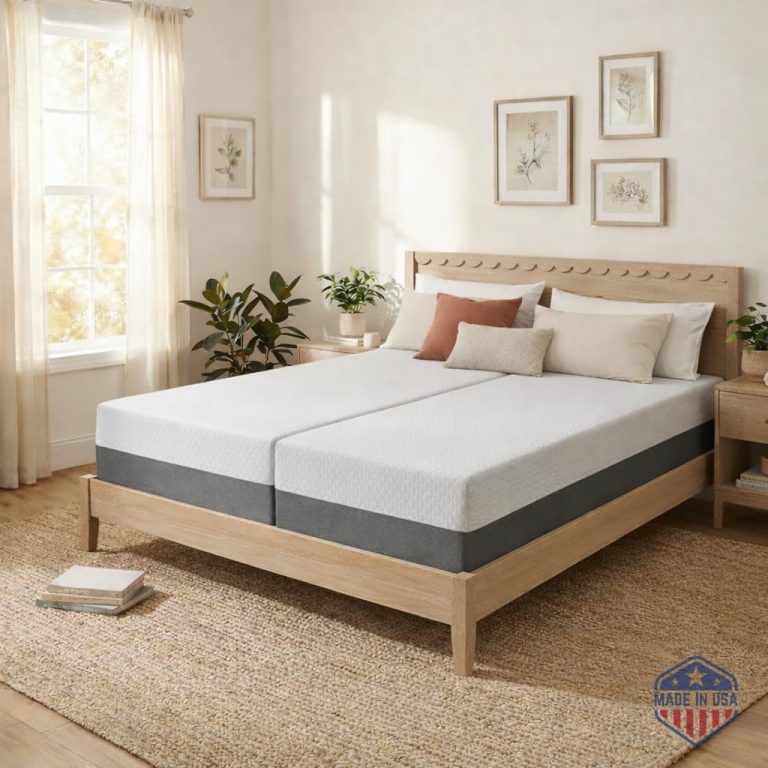
Some companies offer split king options. A split king comes in two pieces, each 38 inches wide. That makes moving and setup much easier. You just have to join the two halves with a connector kit.
Bed-in-a-Box Options
Many online mattresses arrive compressed in a box. This makes moving a king easier because it comes in a manageable package. You still have to get it to your bedroom, but the box is easier to handle.
We found that compressed king mattresses are much simpler to set up than traditional ones. You just unroll them, let them expand, and wait a few hours. This removes a lot of the hassle.
Sleep Quality and Health Considerations
Your sleep quality is about more than size. Proper spinal alignment and pressure relief matter just as much. A queen that supports your back well beats a king that sags in the middle.
Research from the National Institutes of Health shows that mattress support affects sleep quality and back pain (NIH). So do not just focus on size. Test the mattress firmness and material before you commit.
Partner Disturbance and Motion Transfer
If your partner tosses and turns, you need good motion isolation. A king gives you more distance from your partner’s movements. But the mattress material matters more than the size.
Memory foam and latex absorb motion better than innerspring coils. If you sleep with a restless partner, look for a mattress with low motion transfer. Many experts recommend foam or hybrid mattresses for couples to reduce sleep disturbances.
Temperature Regulation
A bigger mattress means more surface area. That can trap more body heat if the material does not breathe well. Look for mattresses with cooling gel, breathable covers, or coil systems that allow airflow.
We found that hot sleepers should prioritize cooling features over size. A queen with great airflow keeps you cooler than a king with poor ventilation. Your comfort depends on temperature control, not just square footage.
Making the Final Decision
So which one should you pick? Start with your bedroom size. If your room is smaller than 12 feet wide, go with a queen. It will fit better and keep your space feeling open.
If you have the room and the budget, a king is a wonderful upgrade. Couples who make the switch often say they sleep better. The extra width gives you freedom to move without disturbing your partner.
Use This Quick Checklist Before You Buy
- Measure your bedroom width and walking space.
- Check your doorways and stairwells for clearance.
- Decide if you sleep alone or with a partner.
- Consider
Conclusion
At the end of the day, the right choice comes down to your room, your budget, and who shares your bed. A queen is the smart pick for most bedrooms, offering plenty of space without taking over the room. A king is a worthwhile upgrade if you have the width and want that extra personal space.
You do not need the biggest bed to sleep well. You need one that fits your space and supports your body. Measure your room first, set a budget, and then test a few options. Pick the size that lets you move freely at night, and you will wake up feeling rested.
Frequently Asked Questions
Is a king mattress too big for a 10×10 room?
Yes, a king is usually too large for a 10×10 bedroom. You will lose walking space and your room will feel cramped. A queen fits this size room comfortably and still leaves room for furniture.
Do king and queen beds use the same size sheets?
No, they use different sheet sizes. Queen sheets fit a 60-inch wide mattress, while king sheets fit a 76-inch wide mattress. Buying the wrong size sheets can leave you with loose fabric or corners that pop off.
Can two tall people sleep comfortably on a queen?
Two tall people can sleep on a queen, but each person only gets 30 inches of width. If you both sleep still, it works fine. If you like to stretch out, you will likely feel more comfortable on a king.
What is the price difference between a queen and king mattress?
You can expect to pay $200 to $500 more for a king mattress compared to a same-quality queen. You also pay more for king accessories like sheets, frames, and mattress protectors.
Is it easier to move a queen or king mattress?
A queen mattress is noticeably easier to move through hallways and up stairs. King mattresses are wider and heavier, making them tricky in tight spaces. A split king solves this problem by coming in two lighter pieces.