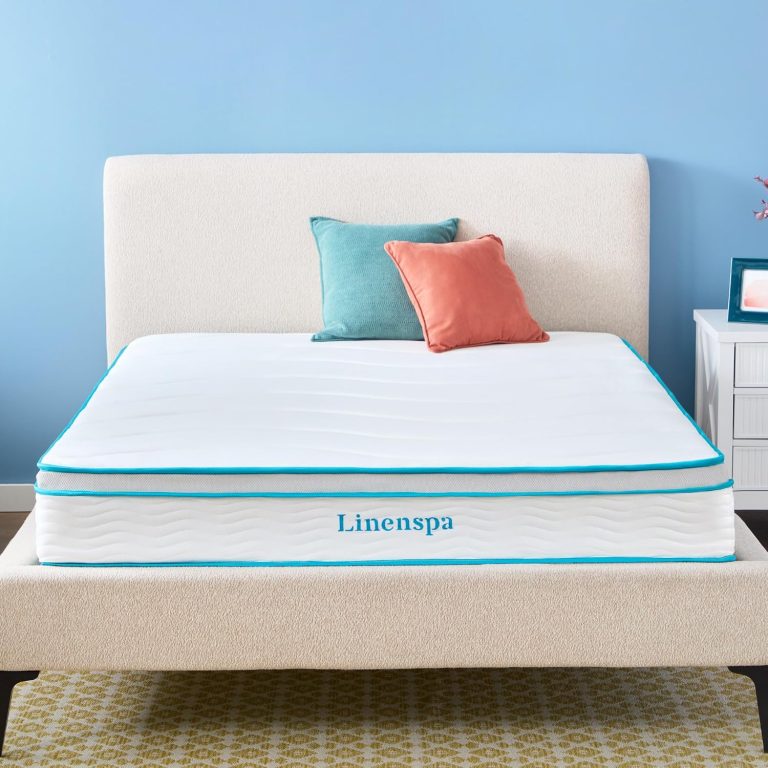
Twin Mattress Dimensions: Size Guide & Buying Tips
A twin mattress is 38 inches wide and 75 inches long. It is the smallest standard adult mattress size, designed for one sleeper. We found that this size works best for kids, teens, guest rooms, and small spaces.
You might wonder if a twin bed will work for you or your child. It offers less width than a Twin XL, which is why budget and floor space often guide this choice. Many experts say a twin is a smart starter bed, but it can feel tight for taller adults.
- Twin size is 38″ x 75″ — perfect for one person, usually a child or teen.
- Fits tight spaces like bunk beds, trundles, and small studio apartments.
- Cheapest mattress size — lower price for the bed, sheets, and accessories.
- Not ideal for adults over 6 feet tall — consider a Twin XL for extra length.
- Good for guest rooms — saves space while still offering a real bed.
Below, we break down everything you need to know about twin mattresses, from room fit to who should buy one. Let’s walk through the details so you can pick the right bed with confidence.
Twin Mattress Dimensions Explained Clearly
A twin mattress measures 38 inches wide by 75 inches long. This makes it the most compact standard bed size for a single adult sleeper.
We found that this footprint gives you about 36 inches of personal sleeping space per person. That is roughly the width of a crib mattress, but much longer. The 75-inch length fits most children and teens up to about 5 feet 10 inches tall with room to spare.
For context, a standard crib mattress is 28 inches wide. A twin gives you a full 10 extra inches of width. This feels huge for a toddler moving up, but snug for a broad-shouldered adult.
How Twin Size Compares to Other Beds
We compared the twin to its closest relatives so you can see the size difference in real terms. The table below sums up the key differences.
| Mattress Size | Width | Length | Best For |
|---|---|---|---|
| Twin | 38 inches | 75 inches | Kids, teens, guest rooms |
| Twin XL | 38 inches | 80 inches | Taller teens and college dorms |
| Full (Double) | 54 inches | 75 inches | Single adults who want more width |
| Queen | 60 inches | 80 inches | Couples or solo sleepers who toss |
Notice that the Twin XL is the same width as a standard twin. The only difference is the extra 5 inches of length. We found that many adults who spend their first night on a twin quickly realize they miss that legroom.
Who Should Buy a Twin Mattress
We have guided many shoppers through this decision, and the answer comes down to your situation. A twin is perfect for some, but a squeeze for others. Let’s break it down by your lifestyle.
Growing Kids and Preteens
The twin is the classic “next step” bed after a toddler bed. It gives a child more room to spread out without taking over the whole bedroom. We found that kids ages 4 to 10 adjust to a twin bed easily. They have plenty of length and can use the extra floor space for toys and a desk.
Many parents also choose a twin for bunk beds. The standard bunk bed frame is built for two twin mattresses, so you do not need to hunt for a special size.
Teenagers and Young Adults
Teens often outgrow a twin by age 14 or 15, especially if they are tall. We found that a twin still works in a narrow bedroom or a dorm-style setup. However, many teens prefer a Twin XL for the extra 5 inches of stretch room.
With sleep being central to teen health and brain development (Centers for Disease Control and Prevention), comfort matters. If you can fit a Twin XL, you are making a smarter long-term investment for a growing teen.
College Dorm Rooms
We should clear up a common mix-up here. Most college dormitories actually use Twin XL mattresses, not standard twins. The frame is sized for a long twin, so a standard twin will look like a tootsie roll in a too-big wrapper. Check with your college housing office before you buy sheets.
Adults and Guest Bedrooms
For adults, the twin is a tough sell if it is your main bed. Most adults over 5 feet 10 inches will find their feet hanging off the edge. We found that a twin works well for occasional guests or in a small home office that doubles as a spare room.
In a guest room, a twin is smart because it does not swallow up the floor space. You can still open a dresser drawer or walk around the bed without feeling trapped.
The Pros and Cons of a Twin Bed
Before you commit, weigh the good and the not-so-good. We found that the twin bed has clear strengths in some rooms and clear drawbacks in others.
Where a Twin Really Shines
- Budget-friendly price: Lower material costs make the twin the cheapest mattress size, with regular sales.
- Fits tight corners: Works in narrow bedrooms, small apartments, and under loft beds.
- Lightweight: Easy to move upstairs or flip for cleaning. One person can manage it.
- Cheap accessories: Sheets, comforters, and mattress protectors cost much less than larger sizes.
- Cozy for one: In cold weather, your body heat keeps a twin warm faster.
Where a Twin Falls Short
The rigid length is the biggest complaint we found. If you sleep with your arms above your head or sprawl like a starfish, the 38-inch width feels tight. The 75-inch length also means taller people will sleep with bent knees or dangle their feet over the edge.
Another drawback is sharing. A twin is strictly a one-sleeper bed. Two adults on a twin is a recipe for a sleepless night and a sore back.
Make Sure the Mattress Fits Your Frame
A mattress that does not match the bed frame is a safety issue. Standard twin frames are built for 38-inch-wide and 75-inch-long mattresses. But all brands vary slightly. We found that a mattress can run up to a half-inch wider or longer than the label says.
Before buying, measure the interior of your bed frame. If you are using a floor loft or a trundle, check the clearance. A thicker mattress can rub against the frame or sit too tall for a trundle to slide underneath.
Sizing Up Your Current Bedroom
Visualize the twin in your room before you buy it. Grab a tape measure and mark a 38-by-75-inch rectangle on the floor. We found that seeing it on the floor prevents surprise when you realize the nightstand does not fit.
Twin beds are perfect for a home office that doubles as a nap zone. You still get a real mattress feel without giving up your whole room to a bed. In a guest room, the twin leaves space for a reading chair or a luggage rack.
Shopping for Twin Bedding and Sheets
Once you decide on a standard twin mattress, shopping for sheets is relatively painless. Store labels clearly say “Twin” and the sheet set comes ready to use. We found that most twin sets include one fitted sheet, one flat sheet, and one standard pillowcase.
One thing to watch: deep-pocket sheets. Many twin mattresses today are thick, especially memory foam ones. Standard twin sheets are designed for mattresses around 8 to 10 inches thick. If you buy a 12-inch plush mattress, look for “deep pocket” sheets so the fitted sheet does not pop off the corners.
Choosing the Right Twin Mattress Firmness
Your weight affects how the mattress feels. A memory foam twin that feels plush to a 110-pound person can feel like a brick to a 200-pound person. We found that the same firmness level suits different body types in very different ways.
Light Sleepers under 150 Pounds
If you are on the lighter side, choose a soft to medium-firm twin mattress. A medium firmness (around 5 to 6 on a 10-point scale) gives you good pressure relief. Your hips and shoulders will sink slightly, keeping your spine aligned.
Heavier Sleepers over 200 Pounds
For heavier bodies, you need more support to keep your hips from sinking too deep. Choose a firm mattress rated 7 or higher. Many experts recommend a hybrid twin with coils and foam, because coils offer stronger edge support and bounce. A firm density prevents the dreaded hammock effect where you roll toward the middle.
Room Layout Ideas for a Twin Bed
A tiny room can still feel open and airy with the right layout. We found that placing the twin bed against the longest wall frees up the most walking space. Do not push the bed into a corner if you can avoid it. When you push a bed into a corner, you lose access to one side for making the bed and you also lose the ability to reach the wall for changing sheets.
For a small studio apartment, try a daybed setup. A twin mattress on a daybed frame functions as a couch during the day and a bed at night. It is one of the smartest space-saving tricks we know.
What About a Twin Trundle or Bunk Bed?
If you plan for sibling sleepovers or a guest who visits often, a trundle twin is a brilliant choice. The trundle holds a low-profile twin mattress that slides underneath the main bed. We found that this setup doubles your sleeping capacity without using one extra square foot of floor space.
Bunk beds with twin mattresses work best in shared kids’ rooms. Check the weight limit on the upper bunk. Most frames hold up to 200 pounds, but some are heavier duty. The top bunk requires a lighter mattress to make it safer when you lower or lift it during sheet changes.
Final Room-Fit Checklist
Use this quick checklist before you finalize your decision. We found that ticking these boxes upfront prevents returns and frustration later.
- Measured the frame: You confirmed the interior width is at least 38.5 inches.
- Checked the door clearance: You know how to angle the mattress through doorways and up stairwells.
- Set a budget for accessories: Twin sheets, a protector, and a comforter are covered in your plan.
- Tested the firmness for your weight: You picked a density that suits your sleeping position.
- Confirmed the room layout: You visually marked the footprint and have walking space left over.
- Verified the bed frame type: The frame matches a 75-inch length, not a Twin XL 80-inch length.
If you checked every box, you are ready to buy a twin mattress with real confidence. It is a smart, budget-friendly bed for kids, guests, and tight quarters. And if you grow out of it later, you can always transition to a Twin XL or a Full without too much fuss.
Conclusion
Choosing a twin mattress comes down to your space, your budget, and who will sleep on it. You learned that the 38-by-75-inch footprint works best for kids, guest rooms, and tight floor plans. It is the cheapest mattress size to buy and outfit with sheets, which makes it a smart starting point.
If you are over 5 feet 10 inches tall, or you want a bed that will grow with a teenager, a Twin XL gives you that extra 5 inches of legroom. For everyone else, a standard twin gets the job done without wasting space.
Your next step is simple: grab a tape measure and mark the footprint in your room. If it fits, you can confidently shop for a twin mattress and matching bedding that will serve you well for years.
Frequently Asked Questions
Can two people sleep on a twin mattress?
Technically, two people can squeeze onto a twin, but you will not sleep well. The 38-inch width gives each person about 19 inches of space, which is narrower than a crib mattress. We strongly recommend a Full or Queen if you plan to share the bed regularly.
Does a twin mattress fit a Twin XL frame?
No, a standard twin will leave a 5-inch gap at the foot of a Twin XL frame. The two beds share the same width, but the Twin XL is 5 inches longer. You can use a twin mattress on a Twin XL frame in a pinch, but you need to fill the gap safely.
What age is a twin mattress good for?
A twin works well for kids transitioning out of a toddler bed, typically around ages 4 to 5. It also suits teens up to about 5 feet 10 inches tall. Many parents switch to a Twin XL or Full when their child hits a growth spurt in middle school.
How thick should a twin mattress be?
Most twin mattresses range from 8 to 12 inches thick. For bunk beds, choose a mattress that is 6 to 8 inches thick to stay within the guardrail height. For a standard frame, a 10-inch mattress gives a good balance of support and comfort.
Are twin sheets the same as Twin XL sheets?
No, they are not interchangeable. Twin sheets fit a 75-inch-long mattress, while Twin XL sheets are 5 inches longer. Using standard twin sheets on a Twin XL will leave the fitted sheet loose at the foot or pop off the corners.