Dishwasher Buying Guide: Key Features to Compare
When you shop for a dishwasher, focus on **noise level, wash cycles, and drying performance** first. These three features decide if you will actually enjoy using the machine every day. The best dishwasher for you also needs a **flexible interior layout** and an **Energy Star rating** to save money on your bills.
We found that most buyers regret skipping the **third rack** or choosing a model without a **stainless steel tub**. These upgrades make a real difference in how much you can fit and how long the machine lasts. You also want to consider **soil sensors** and **adjustable tines** for handling odd-shaped dishes and pots.
- Look for a **decibel rating of 44 or lower** so you can run it while watching TV.
- Pick a model with a **third rack** for utensils and small items.
- Choose a **stainless steel tub** over plastic for better drying and durability.
- Get **at least three wash cycles** including Heavy, Normal, and Quick.
- Always check for an **Energy Star label** to cut water and power use.
Below, we walk you through each must-have feature in plain English. You will know exactly what to look for on the spec sheet and what to ask at the store. Let’s find the perfect dishwasher for your kitchen.
Choosing a Dishwasher That Fits Your Life
You do not need to be an appliance expert to pick a great dishwasher. We found that focusing on a handful of key features narrows your options fast. Think of it like buying a car. You care about the engine, the safety rating, and the trunk space. A dishwasher has its own version of those basics. Once you know what they are, the decision becomes simple.
Noise Levels and Why They Matter More Than You Think
Nobody wants to shout over a loud dishwasher during dinner. The noise level is measured in decibels (dBA). This is one of the first numbers you should check on any spec sheet.
We found that a dishwasher rated at 44 decibels or lower is nearly silent. You will barely notice it running. Many models sit in the 38 to 42 range. Those are the ones you can run while watching a movie or talking on the phone.
Older models often hit 60 decibels or more. That is roughly the same volume as a normal conversation. It is not terrible, but it is annoying over a 2-hour cycle.
How to Test Noise in a Showroom
Stores are noisy places. You can still get a feel for it. Stand next to the unit and look for the dBA rating on the tag. We found that most brands put this front and center.
If the store has a live display, open the door and close it. Listen to the difference between models. Also, ask the salesperson about the insulation package. Extra insulation usually means a quieter machine.
What About the “Quiet” Feature on Budget Models?
Budget models often advertise a quiet mode. It works, but it usually slows down the wash time. You save noise but lose time. Many experts say that a base noise rating of 44 dBA is better than a special quiet mode that doubles your cycle length.
Wash Cycles and Soil Sensors
You do not need 15 wash cycles. We found that most people use the same three or four on a regular basis. A good dishwasher should have Heavy, Normal, and Quick cycles at the minimum.
The heavy cycle is for baked-on casseroles and greasy pans. The normal cycle handles everyday plates and glasses. The quick cycle is for lightly soiled loads when you are in a rush.
The Magic of Soil Sensors
Here is where things get interesting. Many modern dishwashers come with a soil sensor. This is a small device that checks how dirty the water is during the cycle. It adjusts the wash time and water usage automatically.
We found that this feature saves you money without you lifting a finger. If your dishes are barely dirty, the machine shortens the cycle. If they are caked with food, it runs longer. You do not have to guess which setting to use.
Look for the word “auto” or “sensor” on the control panel. It is a simple feature that makes a big difference.
Sanitize Cycle: Is It Worth It?
A sanitize cycle uses hotter water to kill bacteria. This is great for cutting boards, baby bottles, and anyone with a weak immune system. Many guidelines point to hot water above 150°F as the key for killing germs (National Sanitation Foundation).
If you have kids or pets, a sanitize cycle adds peace of mind. Just note that it uses more energy to heat the water.
Drying Performance and the Materials That Matter
Nothing is worse than pulling out a “clean” dish that is still dripping wet. Drying performance depends on two things: the tub material and the drying system itself.
Stainless Steel vs. Plastic Tubs
We found that a stainless steel tub is a must-have for most buyers. Steel holds heat better than plastic. That heat helps dishes dry faster. Plastic tubs lose heat quickly, which leaves puddles on your cups and bowls.
Steel also lasts longer. It does not crack or stain like plastic can. Yes, steel is pricier. But it is worth the extra money if you plan to keep your dishwasher for 8 to 10 years.
One small downside: stainless steel shows water spots more easily. You can wipe the inside occasionally, but it is not a big deal.
Heated Dry vs. Condensation Dry
There are two main drying styles. Heated dry uses a heating element at the bottom of the tub. It is fast and effective. Condensation dry uses the cool countertop or cabinet to pull moisture out of the air. It is more energy-efficient but takes longer.
Many newer models offer a fan-assisted dry that circulates air inside. We found that this works well for plastic items, which are notoriously hard to dry. Look for the word “fan” or “turbulence” in the drying description.
Flexible Interior Layout and Loading Options
You load a dishwasher every single day. The layout matters more than you might expect. We found that flexible racks turn a frustrating chore into a quick task.
Why the Third Rack Is a Game-Changer
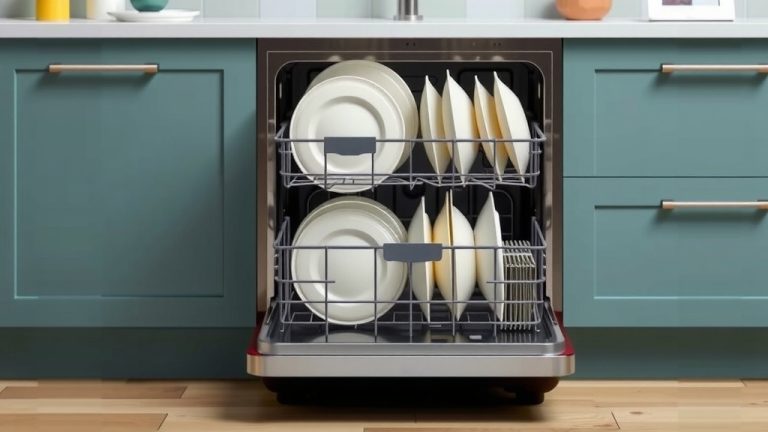
A third rack sits at the very top of the dishwasher. It is a shallow tray designed for utensils, spatulas, and small lids. We found that this single feature changes how you load the machine.
Without a third rack, you have to jam silverware into a basket. That basket takes up valuable space in the bottom rack. With a third rack, the bottom rack is freed up for plates and pots. You can fit more dishes in the same size machine.
Most buyers who skip this feature regret it later. It is worth the upgrade.
Adjustable Tines and Fold-Down Racks
Look for rows of prongs (tines) that you can fold down. This lets you create flat space for large pots and casserole dishes. We found that adjustable tines are the difference between a full load and a half load.
You might also want a rack that raises or lowers. This gives you clearance for tall glasses on the top and platters on the bottom. It is a small feature, but it adds real flexibility.
Cutlery Baskets vs. Third Racks
Some dishwashers offer a cutlery basket with a lid. This works fine, but it takes up space. If you have the choice, go with a third rack first. If the model only has a basket, make sure the basket is removable so you can load bulky items in that spot.
Energy Efficiency and Water Usage
Your dishwasher runs almost every day. Over a year, that adds up on your utility bill. The Energy Star label is your shortcut to savings. It is a government-backed rating that tells you the machine meets strict efficiency guidelines.
We found that an Energy Star dishwasher uses about 3 to 4 gallons of water per load. Older models can use 8 to 10 gallons. That difference is huge, especially if you have a family.
Energy Star models also use less electricity. They have better insulation and more efficient motors. You might pay a little more upfront, but you save every single month.
Control Types: Buttons, Knobs, or Hidden Touch Panels
This is a matter of personal taste, but it is worth thinking about. Some people love a physical dial. Others prefer a touchscreen. We found that top-mounted controls are the best choice for families.
Top-mounted controls sit on the edge of the door. They are hidden when the door is closed. This gives your kitchen a sleek, seamless look. It also keeps curious toddlers from pressing buttons.
Front-mounted controls are easier to reach. But they can be accidentally pressed when you bump into the machine. Decide which trade-off you prefer before you buy.
Quick Checklist Before You Buy
Use this list when you are at the store or scrolling online. If the model checks most of these boxes, it is a solid pick.
- Noise rating of 44 dBA or lower for quiet operation.
- Stainless steel tub for better drying and durability.
- Third rack for utensils and small items.
- Soil sensor to save water and energy automatically.
- At least 3 wash cycles including Heavy, Normal, and Quick.
- Energy Star label to cut your utility bills.
Comparing Popular Feature Combinations
Not every dishwasher has everything. Here is a quick comparison of typical feature sets across budget tiers. Use it as a guide, not a rule.
| Feature | Budget Model | Mid-Range Model | Premium Model |
|---|---|---|---|
| Noise Level (dBA) | 50-55 | 44-48 | 38-42 |
| Tub Material | Plastic | Stainless Steel | Stainless Steel |
| Third Rack | No | Yes | Yes |
| Soil Sensor | No | Yes | Yes |
| Energy Star | Sometimes | Yes | Yes |
| Drying Type | Standard Heat | Heated + Fan | Condensation + Fan |
We found that mid-range models offer the best value for most households. They hit the sweet spot of quiet operation, flexible racks, and energy savings without the premium price tag.
Smart Features: Are They Worth It?
Many new dishwashers come with Wi-Fi and app control. You can start a cycle from your phone or get a notification when it is done. We found that this is a nice convenience, but it is not a must-have.
If you often forget to start the dishwasher before bed, a delay start timer does the same job. It is built into most models and costs nothing extra. You set the timer, and the machine runs later.
Smart features become more useful if you have a busy schedule. You can start a load from work so it finishes when you get home. But for most people, the basic mechanical features matter more than the app.
Fitting the Dishwasher Into Your Kitchen
Before you fall in love with a specific model, measure your space. Standard dishwashers are 24 inches wide. But some compact models are 18 inches. We found that people often overlook this and end up with a machine that does not fit.
Check the height too. Some models have adjustable legs. Others are fixed. Measure from the floor to the underside of your countertop. Also, check the depth so the door opens fully without hitting the sink or cabinet.
If you are replacing an old unit, take note of where the water line and power cord connect. Most models use the same connections, but it is worth a quick look.
Installation Considerations and Hidden Costs
The sticker price is not the final price. We found that installation can add $100 to $200 to your total. Some stores include it for free during sales events. Always ask.
You also need a dedicated circuit for the dishwasher. Most kitchens have this already. If you are in an older home, you might need an electrician. That is an extra cost to plan for.
Finally, check the water pressure in your home. Dishwashers need a minimum pressure to work well. Low pressure means poor cleaning and longer cycles. A simple water pressure gauge at the hardware store tells you what you need to know.
Take your time with these checks. A few minutes of measuring saves you a headache on installation day.
Conclusion
You now know exactly what to look for when buying a dishwasher. Start with the noise rating and the tub material. These two features will shape how you feel about the machine every single day.
Next, check for a third rack, a soil sensor, and the Energy Star label. These features save you time, money, and frustration. They are the ones you will use most.
Your next step is simple. Grab the quick checklist from above and compare a few models online. Write down the dBA rating and tub material first. Then, go to a store and see the racks in person. You will find the right fit before you know it. Happy dishwashing.
Frequently Asked Questions
How many place settings do I need in a dishwasher?
Most standard dishwashers hold 12 to 16 place settings. We found that a 14-place setting model works for most families of four. If you entertain often, look for 16 place settings to fit extra platters and serving bowls.
Should I buy a dishwasher with a food disposal built in?
A built-in food grinder is not necessary. We found that modern dishwashers have filters that catch food particles. You just scrape off large chunks before loading. Skip the grinder and save some money. A filter system works well for everyday messes.
Are quiet dishwashers worth the extra money?
Yes, if you have an open floor plan or run the dishwasher at night. We found that dropping from 50 dBA to 42 dBA is a big difference in real life. It can cost $100 to $200 more. If you watch TV in the kitchen, the upgrade is worth it.
Do dishwashers with stainless steel tubs really dry dishes better?
They do. Stainless steel holds heat, which helps dishes dry faster. Plastic tubs cool down quickly and leave water spots. We found that the difference is obvious with plastic items like Tupperware. Steel tubs also resist odors and stains better over time.
What is the average lifespan of a dishwasher?
Most dishwashers last 8 to 10 years with regular use. We found that models with stainless steel tubs tend to last longer than those with plastic. Taking care of the filter and running vinegar through it monthly helps extend the life.