Best Washer Dryer Combo: Your Ultimate Buying Guide
Finding the best washer and dryer combo depends on your specific needs and budget. We found that all-in-one units are fantastic space-savers, while separate machines offer more flexibility and capacity for larger households. Your ideal choice balances these factors for peak laundry efficiency.
When looking for a combo, consider factors like drum size, energy efficiency ratings, and special wash cycles. Many people overlook the importance of noise levels and available smart features. We found that top-rated models often combine advanced technology with user-friendly designs for a superior laundry experience.
- All-in-one units save space but may have smaller capacities.
- Separate machines offer more flexibility and higher capacity.
- Consider drum size, energy ratings, and noise levels.
- Smart features can add convenience for busy households.
Let’s walk through the key differences and features to help you find the perfect washer and dryer combo for your home.
Choosing Your Ideal Washer & Dryer Setup
Deciding on the best washer and dryer combination for your home involves understanding the different types available. You’re essentially choosing between an all-in-one unit or separate machines. Each has its own set of benefits that cater to various living situations and laundry needs.
All-in-One Washer Dryer Combos: The Space-Saving Solution
An all-in-one unit, sometimes called a stacked or combo washer dryer, combines both washing and drying functions into a single appliance. This is a fantastic option if you have limited space. Think apartments, RVs, or small laundry rooms where fitting two separate machines would be impossible.
We found that these units are incredibly efficient in their use of space. They plug into a single water hookup and a single power outlet (though some require two). Installation is usually simpler, and they offer a sleek, modern look. Many people appreciate the convenience of loading laundry and having it come out dry without moving a single item.
Pros of All-in-One Units
- Space efficiency: The most obvious advantage.
- Convenience: Load and forget, no transferring clothes.
- Aesthetics: Often have a clean, integrated design.
- Simpler installation: Usually requires fewer hookups.
Cons of All-in-One Units
- Smaller capacity: You might not be able to do large loads.
- Longer cycles: Drying often happens within the same drum, which can take more time.
- Maintenance: If one part breaks, the whole unit might need servicing.
- Less drying power: Some research indicates they may not dry as thoroughly as separate dryers.
Separate Washer and Dryer Units: Flexibility and Capacity
On the other hand, separate washers and dryers offer more traditional flexibility. You can choose a washer and dryer that perfectly match your needs, or even mix and match brands and styles. This is the go-to for most larger households or those who do frequent, large laundry loads.
With separate machines, you typically have a wider range of choices in terms of size, features, and specialized cycles. If your washing machine wears out, you can replace just that unit. The same applies to the dryer. Many experts recommend this setup for its durability and versatility.
Pros of Separate Units
- Higher capacity: Handle bulky items and large family loads easily.
- Faster cycles: Washers and dryers work independently, often leading to quicker overall laundry times.
- More customization: Choose specific features for both washing and drying.
- Easier repairs: If one unit fails, the other continues to function.
Cons of Separate Units
- Requires more space: You need room for two distinct appliances.
- More complex installation: Requires separate water, drain, and power connections.
- Higher initial cost: Buying two machines is generally more expensive than one combo unit.
Key Features to Consider for Your Laundry Setup
Regardless of whether you choose an all-in-one or separate units, several features can make a big difference in your laundry routine. We found that looking at these details can help you avoid common laundry day frustrations.
Drum Size Matters: Capacity and Efficiency
The drum size, measured in cubic feet, is one of the most important factors. A larger drum means you can wash and dry more clothes at once. This is especially helpful for bulky items like comforters or for families with a lot of laundry.
For a single person or a couple, a smaller capacity (around 2.0-3.5 cu. ft.) might suffice. For families of three or more, we found that a capacity of 4.0 cu. ft. or larger is often recommended (U.S. Department of Energy). Keep in mind that all-in-one units typically have smaller drums than standalone washers.
Energy Efficiency: Saving Money and the Planet
Look for the ENERGY STAR® label. Appliances with this certification meet strict energy efficiency guidelines set by the U.S. Environmental Protection Agency. This means they use less energy and water, saving you money on utility bills over time. Many guidelines point to ENERGY STAR certified appliances as a smart choice for both your wallet and the environment (U.S. EPA).
Consider both the washer and dryer. Washers use less hot water and less energy to spin clothes dry. Dryers use energy to heat the air. We found that heat pump dryers, while often more expensive upfront, can be significantly more energy-efficient than traditional electric or gas dryers.
Wash Cycles and Special Features: Tailoring to Your Needs
Modern washers and dryers come with a plethora of cycles. Think about the types of fabrics you wash most often. Do you need cycles for delicates, heavy-duty items, or quick washes?
Some popular special features include steam cycles for sanitizing and wrinkle reduction, allergen cycles to remove pet dander and dust mites, and delay start options so your laundry finishes when you’re ready. Smart features, like Wi-Fi connectivity, allow you to control and monitor your machines from your smartphone. This can be a real lifesaver when you’re busy!
Noise Levels: A Peaceful Laundry Room
This is a feature many people overlook until it’s too late! If your laundry room is near a bedroom or living area, a noisy machine can be quite disruptive. Some manufacturers design their machines with advanced suspension systems and sound insulation to minimize vibrations and noise.
We found that looking at reviews that specifically mention noise levels can be very helpful. Some models are advertised as being “quiet” or “low-noise,” but user feedback provides the most honest assessment. A quiet machine can make a surprising difference in your home’s overall peace.
| Feature | All-in-One Unit | Separate Units |
|---|---|---|
| Space Required | Minimal (one appliance footprint) | Moderate to High (two appliance footprints) |
| Capacity | Generally Smaller | Generally Larger |
| Installation | Simpler, fewer hookups | More complex, more hookups |
| Flexibility | Lower (one unit does all) | Higher (independent units) |
| Repair | If one part fails, the whole unit may be affected | Only the failing unit needs repair/replacement |
Your Laundry Day Checklist: What to Look For
Ready to find your perfect match? Here’s a quick checklist to guide your decision:
- Confirm your space: Measure carefully for either one or two machines.
- Assess your needs: How much laundry do you do? What types of items?
- Prioritize features: What wash cycles are essential for you?
- Check energy ratings: Aim for ENERGY STAR certified models.
- Read reviews: Pay attention to comments on performance and noise.
- Set your budget: Consider both upfront cost and long-term savings.
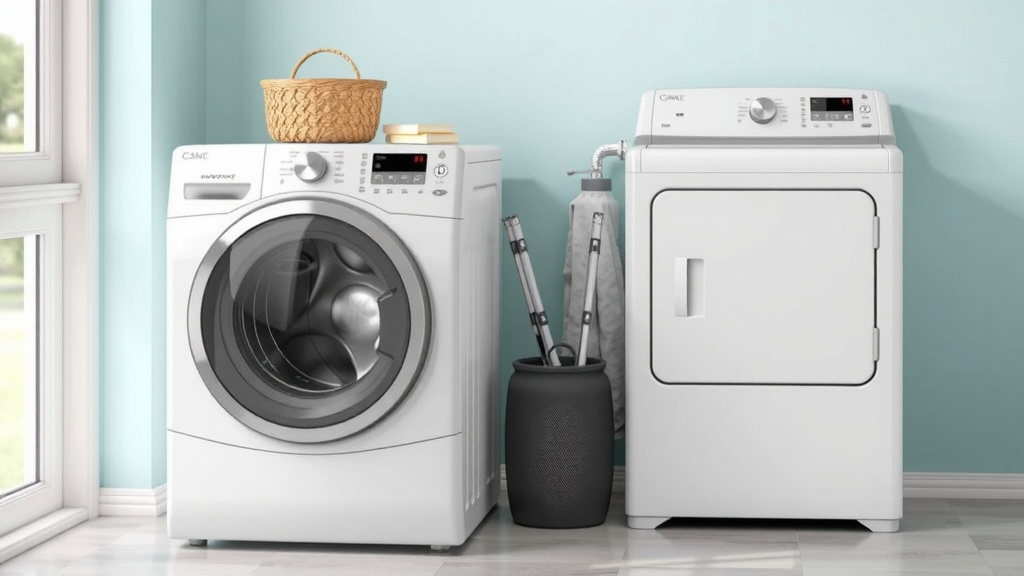
Conclusion
You’ve learned that the best washer and dryer combo really comes down to your unique situation. If space is tight, an all-in-one unit is a smart, convenient choice. For larger homes or bigger laundry loads, separate machines offer more power and flexibility. Remember to consider drum size, energy ratings, and those handy special cycles. Now that you know the key differences, you’re ready to choose the laundry setup that will make your chores a breeze. Take a moment to measure your space and consider your typical laundry needs, then make your selection!
Frequently Asked Questions
Are all-in-one washer dryer combos worth the money?
All-in-one units can be worth the money if you prioritize space-saving and convenience. They are a great solution for small apartments or homes where space is limited. While they might have a higher initial cost per unit than a single machine, they eliminate the need for two separate appliances.
How long do all-in-one washer dryer combos typically last?
The lifespan of an all-in-one unit can vary, but generally, they might have a slightly shorter lifespan than separate machines. This is because both the washer and dryer components are housed in a single unit, meaning if one part fails, the entire appliance may need servicing or replacement. Proper maintenance can help extend their life.
Can I wash and dry large loads in an all-in-one unit?
Most all-in-one units have a smaller capacity compared to separate washers and dryers. While they can handle standard loads, you may find it challenging to wash and dry very large items like comforters or bulky bedding without exceeding the drum’s capacity. You might need to do smaller, more frequent loads.
What are the main energy efficiency differences between combo units and separate machines?
ENERGY STAR certified all-in-one units are designed to be efficient. However, separate dryers, especially heat pump models, often offer even greater energy savings for the drying function due to their technology. When comparing, always look for the ENERGY STAR label on both machines.
Is it better to buy a washer and dryer separately or as a set?
Buying separately allows you to customize your choices based on specific needs for washing and drying, and potentially find better deals. Purchasing as a set can sometimes offer a slight discount and ensures matching aesthetics. For maximum flexibility and capacity, separate units are often preferred, especially for larger households.