How to Choose a Washer and Dryer: 2026 Guide
Buying a washer and dryer comes down to matching the machine to your home, your laundry habits, and your budget. The best choice isn’t the most expensive model—it’s the one that fits your space and how often you actually do laundry. We found that starting with your available space and hookup type cuts your options in half right away.
You’re not just picking an appliance; you’re picking a machine you’ll live with for the next 10 to 15 years. That’s a big commitment, and we get it. Between front-loaders, top-loaders, stackable units, and all-in-one combos, the choices can feel overwhelming. We’re here to help you sort through the noise and focus on what actually matters.
- Check your hookup: If you have a 220V outlet, you need an electric dryer. A gas hookup means a gas dryer.
- Measure your space: A standard washer is 27 inches wide, but you need room for hoses and venting.
- Choose your type: Front-loaders clean better and stack, top-loaders are easier on your back.
- Set a realistic budget: Great mid-range sets run $800–$1,500, and you don’t need the fanciest model.
- Match the capacity: A 4.5 cubic foot drum is ideal for a family of four.
Below, we’ll walk you through the exact steps to pick the right washer and dryer pair for your home, your family size, and your wallet.
Choosing the Right Washer and Dryer Setup for Your Home
Start with your laundry room’s physical layout. This single step removes half the models available. You will save time and avoid buyer’s remorse by measuring first.
We found that most people overlook the obvious details. They fall in love with a machine online, only to realize it doesn’t fit the closet. Check your hookup type and dimensions before you browse anything else.
Electric vs. Gas Dryer Hookups
Look behind your current machines. You will see either a 220-volt outlet for an electric dryer or a gas valve on the wall. This is your starting line.
Electric dryers are more common and easier to install. Gas dryers cost more upfront but are cheaper to run over time. Many experts say gas dries clothes faster because it heats up quicker. If you are moving into a new home, check the hookup during the tour. You don’t want any surprises on delivery day.
Measuring for Width, Depth, and Venting
Standard washers and dryers are about 27 inches wide. That sounds simple enough, but you need extra wiggle room. You need space for the hoses, the power cord, and your own hands to reach the shut-off valves.
- Measure the width, depth, and height of the opening.
- Leave at least 1 inch of clearance on each side.
- Leave 5 to 6 inches behind the machines for hoses.
- Check the door swing. Can you fully open the washer lid?
- Is there a path to the outside for the dryer vent?
Also, check your doorways and hallways. A 27-inch machine needs to travel from your front door to the laundry room. Consider the path of a large appliance that weighs over 150 pounds. If you have tight, narrow stairs, that bigger machine might be a bad fit.
Front-Load vs. Top-Load: The Big Debate
This is the main fork in the road. Each type has distinct pros and cons. Your choice affects cleaning power, your back, and your monthly water bill.
We found that people often choose based on what they grew up with. But your habits should drive this decision, not nostalgia.
Why Front-Loaders Clean Better
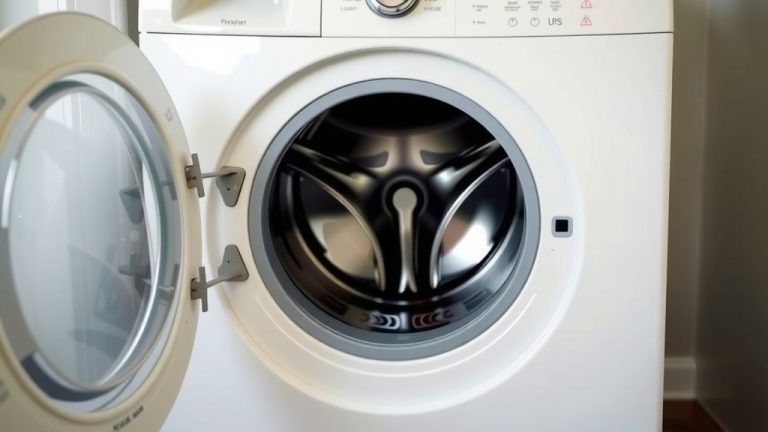
Front-loaders use a tumbling action. The clothes fall through water over and over again. This gives you a deep, thorough clean without a center agitator.
They are gentler on fabrics because they don’t pull and twist. They also use less water and energy, which saves you money every month. Another huge perk is stackability. You can put the dryer on top of the washer to save floor space.
There is one drawback: mold. The rubber gasket can trap moisture and grow mildew if you leave the door shut. You’ll need a habit of leaving the door open between loads. Many experts say this is the trade-off for that superior clean.
Why Top-Loaders Are Easier on Your Body
Top-loaders let you stand upright while loading and unloading. No bending, no kneeling, no squatting. If you have back problems, this is a game-changer for your routine.
Traditional top-loaders have a center agitator. These are tough on clothes and use a lot of water. However, the newer high-efficiency models use an impeller plate instead. They still clean well but are much gentler and use less water.
You cannot stack a top-loader. They take up more floor space, but they are usually cheaper to buy. They are simpler machines with fewer parts that break down.
The Middle Ground: High-Efficiency Top-Loaders
These models skip the center agitator entirely. They use a low-profile disc at the bottom to create friction and move clothes through the water. They combine the convenience of a top-loader with the efficiency of a front-loader. They also tend to have larger drums. This makes them a solid pick for bulky items like comforters.
Just remember, they still need extra room for the lid to flip up. Always measure the vertical clearance above the machine.
Matching Capacity to Your Family Size
Bigger is not always better when it comes to drums. If you live alone, a giant 5.0 cubic foot drum just wastes water and energy. If you have kids, a small machine means doing laundry every single day.
We found that 4.5 cubic feet is the magic number for a family of four. This size handles a king-size comforter and a week of shirts, pants, and towels in one go.
| Household Size | Recommended Drum Size | Why It Works |
|---|---|---|
| 1-2 people | 3.5 – 4.0 cu. ft. | You won’t waste water on small loads. |
| Family of 3-4 | 4.5 – 5.0 cu. ft. | Handles bulky items and weekly clothes. |
| Family of 5+ | 5.0+ cu. ft. | Cuts down your loads per week. |
Check your dryer capacity too. The dryer should be slightly larger than the washer. This gives clothes room to tumble and dry quickly. A 7.4 cubic foot dryer is a common match for a 4.5 cubic foot washer.
Setting a Realistic Budget for a New Set
You can spend anywhere from $400 to $3,000 on a washer alone. The price range is wild. We found that the sweet spot for most families is the $800 to $1,500 range for the full set. This usually gets you solid, reliable machines without the fancy bells and whistles.
Budget models get the job done. They just have fewer cycles and louder motors. Mid-range models add better stain removal, steam features, and mold-resistant door seals. High-end models are for enthusiasts who want smart features and absolute quiet.
The 15-Year Commitment
A washer and dryer is a long-term investment. You will use these machines weekly for over a decade. Spending a little more upfront for better build quality often pays off.
However, don’t buy the most expensive model just because it looks cool. Many experts say the extra cost often goes to unnecessary smart features you’ll never use. Set a firm price ceiling and stick to it.
Standard installation runs about $150 to $300. You should also budget for new hoses. Replacing the rubber hoses with braided stainless steel ones is worth the $30 extra. It greatly reduces the risk of flooding your laundry room (National Fire Protection Association).
Matching Features to Your Laundry Habits
You don’t need everything. You need what you’ll actually use. Look at how you do laundry, not what the salesperson suggests. If you’re a set-it-and-forget-it person, skip the manual dials and get a machine with saved cycles.
We found that two features matter more than any others. The first is a steam cycle for removing wrinkles and killing dust mites. The second is a quick-wash option for small, lightly soiled loads.
Fill in the 5-Minute Checklist Before You Buy
We created a simple final checklist to run through before you hit “add to cart”. If you can answer “yes” to all of these, the machine is likely a winner for your home.
- Perfect fit: Does the machine fit with clearance for hoses and doors?
- Correct hookup: Is it electric or gas to match your wall?
- Right type: Front-load for space and clean, top-load for back relief?
- Adequate capacity: Can it handle your biggest weekly load?
- Price tag: Does it fit your budget without sacrificing basic quality?
- Return policy: Can you return it if the installation fails?
Stacked Units and All-in-One Combos
Space constraints change everything. If you live in an apartment or condo, a traditional side-by-side setup might not fit. You have two smaller-footprint alternatives to consider.
Stackable units are separate washer and dryer machines that mount on top of each other. You need a stacking kit with a metal bracket to secure them. These work well because they offer full-size capacity in a smaller footprint.
All-in-one combos are a single machine that washes and dries in the same drum. You literally load the clothes, press start, and come back later. The trade-off is that these take much longer to dry. Some cycles take three to four hours. They are also prone to more mechanical failures because they pack two machines into one body.
Many experts say all-in-one combos are best for single people, tiny homes, or boats. If you have a family and a standard laundry area, stick with a separate washer and dryer set.
Conclusion
Choosing the right washer and dryer starts with your laundry room, not the showroom. Measure your space first. Check the hookup type. Then match the machine to how your family actually does laundry.
You don’t need the most expensive set on the market. You need the one that fits your home and your habits. Front-loaders give you a better clean and stackable convenience. Top-loaders are easier on your back. Most families do great with a mid-range pair in the $800 to $1,500 range.
Your next step is simple: grab a tape measure and check your hookup today. Once you know those two facts, you can confidently shop for the right machine. Your perfect pair is out there waiting.
Frequently Asked Questions
How long should a washer and dryer last?
You can expect a quality washer and dryer to last about 10 to 15 years with regular maintenance. Front-loaders tend to have more parts that can wear out over time. Stick with reputable brands and you’ll get solid service for over a decade.
Should I buy the same brand for both washer and dryer?
You don’t have to match brands, but it’s usually easier to buy a matching set. Matching pairs are designed to fit together well and often come bundled at a better price. If you’re replacing just one machine, you can pair it with your existing unit as long as the dimensions align.
What is the best time of year to buy a washer and dryer?
You’ll find the best deals during major holiday weekends like Memorial Day, Labor Day, and Black Friday. September is also a strong month as stores clear inventory for new models. Appliance prices are always negotiable, so don’t be afraid to ask for a discount or free delivery.
Is it cheaper to buy a washer and dryer set or separately?
Buying a set is almost always cheaper than purchasing each unit separately. Retailers discount pairs to move more inventory and clear warehouse space. You’ll also save on installation costs if you bundle both machines in one delivery.
Can I install a washer and dryer myself?
You can install a washer yourself if you have basic DIY skills and the right hookups. Dryers are trickier, especially gas models that require proper ventilation. Many experts recommend professional installation for gas dryers to avoid safety risks. Your local utility company often offers installation rebates too.