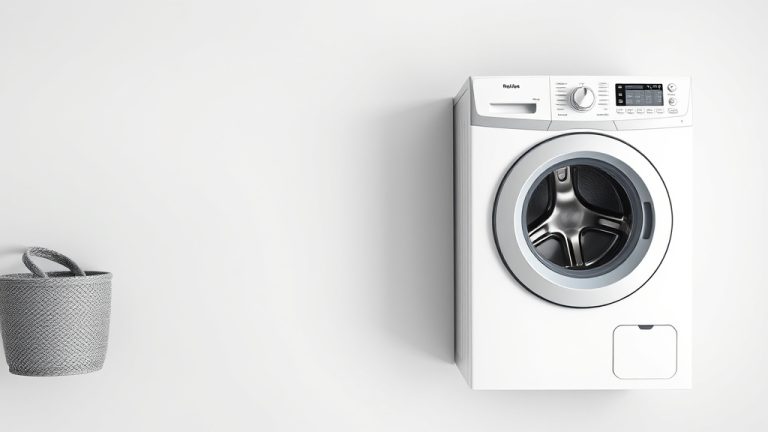
Best Portable Washer: Your Top Picks for Clean Laundry
The best portable washer for you really depends on your specific needs, like space and how much laundry you do. Generally, a compact, top-loading portable washer is a great choice for small apartments or RVs because it’s easy to move and use. These machines connect to a standard faucet and drain into a sink, making setup a breeze.
Finding the right portable washing machine means considering factors beyond just cleaning power. You’ll want to think about its size, capacity, and ease of portability. Many models offer different wash cycles, mimicking larger machines. We found that researching these features helps you avoid common frustrations and get a clean you can rely on.
- Portable washers connect to a faucet and drain into a sink.
- Top-loading models are usually easier to manage for small spaces.
- Consider size, capacity, and how easy it is to move.
- Look for different wash cycles if you need more versatility.
Ready to find a machine that fits your lifestyle? Let’s walk through what makes a portable washer a winner and help you choose the perfect one for your home. Our guide to washing machine cost can help you understand the price range.
Choosing Your Ideal Portable Washing Machine
When you’re looking for the best portable washer, you’re not just buying an appliance. You’re finding a solution to a common household chore that works for your unique living situation. Whether you’re in a tiny studio apartment, a spacious RV, or just want more flexibility, there’s a portable washer designed to make your life easier. We’ve researched what makes these compact machines so popular, and it boils down to convenience and effectiveness.
Think about it: no more hauling heavy laundry baskets to a communal laundromat or dealing with broken machines. A portable washer brings the laundry room right to you. The key is understanding what features matter most for your needs. Let’s break down how to find the perfect match for your laundry days.
Understanding the Mechanics: How They Work
Portable washers are surprisingly simple in their operation. They’re designed to be plug-and-play, or as close to it as possible. Most models connect to your standard kitchen or bathroom faucet using an adapter. This is how they get the water they need for washing and rinsing.
Water In, Water Out: The Plumbing Connection
The most common setup involves a hose that attaches to your faucet. You simply turn on the tap to fill the drum. For draining, a separate hose typically rests over the edge of your sink or into a bathtub. The machine uses a small pump to push the dirty water out. We found that this sink-drainage system is a major reason why people choose these units, as it requires no permanent plumbing.
Some larger, more advanced portable washers might have different drainage options, but the sink-drain method is the standard for true portability. It’s a clever design that avoids the need for professional installation, saving you time and money.
Powering Your Wash
Don’t let their small size fool you; portable washers plug into a regular household electrical outlet. You won’t need any special wiring. Just find a convenient spot near a faucet and an outlet, and you’re pretty much ready to go. The electrical components are designed to be safe and efficient for their size.
Key Features to Consider for Your Portable Washer
When you’re comparing different models, certain features stand out. These will directly impact how well the washer suits your lifestyle and laundry habits. We looked at several factors that really make a difference in daily use.
Capacity: How Much Can It Actually Hold?
This is perhaps the most important factor after basic functionality. Portable washers are measured by their capacity, usually in pounds or cubic feet. A typical small portable washer might handle about 5-10 pounds of laundry per load. This is great for small loads, delicates, or a few outfits at a time.
What does that mean in real terms? A 5-pound capacity might fit about 10 t-shirts or a few pairs of jeans. If you have a large family or do big loads, you might need to do multiple small loads, or consider a larger, though less portable, model. Researching this capacity will help you manage your expectations and avoid overloading the machine, which can damage it.
Size and Portability: Fitting Your Space
The term “portable” means different things to different people. Some are lightweight and easy to move around. Others are a bit heavier but still designed to be stored away. Measure the space where you plan to use or store the washer. Ensure it fits comfortably.
Consider the dimensions: width, depth, and height. Also, think about the weight. If you plan to move it frequently, say from a closet to the kitchen sink and back, a lighter model is essential. We found that many users appreciate washers with wheels for easier transport.
Wash Cycles and Features: More Than Just a Spin
While basic models might just offer a wash and spin cycle, many modern portable washers come with a surprising range of options. You might find cycles for delicates, heavy-duty items, or even a quick wash. These cycles adjust the water temperature, spin speed, and wash time.
Look for features like adjustable water levels, delay start, or different spin speeds. These can help you customize the wash for different fabrics and soil levels. It’s like having a mini-laundry expert in your home, but much quieter!
Ease of Use and Controls
Simple controls are a big plus. We looked for models with intuitive dials or buttons. You want to be able to select your cycle and start the machine without needing an engineering degree. Clear labels and easy-to-understand instructions are always a good sign.
Think about how you’ll interact with the machine daily. Is the lid easy to open and close? Is the control panel accessible? These small details contribute to a frustration-free laundry experience.
Top Portable Washer Types and Their Use Cases
Not all portable washers are created equal. They tend to fall into a few main categories, each suited for different needs.
Compact Top-Loaders: The All-Around Favorite
These are the most common type you’ll find. They look like miniature versions of traditional top-loading washing machines. You add clothes through the lid on top. They are generally very user-friendly and efficient for their size.
Why they’re great:
- Easy to load and unload.
- Controls are usually straightforward.
- Good for most everyday laundry needs.
- Often stackable with a separate portable dryer.
Many experts suggest these for first-time portable washer buyers (Consumer Reports).
Twin Tub Washers: For the Hands-On User
These have two separate tubs: one for washing and one for spinning to remove excess water. You move the clothes from the wash tub to the spin tub manually. They often offer more control over the wash process.
Consider these if:
- You want to separate washing and spinning.
- You enjoy having more control over each step.
- You don’t mind the extra manual step.
They can be very effective, but require more user involvement.
Automatic Portable Washers: The Set-It-and-Forget-It Option
These are more advanced and mimic the functionality of full-sized automatic washers. They have built-in programs that handle the entire wash and spin cycle without user intervention beyond selecting the program. They often have larger capacities.
They are ideal for:
- Those seeking maximum convenience.
- People with slightly more space.
- Anyone who wants a “smart” laundry experience.
These usually come with a higher price tag but offer the most convenience.
Making the Smart Choice: A Quick Checklist
Before you click “buy,” run through this quick checklist. It helps ensure you’re not missing any key considerations.
- Capacity: Does it fit your typical load size?
- Dimensions: Will it fit your available space?
- Portability: Is it easy to move if needed?
- Features: Does it have the cycles you require?
- Drainage: Is the sink/tub drainage method suitable for you?
- Reviews: What are other users saying about its durability and performance?
By ticking these boxes, you’re well on your way to finding a portable washer that truly fits your life. It’s about finding a practical helper for your laundry needs.
Conclusion
Choosing the best portable washer boils down to matching its capabilities with your lifestyle. You’ve learned how these compact machines connect, what capacity you realistically need, and how portability impacts your choice. Whether you prefer a simple top-loader or a more automatic model, understanding these factors ensures you get a machine that simplifies your laundry routine. Take your measurements, consider your typical laundry loads, and review user feedback. Your perfect portable washer is out there, ready to bring convenience right to your doorstep.
Frequently Asked Questions
How often do I need to clean a portable washer?
You should clean your portable washer regularly, ideally every 1-2 months, to prevent mildew and odors. Wipe down the interior drum and exterior surfaces after each use. Periodically run a cleaning cycle with hot water and vinegar or a specialized washer cleaner.
Can I use regular laundry detergent in a portable washer?
Yes, you can use regular laundry detergent. However, it’s best to use a high-efficiency (HE) detergent and use less of it than you would in a full-sized machine. Too much detergent can lead to over-sudsing and make rinsing difficult in a small drum.
What is the typical lifespan of a portable washer?
The lifespan of a portable washer can vary, but with proper care and maintenance, many can last between 5 to 10 years. Regular cleaning, avoiding overloading, and ensuring proper connections can help extend its working life.
Are portable washers energy-efficient compared to larger machines?
Portable washers generally use less water and electricity per load than their full-sized counterparts because of their smaller capacity. This can make them a more energy-efficient option for individuals or couples with lower laundry volumes.
Can I connect a portable washer to a utility sink?
Yes, utility sinks are a common and suitable option for connecting a portable washer. Ensure the sink is deep enough to accommodate the drainage hose and that the faucet type is compatible with the included adapter for water supply.