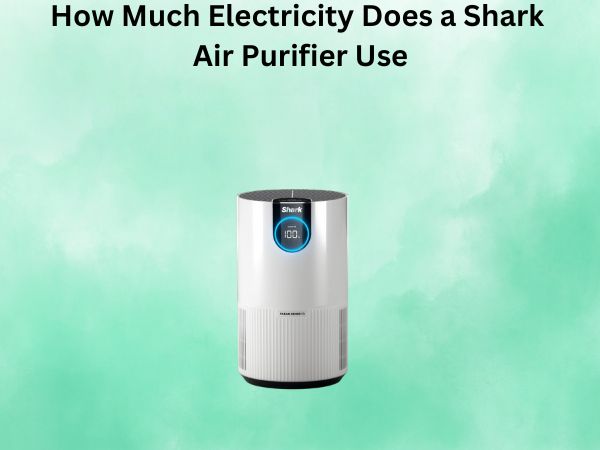
How Much Electricity Does a Shark Air Purifier Use? A Complete Guide to Energy Consumption
Considering a Shark air purifier but wondering about its impact on your electricity bill? It’s a valid concern! Many homeowners want to understand the energy usage of devices that run constantly, like an air purifier keeping their home environment clean. This comprehensive guide will break down everything you need to know about how much electricity Shark air purifiers use, helping you make a confident choice.
Understanding Air Purifier Energy Consumption Basics
Before we dive into Shark-specific models, it’s helpful to understand how air purifier energy consumption actually works. Think of it like a car engine—the more powerful the motor and the higher the settings, the more fuel it burns. Similarly, air purifiers consume electricity based on their power rating, speed settings, and how long they operate each day.
Most air purifiers, including Shark models, are measured in watts. This is the key metric you’ll see on the product specifications. Understanding watts helps you calculate your monthly electricity costs and determine whether the device fits your budget and lifestyle.
Typical Power Ratings of Shark Air Purifiers
Shark air purifiers generally range from about 22 watts to 75 watts, depending on the model and its capabilities. This might sound like a lot, but let’s put it in perspective. Your average desktop computer uses around 100-150 watts, so a Shark air purifier actually consumes considerably less energy than many common household devices you’re probably already using.
Entry-Level Shark Models
The smaller, more compact Shark air purifiers typically consume around 22 to 35 watts. These are your budget-friendly options that work well for smaller rooms or personal spaces. If you’re placing one in a bedroom or home office, these lightweight models should do the job without consuming excessive electricity.
Mid-Range Shark Models
The sweet spot for many families is the mid-range models, which usually operate between 40 to 55 watts. These purifiers cover larger room sizes and offer multiple fan speed settings, making them versatile for different needs throughout your home.
High-Performance Shark Models
Premium Shark air purifiers with advanced features and larger coverage areas might use 60 to 75 watts. These models often include smart technology, UV-C light features, or ionizers that contribute to their higher power consumption. However, they’re still remarkably efficient compared to other household appliances.
How Fan Speed Affects Electricity Usage
Here’s something crucial that many people don’t realize: not all air purifiers use the same amount of electricity all the time. Most Shark models come with multiple fan speed settings, and this dramatically changes your power consumption.
- Low speed: Uses approximately 25-35% of the device’s maximum wattage
- Medium speed: Uses approximately 50-70% of the device’s maximum wattage
- High speed: Uses approximately 85-100% of the device’s maximum wattage
- Auto mode: Adjusts speeds based on air quality, averaging around 40-60% usage
This means if you’re running your Shark air purifier on low speed overnight, you’re consuming far less electricity than if you’re running it on high speed during the day. Smart usage of these settings can significantly reduce your overall energy costs.
Calculating Your Monthly and Annual Electricity Costs
The Math Behind Energy Consumption
Let’s make this practical. To calculate how much electricity your Shark air purifier uses, you need to know three things: the wattage of your specific model, how many hours per day you run it, and your local electricity rate. Here’s the formula:
Daily kilowatt-hours (kWh) = (Watts ÷ 1000) × Hours per day
For example, if you have a 50-watt Shark air purifier and run it for 8 hours daily:
(50 ÷ 1000) × 8 = 0.4 kWh per day
Multiply that by 30 days, and you get 12 kWh per month. At an average electricity rate of $0.12 per kWh (which varies by location), that’s about $1.44 per month or roughly $17.28 per year.
Real-World Cost Scenarios
Let’s explore different usage patterns to give you a better picture of potential costs. Assume we’re using a 50-watt Shark air purifier with the national average electricity rate.
- 8 hours daily usage: Approximately $1.44 per month ($17.28 per year)
- 12 hours daily usage: Approximately $2.16 per month ($25.92 per year)
- 24 hours daily usage (continuous): Approximately $4.32 per month ($51.84 per year)
Even running your air purifier continuously 24/7, the cost is minimal compared to major appliances like air conditioning units or electric heating systems.
Comparing Shark Air Purifiers with Other Brands
Shark vs. Budget Alternatives
Many budget air purifiers might seem cheaper upfront, but some actually consume more electricity due to less efficient motors. Shark models are engineered for energy efficiency without compromising performance, making them a smart long-term investment.
Shark vs. Premium Brands
High-end air purifier brands sometimes use significantly more power due to advanced technologies like HEPA filtration combined with activated carbon and UV sterilization. While Shark models are competitive, the premium brands might use 20-40% more electricity for marginally better air quality improvements.
Factors That Influence Actual Electricity Usage
The wattage rating on your Shark air purifier is just the starting point. Several factors affect how much electricity you actually consume.
Room Size and Air Quality
If you’re running your air purifier in a room with poor air quality, it might run on higher settings more frequently, consuming more electricity. Conversely, a room that’s already relatively clean allows the purifier to operate on lower settings or even use the auto mode more efficiently.
Filter Condition
A clogged filter forces the motor to work harder, increasing electricity consumption. Keeping your Shark air purifier’s filters clean or replacing them according to the manufacturer’s recommendations actually helps maintain energy efficiency. It’s like keeping your car’s air filter clean—it helps the engine run smoother and more efficiently.
Room Temperature and Humidity
Strangely enough, room conditions can affect how hard your air purifier works. In extremely dry conditions or very humid environments, certain pollutants behave differently, potentially requiring more filtration work.
Usage Patterns
Your personal usage habits make a huge difference. Running your Shark air purifier all day and night will obviously use more electricity than running it only during sleeping hours or when someone’s home.
Energy-Saving Tips for Shark Air Purifier Usage
Want to minimize your air purifier’s electricity consumption without sacrificing air quality? Here are practical strategies:
- Use the auto mode feature, which adjusts fan speed based on detected pollutants
- Run on low speed in bedrooms or less-polluted areas
- Keep bedroom doors closed so the purifier doesn’t have to work on larger spaces
- Clean or replace filters regularly to maintain efficiency
- Position the purifier centrally in the room for optimal air circulation
- Turn off the device when no one’s home if air quality isn’t a concern
- Use the sleep mode if your Shark model offers it—this typically runs on ultra-low settings
Smart Technology and Its Impact on Energy Use
Many modern Shark air purifiers come with smart features like Wi-Fi connectivity and app controls. Here’s the good news: these smart features themselves use minimal energy. The real benefit is that they help you optimize when and how you run your purifier, potentially saving you money overall.
Imagine being able to turn on your air purifier from your phone 30 minutes before you arrive home. That’s smarter energy management than letting it run all day just in case. Smart scheduling features allow you to set specific times for operation, which can reduce unnecessary runtime.
Understanding the Energy Guide Label
When you’re shopping for a Shark air purifier, look for the energy guide label or specifications sheet. This will clearly list the wattage and estimated annual energy consumption. Many manufacturers now provide this information to help consumers make informed decisions. Don’t ignore this information—it’s valuable for understanding long-term costs.
The Environmental Impact of Your Shark Air Purifier
Beyond just your wallet, it’s worth considering the environmental impact of running an air purifier. The good news is that Shark air purifiers are relatively eco-friendly. Consuming 50 watts continuously is roughly equivalent to the carbon footprint of driving your car a few miles per week. Compare that to traditional pollution sources, and air purification is actually an environmentally responsible choice for maintaining indoor air quality.
Is the Electricity Cost Worth It?
Here’s the real question: given the minimal electricity costs, is a Shark air purifier worth the investment? Consider that you’re spending roughly $15-50 per year in electricity to provide clean air for you and your family. That’s incredibly cheap insurance against dust, allergens, pet dander, and air pollution. Most people spend more on coffee in a month than they’ll spend on operating an air purifier for an entire year.
Maintenance and Its Relationship to Energy Efficiency
Regular maintenance directly impacts how efficiently your Shark air purifier operates. Dust and debris accumulation on the motor vents, fan blades, or sensors can force the device to work harder, consuming more electricity. Following the manufacturer’s maintenance recommendations isn’t just about extending the device’s lifespan—it’s also about maintaining optimal energy efficiency.
Warranty and Energy Guarantees
Shark backs their air purifiers with substantial warranties, and the energy efficiency is part of what they’re confident about. If your specific model isn’t performing as expected energy-wise, you typically have recourse through customer service. This added peace of mind is worth considering when evaluating the overall value proposition.
Making Your Final Decision
When you’re deciding whether to purchase a Shark air purifier, the electricity cost should be one of your last concerns. At such minimal monthly expenses ($1-5 for most models), the deciding factors should be room coverage, filtration quality, noise levels, and design. The energy efficiency is excellent across the board with Shark models, so you’re not sacrificing anything by choosing one over other brands in this category.
Conclusion
Shark air purifiers are remarkably energy-efficient devices that use between 22 and 75 watts depending on the model and settings. This translates to roughly $15-50 per year in electricity costs for most households, making them one of the most economical investments you can make for your family’s health. By understanding how these devices consume electricity and implementing smart usage strategies, you can optimize both air quality and energy efficiency in your home. Don’t let concerns about electricity consumption deter you from improving your indoor air quality—the actual costs are minimal, and the health benefits are substantial. Whether you run your Shark air purifier occasionally or continuously, you’re making a financially sound and environmentally responsible choice for cleaner air.
Frequently Asked Questions
What is the average wattage of most Shark air purifiers?
Most Shark air purifiers consume between 40 to 55 watts on average, though smaller models can use as little as 22 watts and larger models might reach 75 watts. The specific wattage depends on the model size, features, and filtration system complexity. You can find the exact wattage listed in your product’s specifications or on the energy guide label.
Can I reduce electricity consumption by using lower fan speeds?
Absolutely, yes. Running your Shark air purifier on low speed can reduce electricity consumption by up to 70% compared to high speed. Using the auto mode is also an excellent strategy since it automatically adjusts the fan speed based on detected air quality, allowing your device to operate efficiently without wasting energy on unnecessary high speeds.
How much will a Shark air purifier add to my monthly electric bill?
For a typical 50-watt Shark air purifier running 8 hours daily, expect to add approximately $1.44 to $2.16 per month to your electric bill, depending on your local electricity rates. Running it 24/7 would cost around $4.32 monthly. These are rough estimates and will vary based on your specific model and local utility rates.
Is it cheaper to run an air purifier continuously or turn it on and off?
Continuous operation uses more total electricity, but turning an air purifier on and off frequently doesn’t save much and can be inconvenient. The best approach is using the auto mode or scheduling operation during times when you’re home and need the air quality most. This balances electricity costs with practical air purification needs.
Do smart features in Shark air purifiers increase electricity consumption?
Smart features like Wi-Fi connectivity and app controls use negligible amounts of additional electricity on their own. In fact, smart features can help you reduce overall consumption by allowing remote control and scheduling. The slight increase in standby power draw is typically less than 1 watt, making it a worthwhile trade-off for convenience and control.
“`