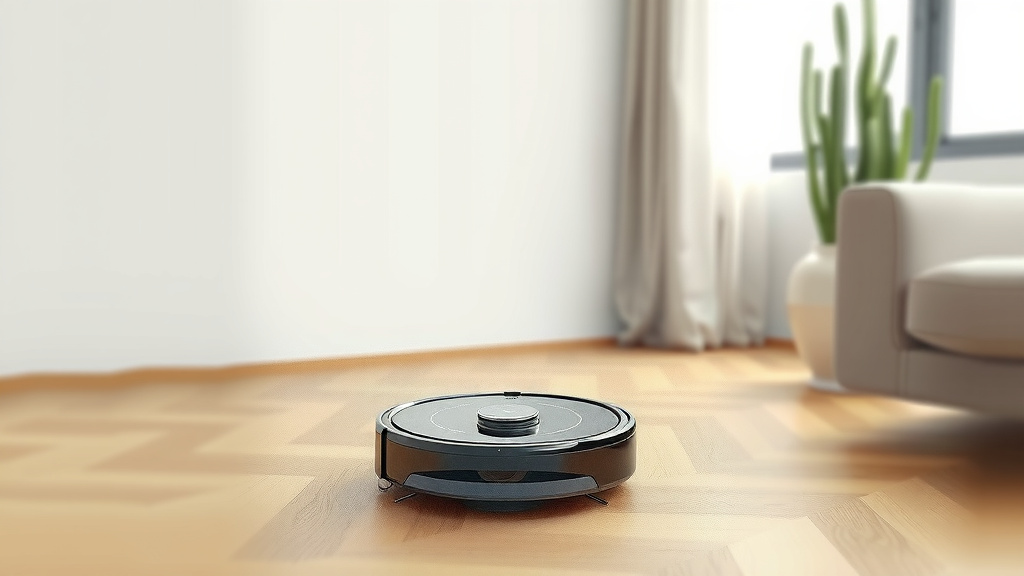
How Robotic Vacuums Work: A Simple Guide
Robotic vacuums work by using a combination of sensors and programmed navigation to map your home and clean your floors automatically. They employ a sophisticated system of brushes and suction to pick up dirt and debris. Many models are designed to be smart enough to avoid stairs and furniture.
These handy devices use various types of sensors, like infrared or bump sensors, to detect obstacles and walls. They also rely on mapping technology, often called SLAM (Simultaneous Localization and Mapping), to create a virtual blueprint of your space. This allows them to clean efficiently and cover every area. We found that the navigation patterns can vary greatly between different brands.
- Robotic vacuums use sensors and programmed navigation.
- They map your home for efficient cleaning.
- Obstacle detection and stair avoidance are common features.
- Brushes and suction collect dirt.
- Navigation patterns differ by model.
Let’s walk through exactly how these little cleaning wizards operate, from their sensing capabilities to how they handle different floor types.
Understanding How Robotic Vacuums Navigate Your Home
You’re probably wondering how these little discs zip around your house without bumping into everything. It’s pretty fascinating, really! They use a smart mix of sensors and programmed smarts to clean effectively. Many experts say it’s all about the sensors and the navigation system working together.
The Brains Behind the Operation: Sensors and Mapping
Think of the sensors as the robot’s eyes and ears. They help it understand its surroundings. Without them, it would just be a bumpy ride! We found that most robotic vacuums rely on a few key types of sensors.
Types of Sensors You’ll Find
You’ll often see infrared sensors. These work a bit like a bat’s echolocation. They send out invisible light beams and measure how long it takes for them to bounce back. This tells the robot how far away an object is. Bump sensors are also common. These are physical switches that trigger when the robot gently touches something. It then knows to change direction.
Many models also use cliff sensors. These are usually located on the underside of the vacuum. They detect a sudden drop, like stairs. This stops your little helper from taking an unexpected tumble down the stairs. We found this feature is a real lifesaver for preventing damage.
Mapping Your Home for Smarter Cleaning
Beyond just avoiding things, robotic vacuums need to know where they’ve been and where they need to go. This is where mapping technology comes in. The most common method is called SLAM, which stands for Simultaneous Localization and Mapping.
Basically, the robot uses its sensors to build a map of your home as it cleans. It figures out where walls are, where furniture is, and creates a path to cover the entire area. You can often see this map in an app on your phone. This allows for more efficient cleaning and prevents the robot from missing spots or going over the same area repeatedly. We found that more advanced models create very detailed maps.
Navigation Patterns: How They Move Around
Once the robot has a map, it needs a plan for how to clean. Different robots use different strategies for this. You might notice your robot moving in straight lines, or maybe it seems a bit more random. Research suggests there are a few common patterns.
Systematic Cleaning Paths
Some robots use a highly systematic approach. They might clean in long, straight lines, much like you would push a traditional vacuum. They’ll often clean in a grid pattern, ensuring they cover every inch of open floor space. After completing one pass, they’ll usually turn and clean in a parallel line.
Edge Cleaning and Spot Cleaning
Many robotic vacuums are programmed to clean the edges of rooms first. They’ll follow along your walls and furniture bases. This is important because dust and debris often collect in these areas. After cleaning the edges, they’ll move to the main floor space. Some robots also have a “spot clean” mode. You can place the robot in a specific area, and it will clean in a tight spiral pattern.
Random vs. Intelligent Navigation
Older or simpler models might use a more random navigation pattern. They’ll bounce off walls and furniture and change direction. While this can eventually cover most areas, it’s less efficient. Newer, more advanced models use the mapping technology we discussed to create a much more intelligent and predictable path. This leads to faster cleaning times and better coverage. We found that the difference in cleaning effectiveness is quite noticeable.
The Cleaning Mechanics: How Dirt Gets Picked Up
So, we’ve covered how they move around. But how do they actually pick up all that dust and debris? It’s a clever system of brushes, suction, and a dustbin.
The Role of Brushes
Most robotic vacuums have at least one main brush roller, often located underneath the vacuum. This roller spins at high speeds. It’s designed to agitate carpets and sweep debris from hard floors. Many models also have small side brushes. These brushes spin outward and sweep dirt from the edges of rooms and along walls towards the main brush and suction area.
Some research suggests that the design of the brush roller can impact its effectiveness, especially on carpets. Different bristle types and designs are used to tackle various types of debris. We found that a good balance of bristles and rubber fins often works best for both carpets and hard floors.
The Power of Suction
As the main brush roller kicks up dirt and debris, the vacuum’s motor creates suction. This suction pulls the particles up through an opening and into the dustbin. The strength of the suction varies greatly between models. Higher-end robots tend to have more powerful motors, which can be better for picking up larger debris or getting deep-seated dirt out of carpets.
You might notice that some robots have adjustable suction power. This allows you to set it higher for carpets and lower for delicate hard floors. This can help conserve battery life and reduce noise. We found that the suction power is a key factor in how thoroughly a robot can clean.
Collecting and Containing the Dirt
All the dust and debris collected is funneled into a small dustbin within the robot. This bin needs to be emptied regularly. The size of the dustbin varies by model. Larger bins mean you can run the robot more times before needing to empty it. Some advanced models come with self-emptying charging docks. When the robot returns to its base, the dock automatically sucks the dirt out of the robot’s bin into a larger bag.
The dustbin also contains a filter. This filter traps fine dust particles and allergens, preventing them from being released back into the air. It’s important to clean or replace these filters regularly to maintain good suction and air quality. Many guidelines recommend cleaning filters monthly (HEPA is a common standard).
A Quick Checklist for Your Robotic Vacuum’s Function
- Sensors detect obstacles.
- Mapping helps it navigate.
- Brushes lift dirt from floors.
- Suction pulls debris into the bin.
- Filters trap fine dust particles.
- Regular maintenance ensures peak performance.
Conclusion
You now have a clear picture of how your robotic vacuum works its magic. It’s a smart combination of sensors for navigation and brushes and suction for cleaning. These devices use advanced mapping to efficiently clean your home, avoiding obstacles and even stairs. Understanding these mechanics means you can better appreciate their cleaning power and know what to expect. To keep yours running optimally, remember regular maintenance like cleaning filters and emptying the dustbin. Now, you can feel confident letting your little helper tackle the floor cleaning!
Frequently Asked Questions
Do robotic vacuums really clean every part of my floor?
Most modern robotic vacuums use intelligent mapping and systematic cleaning patterns to cover most accessible areas. Some may struggle with very tight corners or complex furniture layouts. Research suggests they are excellent for daily maintenance and covering open floor space efficiently.
How do robotic vacuums handle different floor types like carpet and hardwood?
Robotic vacuums typically adjust their cleaning mode based on the floor type. They often increase suction power on carpets to lift embedded dirt. For hard floors, they might use a gentler brush setting. Some models allow manual adjustments for specific needs.
What happens if my robotic vacuum gets stuck under furniture?
Many robotic vacuums are equipped with sensors that detect when they are stuck or low on battery. They will usually stop and send an alert to your smartphone app. Some advanced models can even backtrack or attempt to free themselves. You might need to manually retrieve it in some cases.
How often do I need to empty the dustbin and clean the filters?
This depends on the size of your home and how often you run the vacuum. For most households, emptying the dustbin every few uses is recommended. Cleaning the filters monthly, or as per the manufacturer’s instructions, is important for maintaining good suction and air quality.
Can a robotic vacuum replace my traditional vacuum cleaner entirely?
For daily upkeep and keeping floors generally clean, a robotic vacuum can significantly reduce your need for a traditional vacuum. However, for deep cleaning, heavily soiled areas, or reaching difficult spots, a traditional vacuum might still be necessary. We found they work best as a supplement.