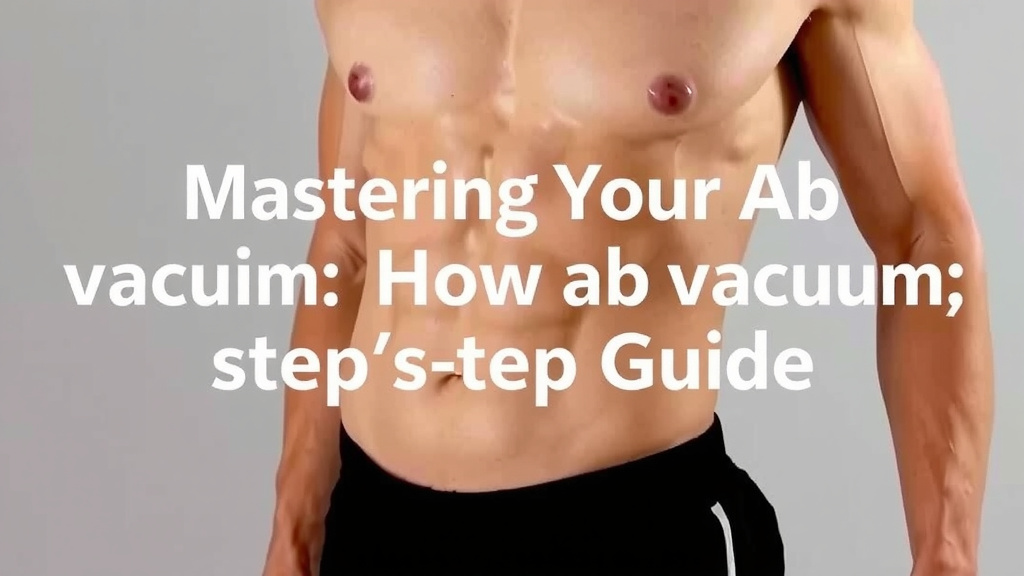
Mastering Your Ab Vacuum: A Step-by-Step Guide
The easiest way to do an ab vacuum is by lying on your back with your knees bent. You’ll then exhale fully and draw your belly button in toward your spine, holding the contraction. Many people find this simple technique incredibly effective for strengthening their core muscles.
This exercise is a popular method for targeting your transversus abdominis, often called your deep core muscles. It’s more about breath control and muscle engagement than intense physical exertion. It’s a great starting point for anyone looking to improve their posture and core stability.
- Exhale completely to start.
- Pull your belly button towards your spine.
- Hold the contraction for a few seconds.
- Focus on your deep core muscles.
Ready to get that flat stomach look? Let’s walk through exactly how to perform the ab vacuum correctly, step by step.
Mastering the Abdominal Vacuum Exercise
So, you’re curious about the ab vacuum? It’s a fantastic way to target those deeper core muscles. Think of it as a gentle hug for your insides. Many people use it to improve posture and stability. It’s not about bulging abs, but about drawing them inward.
Getting Started: Your First Ab Vacuum
The ab vacuum is simple to learn. You can do it almost anywhere. Let’s break down how to do it properly, step by step. It’s all about controlled breathing and muscle contraction.
The Core Technique: Step-by-Step
We’ll start with the most common and beginner-friendly position. This helps you feel the muscles working. Remember to stay relaxed and focus on your breath.
Positioning Your Body
Lie down on your back. Bend your knees, keeping your feet flat on the floor. Your arms can rest comfortably by your sides. This stable position helps you isolate the core muscles. It allows for a deeper connection with your breath.
Exhale Fully
This is the most critical first step. Take a deep breath in, then exhale completely through your mouth. Really push all the air out. Imagine you’re trying to deflate a balloon inside you. This empties your lungs and prepares your diaphragm.
The Vacuum Action
While exhaling, begin to pull your belly button in towards your spine. You’re not just sucking in your stomach. You’re actively drawing your abdominal muscles inward and upward. Think about making your waistline smaller. Keep the rest of your body relaxed. Your chest and shoulders should remain still.
Holding the Contraction
Try to hold this inward pull for about 10 to 20 seconds. Breathe shallowly through your nose while maintaining the vacuum. If you can’t hold it that long at first, don’t worry. Even a few seconds is a great start. Consistency is key here.
Releasing and Repeating
Slowly release the contraction. Let your belly return to its natural position. Take another breath and repeat the process. Aim for 5 to 10 repetitions to start. You can gradually increase the hold time and the number of reps as you get stronger.
Breathing is Key: Mastering the Diaphragm
Your diaphragm plays a huge role in this exercise. When you exhale fully, your diaphragm moves upward. This naturally helps draw your abdominal organs inward. The vacuum action enhances this. Many fitness experts highlight the importance of diaphragmatic breathing for core health (National Institutes of Health).
Variations for Added Challenge
Once you’re comfortable with the basic ab vacuum, you can try different positions. These variations engage your core in slightly different ways. They can help you build more strength and control.
The Standing Ab Vacuum
Stand up straight with your feet shoulder-width apart. You can place your hands on your knees for support, or let them hang by your sides. Exhale completely and pull your belly button towards your spine. Hold this position. This is a great option when you’re short on time or don’t have a place to lie down.
The Seated Ab Vacuum
Sit on the edge of a chair with your knees bent and feet flat on the floor. Lean forward slightly, placing your hands on your thighs. Take a deep breath and exhale all the air from your lungs. As you exhale, draw your belly button in towards your spine. Hold the contraction. This version also allows for good muscle engagement.
The Quadruped (Tabletop) Position
Get on your hands and knees, forming a tabletop shape with your body. Ensure your hands are directly under your shoulders and your knees under your hips. Exhale all the air out. Then, pull your belly button towards your spine, creating the vacuum. Keep your back flat and avoid arching it. This position is excellent for feeling the deep core muscles work.
Common Mistakes to Avoid
It’s easy to make small errors when you’re learning. Avoiding these pitfalls will help you get the most out of the ab vacuum. They also help prevent any discomfort.
- Holding your breath: Remember to breathe shallowly through your nose while holding the vacuum.
- Arching your back: Keep your back relatively flat. Avoid lifting your hips or creating a big arch.
- Using the wrong muscles: Focus on drawing your belly button in. Don’t just suck in your stomach muscles without the deep engagement.
- Exhaling too quickly: Take your time with the exhale. A slow, complete exhale is more effective.
How Often Should You Do Ab Vacuums?
You can perform ab vacuums daily. Many find doing them in the morning before breakfast helps. You can also do them throughout the day. Start with a few repetitions in each position. As you get more comfortable, you can increase the number. Aim for a few sets of 5-10 repetitions. Listen to your body and don’t overdo it, especially at first.
Benefits Beyond the Aesthetic
While many people aim for a flatter stomach, the ab vacuum offers more. It’s a powerhouse for your core stability. A strong core can improve your posture. It can also help reduce lower back pain. Research suggests that strengthening the transversus abdominis can lead to better spinal support (Cleveland Clinic).
Think of your core as the foundation of your body. A strong foundation supports everything else. This exercise trains that essential support system. It’s about functional strength, not just how you look. It can make everyday movements feel easier.
Your Ab Vacuum Checklist
To help you get started and stay on track, here’s a quick checklist:
- Choose a comfortable starting position (lying down is recommended).
- Exhale completely, pushing all the air out.
- Pull your belly button towards your spine.
- Hold the contraction for 10-20 seconds.
- Breathe shallowly through your nose while holding.
- Release slowly and repeat 5-10 times.
Conclusion
You’ve learned how to master the ab vacuum exercise. This simple yet powerful technique targets your deep core muscles. It’s about control and breath, not just muscle flexing. Remember to focus on exhaling fully and drawing your belly button inward. Consistency is your best friend here. Start with the basic lying-down position and gradually explore other variations as you get stronger. Making the ab vacuum a part of your routine can lead to better posture and core stability.
Your next step is to practice. Try doing 5-10 repetitions in your preferred position today. Keep up the practice, and you’ll feel the difference.
Frequently Asked Questions
How long should I hold the ab vacuum?
Start by holding the contraction for about 10 to 20 seconds. As you build strength and control, you can gradually increase this hold time. Don’t worry if you can only hold it for a few seconds initially; consistency is more important than duration at first.
Can I do ab vacuums if I have back pain?
Many people find that strengthening their deep core muscles with ab vacuums can actually help alleviate lower back pain. However, it’s always best to consult with a doctor or physical therapist before starting any new exercise if you have a pre-existing condition.
What’s the difference between an ab vacuum and just sucking in my stomach?
The key difference lies in muscle engagement. An ab vacuum specifically targets your transversus abdominis by drawing your belly button towards your spine. Simply “sucking in” your stomach doesn’t engage these deep core muscles in the same effective way.
How many times a week should I do ab vacuums?
You can perform ab vacuums daily, as they are a low-impact exercise. Many people do them in the morning or before bed. Aim for a few sets of 5-10 repetitions, focusing on quality over quantity.
Will ab vacuums give me visible abs?
While ab vacuums strengthen your deep core muscles and can contribute to a flatter-looking stomach, they won’t directly create visible abdominal muscles on their own. Visible abs are typically achieved through a combination of consistent core strengthening and a low body fat percentage.