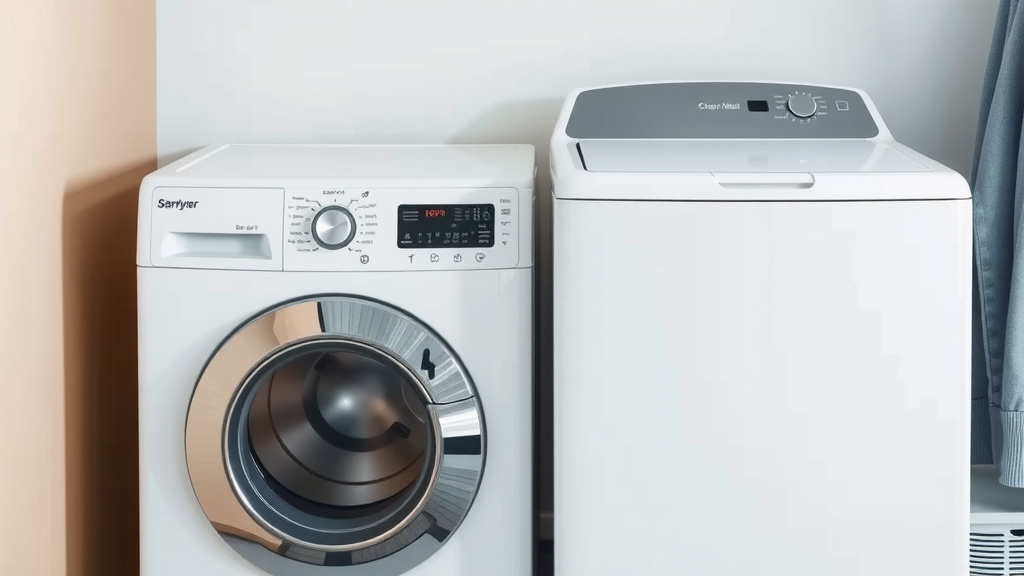
Washer and Dryer Dimensions: What Size Do You Need
A standard washer and dryer set typically measures around 27 inches wide. Most front-load machines are about 27-30 inches deep and 39-40 inches tall. Top-load washers can vary slightly more. Knowing these dimensions is key for fitting them into your laundry space.
Before buying, it’s wise to measure your doorways, hallways, and the laundry room itself. We’ve found that many people overlook measuring the path to the laundry room. This can save you a lot of hassle. Consider also the clearance needed for opening doors and vents.
- Washer/Dryer Dimensions: Around 27 inches wide, 27-30 inches deep, and 39-40 inches tall.
- Consider the path: Measure doorways and hallways.
- Laundry room space: Ensure enough room for installation and use.
- Depth matters: Especially for front-loaders and access.
Let’s walk through exactly what you need to measure and consider to ensure your new washer and dryer fit perfectly in your home.
Understanding Your Washer and Dryer’s Physical Footprint
So, you’re wondering, “Just how big is a washer and dryer?” It’s a super common question, and the answer really hinges on the type of machine you’re looking at. But don’t worry, we’re here to break down the typical sizes so you can plan your laundry room like a pro.
Standard Dimensions for Washers
Let’s start with the washing machine. Most standard residential washing machines, whether top-load or front-load, tend to have a pretty consistent width. We found that around 27 inches wide is the industry standard. This dimension is critical because it needs to fit through your doorways and hallways.
Top-Load Washers: A Familiar Friend
Top-load washers often feel like the classic choice. Their dimensions can be a little more varied than front-loaders, especially in height. Width-wise, expect them to be right around that 27-inch mark. The depth is usually between 25 to 28 inches. When it comes to height, these can range from about 36 inches up to a taller 42 inches. This extra height is something to note if you have low ceilings or need to stack anything above them.
Front-Load Washers: Sleek and Stackable
Front-load washers are known for their energy efficiency and often their sleek design. Their width is also typically 27 inches. What sets them apart is their depth, which is often a bit more than top-loaders, usually ranging from 28 to 32 inches. This extra depth is needed for the tumbling action. Their height is generally around 39 to 40 inches, making them ideal for stacking with a compatible dryer.
Typical Dryer Sizes: The Perfect Match
Dryers are designed to complement their washer counterparts, meaning their dimensions are usually quite similar. You’ll find that most dryers also measure about 27 inches wide. This uniformity makes pairing a washer and dryer a straightforward process, dimensionally speaking.
Electric Dryers: Common and Capable
Electric dryers generally follow the same size guidelines. Their width will be close to 27 inches. The depth is typically around 28 to 30 inches, and the height is usually about 39 to 40 inches. These are the workhorses you’ll see in many homes, offering reliable performance.
Gas Dryers: Similar Footprint, Different Needs
Gas dryers are dimensionally very similar to their electric cousins. Expect the same 27-inch width and a depth of about 28 to 30 inches. The height will also be in the 39 to 40-inch range. The main difference here is not size, but the gas line connection needed for operation. Always ensure you have the proper hookups ready.
Considering the Full Installation Space: Beyond Just the Appliances
Okay, so you know the basic sizes. But here’s where many people run into trouble: they forget about the space needed for installation and use. It’s not just about getting the machines *into* the room; it’s about being able to open the doors, hook up the hoses, and have a little breathing room.
Door Clearance: The Forgotten Factor
This is a big one, especially for front-load washers and all dryers. You need enough space for the door to swing open completely. For front-loaders, you’ll want at least 28 inches of clear space in front of the machine when the door is open. Dryers also have doors that swing open, usually to the side, so check which way it opens and ensure there’s nothing blocking it. We found that not accounting for this can lead to awkward maneuvering every time you load or unload laundry.
Ventilation and Utility Access: Airflow is Key
Washers and dryers, especially dryers, need proper ventilation. Make sure there’s enough space behind the machines for the dryer vent hose to connect without being kinked. A kinked vent hose is a fire hazard and makes your dryer work much harder. We’ve researched that proper airflow is essential for efficiency and safety (Consumer Product Safety Commission). Also, remember you’ll need access to water hookups for the washer and electrical outlets for both. Leave a little space behind for these connections and any potential future maintenance.
Compact and Stackable Options: Maximizing Small Spaces
What if you have a really tight space? Don’t despair! The market offers compact washers and dryers that are perfect for apartments, small condos, or even RVs. These are often narrower, measuring around 24 inches wide, and sometimes shallower too.
Stackable Units: Going Vertical
When space is at an absolute premium, stackable washer and dryer units are a lifesaver. These are designed to be placed one on top of the other, dramatically reducing the floor space needed. A typical stackable unit might take up only about 27 inches in width, but the combined height can be around 70-75 inches. They are specifically engineered to work together safely and efficiently.
Measuring Your Path: The Journey to the Laundry Room
We can’t stress this enough: measure the path from your front door to your laundry room. This includes doorways, hallways, staircases, and any tight turns. We found that many people successfully measure their laundry room but forget about the journey to get the appliances there. A standard doorway is about 30-32 inches wide, but some older homes or specific rooms might have narrower openings. Measure every step of the way to avoid surprises.
Here’s a quick checklist to help you plan:- Measure your laundry room width, depth, and height.
- Check clearances for opening washer and dryer doors.
- Measure all doorways and hallways the machines must pass through.
- Account for space behind for vents and utility connections.
- Consider the height if you plan to stack.
- Look into compact or stackable units if space is limited.

Conclusion
You’ve learned that most washers and dryers are about 27 inches wide, but depths and heights can vary. Remember that front-loaders are often deeper and taller, while top-loaders might offer more height flexibility. We’ve highlighted the importance of measuring not just the laundry space, but also the pathways and doorways. Don’t forget clearance for doors and vents. Your next step is to grab your tape measure and map out your laundry room and its access points. This careful planning will help you confidently choose appliances that fit your home perfectly.
Frequently Asked Questions
Will a standard washer and dryer fit through a 30-inch doorway?
Generally, yes. Most standard washers and dryers are about 27 inches wide, which usually allows them to pass through a 30-inch doorway. However, you should always measure the appliance’s exact width and compare it to your doorway’s opening, accounting for any trim or obstructions.
How much space do I need behind the washer and dryer?
You’ll typically need about 4-6 inches of space behind your machines. This allows for proper ventilation hoses, water connections for the washer, and power cords without kinking. Check your appliance’s manual for specific recommendations, as some models might require more or less.
Are compact washers and dryers significantly smaller?
Yes, compact models are designed for smaller spaces. While standard units are around 27 inches wide, compact versions are often about 24 inches wide. They may also be slightly shallower and shorter, making them ideal for apartments or tight laundry nooks.
Do I need special clearance for stacked washer and dryer units?
When stacking, the width and depth requirements are similar to a single unit (around 27 inches wide and 28-32 inches deep). The main difference is the vertical space needed, as the combined height can reach 70-75 inches or more. Ensure your ceiling height can accommodate the stacked appliance safely.
What’s the difference in size between gas and electric dryers?
Dimensionally, there’s usually no significant difference between gas and electric dryers. Both standard types will typically measure around 27 inches wide, 28-30 inches deep, and 39-40 inches tall. The size is consistent; their operational needs (gas line vs. electrical outlet) are what differ.