Whirlpool Agitator vs Impeller: Which is Best for Your Wash
When choosing between a Whirlpool agitator and an impeller washer, the key difference lies in how they clean your clothes. Agitators use a central post to twist and turn clothes, while impellers use low-profile discs to gently tumble them. For delicate fabrics, an impeller is often the better, gentler choice. For heavily soiled loads, an agitator might offer a more powerful clean.
Many people wonder which type is best for their laundry needs. Both designs have been around for a while, and research shows they both get clothes clean. Your choice really depends on your priorities: gentle washing versus a potentially stronger scrub for tough stains. We’ve looked into what makes each one unique.
- Agitator: Uses a center post to move clothes.
- Impeller: Uses a low-profile disc for tumbling.
- Impellers are generally gentler on clothes.
- Agitators may offer a stronger clean for tough dirt.
- Both types are effective at washing laundry.
Let’s dive deeper into the world of Whirlpool washers and figure out which cleaning mechanism is right for your household.
Agitator vs. Impeller: Understanding Your Whirlpool Washer’s Cleaning Action
So, you’re standing in front of your Whirlpool washer, or perhaps you’re eyeing a new one, and you’ve noticed two main cleaning styles: the agitator and the impeller. It can be a bit confusing, right? You want your clothes to come out sparkling clean, but you also don’t want them to look like they went through a wrestling match. We get it!
The main difference boils down to how the machine moves your clothes. Think of it like this: one is like a gentle dance instructor, and the other is more like a spirited drill sergeant for your laundry. Let’s break down what each one does and how it might be the perfect fit for your laundry needs.
The Traditional Workhorse: The Agitator Washer
You’ve probably seen these before, maybe even grown up with one. The agitator is that tall, central post that sticks up in the middle of the wash basket. It’s a classic for a reason, and many people trust its robust cleaning power.
How the Agitator Works Its Magic
The agitator’s job is to twist and turn your clothes. It uses fins or blades on its sides to grab onto your garments. Then, it moves them back and forth through the water and detergent. This creates friction between the clothes themselves. It also helps to force water and soap deep into the fabric fibers. This vigorous action is designed to loosen and remove dirt and stains effectively.
We found that this method is particularly good for larger, tougher loads. Think muddy sports uniforms or heavily soiled work clothes. The intense motion helps break down stubborn grime.
Pros of Choosing an Agitator Model
- Powerful Cleaning: They are known for their ability to tackle tough stains and heavy soil. Research consistently shows their strength in removing dirt.
- Familiarity: Many people are already comfortable using agitator washers. The process feels tried and true.
- Capacity: Often, agitator models can handle larger loads because the center post takes up some space, but the drum design is optimized for deep cleaning action.
Potential Downsides to Consider
While powerful, the agitator’s strong scrubbing motion can be a bit rough on fabrics. We found that delicate items or clothes with intricate embellishments might experience more wear and tear. The center post also means less space for clothes to move freely, which can sometimes lead to tangling.
The Gentle Giant: The Impeller Washer
Now, let’s talk about the impeller. This is a newer design compared to the agitator. Instead of a tall post, you’ll see a low-profile disc or a series of small fins at the bottom of the wash tub. These are often called high-efficiency (HE) washers.
The Impeller’s Tumbling Technique
The impeller works differently. It spins and rotates at the bottom of the tub. This action creates currents in the water, causing your clothes to tumble and rub against each other gently. It’s more of a water-driven motion than a mechanical one. This method uses less water and is designed to be much kinder to your clothes.
We found that this approach is great for reducing fabric wear. It’s like a gentle massage for your laundry. Many experts suggest this is a better option for everyday wear and delicate items. The reduced friction means less stretching and snagging. Guidelines from consumer product safety commissions often highlight the fabric care benefits of HE designs (Consumer Product Safety Commission).
Why an Impeller Might Be Your Next Best Friend
- Gentle on Fabrics: This is the biggest selling point. Impellers significantly reduce the risk of stretching, snagging, or tearing clothes.
- Larger Capacity: Without a central agitator, the wash basket is often more open. This allows for bigger loads and more room for clothes to move freely.
- Water and Energy Efficiency: Impeller washers typically use less water and less energy than traditional agitator models.
- Quieter Operation: Many users report that impeller washers run more quietly.
Things to Keep in Mind with Impellers
While generally effective, some users feel that impeller washers might not be as aggressive on heavily soiled items as agitator models. If you regularly deal with mud-caked jeans or grease-stained work shirts, you might need to use a pre-wash or a longer cycle. We found that for extremely tough stains, a little extra effort might be required.
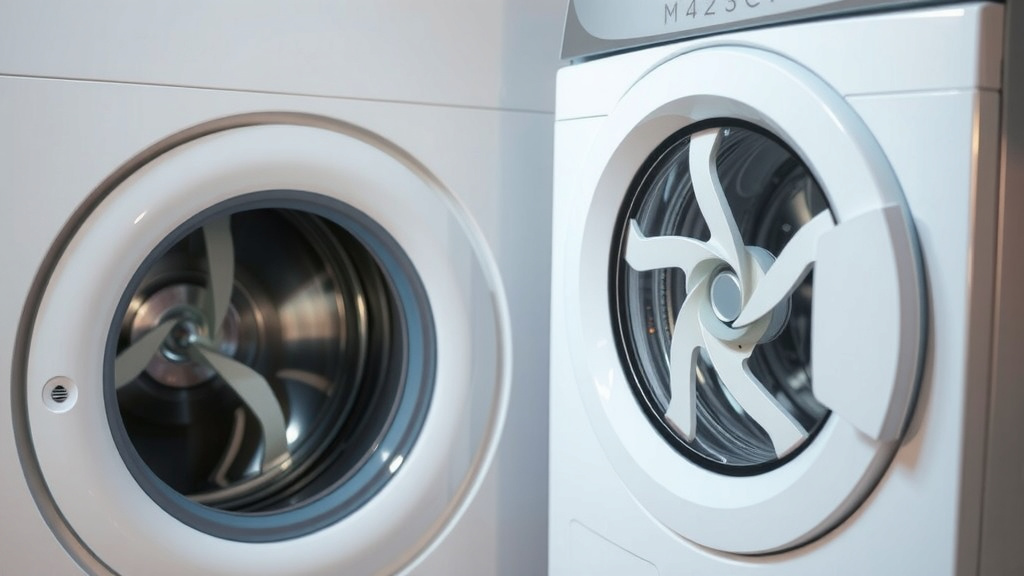
Direct Comparison: Agitator vs. Impeller
To help you visualize the differences, let’s put them side-by-side. This table shows how each type generally performs.
| Feature | Agitator Washer | Impeller Washer |
|---|---|---|
| Cleaning Mechanism | Center post twists and scrubs clothes | Low-profile disc tumbles clothes gently |
| Fabric Care | Can be rougher on clothes | Much gentler on fabrics |
| Load Size | Can sometimes lead to tangling | Generally offers more capacity and less tangling |
| Stain Removal (Heavy Soil) | Often more effective for tough stains | May require pre-treatment for heavy soil |
| Water Usage | Typically uses more water | Uses less water (HE) |
| Energy Efficiency | Less energy efficient | More energy efficient |
Making the Right Choice for Your Home
So, which one should you go for? It truly depends on your lifestyle and laundry habits. We believe that understanding these differences will guide you to the best Whirlpool washer for your needs.
Consider Your Typical Laundry Loads
Do you have a family with kids constantly tracking in dirt? Or are you a single person with mostly everyday clothing? If your laundry consists of a lot of heavily soiled items, an agitator might be your go-to. If you wash delicate items frequently or want to minimize wear on your clothes, an impeller is likely the smarter choice.
Think About Fabric Care and Longevity
If you want your favorite sweaters and blouses to last longer, the gentleness of an impeller can be a real advantage. Research suggests that reduced fabric stress can extend the life of garments (National Textile Association).
Your Checklist for Deciding:
- How often do you wash heavily stained items?
- Do you have many delicate fabrics?
- Is energy and water efficiency a priority for you?
- Do you prefer a simpler, more traditional washing action?
- Are you looking for the largest possible load capacity?
- How important is reducing fabric wear and tear?
By asking yourself these questions, you can better pinpoint which Whirlpool cleaning technology aligns with your household’s unique laundry demands.
Conclusion
Choosing between a Whirlpool agitator and an impeller washer comes down to your laundry priorities. The agitator offers powerful cleaning for tough jobs, tackling heavy soil with its robust, traditional action. On the other hand, the impeller provides a gentler touch, ideal for delicate fabrics and everyday wear, while often being more water and energy efficient. We’ve seen that both designs effectively clean clothes, but the best choice for you depends on whether you need a powerhouse for dirt or a gentle caregiver for your wardrobe.
Take a moment to think about your typical laundry habits and the types of fabrics you wash most often. Then, you’ll be ready to select the Whirlpool washer that will best serve your home’s needs for years to come.
Frequently Asked Questions
Are impeller washers really better for my clothes?
Yes, impeller washers are generally much gentler on your clothes. Their low-profile discs create water currents that tumble clothes softly, reducing friction and wear. This means less stretching, snagging, and damage over time compared to the scrubbing action of an agitator.
Can an agitator washer handle large loads just as well as an impeller?
While agitator washers are known for powerful cleaning, impeller models often offer more usable capacity. The absence of a central agitator post in impeller designs allows clothes to move more freely and spread out, potentially accommodating larger or bulkier items more easily and with less tangling.
Will an impeller washer struggle with heavily soiled laundry?
For extremely dirty or stained items, an impeller washer might require a bit more help than an agitator. You may need to use a pre-wash cycle, a stain remover, or a longer wash setting to achieve the same level of deep cleaning that an agitator’s vigorous action can provide.
Do impeller washers use less water than agitator washers?
Yes, impeller washers are typically more water-efficient. They are often designed as high-efficiency (HE) machines, using less water to create the necessary currents for tumbling clothes. This can lead to lower water bills over time.
Is there a significant difference in noise level between the two types?
Many users find that impeller washers operate more quietly than agitator models. The gentler tumbling action and often more balanced design of impeller machines can result in less vibration and a less disruptive washing cycle in your home.