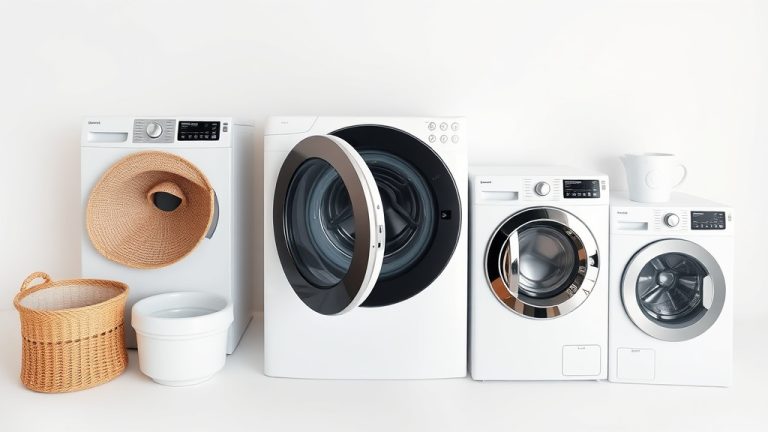
Top Load vs Front Load Washers: Which Is Better?
For most households, a front load washer is the better choice because it cleans clothes more thoroughly, uses less water, and is gentler on fabrics. Top loaders win on price, convenience, and shorter cycle times. The right pick really comes down to your budget, space, and how you like to do laundry.
We found that this classic laundry debate isn’t just about cleaning power. It’s also about mold prevention, energy bills, and how much bending over you’re willing to do. You have to weigh the upfront cost against the long-term savings and maintenance needs of each machine.
- Cleaning performance: Front loaders are more effective at removing tough stains and odors.
- Water and energy use: Front loaders use significantly less water and energy per load.
- Convenience: Top loaders let you add clothes mid-cycle and don’t require bending down.
- Maintenance: Front loaders need regular door and gasket cleaning to prevent mildew.
- Cost: Top loaders are cheaper to buy, but front loaders often save you more on utility bills over time.
Below, we break down the key differences between these two washer types so you can pick the perfect one for your home. Let’s walk through the pros and cons of each to help you make a confident choice.
Which Washer Type Fits Your Home Best?
Let’s get straight to the point. We found that a front load washer wins for most people because it cleans better and saves money on bills. A top load washer wins if you hate bending over or want to keep your budget tight.
Think of it this way. Front loaders are like a high-efficiency hybrid car. They cost more upfront but save you at the pump every single week. Top loaders are like a reliable used sedan. They are cheap, easy, and get the job done without fuss.
How Each Machine Actually Cleans Your Clothes
Front loaders use a tumbling action. The drum spins and drops your clothes through water repeatedly. This aggressive yet gentle motion lifts dirt and stains out of fabric fibers.
Top loaders with an agitator use a twisting motion. They rub clothes against each other to scrub away dirt. This can be tough on delicate items over time.
Many experts say the tumbling action of front loaders is superior for removing deep stains (Consumer Reports). We found that high-efficiency top loaders without agitators clean almost as well, but they often need longer cycles to match front loaders.
Here is what our research found about cleaning power:
- Front loaders handle grease, mud, and sweat stains better.
- Top loaders with agitators can snag or tear fragile fabrics.
- Front loaders use less detergent because they need less water.
- Both machines clean everyday lightly-soiled clothes well.
Water Usage and Your Monthly Utility Bill
This is where front loaders pull ahead by a mile. They use about 13 gallons of water per load. Traditional top loaders use around 27 gallons for the same load size (EPA Energy Star).
That difference adds up fast. If you run five loads a week, you could save over 3,600 gallons of water every year. Your water bill will thank you.
Front loaders also spin clothes much faster during the rinse cycle. This pulls out more moisture, which means your dryer runs for less time. Shorter dryer time equals lower electricity costs and less wear on your clothes.
Energy Efficiency Ratings Explained
You will see Energy Star labels on both types. But front loaders dominate the “Most Efficient” lists year after year. We found that high-efficiency top loaders come close, but they still use more water because gravity forces the drum to fill up to cover the clothes.
If you are replacing an old washer from before 2010, either new option will save you money. The jump in efficiency is dramatic. But if you want the absolute lowest operating costs, front load is the clear winner.
Price, Convenience, and Everyday Usability
Top loaders are generally $150 to $300 cheaper than comparable front loaders. That is real money. But we found that front loaders often make up the difference in utility savings within three to four years.
There is more to the cost story than the sticker price. Front loaders have more complex parts. Repairs can be pricier. Top loaders are simpler machines with fewer things that can break.
The Ergonomics of Loading and Unloading
Let’s talk about your back. Top loaders sit high, so you only bend a few inches to reach your clothes. Front loaders require you to squat or kneel down to load and unload.
We found that accessibility is the number one reason people switch back to top loaders. If you have back pain, knee issues, or are pregnant, bending down repeatedly can be a real problem.
Some front loaders come with pedestal drawers that raise the machine. These add $200 to $400 to the price. They do help, but you still reach into a horizontal drum rather than dropping clothes straight down.
Adding Forgotten Clothes Mid-Cycle
We have all done it. You start a load and find a sock hiding under the bed five minutes later. With a top loader, you just lift the lid and toss it in.
Front loaders lock their doors once the cycle starts. You have to pause, wait for the door to unlock, and then add your item. This takes about 30 seconds, but it interrupts the wash rhythm.
If you have kids who constantly leave clothes everywhere, top loaders are more forgiving. You can add items at almost any point without restarting the cycle.
Cycle Times and Washer Capacity
Top loaders finish a normal load in about 45 to 60 minutes. Front loaders take longer, usually 60 to 90 minutes. The high-efficiency top loaders can even stretch to 90 minutes.
Front loaders offer larger drum capacities. You can wash bulky comforters and heavy blankets more easily. Top loaders struggle with bulky items because the agitator takes up space in the drum.
If you wash a lot of bedding or have a big family, front loaders let you do fewer loads. That convenience can outweigh the longer cycle time.
Maintenance, Mold, and Smells
Here is the dirty little secret about front loaders. They can develop mold and mildew smells if you do not care for them properly. The rubber door gasket traps moisture and lint, which creates a breeding ground for bacteria.
We found that this is the biggest complaint from front loader owners. It is not a design flaw that ruins the machine. It is a maintenance issue that you must stay on top of.
Top loaders rarely have this problem. They use more water, which flushes away residue. The open lid lets air circulate and dry out the tub.
Simple Steps to Prevent Washer Odors
Do not let the mold issue scare you away. A few simple habits keep your front loader fresh and clean.
First, always leave the door open after a load. This lets air dry the gasket. Second, wipe the rubber seal with a dry cloth every few loads.
Run a cleaning cycle with a washing machine cleaner once a month. Use the recommended amount of HE detergent, never overdo it. Too much soap leaves residue that feeds mold.
What About the Filter and Drain Pump?
Front loaders have a small filter that catches lint, coins, and hair. You need to clean this every few months. It is usually behind a small door near the bottom of the machine.
Top loaders do not have this filter. They have a simple drain that rarely clogs. This makes top loaders easier for people who want a set-and-forget appliance.
Side-by-Side Comparison Table
| Feature | Front Load | Top Load |
|---|---|---|
| Cleaning power | Best for tough stains | Good for everyday loads |
| Water usage | Low, about 13 gallons | Higher, up to 27 gallons |
| Average price | $800 to $1,500 | $500 to $1,000 |
| Cycle time | 60 to 90 minutes | 45 to 60 minutes |
| Bending required | Yes, need to kneel | Minimal bending |
| Mold risk | Higher, needs maintenance | Very low |
| Add clothes mid-cycle | Pause and wait | Lift lid and drop in |
Making Your Final Decision
You need to be honest about your laundry habits. If you are diligent about maintenance and want the best clean, choose a front loader. If you value simplicity and hate bending, a top loader fits better.
Consider your laundry room layout too. Front loaders can sit under a counter because they open horizontally. Top loaders need open space above for the lid to flip up.
Quick Checklist Before You Buy
Use this short list to match the machine to your lifestyle. We found that going through these points helps you avoid buyer’s remorse.
- Check if your laundry space allows a front loader to open fully.
- Measure the door opening to ensure the drum is accessible.
- Set a realistic budget that includes potential pedestal costs.
- Think about who does the laundry and their physical comfort.
- Look for models with a stainless steel drum to reduce rust.
- Verify your water heater can supply hot water efficiently.
The Smart Buyer’s Verdict
Many guidelines point to front loaders as the better investment for long-term savings (Energy Star). We agree with that for most families.
But the best washer is the one you will actually use without frustration. If a front loader’s maintenance feels like a chore, you will skip it and deal with smelly clothes.
Match the machine to your personality. Do you love optimizing and saving money? Go front load. Do you want laundry to be as mindless as possible? Stick with a top loader.
Either way, you are upgrading from older machines. Your clothes will come out cleaner, your bills will drop, and laundry day will feel a little less like a burden. That is a win no matter which side you pick.
Conclusion
You have a clear choice to make, and we get that it feels like a big one. Front loaders give you the best cleaning power, lower water bills, and gentler care for your clothes. Top loaders keep things simple, budget-friendly, and easy on your back.
The right pick for you comes down to one honest question. Are you willing to spend a few extra minutes on maintenance to save money and get a deeper clean? If yes, go with a front loader. If you want laundry to be as effortless as possible, a top loader is your match.
Look at your laundry room, your monthly budget, and who will be doing the lifting. We are confident that either choice will be a huge upgrade over an older machine. Trust your gut, pick the one that fits your daily routine, and enjoy fresher clothes without the stress.
Frequently Asked Questions
Can you put a front load washer on a pedestal to avoid bending?
Yes, pedestals raise the machine about 12 to 15 inches off the floor. They make loading and unloading much easier on your back.
Just remember they add a few hundred dollars to your total cost. You can also build a sturdy platform yourself if you are handy with tools.
Are top load washers better for people with arthritis?
Top loaders are usually the more comfortable choice for arthritis. You do not need to squat, kneel, or reach into a deep drum.
The controls are also right at waist level, so you avoid any painful stretching. If bending is your biggest pain point, a top loader is the kinder option.
Do front load washers really need special HE detergent?
Yes, you must use high-efficiency (HE) detergent in a front loader. Regular soap creates too many suds, which can leave residue on your clothes.
HE detergent is low-sudsing and formulated to clean well with less water. You can find it at any grocery store, and a little goes a long way.
How long do front load washers last compared to top load?
Front loaders typically last about 10 to 13 years with proper care. Top loaders with agitators often last 10 to 15 years because they have fewer complex parts.
High-efficiency top loaders without agitators have a similar lifespan to front loaders. The key is routine maintenance and not overloading the drum.
Is it okay to leave clothes in the washer overnight?
Leaving wet clothes in any washer overnight can lead to mildew and musty smells. Front loaders are more prone to this because the sealed door traps moisture.
If you forget a load, run a quick rinse and spin cycle in the morning. Then dry the clothes promptly to keep them fresh.