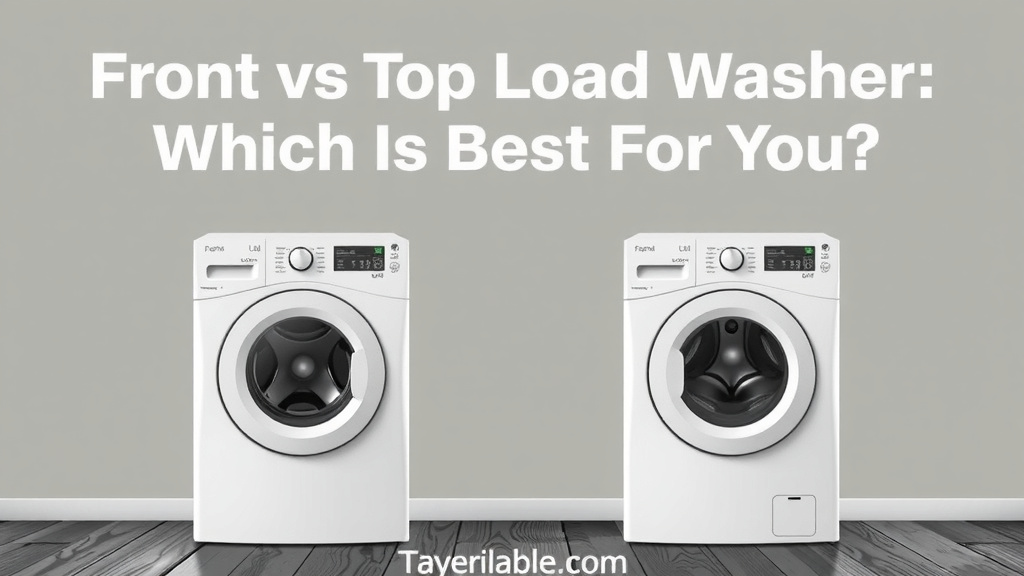
Front vs Top Load Washer: Which Is Best for You
When choosing a new washing machine, you’re likely weighing the front-load vs. top-load options. While both get your clothes clean, front-load washers generally offer better cleaning performance and are more energy-efficient. Many experts agree they are the top choice for most households.
Your decision might also depend on factors like your budget and laundry room space. Top-loaders can be more budget-friendly upfront and may offer a larger capacity for bulky items. However, front-loaders often boast advanced features and gentler fabric care, which many users find appealing for their clothing longevity.
- Front-loaders often clean better and use less water.
- Top-loaders can be cheaper and handle big loads.
- Consider your budget and space for the best fit.
- Both have pros and cons depending on your needs.
Let’s break down the key differences between front-load and top-load washing machines to help you make the best choice for your home.
Front Load vs. Top Load Washers: Making Your Choice
Deciding between a front-load and a top-load washing machine can feel like a big decision. Both types are designed to get your clothes clean, but they go about it differently. We’ve found that understanding these differences helps you pick the machine that best fits your lifestyle. Let’s dive into what makes each type unique so you can feel confident in your choice.
How They Clean: The Mechanics Behind the Freshness
The way a washing machine agitates your clothes is a key difference between front-loaders and top-loaders. This difference impacts everything from cleaning power to how gentle they are on your fabrics.
Front-Load Washers: Tumble and Gentle
Front-load washers use a tumbling action. The drum spins on a horizontal axis. Your clothes are lifted and then dropped back into the water and detergent mixture. This motion mimics hand-washing in a way. It’s a **gentler way to clean** your clothes. Many experts agree this tumbling action is more effective at removing dirt. It’s also why front-loaders are often considered more energy-efficient.
Top-Load Washers: Agitator or Impeller Action
Top-load washers spin on a vertical axis. They generally use one of two methods to move your clothes: an agitator or an impeller.
The Agitator Method
Older and some newer top-loaders have a tall, central post called an agitator. This part twists and turns, rubbing against your clothes to loosen dirt. While effective, agitators can be rough on fabrics. They can cause clothes to snag or stretch over time. We’ve seen that this method can also use more water.
The Impeller Method
Many modern top-loaders use a low-profile cone or disc at the bottom of the drum called an impeller. This spins and creates currents that move clothes around in the water. Impellers are generally gentler on clothes than agitators. They also tend to allow for more capacity in the drum. We found this method uses less water than agitator models but can sometimes struggle with heavily soiled loads.
Water and Energy Efficiency: A Greener Clean
When thinking about your utility bills and the environment, water and energy use is a big factor. Front-load washers generally have a clear advantage here.
Front-Loaders: The Water Savers
Because they don’t fill the entire drum with water, front-loaders use significantly less water per load. They rely on gravity and the tumbling action to move clothes through a smaller amount of water. This means they also use less energy to heat that water. We found that front-loaders are consistently rated as more energy-efficient by organizations like Energy Star.
Top-Loaders: A Thirstier Option
Traditional top-loaders, especially those with agitators, typically need to fill the entire tub to properly wash clothes. This means they use much more water. While some high-efficiency (HE) top-loaders have improved their water usage, they still often use more than their front-load counterparts. This higher water usage also translates to more energy needed for heating.
Cleaning Performance: Which Gets Clothes Cleaner?
Research and user reports often point to front-loaders for superior cleaning. But top-loaders can certainly get the job done.
The Front-Load Advantage
The tumbling action of front-loaders is effective at working detergent deep into fabrics. It also does a better job of removing stains and grime. Many independent tests show front-loaders outperform top-loaders in stain removal. They are also considered better for delicate items due to the gentler action. You might find your clothes look newer for longer.
Top-Loaders: Getting the Job Done
Agitator top-loaders can be very powerful, especially for heavily soiled work clothes. The aggressive action can tackle tough dirt. Impeller models offer a good balance, providing decent cleaning without being too harsh. However, they may not always achieve the same deep clean as a front-loader on stubborn stains. We’ve seen that some users prefer the convenience of adding clothes mid-cycle with top-loaders.
Capacity and Loading: What Can You Fit?
How much laundry you do and what types of items you wash can influence your choice of washer.
Front-Loaders: Big Loads, Big Items
Front-load washers often have larger drum capacities. This means you can wash bigger loads, saving time. They are also excellent for bulky items like comforters and blankets. The wide opening makes it easy to load and unload these larger items. However, you do need to bend over to load and unload them.
Top-Loaders: Easy Access and Big Capacity
Top-loaders offer easier loading and unloading because you don’t have to bend down. This is a big plus for many people, especially those with back issues. Some top-loaders, particularly impeller models, can also offer very large capacities. They are great for washing bulky items too. The ability to stop the cycle and add forgotten items is a convenience many users love.
Maintenance and Hygiene: Keeping Your Machine Clean
Both types of washers require some maintenance, but front-loaders have a specific area to watch.
Front-Loaders: The Door Seal Challenge
Front-loaders can sometimes develop mold or mildew around the door seal if not properly maintained. This is because the seal traps moisture. It’s important to wipe down the seal after each use and leave the door ajar between washes. Many models now come with a “clean washer” cycle to help with this. Many experts recommend using these cycles regularly (Cleveland Clinic).
Top-Loaders: Less Prone to Issues
Top-loaders generally have fewer hygiene concerns because the lid is open to the air, allowing moisture to escape more easily. You still need to clean your washing machine periodically to remove detergent buildup and keep it smelling fresh. Regular cleaning cycles and occasional deep cleans are recommended for both types.
Cost: Upfront vs. Long-Term Savings
When you’re looking at the price tag, it’s important to consider both the initial purchase price and the ongoing costs.
Front-Loaders: Higher Initial Price, Lower Running Costs
Front-load washers typically have a higher upfront purchase price. However, their superior energy and water efficiency mean lower utility bills over the life of the machine. For many households, the long-term savings can offset the initial higher cost. This is a key factor to consider when budgeting. Front-load washers typically have a higher upfront purchase price, and our guide explains the full cost.
Top-Loaders: Affordable Start, Higher Bills
Top-load washers, especially those with agitators, often have a lower purchase price. This makes them a more budget-friendly option for many. However, their higher water and energy consumption can lead to increased utility bills each month. The savings upfront might be eaten up over time by these higher running costs.
Key Differences at a Glance
To help you visualize the comparison, here’s a quick rundown:
| Feature | Front-Load Washer | Top-Load Washer |
|---|---|---|
| Cleaning Action | Tumbling (gentle) | Agitator (aggressive) or Impeller (moderate) |
| Water Efficiency | High | Moderate to Low |
| Energy Efficiency | High | Moderate to Low |
| Fabric Care | Gentle | Varies (Gentle with impeller, less so with agitator) |
| Capacity | Generally large | Varies, some very large |
| Ergonomics | Requires bending | Easier loading, no bending |
| Cost (Upfront) | Higher | Lower |
| Cost (Long-Term) | Lower (utilities) | Higher (utilities) |
| Hygiene | Requires door seal maintenance | Less prone to mildew |
Making Your Final Decision: A Quick Checklist
Before you head out to shop, consider these points to guide your choice:
- How much laundry do you typically do in a week?
- Are you washing a lot of bulky items like bedding?
- What’s your budget for the initial purchase?
- Are long-term utility savings a priority?
- Do you have any physical limitations that might affect loading?
- How important is the gentlest possible care for your clothes?
By thinking through these questions, you’ll be well on your way to finding the perfect washing machine for your home. Both front-load and top-load options have their strengths, and the best one for you depends entirely on your needs!
Conclusion
You’ve now seen how front-load and top-load washers differ in cleaning action, efficiency, and cost. Front-loaders generally offer superior cleaning and better energy savings, making them a top choice for many households. Top-loaders provide easier loading and often have a lower upfront price. Consider your budget, laundry habits, and physical comfort when making your final choice. Take a moment to review the checklist of questions provided. This will help you pinpoint the washing machine that best suits your unique needs and laundry room.
Frequently Asked Questions
Are front-load washers really worth the extra cost?
For many, yes. While front-loaders have a higher initial price, their exceptional water and energy efficiency lead to lower utility bills over time. Research and user reports often show they also provide a gentler wash and better cleaning performance, which can extend the life of your clothes.
Can I add clothes to a front-load washer mid-cycle?
Generally, no. Most front-load washers don’t allow you to add clothes once the cycle has started, as the door is locked for safety and to prevent leaks. Top-loaders, on the other hand, typically let you add forgotten items easily, which many users find convenient.
Which type of washer is better for people with back problems?
Top-load washers are usually better for individuals with back issues. You don’t need to bend down to load or unload clothes, which can be much more comfortable and easier on your body. Front-loaders require you to bend over, though pedestal stands can help alleviate this.
How often should I clean my washing machine?
Both types benefit from regular cleaning. For front-loaders, it’s crucial to wipe down the door seal and leave the door ajar to prevent mildew. Using a “clean washer” cycle monthly is recommended. Top-loaders just need periodic cleaning to remove residue and keep them smelling fresh.
Which washing machine type is faster?
Cycle times can vary greatly by model and settings for both front-load and top-load washers. However, some research suggests that front-loaders may sometimes have slightly longer cycle times due to their efficiency-focused operations. Top-loaders, especially older agitator models, might complete cycles quicker.