How Long Should an Air Purifier Be On Each Day? A Complete Guide
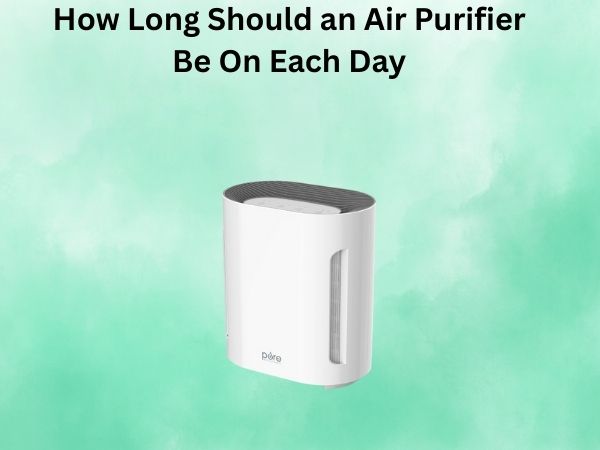
Just welcomed a new air purifier into your home? One of the first questions on your mind is probably how many hours a day it should actually be operating. This is a very common query among new owners, and the straightforward answer is that there isn’t a universal “right” amount of time. Instead, the optimal running duration is determined by several key factors unique to your personal circumstances, your home environment, and the specific air quality concerns you’re aiming to address.
Let me walk you through everything you need to know about finding the perfect daily runtime for your air purifier.
Understanding Your Air Purifier’s Purpose and Function
Before we dive into how long your air purifier should run, let’s establish what these devices actually do. An air purifier works like a silent guardian in your home, continuously filtering out pollutants, dust particles, allergens, and other unwanted contaminants from the air you breathe. Think of it as a specialized vacuum cleaner for the air itself.
The way these devices operate is pretty straightforward. They pull air from your room through various filters—typically including a pre-filter, HEPA filter, and sometimes an activated carbon filter—and then release clean air back into the space. The more hours your purifier runs, the more air it processes and the cleaner your indoor environment becomes.
How Air Quality Measurements Help Determine Runtime
Modern air quality is often measured using the Air Quality Index, or AQI. This scale helps you understand whether your indoor air is excellent, good, moderate, unhealthy for sensitive groups, unhealthy, or hazardous. If your AQI is already good, you might not need to run your purifier as much. Conversely, if you’re dealing with poor air quality, longer runtimes become essential.
Factors That Determine Your Air Purifier’s Ideal Daily Runtime
The answer to how long your air purifier should run really hinges on several interconnected factors. Let me break these down for you so you can make an informed decision.
Your Room Size and the Air Changes Per Hour Concept
One of the most important considerations is your room’s square footage. Air purifiers are rated by their Clean Air Delivery Rate, commonly known as CADR. This measurement tells you how many cubic feet of air the device can clean per minute. Here’s where it gets practical: a device with a high CADR designed for large rooms can theoretically clean a small bedroom’s air several times per hour.
The industry standard recommendation is that an air purifier should change all the air in a room at least 4 to 5 times per hour. So if you have a 400 square foot bedroom, and your purifier can process the entire room’s air in 20 minutes, running it for just one to two hours daily would meet that standard. However, if you have a 1,000 square foot open living area with a smaller purifier, you’d need much longer runtimes to achieve the same air changes.
The Type of Pollutants You’re Dealing With
Are you dealing with pet dander, pollen, smoke, dust mites, or chemical odors? Different contaminants require different filtration strategies and potentially different runtime durations. Someone dealing with pet allergies might benefit from longer continuous operation, while someone mainly concerned with seasonal pollen might be fine with targeted usage during high pollen season.
Your Health Considerations and Sensitivity Levels
If you or anyone in your household has asthma, allergies, or respiratory conditions, you’ll want to prioritize longer air purification times. People with compromised immune systems benefit significantly from continuously cleaner air. On the other hand, if your household consists of generally healthy individuals with no specific air quality concerns, you might run your purifier less frequently.
Recommended Daily Operating Hours for Different Scenarios
Let’s talk specifics. How many hours should you actually have that machine running?
Light Usage: 4 to 8 Hours Daily
If you live in a relatively clean environment with decent outdoor air quality, and you’re mainly looking for preventative maintenance and general air improvement, running your purifier for 4 to 8 hours per day is often sufficient. Many people find that running their device during waking hours or while they’re home covers their needs adequately. This approach also keeps your electricity costs manageable.
Moderate Usage: 8 to 16 Hours Daily
For most households with standard concerns—a few pets, normal dust accumulation, or mild allergies—somewhere between 8 and 16 hours of daily operation hits the sweet spot. This could mean running your purifier during the day, turning it off at night, or alternating between rooms. You’re getting meaningful air improvement without excessive energy consumption.
Heavy Usage: 16 to 24 Hours Daily
If you’re dealing with significant air quality issues, live in a polluted area, have multiple pets, smokers in the household, or health conditions that demand clean air, running your purifier 16 to 24 hours daily—or even continuously—makes sense. In this scenario, the health benefits far outweigh the electricity costs.
Understanding Air Changes Per Hour in Practice
Let me give you some concrete examples to make this clearer. Suppose you have a bedroom that’s 150 square feet with a standard 8-foot ceiling. That’s 1,200 cubic feet of air. If your purifier has a CADR of 200 cubic feet per minute, it will clean the entire room’s air every 6 minutes. To achieve five air changes per hour, you’d only need to run it for about 6 minutes every hour. In reality though, nobody turns devices on and off that frequently, so running it for at least one to two hours daily gives you plenty of margin.
Now consider a large open-plan living area of 600 square feet. If your purifier’s CADR is only 150 cubic feet per minute, it takes 4 minutes to process 600 cubic feet, but you’d want it running much longer to achieve five complete air changes per hour. You’d likely need 5 to 7 hours of continuous operation to achieve optimal results.
Calculating Your Specific Air Change Requirements
- Measure your room in square feet and multiply by ceiling height to get cubic feet
- Find your purifier’s CADR rating in the product specifications
- Divide the total cubic feet by the CADR to see how many minutes it takes to process all air once
- Multiply by 5 to determine the time needed for five air changes
- Divide by 60 to convert minutes to hours
Seasonal Variations and How Weather Affects Your Air Purifier Runtime
Here’s something many people overlook: your air purifier needs will change dramatically with the seasons. You’re not dealing with static conditions year-round.
Spring: High Pollen Season
During spring months when pollen counts are at their peak, you’ll want to increase your purifier’s runtime, especially if you or anyone in your home has pollen allergies. Running your purifier more hours during this season—potentially moving from 8 hours to 12 or even 16 hours—can significantly reduce allergy symptoms.
Summer: Wildfire and Ozone Concerns
Depending on where you live, summer might bring wildfire smoke, increased ozone levels, or humidity-related concerns. If you’re in a wildfire-prone region, expect to run your purifier longer during summer months. The air quality might be perfectly fine in winter and terrible in August.
Fall: Mold and Dust Mite Peaks
Autumn brings its own challenges, with falling leaves creating outdoor mold spores and dust mites thriving in transitional temperatures. Many people increase their purifier usage in fall to combat these seasonal allergens.
Winter: Indoor Air Stagnation
Winter is when we seal up our homes to keep the heat in, which means indoor air doesn’t exchange with fresh outdoor air as frequently. This is actually when longer purifier runtimes become more valuable, as contaminants accumulate more readily in the sealed environment.
Energy Consumption and the Cost of Running Your Air Purifier
Let’s address the elephant in the room: will running your air purifier constantly drain your wallet? The honest answer is that it depends on your device and your local electricity rates.
Typical Power Consumption Levels
Most residential air purifiers consume between 30 to 200 watts, depending on size and filtration type. A typical mid-range purifier might use around 50 to 75 watts. If you’re running it for 12 hours daily at 60 watts, that’s 720 watt-hours or 0.72 kilowatt-hours per day. At an average electricity rate of $0.12 per kilowatt-hour, you’re looking at roughly $3 per month, or about $36 annually.
Even if you ran a larger 150-watt purifier continuously 24 hours a day, that would cost approximately $43 per month or $520 annually. For most households, this is a manageable expense when weighed against the health benefits.
Budget-Friendly Optimization Strategies
- Use your purifier’s eco or quiet mode during lower pollution periods
- Run it on highest settings only during high pollution days or specific hours
- Consider using a timer to automatically turn it on during peak allergy or pollution times
- Choose energy-efficient models with the ENERGY STAR certification
- Run your purifier in the most-used rooms rather than spreading it across multiple spaces
Should You Run Your Air Purifier Continuously?
This is a question I get frequently, and the answer is nuanced. Continuous operation isn’t necessary for most households, but it’s also not harmful if your device is designed for it and you don’t mind the ongoing electricity cost.
Situations Where Continuous Operation Makes Sense
If you’re dealing with severe air quality issues—perhaps you live near a busy highway, in an area with poor outdoor air quality, or someone in your household has serious respiratory conditions—running your purifier 24/7 is perfectly reasonable. The continuous improvement in air quality provides genuine health benefits that justify the continuous operation.
When You Can Turn It Off
Conversely, if you have mild allergies, live in an area with decent air quality, or are primarily concerned with dust control, you absolutely can turn your purifier off at night or during hours when you’re away from home. The air doesn’t immediately become polluted the moment you turn it off.
Smart Scheduling Strategies for Optimal Air Quality
Rather than overthinking this, consider developing a smart schedule that balances air quality with practicality.
The Standard Daytime Approach
Run your purifier during daytime and evening hours when you’re home and awake, and turn it off at night. For most people, 12 to 14 hours of daily operation provides excellent air quality improvement. This keeps your electricity costs reasonable while still achieving meaningful pollutant reduction.
The Targeted High-Pollution Strategy
Monitor your local air quality index through smartphone apps or websites. On days when pollution levels spike, increase your purifier’s runtime or boost it to higher fan speeds. On clean air days, you can run it minimally or not at all. This approach maximizes the benefit-to-cost ratio.
The Bedroom-Focused Method
Many people prefer running their purifier primarily in their bedroom for 8 to 10 hours overnight and during evening hours. Since we spend about one-third of our lives sleeping, ensuring clean air during sleep is a smart investment in health.
The Multi-Room Rotation System
If you have multiple rooms and one purifier, consider moving it between spaces on a rotation schedule. Spend a week focusing on the bedroom, then shift to the living room, then the home office. This ensures all frequently-used spaces benefit from purification.
Maintaining Peak Performance Throughout the Year
Running your purifier longer won’t help if it’s not performing optimally. Maintenance is crucial.
Filter Replacement Schedules
The more hours you run your purifier, the faster your filters accumulate particles and require replacement. If you’re running your device 12 hours daily, you might need to replace filters every 3 to 6 months instead of the standard 6 to 12 months. Check your filters monthly and replace them when they appear visibly dirty or clogged.
Regular Cleaning and Care
Pre-filters can often be vacuumed or rinsed to extend their lifespan. Keep the intake and output vents clear of obstructions. Place your purifier centrally in a room rather than in corners or against walls, where it can’t effectively circulate clean air throughout the space.
Conclusion
So, how long should your air purifier be on each day? The truth is that there’s no universal answer, but you now have a framework for making the right decision for your specific situation. Start by assessing your room size, your purifier’s specifications, your household health needs, and your local air quality conditions. Most households will find that 8 to 12 hours of daily operation strikes an excellent balance between air quality improvement and practical concerns. Those with serious air quality issues or health conditions may benefit from longer runtimes or continuous operation. Remember that running your purifier is an investment in your health and wellbeing, and the relatively modest electricity costs are well worth the benefits you’ll experience. Start with a moderate schedule, monitor how you feel, and adjust based on your results and seasonal changes. Your air purifier will repay your investment in cleaner, healthier indoor air.
Frequently Asked Questions About Air Purifier Runtime
Will my air purifier break down if I leave it on 24/7?
Most modern air purifiers are designed to operate continuously without mechanical breakdown. The main concerns with 24/7 operation are filter lifespan and electricity costs rather than device failure. If your purifier is rated for continuous operation, leaving it on won’t damage it. However, you’ll need to replace filters more frequently, typically every 3 to 4 months instead of every 6 to 12 months. Check your specific model’s specifications and user manual for any manufacturer recommendations regarding continuous operation.
Can I save money by only running my purifier a few hours per week?
While you’ll certainly save electricity costs, you won’t enjoy the air quality benefits you purchased the device for. Air purifiers work by continuously filtering out contaminants, and pollutants accumulate rapidly when the device isn’t running. For meaningful health benefits, aim for at least 8 to 12 hours of daily operation. The electricity savings from running it just a few hours weekly are minimal compared to the investment you made in the device itself, so you’re not maximizing your return on investment.
Should I run my air purifier while I’m away from home?
<p