How Long Can You Run the Levoit Air Purifier? A Complete Guide to Runtime and Usage
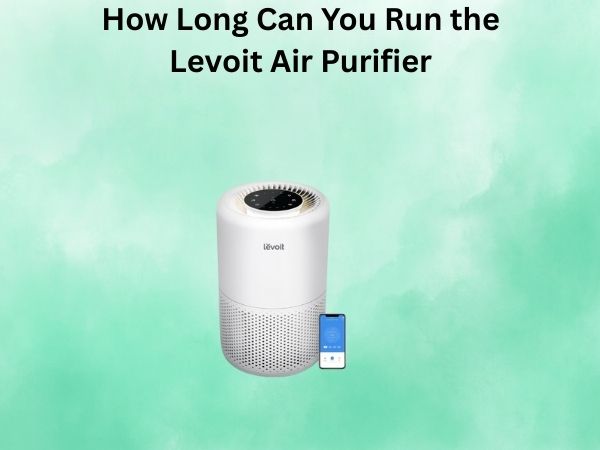
Thinking about a Levoit air purifier, or already own one? A common, yet often unasked, question is just how long these devices can run without issues. Understanding the optimal operating duration is crucial for both performance and longevity. In this comprehensive guide, I’ll explain everything about running your Levoit air purifier continuously, the key factors affecting its runtime, and practical tips to maximize its effectiveness and lifespan.
Understanding Levoit Air Purifier Runtime Capabilities
Here’s the thing about Levoit air purifiers that many people don’t realize right away: these devices are actually designed to run for extended periods. Unlike some household appliances that you should only operate in short bursts, air purifiers are built with continuous operation in mind. Think of it like your refrigerator—it runs pretty much all day and night without complaining.
Most Levoit models can technically run continuously for as long as you keep them plugged in and powered on. The real question isn’t whether they can run for hours and hours, but rather whether you should let them run that way, and what happens when you do. Let me break this down for you in a way that makes sense.
The Basic Answer: Continuous Operation is Possible
Your Levoit air purifier doesn’t have a built-in timer that shuts it off after a certain number of hours. It won’t automatically stop working after 12 hours or 24 hours. This means you could theoretically run it continuously for days, weeks, or even months if you wanted to. The device won’t burn out or suffer damage from being on for extended periods, provided you’re following proper maintenance guidelines.
Can You Run Your Levoit 24/7 Without Any Issues?
Yes, you absolutely can run your Levoit air purifier around the clock, and many people do. In fact, for people with allergies, asthma, or other respiratory concerns, running their air purifier continuously is exactly what they should be doing. But before you decide to keep yours running permanently, let’s talk about the practical considerations.
The Safety Factor
Levoit air purifiers go through rigorous safety testing. They’re built to handle continuous operation without overheating or becoming a fire hazard. The motors are designed for durability, and the electrical components are manufactured to withstand prolonged use. So from a pure safety standpoint, running your unit 24/7 is perfectly fine.
The Maintenance Perspective
This is where things get more interesting. While your purifier won’t break down from continuous operation, the components that do the actual work—the filters—will degrade faster if you’re running the device constantly. If you run your Levoit 24/7, you’re going to need to replace or clean the filters more frequently than someone who only runs theirs for a few hours each day.
Factors That Affect How Long You Can Run Your Unit
Several variables will influence how comfortable you’ll be running your Levoit air purifier continuously, and how effectively it will work over time.
Room Size and Air Quality
The size of the room where your air purifier operates directly impacts how hard it has to work. If you’ve got a small bedroom with decent air quality, your Levoit won’t need to work as intensively as one running in a large living room with pet dander and dust. The harder your unit works, the faster the filters will accumulate particles and need replacement. It’s like the difference between a light jog and a sprint—the sprint exhausts you faster.
Fan Speed Settings
Most Levoit models come with adjustable fan speeds. If you’re running your purifier on the highest fan speed continuously, you’re going to see faster filter degradation and higher electricity costs compared to running it on a lower setting. Many people find that a medium or auto setting provides a good balance between air cleaning effectiveness and energy efficiency during extended operation.
Air Quality Conditions
Is your home particularly dusty? Do you have pets? Smoke in your house? These factors dramatically affect how hard your air purifier needs to work. A Levoit running in a clean, smoke-free home with no pets will have an easier time than one in a home with multiple cats and a smoker present.
Filter Lifespan and Continuous Operation
Let’s talk about the elephant in the room: filters. The true limiting factor for how long you can effectively run your Levoit air purifier isn’t the device itself—it’s the filters.
How Filter Life Works
Levoit filters come with a rated lifespan, typically measured in months or years of use. Most HEPA filters last somewhere between 6 and 12 months under normal conditions. However, “normal conditions” usually assumes you’re running the purifier for 8 to 12 hours per day. If you’re running it 24/7, you’re going to use up that filter life in roughly one-third the time.
- Running 8 hours daily: Filter lasts approximately 8-12 months
- Running 16 hours daily: Filter lasts approximately 4-6 months
- Running 24 hours daily: Filter lasts approximately 2-4 months
The Importance of Regular Filter Checks
When you’re running your Levoit continuously, you need to check your filters more often. Don’t just wait until the indicator light comes on. Make it a habit to visually inspect your filters every couple of weeks. If you notice they’re darkening or looking dusty, it might be time to replace them sooner rather than later. This is especially true if you’re running your purifier constantly.
Power Consumption and Cost Considerations
Let’s get practical. Running any electrical device 24/7 is going to cost you money. How much, though?
Understanding Your Power Usage
Most Levoit air purifiers consume between 25 and 80 watts of power, depending on the model and fan speed. Let’s use 50 watts as a middle estimate. If you run your Levoit 24/7 for a month at 50 watts, you’re looking at about 36 kilowatt-hours of electricity. At an average US electricity rate of roughly 14 cents per kilowatt-hour, that’s about $5 per month, or $60 per year. That’s not exactly breaking the bank, but it’s worth considering.
Maximizing Efficiency
Here’s a smart approach: use the auto mode or a lower fan speed during times when air quality is naturally better. For instance, if you run your purifier on high speed at night when you’re sleeping and air quality in your home is stable, you might want to dial it back to medium speed. Many Levoit models have this feature, and it can meaningfully reduce your energy consumption over time.
Heat Generation and Safety Concerns
One thing people sometimes worry about is whether an air purifier running continuously will generate too much heat and become a safety hazard.
Is Heat a Real Problem?
Levoit air purifiers generate minimal heat during operation. The motor and electrical components are designed to dissipate heat effectively. You might notice the unit is slightly warm to the touch if you place your hand on it after it’s been running for several hours, but this is completely normal and not dangerous. The device won’t get hot enough to damage nearby furniture or create a fire risk.
Proper Ventilation Matters
That said, you should always ensure your Levoit air purifier has adequate ventilation around it. Don’t place it in a closed cabinet or pressed against a wall. Leave at least a few inches of space around the device so air can circulate freely. This helps maintain optimal performance and ensures any minimal heat that’s generated can dissipate naturally.
Noise Levels During Extended Use
If you’re planning to run your Levoit 24/7, especially in a bedroom, noise is definitely something to consider.
What to Expect Noise-Wise
Levoit air purifiers are generally quieter than many competitors, but they’re not silent. On the lowest fan speed, most models produce between 20 and 30 decibels of noise—roughly equivalent to a whisper or quiet library. On high speed, you might be looking at 50-60 decibels, similar to normal conversation volume. The higher the speed, the louder it gets.
Finding Your Comfortable Speed
For continuous operation, especially if you’re using it in a bedroom, I’d recommend running your Levoit on a lower or medium speed setting, or using the auto mode. Most people find these settings provide good air purification without being intrusive. You’ll barely notice the hum after the first few nights, and it actually becomes kind of soothing for many people.
Maintenance Tips for Long-Term Operation
If you want your Levoit air purifier to keep running smoothly for months or years of continuous operation, proper maintenance is absolutely crucial.
Regular Filter Replacement
This is your number one priority. Keep spare filters on hand so you can replace them as needed. Don’t wait until your air quality starts degrading to realize your filter is clogged. Stay ahead of it.
Cleaning the Pre-Filter
Some Levoit models have a washable pre-filter. If yours does, clean it once a month during continuous operation. This removes larger particles like dust and pet hair before they get to the main HEPA filter, extending the HEPA filter’s life.
Wiping Down the Exterior
Every month or so, wipe down the exterior of your unit with a soft, dry cloth. This prevents dust from accumulating on the device itself and helps maintain its appearance. It also ensures air intake vents aren’t obstructed.
Monitoring Indicator Lights
Pay attention to any filter life indicator lights or air quality indicators your Levoit has. These are designed to help you know exactly when maintenance is needed.
Best Practices for Running Your Levoit Air Purifier
Let me share some strategies that many Levoit owners have found work well for extended operation.
Use Auto Mode When Possible
If your model has auto mode, use it. The purifier will adjust its fan speed based on detected air quality, which means it’s working hard when it needs to and running quietly when the air is already clean. This is incredibly efficient for continuous operation.
Position Your Unit Strategically
Place your Levoit in a central location where it can effectively circulate clean air throughout your space. Keep it away from walls and obstacles that might block air intake or output. A good rule of thumb is to place it at least a few feet away from where you spend the most time, so the direct air stream doesn’t blow on you constantly.
Consider Multiple Units for Large Spaces
If you have a large home and want continuous air purification throughout, you might be better off with multiple Levoit units rather than running one unit 24/7. This distributes the load and can actually be more effective at maintaining air quality across your entire space.
When to Give Your Air Purifier a Break
While you can run your Levoit continuously, there are some situations where it makes sense to power it down occasionally.
During Cleaning Days
When you’re actively cleaning your house and stirring up dust, your air purifier is working overtime trying to catch all those particles. That’s actually fine and the whole reason to run it. But once you’re done cleaning, the air quality will naturally improve over time. You can dial back the fan speed or even turn the unit off for a while if you want.
Vacation and Extended Absences
If you’re leaving your home for a week or two, it doesn’t make sense to keep your Levoit running. Turn it off, save the electricity, and turn it back on when you return. The air quality will be fine for a couple of weeks without active purification.
Filter Replacement Time
When you’re replacing filters, obviously the unit will be off. Just make sure you replace them promptly and get it running again.
Troubleshooting Common Issues with Extended Use
Sometimes continuous operation can reveal issues that might not show up with occasional use. Here’s what to watch for.
Decreased Airflow
If you notice the air output seems weaker than when you first bought your purifier, the most likely culprit is a clogged filter. Replace it and see if performance improves. This is totally normal with continuous operation.
Unusual Noises
If your Levoit starts making squeaking, buzzing, or rattling sounds it didn’t make before, something might be wrong. Check that the unit is on a level, stable surface. Make sure all panels and covers are securely attached. If the noise persists, contact Levoit support.
Indicator Light Issues
If warning lights come on, don’t ignore them. They’re there for a reason. Most commonly, they’re indicating that filter replacement is needed. Follow the manufacturer’s instructions for resolving whatever issue the light is indicating.
How Different Levoit Models Compare for Extended Use
Core 300S
The Core 300S is excellent for continuous operation in small to medium rooms. Its filter lasts about 6 months under normal use, but with 24/7 operation, expect 2-3 months. The quiet operation makes it ideal for bedroom use.
LV-H133
This model is a bit more heavy-duty and can handle larger spaces. It’s well-suited for continuous operation and has a slightly longer filter life than the Core models.
LV-PUR131S
One of Levoit’s more premium models, the PUR131S is built for serious air purification needs. It can certainly handle continuous operation and is excellent if you have significant air quality concerns.
Comparing Continuous vs. Intermittent Operation
Advantages of Continuous Operation
- Consistently clean air at all times
- Better for people with allergies or asthma
- Reduces odors and volatile organic compounds continuously
- Helps remove airborne