How Long Should I Let My Air Purifier Run Each Day? A Complete Guide
Just invested in an air purifier? You’re probably wondering about the best way to use it. A common question I hear is whether to keep it running constantly, or if there’s an optimal daily usage period. This topic, surprisingly, is more nuanced than you might initially think.
The truth is, there’s no one-size-fits-all answer, but I’m going to walk you through everything you need to know to make the right decision for your home and family.
Understanding Air Purifiers and How They Work
Before we dive into runtime recommendations, let’s talk about what your air purifier actually does. Think of it like a security guard for your indoor air—it’s constantly working to catch pollutants, dust, allergens, and other nasty particles before they can settle in your lungs.
When you turn on your air purifier, it draws air through a series of filters. These filters trap particles of various sizes, from large dust motes to microscopic bacteria and viruses. The cleaned air then gets released back into your room. Pretty straightforward, right?
The Ideal Daily Runtime for Air Purifiers
Here’s what most experts recommend: you should run your air purifier for at least 12 hours per day, though many people find that 24/7 operation works best for their needs. Now, before you think that sounds excessive, consider this—air quality doesn’t improve overnight, and pollutants don’t stop accumulating just because the sun goes down.
Running Your Purifier Around the Clock
Operating your air purifier continuously might seem wasteful, but it’s actually one of the most effective approaches. When your purifier runs constantly, it continuously cycles the air in your room through the filters multiple times throughout the day and night. This means contaminants get removed more frequently, and your air quality stays consistently high.
Think about it this way: if you only run your purifier for four hours a day, the air in your room gets cycled through the filters maybe once or twice. But if it runs all day, that air could be filtered five, six, or even ten times depending on your unit’s efficiency and room size.
The 12-Hour Minimum Approach
If running your purifier 24/7 doesn’t feel right for you—maybe you’re concerned about energy bills or noise levels—then 12 hours is a solid minimum. Many people run their purifiers for the entire night while they sleep, which makes sense because you’re spending roughly eight hours in your bedroom where you want the air to be cleanest.
If you add eight hours of nighttime operation plus four hours during the day, you’re hitting that 12-hour mark, which should provide noticeable improvements to your indoor air quality.
Factors That Influence How Long You Should Run Your Purifier
Now, remember when I said there’s no universal answer? Here’s why. Several factors affect how long your particular situation requires:
Your Room’s Size and Layout
The size of the space you’re trying to purify matters tremendously. A small bedroom won’t require the same runtime as a large open-concept living area. Air purifiers are typically rated by their Clean Air Delivery Rate, or CADR, which tells you how many cubic feet of air they can clean per minute.
If your purifier is appropriately sized for your room, it might need less runtime. But if you’re using an undersized unit in a large space, you’ll need to run it longer—or possibly all day—to see real benefits.
Indoor Air Quality in Your Area
Where you live plays a huge role. If you’re in an urban area with heavy pollution, or if you have outdoor air quality issues like wildfire smoke, you’ll want to run your purifier longer. Similarly, if you live in an area with high pollen counts, you might need extended runtime during allergy season.
Conversely, if you live in a relatively clean area with minimal outdoor pollution, you might get away with fewer daily hours.
Number of Occupants and Activity Level
Here’s something people often overlook: how many people live in your home matters. Each person generates indoor air pollutants through skin cells, breathing, cooking, and general activity. A household of four generates significantly more pollutants than a single person living alone.
If you have kids, pets, or frequently host guests, your air gets dirtier faster, which means your purifier needs to work longer to keep up.
Pet Ownership
Speaking of pets, let me be direct: if you have cats or dogs, you should strongly consider running your purifier continuously. Pet dander is one of the most common indoor allergens, and it’s constantly being released into your air. A 24/7 runtime helps control this ongoing issue.
Allergies and Health Conditions
If you or someone in your household has asthma, severe allergies, or other respiratory conditions, extended purifier runtime is worth the investment. The health benefits of cleaner air often outweigh the minor increase in electricity costs.
Cooking Frequency
Do you cook every day, and particularly do you engage in high-heat cooking like stir-frying or grilling? Cooking generates significant air pollutants, including particulate matter and volatile organic compounds. If you’re a frequent cook, running your purifier during and after meal preparation is essential.
Energy Consumption and Cost Considerations
I know what you’re thinking: won’t running an air purifier all day spike my electric bill? Let’s talk about this practically.
Most modern air purifiers use between 30 and 200 watts of electricity, depending on the model and fan speed. Even if you have a high-powered unit at the top end, running it 24/7 for a month costs roughly the same as running a 60-watt light bulb for the same period—usually between five and fifteen dollars per month.
When you weigh that against the health benefits of cleaner air and potential medical costs from respiratory issues, the math becomes pretty compelling.
Energy-Efficient Options
If you’re concerned about power consumption, consider these strategies:
- Use your purifier’s eco mode or sleep mode, which runs the fan at lower speeds
- Choose purifiers with automatic sensors that adjust fan speed based on air quality
- Run your unit at maximum speed during high-pollution times, then reduce it during low-activity periods
- Invest in a model with a programmable timer so you can schedule operation during your most-needed times
Recommended Runtime Schedules for Different Scenarios
For Allergy Sufferers
If allergies are your primary concern, aim for 16 to 20 hours daily, with special focus on your bedroom during sleeping hours and your living spaces during daytime hours. This provides consistent protection when you’re most vulnerable—while you’re resting and breathing deeply.
For Asthma Management
People with asthma should really consider 24/7 operation. Your air quality directly impacts respiratory health, and continuous purification can significantly reduce asthma triggers and symptoms.
For Pet Owners
Run your purifier constantly, or at minimum 16 hours daily. Pet dander is relentless, so you need relentless filtration. Your lungs will thank you.
For General Wellness
If you just want better air quality without specific health concerns, 12 hours daily is your baseline. Run it through the night, and then for a few hours during the day, and you’ll notice a significant difference in air freshness and dust accumulation.
For Urban and High-Pollution Areas
Living in a city or near pollution sources? Go for 18 to 24 hours daily. The outdoor air quality is working against you, so you need maximum filtering power.
Seasonal Adjustments to Your Purifier Runtime
Your air purifier needs shouldn’t be static throughout the year. Think about how seasons affect indoor air quality.
Spring and Summer
During spring and summer, pollen counts skyrocket. If you open windows for fresh air, you’re inviting pollen inside. During these seasons, increase your runtime significantly—many people run purifiers continuously from March through August.
Fall and Winter
Fall brings mold and decaying leaves. Winter brings dry air and increased indoor heating, which can stir up dust and allergens. Many people actually find that fall and winter require consistent purifier operation because homes are sealed tight against the weather.
Overnight Operation: A Special Consideration
Your bedroom deserves special attention because you spend roughly a third of your life there, and you’re breathing deeply while your immune system is at rest. I strongly recommend running your air purifier all night, every night.
Nighttime air purification has several benefits:
- Your air is cleanest when you’re most vulnerable to respiratory issues
- You wake up feeling more refreshed with cleaner air
- Dust accumulation on surfaces slows down
- Allergens that trigger nighttime symptoms are continuously removed
Tips for Optimizing Your Air Purifier Runtime
Use Smart Features and Sensors
If your purifier has an air quality sensor, take advantage of it. These devices detect pollution levels and automatically adjust fan speed, which means your unit runs efficiently without wasting energy on over-purification when air quality is already good.
Keep Your Filters Clean
Here’s the thing—a clogged filter significantly reduces your purifier’s effectiveness. You could run a dirty purifier 24/7 and get worse results than running a clean one for 12 hours. Check your filters monthly and replace them according to the manufacturer’s recommendations.
Strategic Placement Matters
Position your purifier centrally in your room with nothing blocking its air intake. This allows it to work more efficiently, meaning it cycles your air faster and requires less runtime to achieve the same result.
Combine with Other Air Quality Measures
Your purifier works best as part of a comprehensive strategy. Open windows occasionally to bring in fresh air, use exhaust fans when cooking, and dust surfaces regularly. These habits reduce the overall pollutant load your purifier must handle.
Common Myths About Air Purifier Runtime
Let me address some misconceptions I hear regularly:
Myth: Running Your Purifier 24/7 Damages It
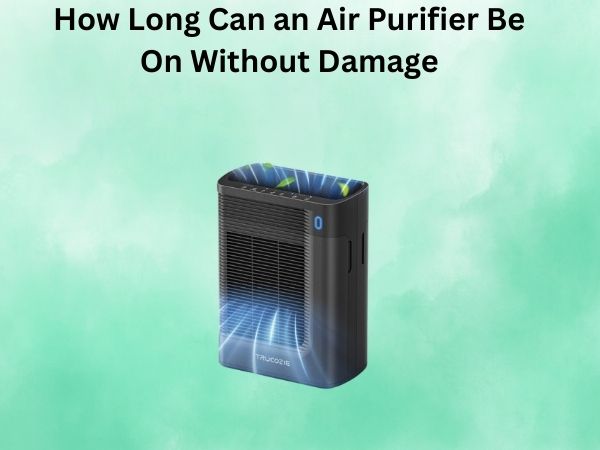
False. Modern air purifiers are designed for continuous operation. In fact, running at lower, consistent speeds is less stressful on the motor than frequent on-off cycles.
Myth: You Only Need to Run It When You Notice Dust
This is backwards thinking. By the time you notice dust visually, there’s already significant pollution in your air. Continuous operation prevents pollution from accumulating in the first place.
Myth: More Runtime Always Equals Better Results
Not if your filters are dirty or your unit is undersized. Quality and proper maintenance matter more than raw hours.
Conclusion
So, how long should you let your air purifier run each day? The honest answer is: as long as possible, ideally 24 hours daily. But realistically, a minimum of 12 hours with nighttime coverage should be your baseline.
Your specific needs depend on your room size, local air quality, health conditions, and household composition. If you have allergies, asthma, pets, or live in an urban area, continuous operation makes sense. If you have general wellness concerns in a clean area, 12 to 16 hours daily works well.
The investment in extended purifier runtime is small compared to the health benefits you’ll gain. Cleaner air means better sleep, fewer respiratory issues, less dust on your furniture, and improved overall wellness for your entire family. That’s worth running that purifier through the night.
Frequently Asked Questions
Is it safe to run an air purifier 24 hours a day?
Absolutely. Air purifiers are designed and tested for continuous operation. Running one around the clock won’t damage it, void the warranty, or create any safety concerns. In fact, modern purifiers run more efficiently at consistent speeds than with frequent on-off cycles.
How much will it cost to run my air purifier continuously?
Most air purifiers consume between 30 and 200 watts. Running a typical 75-watt purifier continuously costs approximately five to ten dollars per month, depending on your local electricity rates. This is minimal when you consider the health benefits.
Should I run my air purifier when I’m not home?
This depends on your situation. If you have pets at home, yes—run it continuously. If your home is empty, you can turn it off since no one is breathing the air. However, many people run purifiers when absent to prevent pollutant accumulation, especially if they’re particularly concerned about air quality.
Can I run my air purifier only at night?
Nighttime operation is better than nothing, but daytime air quality matters too. You spend time indoors during the day, and pollutants accumulate then as well. If continuous operation isn’t feasible, aim for at least 12 hours that include your sleeping hours plus several daytime hours.
How do I know if my air purifier is running effectively?
Check the filter regularly—it should show signs of collecting dust within a few weeks of use. Many purifiers include air quality indicators that show whether air quality is improving. You should also notice less dust on surfaces and fewer allergy symptoms over time. If you’re not seeing these signs after a month of regular use, your unit might be undersized for your space.
“`