Stackable Washer Dryer Space Needs: What to Know
When planning for a stackable washer and dryer, you generally need about 27 to 30 inches of width and roughly 75 to 80 inches of height. This accounts for the combined dimensions of both units plus a little wiggle room for ventilation and hookups. It’s best to measure your specific models carefully.
Finding space for laundry can feel like a puzzle. Luckily, stackable units are designed to maximize small areas. We found that understanding the minimum space requirements helps you avoid costly mistakes and ensures your laundry setup works efficiently. Don’t forget to factor in clearance for opening doors and drawers, too.
- Stackable units need around 27-30 inches wide.
- Height required is usually 75-80 inches.
- Always measure your specific models.
- Add extra space for door/drawer clearance.
- Proper ventilation space is also important.
Let’s walk through exactly what dimensions you’ll need to consider for your stackable washer and dryer setup.
Figuring Out Your Stackable Washer and Dryer Footprint
So, you’re eyeing a stackable washer and dryer combo. Smart move for saving space! But before you measure for a new laundry closet, let’s nail down just how much room these units actually need. You might be surprised by how compact they can be.
We’ve looked at a lot of stackable setups, and the general rule of thumb is about 27 to 30 inches in width. That’s for the combined units, stacked one on top of the other. The height is where you’ll see the biggest difference, typically needing around 75 to 80 inches.
Understanding the Basic Dimensions
Think of a standard washing machine. Now imagine a dryer sitting right on top of it. That’s the essence of a stackable set. The width is usually determined by the individual machines themselves. Most standard-sized washers and dryers are about 27 inches wide. Stackable units stick close to this measurement.
The depth is also quite standard, generally around 30 to 34 inches. This measurement is important for how far the units will stick out from the wall. Always check this, especially if your laundry area is in a tight hallway or a walk-through space.
Width: More Than Just the Machine’s Edge
While the machines themselves might measure around 27 inches wide, you’ll want a little extra breathing room. Experts often recommend adding 1 to 3 inches of clearance on each side. Why? For ventilation and easier access.
This extra space helps prevent the units from overheating. Good airflow is key to keeping your machines running smoothly. It also makes it much easier to connect and disconnect water hoses or electrical cords. You don’t want to be wrestling with hoses in a super tight spot.
Height: It All Adds Up
This is where the “stackable” part really comes into play. You’re essentially fitting two full-sized appliances vertically. A standard washing machine is about 36 inches tall. A dryer is usually around 36 inches tall as well. When stacked, that combined height is roughly 72 inches.
However, you need to factor in the stacking kit. This is the special hardware that secures the dryer to the washer. The stacking kit adds a few inches to the overall height. Plus, you need to consider the top of the machine for ventilation or any control panels. We found that aiming for 75 to 80 inches of clear vertical space is a safe bet for most models.
Don’t Forget About the Doors and Drawers!
This is a common oversight, but it’s a big one. You need space for the appliance doors to open fully. If your laundry area is in a closet or a tight corner, this can be a real issue. Measure how far the door swings open.
For washers, the detergent drawer also needs clearance. You don’t want to be pulling it out only to hit the wall. Many experts suggest leaving at least 6 inches of clearance in front of the washer for the door and drawer to operate freely. For dryers, the door swing might be less of an issue depending on the model, but it’s still worth checking.
Essential Clearance Considerations for Optimal Performance
Beyond the basic box dimensions, there are other space needs you absolutely must consider. These aren’t just about fitting the units in; they’re about ensuring they operate efficiently and safely.
Ventilation: Keeping Things Cool
Appliances generate heat. Stackable units, especially the dryer, need proper ventilation to prevent overheating. This is crucial for their longevity and performance.
Most manufacturers recommend leaving a few inches of space behind the units. This allows air to circulate freely. For dryers, particularly vented ones, ensuring the vent hose isn’t kinked is also vital. A kinked hose restricts airflow, reducing drying efficiency and potentially creating a fire hazard. We found that leaving at least 4 to 6 inches of space behind the units is a good general guideline for ventilation.
Hookups and Access: The Practicalities
Where are your water lines, drain, and electrical outlets located? You’ll need space to comfortably connect and disconnect these. This isn’t just for installation day; it’s also for maintenance or if you ever need to pull the units out for service.
Think about the bend radius of your hoses. You don’t want them sharply bent, as this can lead to leaks or reduce water flow. Having a little wiggle room behind the machines makes these tasks much less frustrating. Many plumbing and appliance installation guides suggest at least 3-4 inches of space behind the units for hose connections and electrical access.
The Stacking Kit: A Tiny Giant of Space Needs
As mentioned, the stacking kit is what holds your dryer securely on top of your washer. It’s often overlooked when people think about space. While it doesn’t add much width or depth, it does affect the overall height. Some kits also have side brackets that might slightly increase the overall width measurement.
Always check the specifications for the specific stacking kit you plan to use. It’s usually a straightforward installation, but it does mean the top unit sits a bit higher than it would if it were just placed next to the washer.
| Appliance Component | Estimated Space Needed (Width) | Estimated Space Needed (Height) | Estimated Space Needed (Depth) |
|---|---|---|---|
| Washer (base unit) | ~27 inches | ~36 inches | ~30-34 inches |
| Dryer (stacked unit) | ~27 inches | ~36 inches | ~30-34 inches |
| Stacking Kit | Minimal (may add side brackets) | ~2-4 inches | Minimal |
| Door/Drawer Clearance (Front) | N/A | N/A | ~6 inches |
| Ventilation Clearance (Back) | N/A | N/A | ~4-6 inches |
| Hookup Clearance (Back) | N/A | N/A | ~3-4 inches |
| Total Recommended Minimum | ~30-33 inches | ~75-80 inches | ~35-40 inches (including door swing) |
A Quick Checklist Before You Buy
Ready to make sure your space is perfect? Here’s a handy checklist to run through:
- Measure the width of your intended space.
- Measure the total height available, from floor to ceiling.
- Measure the depth of your space, considering how far machines will stick out.
- Check where your water, drain, and power outlets are located.
- Visualize opening the washer door and detergent drawer.
- Imagine the dryer door opening (if applicable).
- Confirm manufacturer specs for your chosen model’s clearance needs.
Conclusion
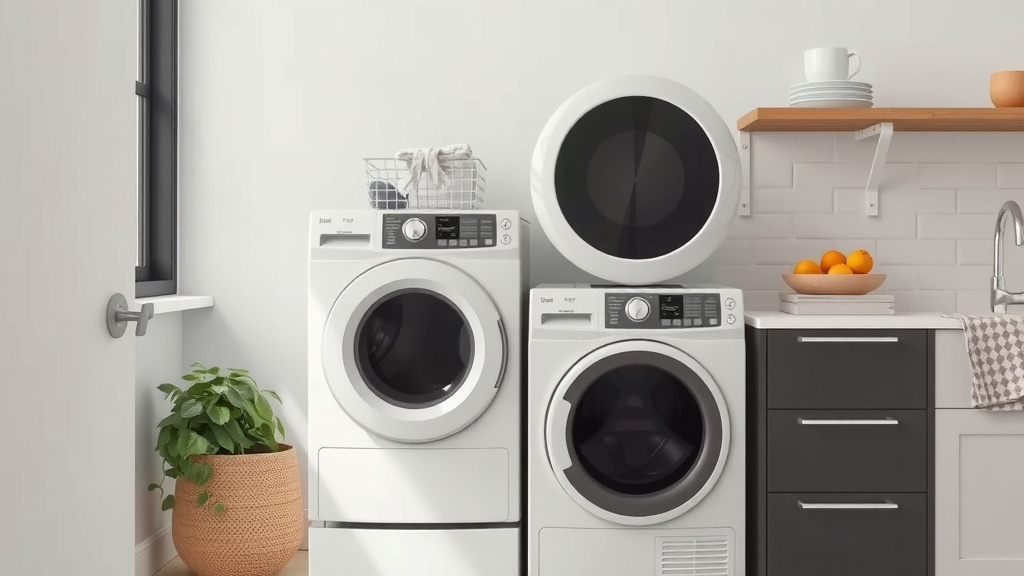
You’ve got the essential blueprint for fitting a stackable washer and dryer into your home. Remember, the typical footprint is around 27-30 inches wide and 75-80 inches tall. But those numbers are just the start. You’ll also need to account for crucial clearances: about 6 inches in front for doors and drawers, and 4-6 inches behind for ventilation and hookups. Don’t forget to factor in the stacking kit’s contribution to the height. By carefully measuring your space and considering these clearances, you can ensure your laundry setup is both efficient and easy to use. Your next step is to grab your tape measure and confirm these dimensions in your intended laundry spot!
Frequently Asked Questions
How much extra width do I need besides the machines themselves?
We found that adding 1 to 3 inches of clearance on each side of your stackable units is a smart move. This extra space is vital for good airflow, preventing overheating, and making connections easier.
Can I use a non-stackable dryer on top of a stackable washer?
Generally, no. You need a specifically designed stackable dryer and washer for safety and stability. A dedicated stacking kit is also essential to secure them properly.
What happens if I don’t leave enough space behind the units?
Insufficient space behind your stackable washer and dryer can lead to overheating, reduced efficiency, and potential fire hazards. It also makes routine maintenance or repairs much more difficult.
Do I need to account for the dryer vent hose in my space calculations?
Yes, absolutely. Ensure your dryer vent hose isn’t kinked and has room to connect comfortably. A straight, unobstructed vent is critical for efficient drying and safety.
What if my laundry area has a low ceiling?
If you have a low ceiling, you might need to look for compact or apartment-sized stackable units. Always check the exact height requirements of the models you’re considering, including the stacking kit.