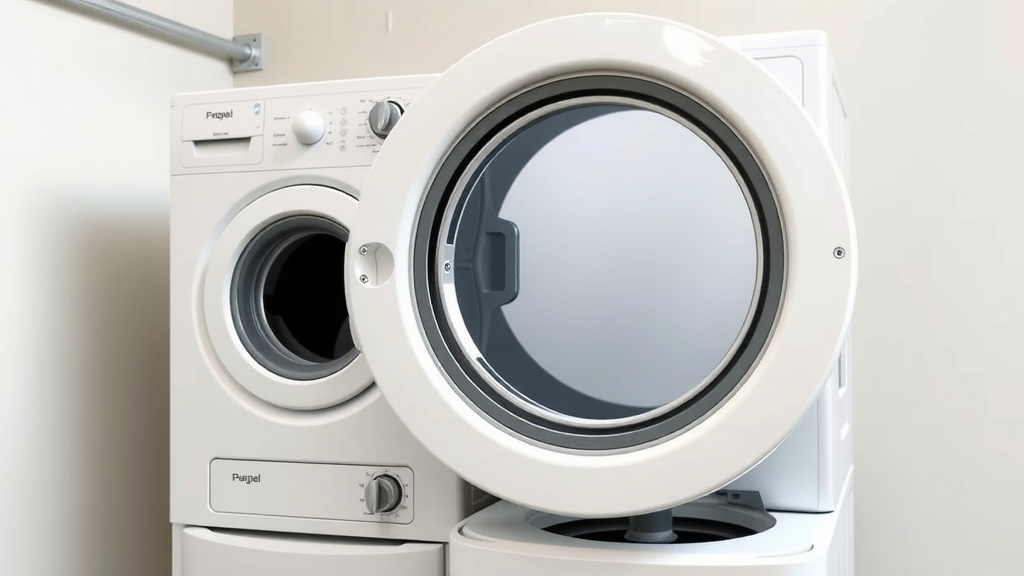
Stackable Washer Height: What You Need to Know
The height of stackable washers typically ranges from 70 to 76 inches when they are stacked together. This measurement is important for fitting them into your laundry space. You’ll want to measure your available vertical space before buying.
Many stackable washer and dryer units are designed to be space-saving solutions. We found that the exact dimensions can vary by brand and model. Always check the product specifications to ensure a good fit for your home.
- Stackable washers usually measure 70-76 inches tall when stacked.
- This includes both the washer and the dryer unit.
- Always check specific model dimensions.
- Consider your ceiling height and door openings.
Let’s walk through exactly how tall different stackable washer units can be so you can make the best choice for your laundry room.
Stackable Washer Dimensions: What to Expect Height-Wise
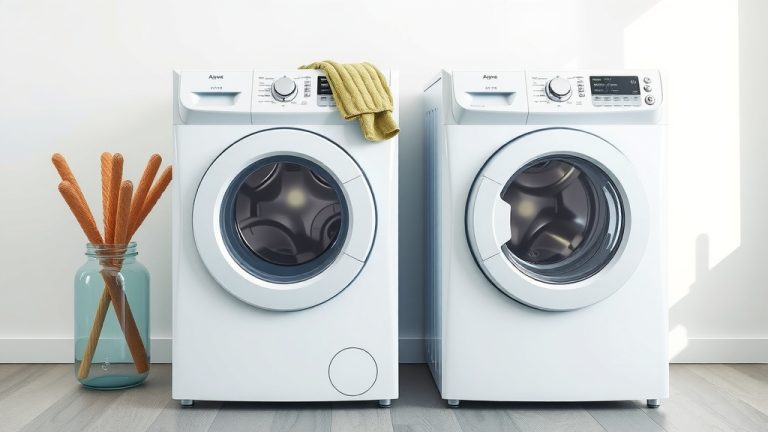
So, you’re curious about the height of stackable washers? We’ve got you covered! When a washer and dryer are stacked together, they form a tall, slender appliance designed to save precious floor space. We found that the typical stacked unit, including both the washer and the dryer, stands between 70 and 76 inches tall.
Think of it like a tall, slim refrigerator for your laundry. This height is a key feature for apartment dwellers or anyone tight on space. But is this height consistent across all brands? We looked into it, and while 70-76 inches is the common range, there can be slight variations.
Understanding the Stacked Unit’s Height
It’s important to remember that when we talk about the height of a stackable washer, we’re usually referring to the combined height of both the washer and the dryer. The washer itself will be shorter, and the dryer sits on top of it. This creates one tall appliance.
We found that most manufacturers design these units with standard ceiling heights in mind. They want them to fit comfortably in most laundry rooms or closets. So, the 70-76 inch range is pretty reliable for the entire stacked setup.
Washer Height vs. Stacked Unit Height
Let’s break it down. A standalone washer, even one designed for stacking, will be a standard washing machine height, typically around 30-40 inches. The dryer, when stacked on top, adds its own height. This is why the combined height is so much greater.
We’ve seen some models where the dryer is slightly taller than the washer, and vice-versa. It really depends on the specific design. Always measure your space before you buy!
Factors Influencing Stackable Washer Height
Several things can influence the exact height of your stacked washer and dryer. It’s not a one-size-fits-all situation. We recommend checking the specs carefully for any unit you’re considering.
Brand and Model Variations
You’ll find that different brands have different dimensions. Some might be on the lower end of the 70-inch spectrum, while others might reach closer to 76 inches. We found that Whirlpool, GE, LG, and Samsung all offer stackable options, and their heights can vary.
For instance, some compact or European-style stackable units might be a bit shorter. Larger capacity models could potentially be a touch taller. It’s like choosing between a compact car and an SUV; they both get you there, but their dimensions differ.
Dryer Design and Capacity
The design of the dryer is a big factor in the stacked height. A dryer with a larger drum capacity might be built a bit taller. The control panel also plays a role; some have controls on the front, while others have them on a raised panel at the top.
We found that dryers with integrated control panels at the top can add a few extra inches. This is something to keep an eye on if you’re pushing the height limit in your laundry space. It’s always good to have a little wiggle room!
Pedestals and Risers: Adding to the Height
Now, here’s where things can get interesting! Some people choose to add a pedestal or riser beneath their stackable washer unit. These are drawer-like additions that lift the entire appliance off the floor.
While pedestals can offer extra storage for detergent and supplies, they definitely add to the overall height. We found that pedestals can add anywhere from 10 to 16 inches to the stacked unit’s height. So, a 75-inch stacked unit with a 12-inch pedestal could easily reach 87 inches!
This is a crucial point. If you’re eyeing a unit and it seems just a bit too tall, check if it can be installed *without* a pedestal. Or, if you really want a pedestal, ensure your ceiling can accommodate the extra inches. It’s like adding a hat to an outfit; it changes the overall look and height!

Measuring Your Space: A Quick Checklist
Before you get too excited about a particular stackable washer and dryer, let’s talk about measuring. This is the most important step to avoid disappointment. We can’t stress this enough!
- Measure your ceiling height. Make sure you have enough clearance for the stacked unit.
- Measure doorway widths. Can you get the stacked unit into your laundry room or closet?
- Measure appliance depth. Ensure it won’t stick out too far into your walkway.
- Consider the location of vents and plumbing. You’ll need space for hookups.
- Factor in any extra height from pedestals or future appliance upgrades.
Here’s a handy table comparing approximate heights. Remember, these are general figures, and specific models will vary. Always consult the manufacturer’s specifications!
| Appliance Type | Approximate Height (Inches) |
|---|---|
| Standard Front-Load Washer (Standalone) | 35 – 40 |
| Standard Dryer (Standalone) | 35 – 40 |
| Stackable Washer & Dryer Unit (Combined) | 70 – 76 |
| Stackable Unit with Pedestal | 80 – 92+ |
We found that having at least 2-3 inches of extra space above the stacked unit is ideal for ventilation and ease of installation. It’s better to have a little breathing room than to have it crammed in there!
So, while the height of stackable washers (when stacked with their dryer) hovers around 70-76 inches, always do your homework. Your measurements will be your best friend in finding the perfect fit for your laundry needs.
Conclusion
You’ve learned that stackable washer and dryer units typically reach heights between 70 and 76 inches. This measurement accounts for both appliances stacked together. We found that while this range is common, variations exist due to brand, model, and dryer design. Remember, adding a pedestal can significantly increase the overall height. Before you buy, always double-check the specific dimensions against your available space. Your next step is to grab your measuring tape and confirm these heights will work for your laundry room!
Frequently Asked Questions
Can a stackable washer fit under a standard 8-foot ceiling?
Yes, most stackable washer and dryer units can fit under an 8-foot ceiling. The typical stacked height of 70-76 inches leaves ample clearance, usually over two feet. We recommend still measuring your ceiling height and the appliance specs to be sure.
Do all stackable washer and dryer units come in pairs?
While they are designed to be stacked, you can often purchase the washer and dryer separately. The key is ensuring they are designed to be stacked together. We found that manufacturers design them to be compatible for safe stacking.
What is the height of a stackable washer without the dryer on top?
A standalone stackable washer unit is similar in height to a standard washing machine. You can expect it to be around 30 to 40 inches tall. The dryer then adds its height when placed on top.
How much extra height does a pedestal add to a stackable unit?
Pedestals can add a considerable amount of height, usually between 10 to 16 inches. We found this is an important factor if you’re working with limited vertical space. Always add this to the stacked unit’s height to get the total measurement.
Can I stack a washer and dryer from different brands?
It’s generally not recommended to stack units from different brands. While dimensions might seem similar, compatibility for safe and stable stacking isn’t guaranteed. We found that using a matching pair from the same manufacturer is the safest bet.