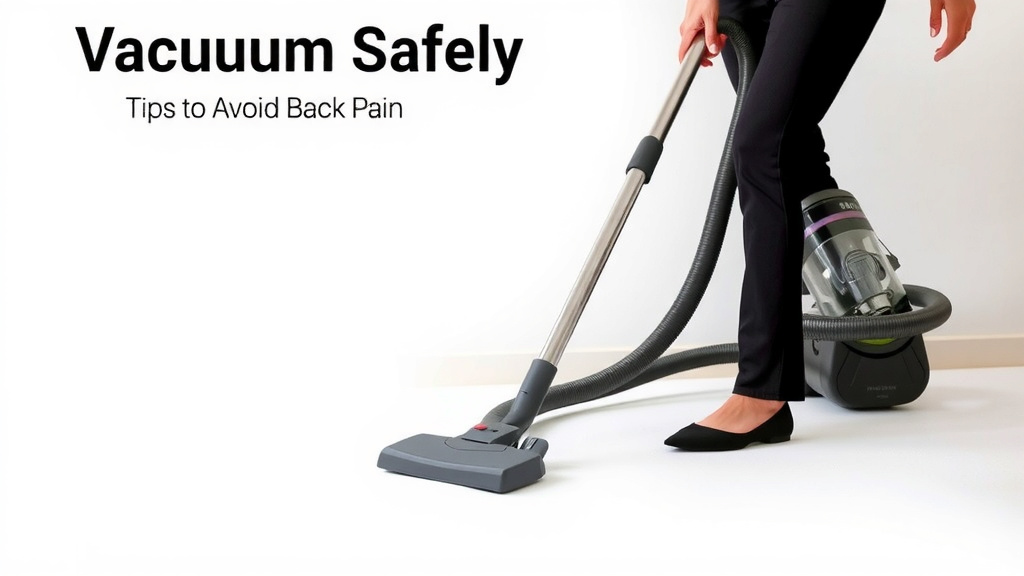
Vacuuming Safely: Tips to Avoid Back Pain
Yes, you absolutely can avoid back pain while vacuuming with a few smart techniques. The key is to use your legs and core, not just your back, and to choose the right vacuum for your home. Proper posture can make a huge difference in preventing that dreaded ache after you’ve finished cleaning.
Many people experience back discomfort after vacuuming because they tend to twist and bend their spine incorrectly. We found that understanding how to move your body efficiently can turn a painful chore into a much more comfortable one. It’s not just about how you hold the vacuum, but also how you position your body.
TL;DR:
- Bend your knees, not your back.
- Keep the vacuum close to your body.
- Push and pull with your whole leg.
- Take breaks often.
- Choose a lightweight vacuum if possible.
Let’s walk through exactly how to vacuum without straining your back, step by step.
Cleaning Your Floors Without Sacrificing Your Back
Vacuuming can feel like a workout, but it shouldn’t leave you sore. Many people experience back pain after vacuuming because they aren’t using the right body mechanics. It’s easy to fall into bad habits, like bending from the waist. We’ve gathered expert advice to help you clean effectively and protect your spine.
The Foundation: Proper Stance and Movement
Your stance is the first line of defense against back strain. Think of yourself as a sturdy tree. You want to be well-rooted and balanced. Standing too stiffly or in an awkward position puts extra pressure on your lower back.
Finding Your Balance
Start by standing with your feet shoulder-width apart. This gives you a stable base. Imagine you’re about to push a heavy object. You’d naturally widen your stance, right? The same principle applies here. A wider stance helps distribute your weight evenly. This reduces the load on your spine.
Engage Your Core
Your core muscles – your abs and back muscles – act like a natural corset. Engaging them provides support for your spine. Before you even start pushing the vacuum, gently tighten your abdominal muscles. You don’t need to suck in your stomach. Just a subtle engagement is enough. Think of it as bracing yourself slightly. This simple step can make a big difference.
Mastering the Vacuuming Motion
The way you move the vacuum cleaner is just as important as your stance. The goal is to use your whole body, not just your back muscles. You want the vacuum to do the work, with your body supporting the motion efficiently.
Push and Pull with Your Legs
This is a game-changer. Instead of bending at your waist and twisting, use your legs to power the movement. When you push the vacuum forward, step forward slightly. When you pull it back, use your legs to create the motion. Research from physical therapists often highlights this technique. They explain that this shifts the effort from your vulnerable back to your stronger leg muscles. It’s like walking – you use your legs to move forward and backward. Apply this same logic to vacuuming.
Keep It Close, Keep It Smooth
Your vacuum should feel like an extension of your body. Keep the vacuum cleaner close to your torso as you move it. This minimizes the leverage that can pull on your back. Avoid large, sweeping motions that require you to twist your spine significantly. Instead, use smaller, controlled movements. Think of it as a gentle glide. When you need to change direction, try to turn your entire body. Pivot on your feet rather than twisting your waist. Many repetitive strain injuries happen when we force our bodies into awkward positions.
Avoid Twisting and Bending
Twisting your spine while holding a heavy object like a vacuum is a recipe for disaster. Try to minimize any twisting motion. If you need to clean around furniture, reposition yourself or the furniture if possible. When reaching for tight spots, try to move your feet to get closer. Bending from the waist puts immense pressure on your spinal discs. If you must bend down, do so by bending your knees and hips. Keep your back straight, like a lever. Imagine you’re lowering yourself down, not just folding in half. This protects the delicate structures in your back.
Choosing the Right Tool for the Job
The vacuum cleaner itself plays a big role in how much strain you experience. Not all vacuums are created equal when it comes to ergonomics.
Weight Matters
If your vacuum feels heavy and cumbersome, it’s likely contributing to your back pain. We found that lighter models are generally easier to maneuver. They require less force to push and pull. Consider the overall weight and how easy it is to lift or steer. Many modern vacuums are designed with user comfort in mind, so explore those options.
Handle and Height Adjustments
The handle height should allow you to stand upright comfortably. If you have to stoop or reach too far, it’s the wrong fit. Many vacuums offer adjustable handles. Make sure you can set it to a height that suits your body. This allows for a more natural posture while you clean. Some vacuums also have swivel steering, which can make them much easier to navigate around furniture without straining your back.
Making Vacuuming a Sustainable Chore
Even with the best techniques, vacuuming is still physical work. Smart planning can prevent overexertion and pain.
Take Frequent Breaks
Don’t try to vacuum your entire house in one go. Break the task into smaller, manageable sessions. Take a 5-10 minute break every 20-30 minutes. Stand up, stretch gently, and walk around. This allows your muscles to recover and prevents fatigue. Listening to your body is key. If you start to feel any discomfort, stop and rest.
Vary Your Tasks
If possible, alternate vacuuming with other less strenuous chores. Maybe vacuum one room, then dust another. This prevents one set of muscles from becoming overworked. It also makes the cleaning process feel less monotonous. A little variety can go a long way in keeping your body happy.
Quick Checklist for Pain-Free Vacuuming
Ready to tackle the dust bunnies without the backache? Keep this simple checklist in mind:
- Stand with feet shoulder-width apart.
- Gently engage your core muscles.
- Push and pull using your legs, not your back.
- Keep the vacuum close to your body.
- Adjust the handle for a comfortable upright posture.
- Take short, frequent breaks to stretch and move.
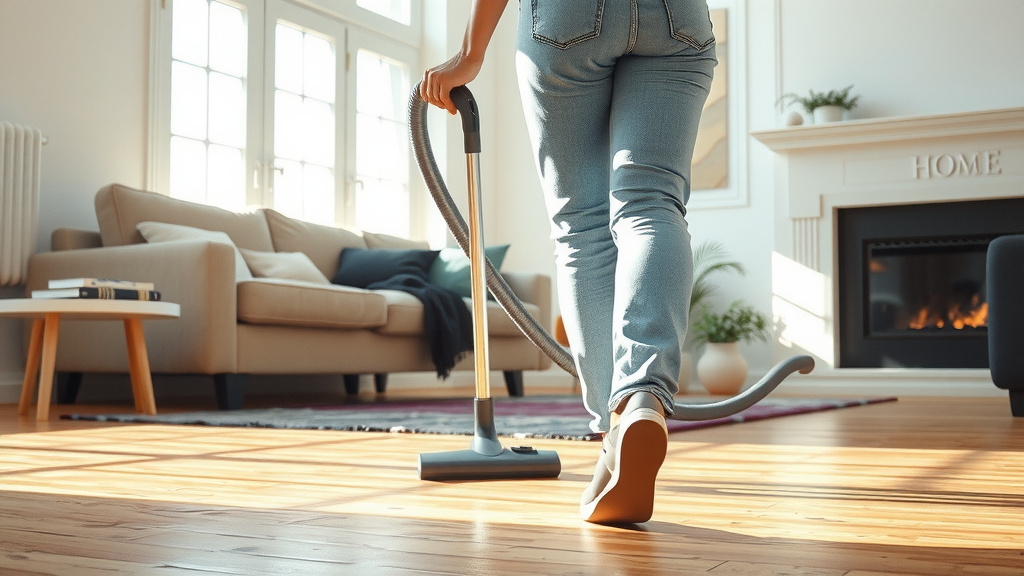
Conclusion
You’ve got the tools to make vacuuming a back-friendly task! Remember, it’s all about using your body wisely. By focusing on your stance, engaging your core, and moving with your legs, you can drastically reduce strain. Choosing a vacuum that fits your needs and taking smart breaks are also key. Don’t let vacuuming be a pain point any longer. Start implementing these techniques today, and you’ll notice a difference in how your back feels after cleaning.
Frequently Asked Questions
How often should I take breaks while vacuuming?
We found that taking short, frequent breaks is best. Aim for a 5-10 minute break every 20-30 minutes of vacuuming. This allows your muscles to recover and prevents them from getting overworked.
What if my vacuum is very heavy?
If your vacuum feels heavy, it’s a good idea to consider lighter models if possible. When using your current vacuum, focus extra hard on using your legs to push and pull. You might also break up the task into even smaller sections.
Is it okay to twist my body if I just do it slowly?
While moving slowly might feel safer, it’s still best to avoid twisting your spine as much as possible. Try to pivot your feet and turn your entire body instead of just your waist. This protects your back from unnecessary strain.
Can vacuuming really cause lasting back pain?
Yes, poor technique can contribute to back discomfort over time. Regularly straining your back with incorrect posture or movements during vacuuming can lead to aches. By using proper body mechanics, you can prevent this pain from developing or worsening.
What’s the most important thing to remember about vacuuming without pain?
The single most important takeaway is to use your legs and core, not your back. Think of yourself as a stable unit powered from below. This simple shift in focus will protect your spine and make the chore much more comfortable.