
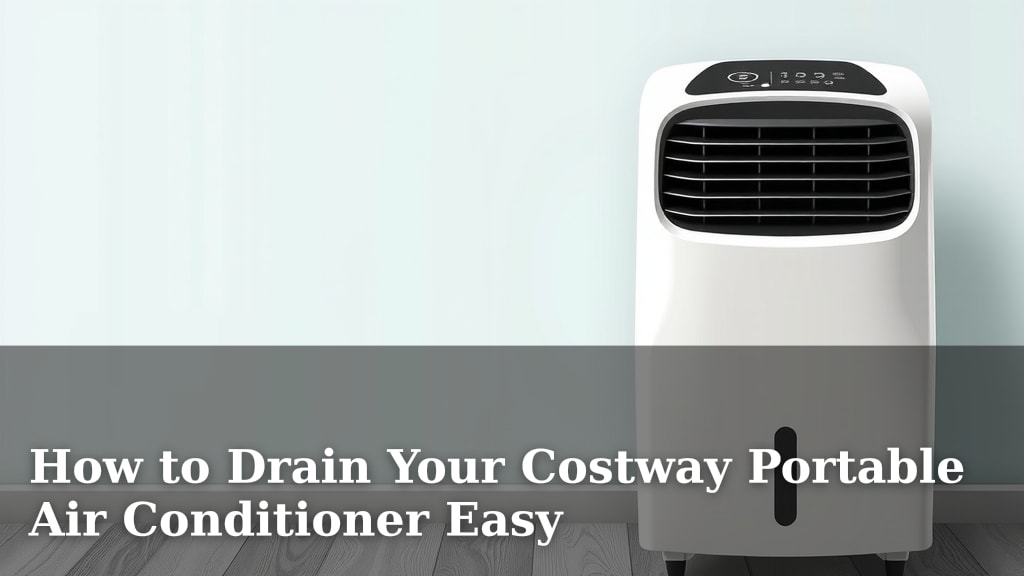
How to Drain Your Costway Portable Air Conditioner Easy
Draining your Costway portable air conditioner is usually quite simple. The easiest way to drain it involves locating the drain port and using a hose or bucket. You’ll want to make sure you have a plan before you start to avoid any messes. This process is essential for maintaining your unit’s efficiency.
Your portable AC collects water as it cools your home. This collected water needs to be removed regularly. Not draining it can lead to reduced cooling performance and even potential water damage. We found that consistent draining helps keep your unit running smoothly all summer long.
- Locate the drain port on your unit.
- Prepare a bucket or hose for water collection.
- Follow specific steps based on your model.
- Understand why draining is important.
- Know when and how often to drain.
Let’s walk through exactly how to drain your Costway portable air conditioner, step by step, so you can get back to enjoying cool air.
Getting the Water Out: Draining Your Costway Portable AC
Your Costway portable air conditioner works hard to keep you cool. As it does, it naturally collects moisture from the air. This water needs to go somewhere, and your unit has a system for that. Knowing how to drain it is key to keeping your AC running efficiently and preventing potential problems.
Many people wonder about draining their portable AC. It’s a common task for owners. We found that a little knowledge goes a long way. This guide will help you understand the different ways to drain your Costway unit.
Understanding Your Costway AC’s Water Collection
Portable air conditioners cool your space by removing heat and humidity. The process of dehumidification involves collecting water vapor from the air. This water then gathers inside the unit.
Think of it like a cold glass on a warm day. Water droplets form on the outside. Your AC does something similar internally, but on a much larger scale. This collected water is called condensate.
Why Does the Water Need Draining?
If you don’t drain the condensate, your unit has a few options. Some advanced models have an auto-evaporation feature. This means the AC will try to evaporate some of the water itself. However, this feature isn’t always 100% effective, especially in humid climates.
If the water can’t evaporate, it will fill up the internal reservoir. Once full, the unit will likely shut off to prevent overflow. This means no more cool air until you empty it. We found that consistent draining is much better than waiting for the auto-shutoff.
Potential Problems of Not Draining
Ignoring the need to drain can lead to more than just a shut-off AC. Water damage is a real concern. If the reservoir overflows, water can leak onto your floors. This could damage your flooring, carpets, or even nearby furniture.
Standing water also creates an environment where mold and bacteria can grow. This can lead to unpleasant odors coming from your AC. It can even affect the air quality in your home. Many health experts recommend maintaining good air quality (CDC).
Methods for Draining Your Costway Portable AC
Costway portable air conditioners typically offer a couple of ways to handle the collected water. The method you use often depends on your specific model and how much water is being produced.
The Manual Drain Method (Bucket or Hose)
Most Costway units have a manual drain port. This is often located at the bottom or back of the unit. You’ll need to locate this port on your specific model.
Finding the Drain Port
Carefully inspect the rear or lower section of your air conditioner. Look for a small cap or plug. Sometimes it’s a rubber stopper, and other times it might be a threaded opening. Your user manual is the best resource if you’re having trouble finding it.
Using a Bucket
The simplest way to drain manually is with a bucket.
- First, make sure your unit is turned off and unplugged for safety.
- Position a shallow bucket or pan directly beneath the drain port.
- Carefully remove the drain port cap.
- Allow the water to drain completely into the bucket.
- Once empty, securely replace the drain port cap.
Using a Drain Hose (If Applicable)
Some models come with a drain hose, or you can attach one. This makes draining easier, especially if the unit is difficult to access.
- Locate the drain port.
- Attach the drain hose securely to the port. Ensure a snug fit to prevent leaks.
- Place the other end of the hose into a floor drain, a larger container, or even outside your home if appropriate and safe.
- Remove the drain port cap (if there is one) to allow water flow.
- The water will now flow out through the hose.
- Once draining is complete, disconnect the hose and replace the cap.
The Continuous Drain Method (For Highly Humid Areas)
If you live in a very humid climate, your unit might produce more water than the manual or auto-evaporation methods can handle. In these cases, you might want to set up continuous draining.
Setting Up Continuous Drainage
This usually involves attaching a drain hose (as described above). The key difference is you’ll want to ensure the hose always has a downward slope. This allows gravity to do the work of carrying the water away constantly.
You’ll need to place your unit in a location where a continuous drain is possible. This might mean it’s near a floor drain or a suitable outlet. This method is excellent for maximizing cooling efficiency during peak humidity.
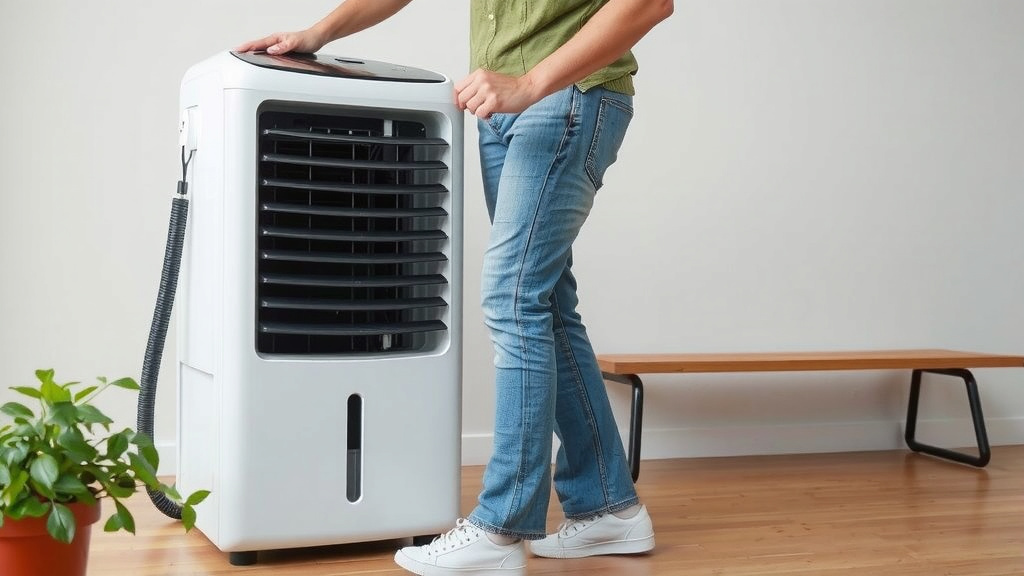
When and How Often to Drain Your AC
The frequency of draining depends on a few factors. How much you use the AC, the humidity level in your home, and your AC’s specific auto-evaporation capabilities all play a role.
We found that checking the water level regularly is the best approach. Many units have an indicator light that signals when the tank is full. Don’t wait for this light if you can help it. A quick visual check is often sufficient.
General Guidelines
In moderate conditions, you might only need to drain every few days. On very hot and humid days, you might need to drain daily. If your unit has a robust auto-evaporation system, you might only need to drain occasionally.
When to Drain Immediately
Always drain your AC if:
- The “water full” indicator light comes on.
- You notice any water leaks around the unit.
- The unit stops cooling unexpectedly (it might have shut off due to a full tank).
Troubleshooting Common Draining Issues
Sometimes, draining doesn’t go as smoothly as planned. Here are a few common hiccups and how to address them.
Water Not Draining Properly
If the water is slow to drain or not draining at all, check a few things. Ensure the unit is on a level surface. A tilted unit can prevent water from reaching the drain port. Also, check the drain port and any attached hose for blockages. Small debris can sometimes clog the opening.
Leaking Around the Drain Port
A leak usually means the drain port cap or the attached hose isn’t secured properly. Double-check that the cap is firmly in place or that the hose is tightly connected. If the cap or hose is damaged, you may need a replacement part.
Here’s a quick checklist to ensure a smooth draining process:
- Check your manual: Always refer to your specific Costway model’s instructions first.
- Unplug the unit: Safety first! Always disconnect power before draining.
- Position your container: Make sure your bucket or hose setup is ready before opening the port.
- Drain completely: Ensure all water is removed before replacing the cap.
- Secure the cap: Replace the drain port cap or hose connection tightly.
- Monitor: Keep an eye on your unit for the first few uses after draining.
Conclusion
You’ve now learned the essential steps to drain your Costway portable air conditioner. Remembering to check your manual and unplug the unit are vital first steps for a safe and efficient process. Whether you use a bucket, a hose, or set up continuous draining, consistent maintenance prevents potential messes and keeps your AC running its best.
Don’t wait for your unit to shut off or for an indicator light to appear. By regularly draining your portable AC, you’re ensuring it continues to provide cool, comfortable air throughout your home. Take a moment this week to check your unit and perform a draining if needed!
Frequently Asked Questions
How often should I drain my Costway portable AC?
You should drain your Costway portable AC whenever the water tank is full, often indicated by a light or the unit shutting off. In very humid conditions, you might need to drain it daily. We found that checking it visually every few days is a good habit.
Can I leave the drain hose connected all the time?
Yes, if you live in a very humid area or use your AC frequently, you can set up a continuous drain using a hose. Ensure the hose has a constant downward slope to allow gravity to remove the water effectively.
What if my Costway AC isn’t draining at all?
If water isn’t draining, first ensure the unit is on a level surface. Then, check the drain port and any attached hose for clogs. Small debris can sometimes block the water flow, preventing it from draining properly.
Is it safe to drain the water outside?
Draining outside can be an option, but ensure it’s done responsibly. Avoid creating puddles that could attract pests or cause water damage to your property. If using a hose, make sure it’s directed to a suitable drainage area.
What happens if I forget to drain my Costway portable AC?
Forgetting to drain can cause your portable AC to stop cooling and shut off automatically to prevent overflow. You might also encounter water leaks, which could lead to floor damage or the growth of mold and unpleasant odors.

![7 Best Split System Air Conditioner Melbourne [2026]](https://bathroomexplorer.com/wp-content/uploads/2026/06/7-best-split-system-air-conditioner-melbourne-2026-featured-768x432.jpg)
![7 Best Window Air Conditioner Energy Efficient [2026]](https://bathroomexplorer.com/wp-content/uploads/2026/06/7-best-window-air-conditioner-energy-efficient-2026-featured-768x432.jpg)