

How to Drain Your Honeywell Portable Air Conditioner
The easiest way to drain your Honeywell portable air conditioner is by **locating the drain plug** and using a hose or container to catch the water. You’ll typically find this plug at the bottom rear of the unit. Properly draining prevents water buildup and potential damage. It’s a **simple process** that keeps your AC running smoothly.
Your portable air conditioner collects condensation as it cools your home. This water needs to be removed periodically. Ignoring it can lead to overflow issues or even reduced cooling efficiency. Knowing how to drain it ensures you get the most out of your unit and avoid messy situations.
- Locate the drain plug, usually at the bottom.
- Prepare a container or hose for the water.
- Remove the plug and let the water drain out.
- Replace the plug securely when finished.
- This is essential for AC maintenance.
Ready to tackle that water? Let’s walk through exactly how to drain your Honeywell portable air conditioner step by step.
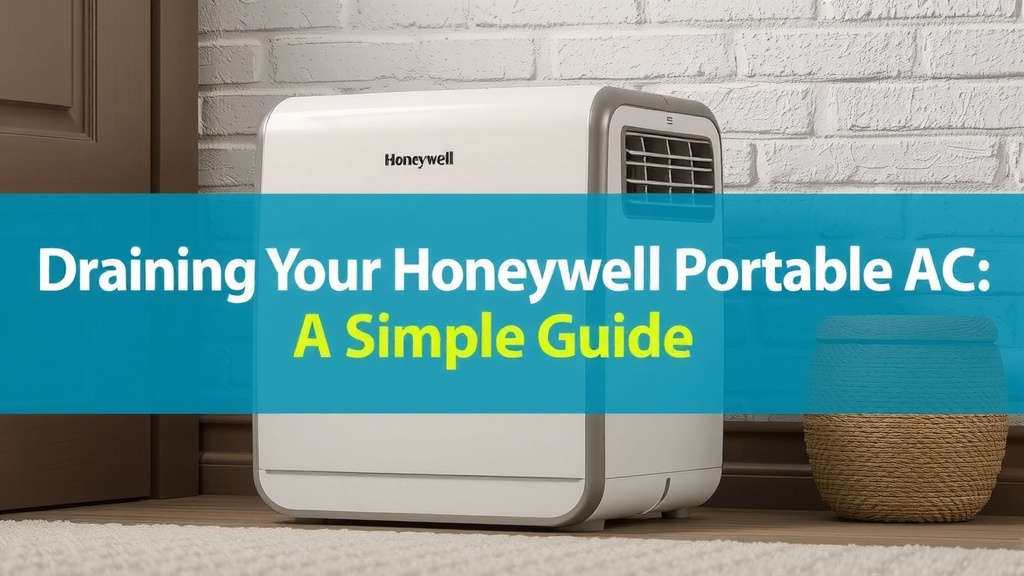
“`htmlDraining Your Honeywell Portable AC: A Simple Guide
Knowing how to drain your Honeywell portable air conditioner is a key part of keeping it running smoothly. This simple task prevents water buildup and potential headaches down the line. You’ll be surprised at how easy it is!
Understanding Why Your AC Needs Draining
As your Honeywell portable air conditioner works its magic, cooling your home, it naturally creates condensation. Think of it like the dew on a cold glass of water on a hot day. This moisture needs somewhere to go.
Where Does the Water Come From?
The process of cooling air involves removing heat and, in turn, moisture. This is called dehumidification. Your AC unit collects this water in a reservoir inside the unit. Over time, this reservoir fills up.
The Importance of Regular Draining
If you don’t drain the water, your unit will eventually reach its capacity. Most Honeywell models have an auto-shutoff feature. This means the AC will stop cooling until the water is emptied. You might also notice a sloshing sound if the water level gets very high. In rare cases, continuous overflow could lead to water damage around your unit.
Locating the Drain Plug on Your Honeywell Unit
The first step is finding where to let that water out. Honeywell designs its portable AC units with drainage in mind. You’ll typically find the drain plug in an accessible spot.
Common Drain Plug Locations
On most Honeywell portable air conditioners, the drain plug is located on the back of the unit. You’ll usually find it towards the bottom. It might be a small rubber plug or a screw-on cap.
Consult your Honeywell user manual if you’re having trouble locating it. Every model can be slightly different, and your manual will have the exact diagram for your specific unit.
What the Drain Plug Looks Like
The drain plug is usually black or gray. It’s designed to be securely in place to prevent leaks during normal operation. Sometimes it’s flush with the casing, and other times it might have a small cap you can twist off.
Step-by-Step Instructions for Draining Your AC
Now that you know where to look, let’s get that water out! This process is straightforward and won’t take much time.
Step 1: Prepare Your Draining Setup
Before you remove the plug, have your drainage method ready. You don’t want water spilling onto your floor. Here are a few options:
- Small Container: A shallow pan or bucket works well if you can place it directly under the plug.
- Drain Hose: Many Honeywell units come with a drain hose or have an attachment point for one. This is the cleanest method.
- Towel/Rag: Keep a towel handy to wipe up any stray drips.
We found that using the official drain hose, if available, offers the least mess. If you don’t have one, a small bucket is your next best bet.
Step 2: Remove the Drain Plug
Gently twist or pull the drain plug to remove it. Be prepared for water to start flowing out immediately if the reservoir is full. If your unit has a separate cap, you’ll need to remove that first, then the plug itself.
Step 3: Allow the Water to Drain
Let all the water flow out of the unit. This might take a few minutes, depending on how much water has collected. You can tilt the unit slightly if needed, but be careful not to knock it over. Many experts suggest tilting the unit *away* from the controls to prevent accidental water damage (Cleveland Clinic).
Tip: If you’re using a hose, make sure the other end is securely placed in a drain or a larger container.
Step 4: Replace the Drain Plug
Once the water has completely drained, clean and dry the plug. Reinsert it firmly into the opening. Make sure it’s sealed tight to prevent any future leaks. A loose plug is an invitation for trouble!
Continuous Draining vs. Manual Draining
Honeywell portable air conditioners often offer different draining options. Understanding these can help you manage water removal more effectively.
Manual Draining Explained
This is the method we’ve described above. You manually remove the plug and let the water out periodically. This is necessary when the water tank inside the unit is full. This is typically the most common method for most users.
Continuous Draining Options
Some Honeywell models support continuous draining. This usually involves attaching a drain hose to a specific port. The water is then directed out of the unit and into a floor drain or a larger external container.
Continuous draining is ideal if your AC is in a basement or an area where you can easily route the hose. It means you won’t have to worry about manually draining as often. Research suggests that units operating in very humid environments will collect water much faster, making continuous drainage a practical solution (NCBI).
When to Use Continuous Draining
If you live in a region with high humidity or are using the unit in a particularly damp area like a workshop, continuous draining can save you a lot of hassle. It ensures your AC keeps running without interruption.
Troubleshooting Common Draining Issues
Sometimes, things don’t go exactly as planned. Here are a few common issues and how to fix them.
Water Not Draining or Draining Slowly
This could mean the drain port is clogged. Check for any debris that might be blocking the plug or hose. If you’ve used a hose, ensure it’s not kinked.
Leaking After Draining
If you notice leaks after you’ve drained the unit and replaced the plug, the plug might not be seated correctly. Remove it, check for any damage to the seal, and reinsert it firmly. Sometimes, the plug itself can become worn over time and may need to be replaced.
Error Codes Related to Water Level
Your Honeywell unit might display an error code if it detects a water level issue. These codes are explained in your user manual. Often, they point to the need for draining or indicate a sensor problem.
Checklist: Quick Steps for Draining Your AC
Keep this handy for a quick reminder:
- Find the drain plug.
- Set up your bucket or hose.
- Remove the plug carefully.
- Let all water drain out.
- Reinsert and secure the plug.
- Wipe up any spills.
Conclusion
You’ve learned how essential it is to drain your Honeywell portable air conditioner. Keeping up with this simple maintenance task prevents water buildup and ensures your unit cools your space effectively. By locating the drain plug, preparing your setup, and carefully draining and replacing the plug, you’re extending your AC’s lifespan. Don’t let a full water tank stop your comfort! For your next step, add a reminder to your calendar to check and drain your unit before the tank is completely full.
Frequently Asked Questions
How often should I drain my Honeywell portable air conditioner?
You should drain your unit whenever the water indicator light comes on or the unit automatically shuts off due to a full tank. In very humid conditions, this might be daily or every few days. For less humid environments, you might only need to drain it once a week or even less often.
Can I leave the drain hose attached all the time?
Yes, if your Honeywell model supports continuous draining and you have a way to route the hose to a floor drain or collection container, you can leave it attached. This is the most convenient option for high-humidity areas or regular use, as it prevents the water tank from filling up.
What happens if I don’t drain my portable AC?
If you don’t drain your portable AC, the internal water tank will eventually fill up. Most Honeywell units have a safety feature that will cause the unit to stop cooling and may display an error code or indicator light. In some cases, continuous overflow could potentially lead to water damage.
My Honeywell AC is making a sloshing sound, what should I do?
A sloshing sound usually means the internal water tank is nearly full. This is your cue to drain the unit. Stop the AC, locate the drain plug, and prepare your container or hose to empty the collected water before it causes an issue.
Is it safe to tilt my portable AC to drain it?
It can be helpful to tilt your unit slightly to ensure all the water drains out, but do so carefully. Experts suggest tilting the unit away from the controls to minimize any risk of water damage to the internal electronics. Always ensure the unit is stable before and after tilting.


![7 Best High Btu Portable Air Conditioner [2026]](https://bathroomexplorer.com/wp-content/uploads/2026/06/7-best-high-btu-portable-air-conditioner-2026-featured-768x432.jpg)