Portable Dishwasher vs Countertop: Which Is Best
Choosing between a portable dishwasher and a countertop model comes down to your kitchen space and how much you cook. If you have room under a counter, a portable dishwasher wins for capacity and cleaning power. If you are cramped for space and only need to wash a few items, a countertop dishwasher is your best bet. We looked at the specs, setup, and real-world use to give you the straight answer.
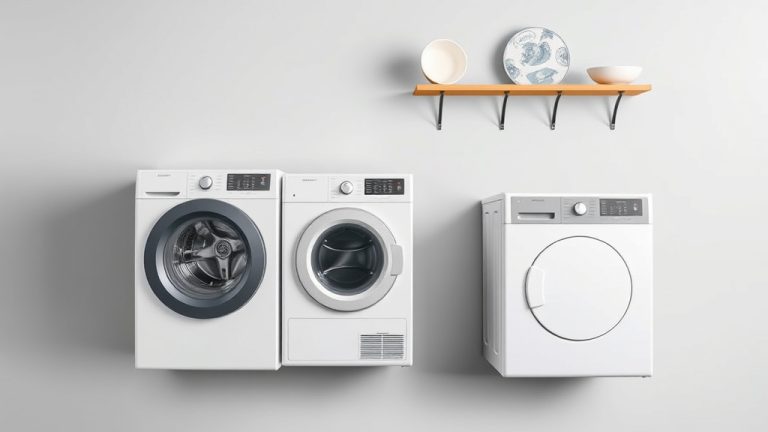
Both options help you skip the hand-washing routine, but they fit very different lifestyles. Portable dishwashers sit on wheels and hook up to your kitchen faucet, while countertop models sit right on your counter. Your water pressure, available square footage, and daily dish volume will point you to the right one. We found that the best choice is often about your specific kitchen layout.
- Portable dishwashers hold 6 to 8 place settings and roll out of the way when done.
- Countertop dishwashers hold about 2 to 4 place settings and need less water per load.
- Portable models connect to the kitchen faucet with a hose; countertop units do the same but sit higher.
- Both types skip the permanent installation, so renters and apartment dwellers can use them.
- Countertop units are typically quieter and cheaper, but portable models clean more dishes at once.
Below, we break down everything you need to know about these two appliance styles. We’ll walk through size, installation, cleaning performance, and cost, so you can make a smart choice.
Portable Dishwashers vs Countertop Models: Your Space-Saving Guide
You want clean dishes without the hassle. But counter space and kitchen layout often decide for you. We found that most shoppers eliminate one option the moment they measure their kitchen.
Portable dishwashers roll on wheels and connect to your faucet. Countertop dishwashers sit on your counter and do the same. Both save you from hand-washing. Neither needs permanent installation. That makes them great for renters and apartment dwellers.
How Much Space Does Each Dishwasher Need?
Space is the biggest deciding factor. Measure your kitchen before you shop. Grab a tape measure and check your available floor and counter area.
A portable dishwasher is about 24 to 26 inches tall, 18 to 20 inches wide, and about 26 inches deep. You need floor space near a sink. You also need a spot to park it when it’s not running. Many people tuck them into a corner or beside the fridge.
Countertop dishwashers are much smaller. Most are about 18 inches wide, 18 inches deep, and 17 inches tall. They fit under most upper cabinets. Just make sure your counter can hold the weight when it is full of water and dishes.
Weighing Your Countertop Strength
Check that your countertop is solid. A full countertop dishwasher can weigh around 40 to 50 pounds. Most laminate and quartz counters handle this fine. But older tile or hollow-core counters may flex. When in doubt, place the unit near a wall or over a support beam.
Water Supply and Drainage Setup
No matter which model you choose, water will flow from your faucet. The dishwasher connects to the aerator thread on your sink spout. A hose carries water in. Another hose drains dirty water down the sink.
Portable models include a Y-connector so you can still use your faucet. You attach it, run the cycle, and detach the hose when done. Countertop units work the same way. Some people find the faucet hookup a little fussy at first. But once it’s set, it takes about 20 seconds to connect.
Keep in mind that you need a faucet with threads. Most modern kitchens have them. If you have a pull-down faucet with no threads, you might need an adapter.
What Happens Without a Threaded Faucet?
You can buy a faucet adapter at a hardware store. Make sure you measure your faucet tip first. The adapter converts your smooth faucet into a threaded one. Without it, you cannot connect either dishwasher type.
Also, consider water pressure. Both types need a minimum of 20 psi. Most home taps deliver more than that. If you live in a high-rise or a low-pressure area, check your water pressure first. A simple gauge from the store can tell you.
Cleaning Power and What You Can Fit Inside
Now, let is talk about dirty dishes. Both machines clean well. But there is a big difference in how many plates you can load in one go.
Portable dishwashers hold 6 to 8 place settings. That is about a full day of dishes for a family of four. You can fit dinner plates, bowls, glasses, and even small pots. The racks resemble those in standard built-in units. You get more vertical space, so taller items like coffee mugs fit easily.
Countertop dishwashers hold 2 to 4 place settings. They work best for one or two people. You can load a few plates, a couple of bowls, and some silverware. But large pots and baking sheets usually do not fit. You will still hand-wash those.
Water and Energy Use: The Hidden Differences
You might think smaller is always more efficient. We found that is mostly true, but not in the way you expect. Countertop models use about 2.5 to 3.5 gallons per cycle. Portable models use roughly 5 to 7 gallons per cycle. That is still far less than hand-washing, which can use up to 20 gallons per load.
Energy costs are similar. Both types heat their own water. Countertop units use a bit less energy because they heat less water. But both will show up on your bill as modest bumps, not big spikes.
Many experts say that running any dishwasher beats hand-washing for water savings (U.S. Department of Energy). So either choice is a step in the right direction.
Drying Performance Compared
Countertop dishwashers often rely on a fan or open door to dry. Some models only air dry, which leaves plastic items wet. Portable dishwashers dry better because they have more room for airflow. Many units include a heated dry cycle.
If you hate towel-drying plastic Tupperware, look for a model with a forced-air dry feature. Both types offer this option on mid-range and higher-end models. It adds a little noise but saves you from soggy lids.
Noise Levels and Everyday Use
Quiet matters if your kitchen is open to the living room. Countertop dishwashers are generally quieter. They run at about 45 to 52 decibels. That is close to the hum of a quiet conversation.
Portable dishwashers are a little louder. They run at about 52 to 60 decibels. The extra noise comes from the larger spray arms and the pump pushing water to a higher level. It is not deafening, but you will know it is running.
One thing people overlook: portable dishwashers vibrate. They roll on wheels, and the spinning spray arm can make the whole unit shuffle on a hard floor. You might need to chock the wheels with a towel. Countertop models stay put because of their weight and stable design.
Daily Routine: Which Is Less Fiddly?
Let us walk through a typical evening with each. With a portable dishwasher, you roll it to the sink, unhook the faucet hose, and push it back when done. The Y-connector stays on your faucet, so you just flip a switch. Honestly, it takes less than a minute.
With a countertop model, you load the top, pull out the bottom rack, and load that, too. Then you fill the detergent cup and press start. You do not have to roll anything. But you lose a chunk of your counter while it runs.
Both require you to keep the hose connected during the cycle. So you cannot use the sink for washing vegetables or filling a pot. Plan your water use around the dishwashing cycle. It is a small adjustment, and most people get used to it within a week.
Cost Breakdown: Upfront Price and Long-Term Value
Price is where many people make their final choice. Countertop dishwashers are cheaper upfront. You can find decent models for 200 to 400 dollars. Portable dishwashers cost a bit more. Expect to pay 400 to 700 dollars for a good one.
Installation is free for both because you do the faucet hookup yourself. No plumber needed. No electrical work. Just plug into a standard outlet and run the hose.
Long-term operating costs are close. Countertop models use less water, so your water bill dips a little. Portable models clean more dishes per cycle, so you run fewer loads. Over a year, the difference is maybe 20 to 30 dollars. Not a dealbreaker either way.
| Feature | Portable Dishwasher | Countertop Dishwasher |
|---|---|---|
| Capacity | 6-8 place settings | 2-4 place settings |
| Space needed | Floor space near sink | Counter space, 18x18x17 inches |
| Water per cycle | 5-7 gallons | 2.5-3.5 gallons |
| Noise level | 52-60 dB | 45-52 dB |
| Upfront cost | 400-700 dollars | 200-400 dollars |
| Installation | Faucet hookup, no tools needed | Faucet hookup, no tools needed |
| Best for | Families, heavy cooks | Singles, couples, small kitchens |
Which One Fits Your Cooking and Dish Habits?
Your daily dish volume is the real test. Ask yourself how many plates you dirty in a day. If you cook dinner for three or more people, portable is the way. You want to run one load, not two. If you live alone and eat out often, a countertop unit handles your small loads perfectly.
Do you bake or use big pots? Both options will leave those for hand-washing. Large baking sheets, slow cooker inserts, and stockpots rarely fit. If those items dominate your sink, neither machine will fully replace hand-washing.
Also, think about your kitchen work triangle. Do you need your counter back while cooking? A portable model takes up floor space but frees your counter. A countertop unit claims counter space but leaves your floor open. Choose based on what you use more.
Renters and Movers: Which Is More Practical?
If you move often, both are easy to take with you. They weigh less than built-in units and do not require permanent attachment. Portable dishwashers are heavier, around 70 to 90 pounds. Countertop models are lighter, at 40 to 60 pounds. If you haul your own boxes up stairs, the countertop is easier on your back.
Rental kitchens rarely have dishwasher hookups. Both options solve that. They just plug into a standard outlet and connect to the faucet. That means no deposits lost to landlord approval. No professional installation fees. You bring the dishwasher when you leave.
Checklist Before You Buy
Use this quick list to avoid a bad investment. We found that a minute of measuring saves you a whole return process later.
- Measure your space first. Write down counter width, depth, and floor clearance.
- Check your faucet threads. Take a photo of the tip and bring it to a hardware store.
- Verify your water pressure. Use a simple pressure gauge on your tap.
- Count your daily dirty dishes. Be honest about how much you use each day.
- Set a budget. Include hoses, adapters, and detergent packs in your number.
- Read the manual before buying. Look for minimum water pressure and hose length specs.
That checklist catches most problems before they happen. Most returns happen because people skipped the faucet check. Do not let that be you.
The Final Word on Making the Right Pick
There is no universal winner here. Portable and countertop dishwashers both deliver clean dishes with minimal effort. Your kitchen layout and your cooking style choose for you.
Go portable if you have floor space and a busy household. You get bigger loads, better drying, and a machine that rolls away when done. Go countertop if you are short on floor space and light on dishes. You get lower cost, quieter cycles, and a tiny footprint.
Either way, you are saving water and time compared to hand-washing. That is a win no matter which model you bring home.
Conclusion
Picking between a portable and countertop dishwasher is about your kitchen, not hype. We found that measuring your space and counting your daily dishes settles the debate in about ten minutes. If you have floor room and a busy household, a portable model gives you bigger loads and better drying. If counter space is the only option, a countertop unit saves money and runs quietly.
Either choice beats hand-washing for water savings. That is a real win. Grab a tape measure, check your faucet threads, and order the model that matches your routine. You will wonder why you waited so long to make the switch.
Frequently Asked Questions
Can you use a portable dishwasher with a pull-down faucet?
Usually, yes, but you need an adapter. Pull-down faucets often lack the threads that the hose connector needs. Measure the tip and head to a hardware store for the right adapter. Install it once, and the connection takes seconds each time.
Do portable dishwashers need a garbage disposal?
No, neither type needs a garbage disposal. The drain hose directs dirty water down the sink drain. Just make sure the hose is secure and the drain is clear before starting a cycle. That is the whole setup.
Can you wash cast iron pans in either dishwasher type?
We found that you should skip both for cast iron. The detergent strips the seasoning and water causes rust. The same goes for wooden cutting boards and delicate knives. Stick to plates, glasses, and everyday cookware in these machines.
How long does a typical cycle take on a countertop dishwasher?
Countertop models average about 60 to 90 minutes per cycle. Portable dishwashers run 90 to 150 minutes depending on the soil level. We found that the shorter countertop cycle is one more reason singles and couples prefer them.
Will a portable dishwasher scratch your floors?
Wheels can leave marks on hard floors, especially if the unit vibrates during a cycle. We recommend placing a mat or towel under the wheels. That protects your flooring and keeps the machine from shuffling around while it runs.