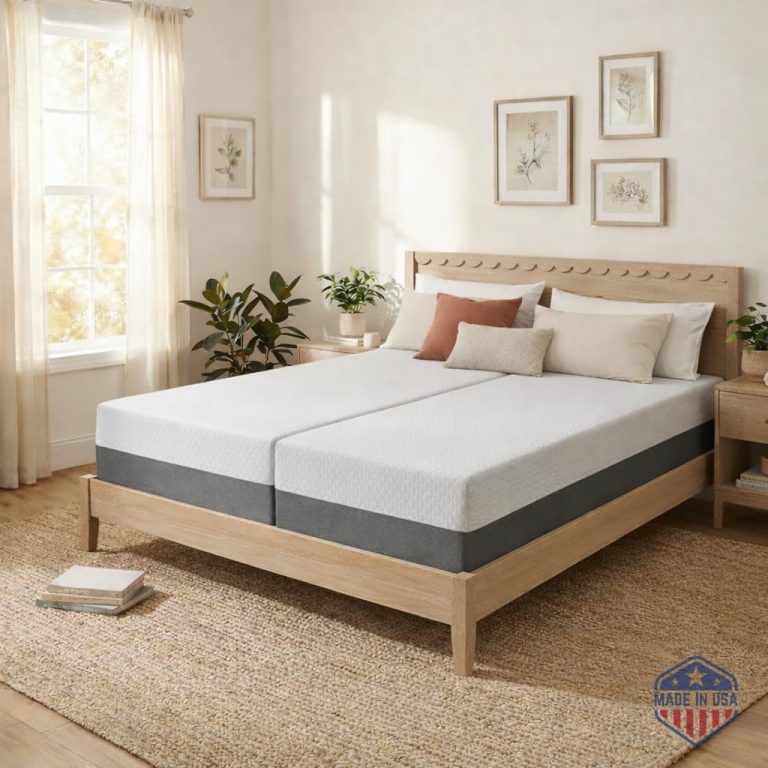
What Is Mattress Height and How to Choose the Right One
Mattress height is the measurement from the bottom of the bed to the top of the sleeping surface, and it typically ranges from 8 to 14 inches. In simple terms, it’s how thick your mattress is. This measurement matters more than you might think, because it affects how easy it is to get in and out of bed, how your sheets fit, and even your comfort level.
When you start shopping for a new bed, you’ll see options labeled as low-profile, standard, or high-profile. We found that the right choice for you depends on your body type, your bed frame, and your personal preference. A mattress that is too low can be hard to get up from, while a very high one might feel like you’re climbing a mountain every night. Getting this simple number right can make a huge difference in your daily comfort.
- Standard mattress height is usually between 8 and 12 inches.
- Low-profile mattresses (under 8 inches) are best for platform beds and kids’ rooms.
- High-profile mattresses (12+ inches) often look luxurious and feel plush.
- Your weight and height help decide which height feels most stable for you.
- Always measure your bed frame to make sure the total height works for you.
Below, we break down everything you need to know about mattress height so you can pick the perfect one for your bedroom. Let’s walk through the numbers, the different types, and how to match them to your specific needs.
Understanding Mattress Height and Why It Matters
Think of mattress height like the thickness of a slice of cake. It’s the distance from the bottom edge to the top surface where you sleep. This number usually falls between 8 and 14 inches, though you can find options outside that range.
We found that this single measurement affects more than just looks. It changes how you get into bed, how your sheets fit, and how the bed feels under your body. The right height makes your bedroom feel inviting. The wrong one can be a daily frustration.
The Anatomy of a Mattress: What Creates Height
Every mattress has layers that stack together to create its total height. The base layer provides support and structure. The comfort layers on top add softness and pressure relief.
Innerspring mattresses use coils in the base, which naturally add height. Foam mattresses often use dense support foam, which can be trimmed to different thicknesses. Hybrid models combine both, which usually pushes them into the taller range.
Why Layers Matter for Your Comfort
More layers usually mean more comfort materials between you and the support core. A thicker comfort layer can help with pressure points, especially around your hips and shoulders. Research and found that proper pressure relief is key for preventing nighttime tossing and turning (National Institutes of Health).
But more layers don’t always mean better sleep. Sometimes a tall mattress just means a thick support base with a thin comfort layer. That’s why you should check the full construction, not just the total height.
Standard Mattress Heights and What They Mean
You’ll see three main height categories when shopping. Each one serves a different purpose and fits different bed frames. Here is the breakdown we use when guiding people through the process.
Low-Profile Mattresses: Under 8 Inches
These slim mattresses sit close to the ground. They are common in kids’ rooms, bunk beds, and platform beds with built-in slats. They also work well for RVs and guest rooms where space is tight.
Getting out of a low-profile bed is easier for kids and people with limited mobility? Actually, no. It can be harder to stand up from a very low position. The National Institute on Aging notes that lower beds can be challenging for older adults to rise from safely.
Standard Mattresses: 8 to 12 Inches
This is the most common range, and it works for most people. An 8 to 12 inch mattress fits standard sheets, works with most bed frames, and provides a balanced feel. You get enough support layers for durability without the bed feeling too tall.
We found that this range is the sweet spot for couples, too. It offers enough structure for heavier partners while staying comfortable for lighter sleepers. Most budget-friendly and mid-range mattresses fall into this category.
High-Profile Mattresses: 12 Inches and Above
High-profile mattresses look luxurious and feel substantial. They often contain extra comfort layers, which gives them a plush, cloud-like feel. Many premium hybrid and pillow-top models land in this range.
The extra height can make getting in and out of bed feel more like stepping up. This can be a problem for shorter people or those with joint issues. However, for taller individuals, the higher surface can actually make sitting on the edge of the bed more comfortable.
| Mattress Type | Height Range | Best For |
|---|---|---|
| Low-Profile | Under 8 inches | Kids’ rooms, bunk beds, platform frames |
| Standard | 8 to 12 inches | Most adults, standard bed frames, all sleep positions |
| High-Profile | 12 inches and above | Luxury feel, taller people, thick pillow tops |
Matching Mattress Height to Your Bed Frame
Your bed frame matters just as much as the mattress itself. The total height of your bed comes from the frame plus the mattress. You want to aim for a combined height that makes sitting on the edge feel natural.
Experts suggest that your feet should rest flat on the floor when you sit on the edge of your bed. Your knees should be level with your hips. This position makes it easiest to stand up without strain.
Measuring Your Frame Before You Buy
Grab a tape measure and check the height of your frame from the floor to the top of the slats or box spring. Then subtract that from your ideal total bed height. The difference is the mattress height you need.
For example, if your frame is 10 inches tall and you want a total height of 22 inches, you need a 12-inch mattress. If you prefer a lower bed, you might aim for a total of 20 inches, which would mean a 10-inch mattress.
Platform Beds and Box Springs
Platform beds have a solid or slatted base, so you don’t need a box spring. They work best with standard or low-profile mattresses. A very thick mattress on a platform bed can make the bed too tall.
Traditional bed frames often use a box spring or foundation. This adds several inches to the total height. In that case, a low-profile mattress might be the better choice to keep the bed at a comfortable level.
How Body Type and Sleep Position Affect Height Choice
Your weight and height play a big role in how a mattress feels. A mattress that feels stable for one person might feel wobbly for another. This is where the height really matters.
Heavier Sleepers Need More Support Layers
If you weigh over 230 pounds, you need a mattress with enough support to prevent sinking. We found that mattresses under 10 inches often lack the deep support layers needed for proper spinal alignment. A taller mattress, around 12 inches, usually has more material to distribute weight evenly.
Many guidelines point to 12 inches as a good starting point for heavier individuals (Cleveland Clinic). The extra thickness prevents you from bottoming out and keeps your spine neutral through the night.
Lighter Sleepers Can Choose More Freely
If you weigh less than 150 pounds, you have more flexibility. A standard 10-inch mattress will likely feel plenty supportive. You might even prefer a low-profile option if you like a firmer, closer-to-the-ground feel.
For side sleepers, a taller mattress with a plush comfort layer helps relieve pressure on the shoulder and hip. Back and stomach sleepers usually prefer a firmer feel, which doesn’t require as much height.
Practical Considerations: Sheets, Bedding, and Edge Support
Taller mattresses can be tricky when it comes to fitting sheets. Deep-pocket sheets are designed for mattresses over 12 inches. Standard fitted sheets, which typically fit 8 to 12 inches, will pop off a high-profile mattress.
Check the pocket depth before you buy sheets. We found that most sheet sets list the maximum mattress height they can accommodate. This saves you from the annoyance of re-tucking your sheets every morning.
Edge Support and Safety
A taller mattress often has better edge support, especially if it uses reinforced foam or coils around the perimeter. This means you can sit on the edge without sliding off. It also increases the usable sleeping surface.
If you share a bed, good edge support is important. It gives each partner a stable place to sit when getting dressed or putting on shoes. It also helps the mattress hold its shape over time, preventing sagging.
Choosing the Right Height for Your Lifestyle
There is no single perfect mattress height. The best choice depends on your frame, your body, and your daily routine. Here is a quick checklist to help you narrow it down.
- Measure your bed frame height from the floor to the top of the base.
- Decide on your ideal total bed height (usually 20 to 24 inches).
- Subtract the frame height to find the mattress height you need.
- Consider your body weight and whether you need extra support layers.
- Think about who else sleeps in the bed and their mobility needs.
- Check your current sheets or plan to buy deep-pocket sheets for taller beds.
We found that most people feel comfortable with a standard height mattress in the 10 to 12 inch range. It balances support, comfort, and ease of use. But if you have specific needs, like a low platform bed or a family member with mobility issues, adjust accordingly.
Take your time with this decision. The right mattress height makes your bed feel like a personal retreat. The wrong one is a constant reminder every time you crawl in or out. Measure twice, shop smart, and enjoy better sleep.
Conclusion
Mattress height isn’t just a random number on a spec sheet. It shapes how your bed feels, how easily you get in and out of it, and how well your sheets stay put. You now know the three main categories: low-profile under 8 inches, standard from 8 to 12 inches, and high-profile above 12 inches.
Your perfect match depends on your frame, your body weight, and who shares the bed. Grab a tape measure and check your bed frame height first. Then aim for a total bed height between 20 and 24 inches. We think you will find that a standard 10 to 12 inch mattress works best for most sleepers. Measure once, buy with confidence, and set yourself up for better rest.
Frequently Asked Questions
Does a taller mattress mean a more comfortable bed?
Not always. A tall mattress can feel plush, but comfort depends on the quality of the layers inside. You could buy a 14-inch mattress with a thin comfort layer and feel stiff. A well-built 10-inch mattress with dense support foam often feels better.
Look at the construction details, not just the total height. Focus on the comfort layers near the top of the mattress.
Can I use deep-pocket sheets on a standard mattress?
Yes, you can, but they might feel loose and baggy. Deep-pocket sheets are designed for mattresses over 12 inches tall. On a 10-inch mattress, the excess fabric can bunch up under you while you sleep.
Check the pocket depth on the sheet packaging. Standard sheets fit most 8 to 12 inch mattresses perfectly. Match your sheets to your actual mattress height for the best fit.
How do I know if my mattress is too low or too high?
Try the sitting test. Sit on the edge of your bed with your feet flat on the floor. Your knees should be level with your hips. If your knees point upward, the bed is too low. If your feet dangle, it is too high.
Listen to your body when you stand up. You should not have to push hard with your hands or feel like you are climbing down from a tall surface.
Does mattress height affect how long the bed lasts?
Generally, yes. Taller mattresses often have thicker support cores, which hold up better over time. A 12-inch mattress usually has more foam or coils to resist sagging compared to a thin 6-inch model.
However, a budget 14-inch mattress can still wear out fast if it uses low-density foam. Height helps, but material quality matters more for durability.
What is the best mattress height for seniors or people with joint pain?
We recommend aiming for a total bed height around 22 to 24 inches from the floor. That range makes standing up easier because your knees stay level with your hips. A standard 10 to 12 inch mattress usually works well on a typical frame.
Low-profile beds under 8 inches are the hardest to get up from. Research and found that higher surfaces reduce strain on knees and hips. Skip the extra-tall luxury models, too, since they can be tricky to climb into safely.