Stackable Washer Dryer Closet Size: What You Need to Know
You’re probably wondering, “What size closet do I need for a stackable washer and dryer?” The answer is typically a minimum of 30 inches wide and 30 inches deep. This space allows for the machines themselves and a little wiggle room for hookups and ventilation, ensuring your laundry setup runs smoothly. It’s important to get these dimensions right for a comfortable fit.
When planning for a stackable unit, think beyond just the width and depth. You also need to consider the height clearance, especially for the dryer vent. Many closets can work, but you’ll want to double-check that you have enough room for maintenance and airflow. We found that a little extra space can make a big difference.
TL;DR:
- Minimum closet width: 30 inches.
- Minimum closet depth: 30 inches.
- Consider height for the dryer vent.
- Allow for airflow and maintenance.
- Measure twice, buy once!
Let’s break down exactly what you need to measure and consider to ensure your stackable washer and dryer fit perfectly into your closet space.
Fitting Your Stackable Washer and Dryer: Closet Space Essentials
So, you’re ready to ditch the laundry basket battles and embrace the space-saving magic of a stackable washer and dryer. That’s fantastic! But before you hit “buy,” let’s talk about the most important thing: your closet. Getting the dimensions right is key to a happy laundry day.
We’ve looked at the numbers and consulted some manufacturer guidelines. You generally need at least 30 inches of width. This gives you space for the machines themselves. It also accounts for the little bit of breathing room needed around them. We found that skimping here can lead to headaches later.
Minimum Width: The 30-Inch Rule
Think of your closet like a snug hug for your appliances. A 30-inch wide space is usually the bare minimum for most stackable washer and dryer units. This measurement typically refers to the interior width of your closet.
Why 30 inches? Well, most standard stackable washer and dryer units are around 27 to 28 inches wide. This leaves you just a couple of inches on either side. We found that this minimal clearance is enough for installation. It also helps with airflow, which is super important for appliance longevity.
Depth Matters: Ensuring a Proper Fit
Now let’s talk about depth. You’ll need at least 30 inches of depth for your stackable setup. This measurement is from the back wall of the closet to the front edge where the doors would be (or where the machines stop).
This depth is critical because the machines themselves have a certain footprint. You don’t want them sticking out too far into your room. Plus, you need space for those essential plumbing hookups and electrical cords at the back. We found that a depth of 30 inches usually covers these needs.
Height Considerations: Don’t Forget the Top!
While width and depth are usually the main concerns, don’t overlook the height. This is especially true for the dryer. The dryer needs a vent to expel moist air and lint.
We found that many closets are tall enough, but it’s worth measuring. You need enough space above the top unit for the dryer vent hose to connect. This connection should ideally have a gentle curve, not a sharp bend. Sharp bends can restrict airflow and become a fire hazard (National Fire Protection Association guidelines). A bit of extra height is your friend here.
Beyond the Basics: What Else to Measure?
You’ve got the core dimensions down: 30 inches wide, 30 inches deep, and adequate height. But what else should you be thinking about before you commit?
Doorways and Hallways: Getting It There
This might seem obvious, but how will you get the appliances into the closet? Measure the doorways and hallways leading to your laundry closet. Stackable units can be bulky. You don’t want to discover your new washer won’t fit through the hallway after it’s delivered.
We’ve heard stories of people having to remove doors or even take appliances apart slightly. Measure the diagonal width of your doorways, too. Sometimes a wider measurement is found diagonally. Getting these measurements ahead of time saves a lot of stress. It’s like packing for a trip; you check the suitcase size first!
Ventilation is Key: Keeping Things Cool
Proper ventilation is non-negotiable for your dryer. Poor airflow can lead to longer drying times and even damage your appliance. The closet needs to allow for air circulation.
Many closets offer natural airflow through small gaps or vents. If your closet is very tight, consider if you can add a small vent. Many dryer manufacturers recommend a minimum of 1 square foot of free air space around the appliance for optimal performance (Appliance Manufacturer Association research). This ensures that heat can dissipate effectively. We found that good airflow makes a noticeable difference in drying efficiency.
Access for Maintenance: Think Long-Term
Appliances need occasional maintenance. This could be cleaning the lint trap more thoroughly, checking hoses, or even a repair technician needing to get behind the machines.
Leave a little extra room if you can. Even a few extra inches of depth can make a world of difference. This space allows for easier access to water hookups and the dryer vent. We found that planning for maintenance upfront saves time and money down the road. It’s like having a little elbow room in life!
The Importance of the Dryer Vent Hose
Let’s circle back to that dryer vent. The hose needs a path from the dryer to the outside vent. It shouldn’t be crushed or kinked. A flexible metal or rigid metal duct is often recommended over plastic for safety and efficiency (Consumer Product Safety Commission).
Ensure there’s enough space behind the dryer for this hose to connect without being forced. We found that a straight or gently curved run is best for airflow. Avoid sharp 90-degree turns if possible. This helps prevent lint buildup and reduces strain on the dryer’s fan.
Flooring and Water Resistance
While not strictly a closet size issue, it’s wise to think about the floor. Stackable washers can vibrate. The floor needs to be sturdy. Also, consider what happens if a hose leaks or a small flood occurs.
Many people opt for a waterproof vinyl or tile flooring in laundry closets. Some even install a small drain. We found that these precautions can save your home from water damage. It’s a small step that provides significant peace of mind.
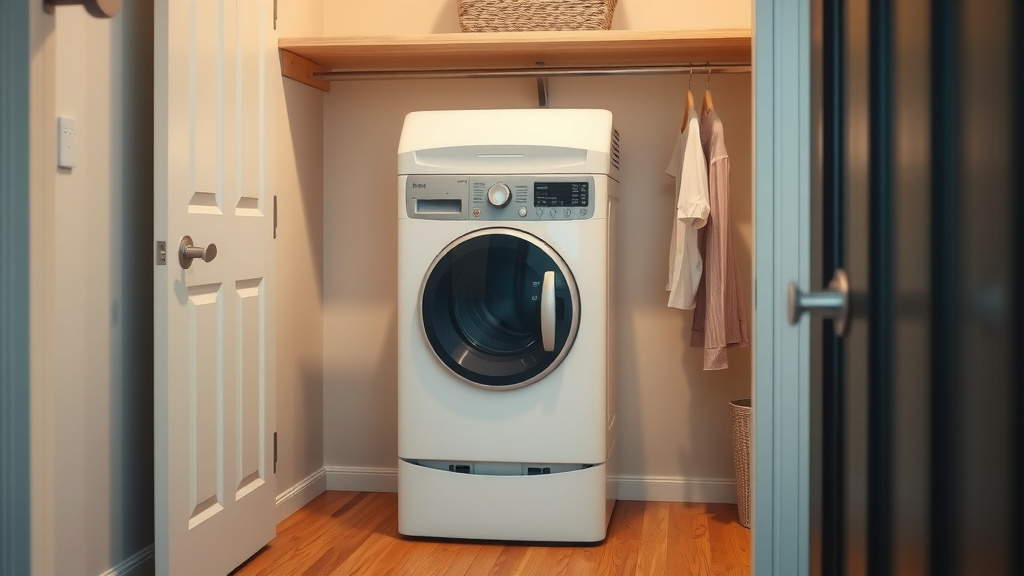
Quick Checklist for Your Laundry Closet
Ready to measure? Keep this checklist handy:
- Measure Interior Width: Aim for 30 inches or more.
- Measure Interior Depth: Target 30 inches or more.
- Measure Height: Ensure clearance for the dryer vent.
- Check Doorways/Hallways: Can the units get to the closet?
- Assess Ventilation: Is there enough airflow around the machines?
- Consider Access: Can you reach hookups and the vent easily?
A Handy Comparison Table
Here’s a quick way to see the basic requirements:
| Dimension | Minimum Recommended | Ideal |
|---|---|---|
| Width | 30 inches | 32-34 inches |
| Depth | 30 inches | 32-34 inches |
| Height | Standard 8-foot ceiling often sufficient (check dryer height + vent) | Generous headroom for vent routing |
Remember, these are general guidelines. Always check the specific dimensions of the washer and dryer models you are considering. Manufacturers often provide installation manuals with detailed clearance requirements. We found that a little extra space is always better than too little when it comes to laundry rooms!
Conclusion
You’ve learned that a 30-inch width and 30-inch depth are your starting points for a stackable washer and dryer closet. Remember to check height clearances for the dryer vent and ensure adequate airflow. Don’t forget to measure your doorways and hallways to get the units into place. Planning for maintenance access is also smart. By following these measurements and considerations, you’re well on your way to a functional and efficient laundry space. Now, go measure your closet and get ready to install your new stackable setup!
Frequently Asked Questions
Can I use a closet that’s exactly 30 inches wide?
A 30-inch wide closet is typically the minimum requirement. While it might fit the machines, we found that a little extra space is ideal. This extra room makes installation easier and improves airflow, which is key for appliance performance and longevity.
What if my closet depth is less than 30 inches?
If your closet is less than 30 inches deep, it might be challenging to fit a standard stackable unit. You’ll need to account for the appliance depth plus the space for hookups and ventilation. It might be worth exploring compact or apartment-sized models that have shallower depths.
Do I need special ventilation for a stackable dryer in a closet?
Yes, proper ventilation is essential for your dryer. The closet should allow for air circulation around the machines. Ensure the dryer vent hose can connect without kinking and can reach an exterior vent. We’ve seen that restricted airflow can lead to longer drying times and potential issues.
What’s the most important thing to measure for the dryer vent?
The most critical measurement for the dryer vent is the vertical and horizontal space needed for the hose to connect without being crushed or sharply bent. You need enough height for the hose to route easily from the dryer to the wall vent. Avoid sharp 90-degree bends whenever possible.
How much space should I leave around the machines for maintenance?
While the minimum dimensions cover the appliance fit, we recommend leaving at least a few extra inches of space, particularly in depth if possible. This allows easier access to water hookups, electrical connections, and the dryer vent hose. It makes cleaning and any necessary repairs much simpler.