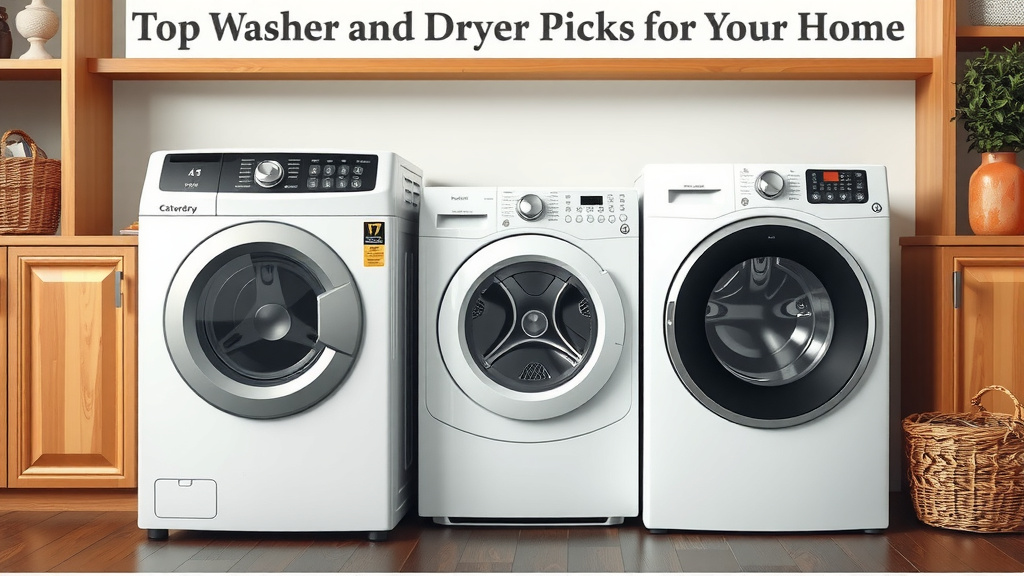
Top Washer and Dryer Picks for Your Home
Choosing the best washer and dryer depends on your specific needs and budget. We found that top-rated models often feature energy efficiency, large capacities, and smart technology for convenience. Look for brands known for durability and performance. Your perfect pair is out there!
When shopping for a new laundry set, think about your household size and washing habits. Do you need a high-efficiency washer to save water and electricity? Perhaps a dryer with steam cycles to de-wrinkle clothes is appealing. We researched many options to help you find the ideal fit. Your laundry day can actually become easier.
- Look for energy-saving features like ENERGY STAR certification.
- Consider capacity based on your family’s laundry needs.
- Smart technology can offer convenience.
- Reliability and brand reputation matter for long-term satisfaction.
Let’s walk through what makes a washer and dryer truly great. We’ll cover the features that matter most for your home.
Finding Your Ideal Washer and Dryer Pair
So, you’re on the hunt for a new washer and dryer. It’s a big purchase, and you want to make sure you get the best bang for your buck. We’ve researched what makes a laundry set truly stand out. It boils down to a few key areas that impact your daily life and your wallet.
Think of your current laundry routine. Are you constantly battling overflowing hampers? Or maybe your old machine takes ages and leaves clothes feeling less than fresh. Your goal is a pair that simplifies chores and delivers clean, well-cared-for clothes. We found that focusing on a few core features can steer you toward the right models.
Understanding Washer Types and Features
When it comes to washers, you have two main choices: top-load and front-load. Each has its own set of pros and cons. Let’s break them down so you can see which might fit your laundry room and lifestyle best.
Top-Load Washers: The Familiar Choice
Top-load washers are what many of us grew up with. They’re generally more affordable upfront. They also tend to be quicker per load. You can add forgotten items mid-cycle easily, which is a handy feature.
Agitator vs. Impeller Models
Within top-loaders, you’ll find two main designs. Agitator models have a central post that twists and turns clothes. This can be tough on fabrics. Impeller models use a low-profile disc at the bottom. They create less friction and offer more space for larger loads.
Front-Load Washers: Efficiency and Gentleness
Front-load washers are known for their superior cleaning performance. They use less water and energy. This makes them a great choice for the environment and your utility bills. Clothes get tumbled, which is gentler on fabrics than an agitator.
Cycle Options and Water Usage
Front-loaders offer a wide array of cycles. Many include steam settings for sanitizing and de-wrinkling. They also tend to be more energy-efficient, as confirmed by ENERGY STAR guidelines. Their spin speeds are often higher, meaning less moisture in clothes.
Key Dryer Features to Consider
Once your clothes are clean, your dryer needs to do its job effectively. Just like washers, dryers come with various features that can make a big difference. We found that cycle selection and capacity are top priorities for most people.
Dryer Types: Gas vs. Electric
The main difference here is the power source. Electric dryers plug into a standard outlet. Gas dryers require a gas line. Gas dryers typically heat up faster and can be cheaper to run if natural gas is affordable in your area. However, the initial cost and installation for gas can be higher.
Essential Dryer Cycles and Technologies
Modern dryers offer more than just “heat and tumble.” Look for sensor dry cycles. These detect moisture levels and stop the cycle automatically. This prevents over-drying and saves energy. Steam cycles are also a nice perk. They can refresh clothes and reduce wrinkles. Some dryers even have specialty cycles for delicates or bulky items.
Capacity: How Much Can It Hold?
This is a big one. A washer’s capacity is measured in cubic feet. A dryer’s capacity is measured by weight or drum size. You want a set that can handle your typical laundry load without being overloaded or requiring too many small loads.
For a single person or couple, a smaller capacity (around 3.5-4.0 cu. ft. for a washer) might be sufficient. A family of four or more will likely benefit from larger capacities (5.0 cu. ft. or more). Overloading your washer can lead to poor cleaning and damage the machine. For dryers, a larger drum means clothes can tumble freely, leading to more even drying.
Energy Efficiency and Smart Features
Saving money on utility bills is always a win. Look for the ENERGY STAR certification. These appliances meet strict energy efficiency guidelines set by the EPA. We found that ENERGY STAR certified washers can use about 25% less energy and 33% less water than standard models.
Smart technology is also becoming more common. This can include Wi-Fi connectivity for remote control via an app. You might get notifications when a cycle is done. Some smart washers and dryers can even diagnose issues or suggest the best cycles for your load. While not essential, these features can add a nice layer of convenience.
Durability and Reliability Factors
You’re investing in an appliance that should last for many years. Brand reputation often plays a role here. Some manufacturers have a long track record of producing reliable machines. Reading reviews can offer insight into common problems or outstanding performance.
We found that materials matter. Stainless steel drums are generally more durable and resist rust and chipping compared to plastic or porcelain. Check warranty information, too. A longer warranty on parts like the motor or drum can indicate the manufacturer’s confidence in their product’s longevity.
Making Your Final Decision: A Quick Checklist
Ready to narrow down your choices? Keep these points in mind:
- Capacity needs: Match the size to your household.
- Energy Star: Look for the certification to save money.
- Cycle types: Do you need steam or special settings?
- Top vs. Front load: Consider cleaning performance and gentleness.
- Durability: Check drum material and brand reputation.
- Budget: Set a realistic price range for your pair.
Conclusion
Finding the best washer and dryer for your home is about matching features to your lifestyle. You’ve learned about the differences between top-load and front-load washers, and the power sources for dryers. Remember to consider capacity for your family’s needs and look for ENERGY STAR certification to save on bills. Prioritize durability by checking materials and brand reputation. Take your time, review your checklist, and you’ll be well on your way to a laundry room that works for you.
Frequently Asked Questions
How often should I replace my washer and dryer?
Most washers and dryers are built to last between 10 to 15 years with proper care. If your current machines are showing signs of frequent breakdowns or are much older, it might be time to consider an upgrade for better efficiency and reliability.
Are smart washers and dryers worth the extra cost?
Smart features can add convenience by allowing remote control and notifications. If you value this tech and the potential for remote diagnostics, they can be worth it. However, they are not essential for effective cleaning and drying, so weigh the cost against the benefits for your household.
Which type of washer is gentler on clothes: top-load or front-load?
Front-load washers are generally gentler on clothes because they use a tumbling action rather than an agitator. This tumbling motion causes less friction and stress on fabrics, helping your clothes last longer and stay in better condition.
What does “cu. ft.” mean for washer capacity?
Cu. ft. stands for cubic feet, which is the standard measurement for a washer’s internal drum volume. A larger cubic footage means the washer can hold more laundry per load, which is especially useful for larger families or for washing bulky items like blankets.
Is a gas or electric dryer more expensive to run?
Typically, gas dryers are less expensive to run than electric dryers if natural gas is readily available and affordable in your area. Gas heats up faster and uses less energy overall, although the initial purchase and installation cost for a gas dryer might be higher.