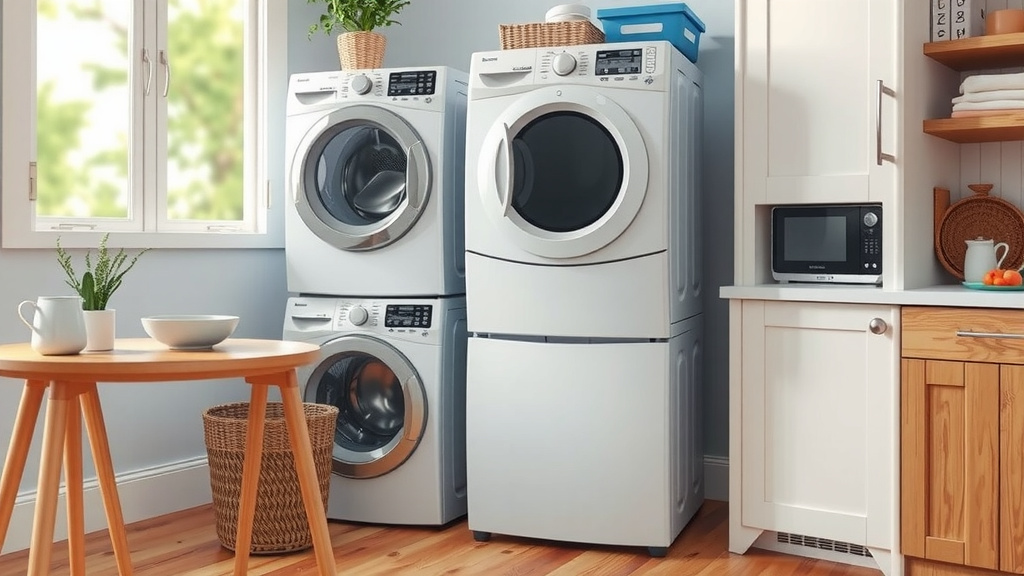
Choosing the Best Stacked Washer Dryer for Your Home
The best stacked washer dryer for your home really depends on your specific needs and laundry habits. Generally, a high-efficiency (HE) stacked unit offers excellent cleaning power while saving water and energy, making it a smart choice for most households. Look for models with various cycle options to handle different fabric types. We found that many HE models are surprisingly quiet, too!
When choosing a stacked unit, consider the overall capacity you’ll need. Larger families might require a bigger drum size to handle more clothes at once. Think about the space constraints in your home; these units are designed to fit in tight spots like closets. Many modern stacked washers and dryers also come with smart features, allowing you to control them remotely. We’ve seen great options that fit into smaller budgets as well.
- Stacked units save precious floor space.
- High-efficiency models are energy and water savers.
- Capacity matters for busy households.
- Smart features add convenience for modern living.
- Budget-friendly options are readily available. Budget-friendly options are readily available, and our guide to washing machine costs can help you understand pricing.
Let’s walk through the key features and considerations to help you find the perfect stacked washer dryer for your laundry room.
Choosing Your Ideal Stacked Washer Dryer
Finding the best stacked washer dryer involves looking beyond just fitting it into a small space. You’re also looking for performance, efficiency, and features that make laundry day less of a chore. We’ve researched many options to help you navigate the choices.
Understanding Stacked Washer Dryer Basics
A stacked washer dryer is essentially two appliances—a washing machine and a clothes dryer—built into one unit. The washer is typically on the bottom, and the dryer sits directly on top. This design is a space-saving miracle for apartments, condos, or homes with limited laundry room space. You get the full functionality of both machines without dedicating twice the floor space.
The All-in-One Convenience
The primary draw is undeniable: convenience. Instead of managing two separate machines, you have one integrated system. This can simplify installation and operation. Many units come pre-stacked and ready to go, which is a big plus for busy households. You can often run a load of laundry and then start drying immediately without moving clothes from one machine to another.
Capacity Considerations
When thinking about capacity, it’s helpful to imagine your typical laundry load. Do you wash a lot of bulky items like comforters? Or are you usually dealing with smaller loads for one or two people? Stacked units often have slightly smaller drum capacities than their side-by-side counterparts. This is because the design prioritizes vertical space. We found that a medium-sized drum, typically around 3.5 to 4.0 cubic feet for the washer, is often sufficient for families of three to four. For larger families, you might need to consider a stacked unit with a larger capacity or explore other laundry solutions if you frequently wash king-sized bedding.
Key Features to Look For
High-Efficiency (HE) Performance
Most modern stacked washer dryers are high-efficiency (HE) models. This is fantastic news for your utility bills and the environment. HE washers use less water and energy per cycle. They also often spin clothes at higher speeds, removing more water before drying. This can lead to shorter drying times. Many guidelines from the Department of Energy suggest choosing ENERGY STAR certified appliances for optimal efficiency (ENERGY STAR).
Wash Cycles and Settings
Your laundry needs are unique. That’s why you’ll want a stacked unit with a good variety of wash cycles. Look for common settings like normal, delicate, heavy-duty, and permanent press. Specialty cycles can be a lifesaver. These might include options for sanitizing, steam cleaning, quick wash, or even specific settings for athletic wear or bedding. We found that the more tailored the cycle, the better the results for your clothes.
Steam Functions
Some higher-end models offer steam functions in both the washer and dryer. In the washer, steam can help remove tough stains and allergens. In the dryer, steam can refresh clothes, reduce wrinkles, and cut down on static. If you hate ironing, this feature might be a game-changer for you.
Smart Technology Integration
Are you glued to your smartphone? Then you might appreciate smart features. Many stacked units now connect to your home Wi-Fi. This allows you to control your washer and dryer remotely using a smartphone app. You can start or stop cycles, receive notifications when a load is done, and even troubleshoot issues. We found that this remote access is surprisingly handy, especially when you’re away from home but want to get laundry finished.
Noise Level and Vibration
No one enjoys a rattling, thumping washing machine. Because these units are often installed in closets or smaller rooms, noise can be a major concern. Look for models that specifically advertise quiet operation or vibration reduction technology. Some brands use advanced suspension systems or direct-drive motors to minimize noise. Reading user reviews can also give you a realistic idea of how loud a particular model is in practice.
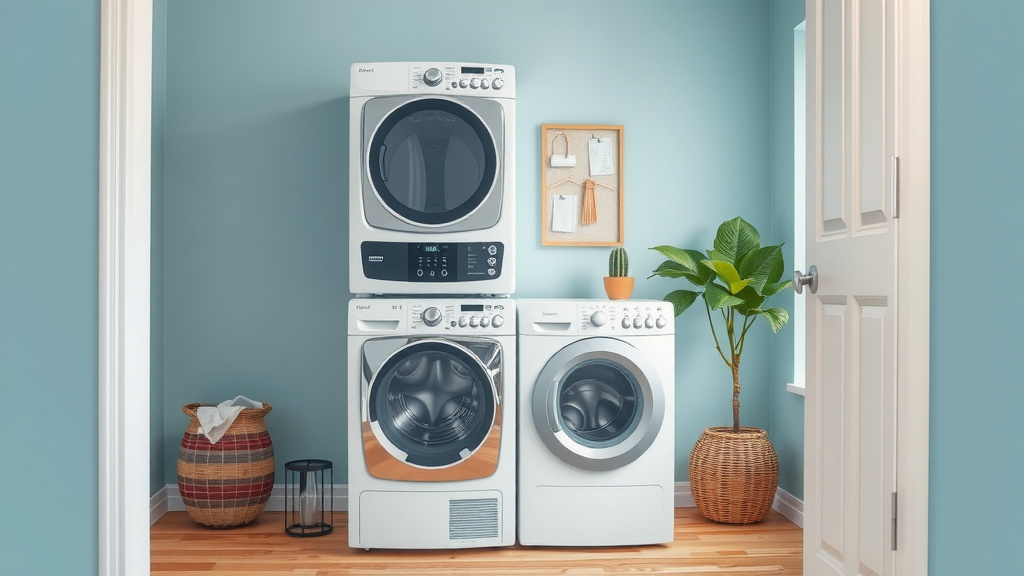
Important Buying Considerations
Installation Requirements
Before you buy, double-check the installation requirements. You’ll need appropriate water hookups, a drain, and electrical outlets for both the washer and dryer. Many units require a specific type of dryer vent or may be ventless. Ventless dryers use a condensation or heat pump system and don’t require an external vent, which can be ideal for apartments. However, they often take longer to dry clothes. Make sure you have enough clearance around the unit for proper ventilation and access.
Energy Efficiency Ratings
Beyond just being HE, check the ENERGY STAR rating and the yellow EnergyGuide label. This will give you a clear idea of the estimated yearly energy consumption and operating cost. Investing a bit more upfront in an energy-efficient model can save you money over the appliance’s lifetime.
Durability and Brand Reputation
Like any major appliance, you want a stacked washer dryer that will last. Research brand reputation for reliability and customer service. Look for models with good warranties, especially on the motor and drum. We found that brands with a long history in appliance manufacturing often have a more proven track record for durability.
Budget and Value
Stacked washer dryers range in price. Basic models are generally more affordable, while those packed with smart features, steam functions, and larger capacities will cost more. Consider what features are essential for your needs versus what are nice-to-haves. Often, you can find a great balance of performance and price by looking at mid-range models that offer the core features you require. Consider what features are essential for your needs, and this guide details the cost of new washing machines.
Your Laundry Day Checklist
To help you make a decision, consider these quick points:
- Measure your available space carefully.
- Estimate your typical laundry load size.
- Prioritize HE and ENERGY STAR ratings.
- Decide which special cycles are a must-have.
- Determine if smart features add real value for you.
- Check warranty information and brand reviews.
Conclusion
Finding your ideal stacked washer dryer boils down to matching its features with your lifestyle. You’ve learned that high-efficiency models are a smart investment for saving water and energy. Consider the capacity needed for your household’s laundry loads. Don’t forget to check for special cycles and the convenience of smart features if they fit your needs. By carefully measuring your space and checking installation requirements, you’re well on your way to a more efficient laundry routine. Your next step is to start comparing specific models based on these key considerations!
Frequently Asked Questions
Can a stacked washer dryer handle large loads?
Stacked units generally have slightly smaller drum capacities than side-by-side models. We found that a washer drum around 3.5 to 4.0 cubic feet is often suitable for families of three to four. If you regularly wash king-sized bedding or have very large loads, you might need to look for a larger capacity stacked unit or consider alternative laundry solutions.
Are stacked washer dryers difficult to install?
Installation requires proper water, drain, and electrical hookups, similar to separate units. Some models offer ventless drying, which can simplify installation in apartments. It’s important to double-check the specific installation requirements listed by the manufacturer and ensure you have adequate clearance around the unit for ventilation and access.
How do I choose the right wash cycle for my clothes?
Look for a machine with a variety of common cycles like normal, delicate, and heavy-duty. Specialty cycles, such as sanitizing, steam, or quick wash, can be very useful for specific fabric types or needs. We found that the more tailored the cycle options, the better the results for keeping your clothes in good condition.
Are smart features really worth the extra cost on a stacked unit?
Smart features, like remote control via a smartphone app, add significant convenience for many people. You can start loads remotely or get notified when they’re done. If you’re often away from home or simply enjoy the convenience of managing appliances from your phone, these features can be a great addition. It’s about whether this technology aligns with your daily routine.
What is the difference between a ventless and a vented stacked dryer?
A vented dryer requires an external exhaust vent to release hot, moist air. A ventless dryer uses condensation or a heat pump system to remove moisture, meaning it doesn’t need an external vent. Ventless models are ideal for apartments or homes without venting options, but they often take longer to dry clothes.