Front Load vs Top Load Washers: Which Is Best For You
When comparing a front load vs. top load washer, front loaders generally offer a superior clean and are more energy-efficient. They use less water, which means lower utility bills and a gentler wash for your clothes. While top loaders might seem faster, front loaders often win in the long run for overall performance and cost savings.
Choosing between these two washer types can feel like a big decision. You want something that gets your clothes clean without breaking the bank or your favorite sweater. We’ve looked into what makes each type tick to help you decide. Both have their perks, but understanding the key differences can save you a lot of laundry day headaches.
- Front loaders clean better and use less water.
- Top loaders can be quicker for a single load.
- Front loaders are often more energy efficient.
- Top loaders are easier to load and don’t require bending.
- Consider your budget and laundry habits.
Let’s break down exactly what makes each type of washer a good fit for your home.
Washing Machine Showdown: Front Load vs. Top Load
When it comes to laundry day, you’ve got a big decision to make: a front-load washer or a top-load washer. Both promise clean clothes, but they get there in very different ways. We’ve looked into the details to help you figure out which machine will be your best laundry buddy.
How They Actually Clean: The Tumbling vs. Agitation Debate
The biggest difference lies in how they move your clothes. It’s like comparing a gentle massage to a vigorous workout for your fabrics.
Front Load Washers: The Gentle Tumblers
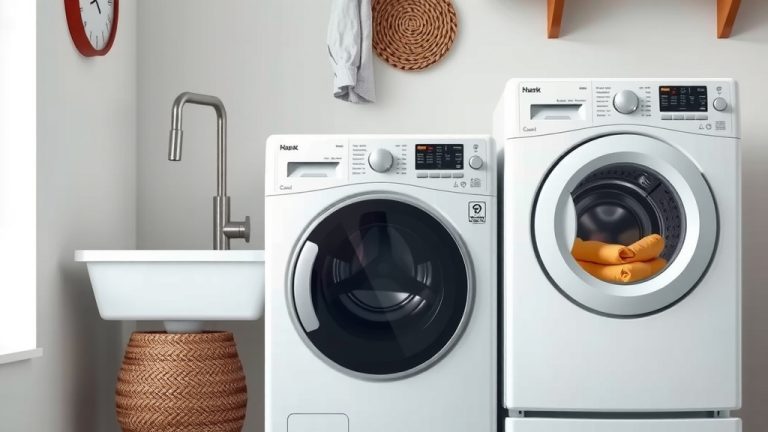
Front-load washers work by tumbling your clothes. Imagine a dryer, but with water. The drum rotates, lifting your clothes up and then dropping them back into the water. This gentle motion is key to their effectiveness.
We found that this tumbling action uses gravity to help clean. It’s a more thorough way to wash. Many experts say it leads to a deeper clean for your garments. Plus, it’s much easier on your clothes.
Top Load Washers: The Agitator or Impeller
Top-load washers use either an agitator or an impeller to move clothes around. An agitator is the tall spindle you might remember from older machines. It twists and turns, rubbing against the clothes.
Newer top-loaders often have an impeller. This is a cone or disc at the bottom. It spins and churns the water and clothes. We found this method can be tougher on fabrics. It can cause more wear and tear over time.
Water and Energy: Saving Your Money and the Planet
Let’s talk about the practical stuff: how much water and electricity these machines use. You’ll see some significant differences here.
Front Loaders: The Water Savers
Front-load washers are famously water-efficient. Because the drum only fills partially with water, they use much less. Think about it: they only need enough water to soak the clothes as they tumble.
We found that this water saving translates directly to lower utility bills. You’re not heating as much water for each cycle. Many studies show they can use up to 40% less water than traditional top-loaders (U.S. Department of Energy).
Top Loaders: The Water Guzzlers
Traditional top-load washers with agitators need to fill the entire tub to get the clothes clean. This requires a lot more water. Even high-efficiency (HE) top-loaders use more water than front-loaders, though they are better than older models.
We found that the extra water means more energy is needed to heat it. This can lead to higher energy bills. If you’re trying to be eco-friendly and save money, this is a big factor to consider.
Performance and Care: What Happens to Your Laundry?
Beyond just getting clothes clean, how do these machines treat your laundry? Your favorite sweater might have an opinion on this!
Gentle on Fabrics
Front-load washers are known for their gentle washing action. The tumbling method is less abrasive. This means your clothes are likely to last longer. You might see less pilling and stretching over time.
Top Loaders: Can Be Harsher
The agitator in top-loaders can snag or stretch clothes. Even the impeller, while gentler than an agitator, can be harder on fabrics than the tumbling action of a front-loader. We found that this can lead to clothes wearing out faster.
Capacity and Load Size
When it comes to capacity, front-loaders often win. Their drums are typically larger and don’t have that central agitator taking up space. This means you can fit more laundry into a single load.
Top-loaders, especially those with an agitator, have a smaller usable capacity. However, some people find top-loaders easier to load. You don’t have to bend over as much.
Convenience and Features: What’s Easier?
Let’s think about the day-to-day experience of using each type of machine. Little things can make a big difference!
Loading and Unloading
This is where top-loaders often get the nod. You can simply toss clothes in from the top. There’s no bending down required. This is a huge plus for people with back issues or mobility concerns.
Front-loaders require you to bend down to load and unload. Some people find this uncomfortable. However, many front-loaders come with pedestals that raise the machine, making it easier to load.
Cycle Times
Top-load washers often have shorter wash cycles. This can be appealing if you’re in a hurry. A quick wash on a top-loader might take 30-40 minutes.
Front-load washers tend to have longer cycles. This is partly because they use less water and rely on tumbling. However, many newer models have quick wash options. We found that the overall clean quality often makes the longer cycle worth it.
Adding Clothes Mid-Cycle
With a top-loader, it’s usually easy to add a forgotten sock mid-cycle. You just lift the lid and toss it in. Many top-loaders pause automatically.
Adding clothes to a front-loader mid-cycle can be tricky. The door is usually locked once the cycle starts to prevent leaks. Some machines have a small door to add items, but not all do. You might have to wait until the next load.
Cost: The Initial Investment vs. Long-Term Savings
What about the price tag? Both the upfront cost and the cost of running the machine matter.
Upfront Price
Generally, top-load washers are less expensive upfront. You can often find a good, basic top-loader for less money than a comparable front-loader. This makes them a popular choice for budget-conscious shoppers.
Long-Term Running Costs
This is where front-loaders start to shine. While they might cost more to buy, their energy and water efficiency means lower utility bills over time. Many experts suggest that over the lifespan of the machine, a front-loader can actually be cheaper to operate.
Let’s look at a quick comparison:
| Feature | Front Load Washer | Top Load Washer (HE) |
|---|---|---|
| Cleaning Performance | Superior, gentle | Good, can be harsher |
| Water Usage | Very Low | Moderate |
| Energy Efficiency | High | Moderate |
| Gentle on Clothes | Excellent | Good (impeller) to Fair (agitator) |
| Capacity | Generally Larger | Generally Smaller (with agitator) |
| Upfront Cost | Higher | Lower |
| Long-Term Cost | Lower (utilities) | Higher (utilities) |
| Ergonomics | Requires bending (unless on pedestal) | Easy to load, no bending |
Making Your Choice: A Quick Checklist
Still pondering? Here’s a quick way to think about what’s most important for your household:
- Do you prioritize the cleanest wash possible?
- Are you looking to save money on water and energy bills?
- Do you need the largest possible capacity for big families?
- Is ease of loading without bending a top priority?
- What is your budget for the initial purchase?
- How important is the longevity of your clothing?
Conclusion
You’ve seen the breakdown: front-load washers offer a superior clean and are kind to your clothes and wallet in the long run. They use less water and energy, leading to lower utility bills over time. While top-loaders might win on initial cost and ease of loading for some, the front-loader’s performance and efficiency often make it the smarter choice for many households. Consider your laundry habits, budget, and what matters most for your clothes. Your next step is to measure your laundry space and start comparing specific models to find the perfect fit for your home.
Frequently Asked Questions
Which type of washer is better for sensitive skin?
Front-load washers are generally better for sensitive skin. Their gentler tumbling action causes less friction and wear on fabrics. This means fewer residues from detergents are left trapped in the clothes compared to the more vigorous agitation of top-loaders. You might find fewer irritations with a front-loader.
Can a front-load washer cause mold or odor?
Yes, front-loaders can develop mold or odors if not maintained properly. The tight seals that keep water in can also trap moisture. It’s important to leave the door ajar between washes and wipe down the rubber gasket regularly. Running a cleaning cycle monthly also helps prevent buildup.
Are high-efficiency (HE) top-load washers much different from regular top-loaders?
HE top-load washers use less water than traditional ones. They often have impellers instead of agitators, which are gentler on clothes. While they still typically use more water than front-loaders, they offer better efficiency and cleaning than older, standard top-load models.
How long do front-load washers typically last?
Front-load washers are generally built to last longer than top-load washers. With proper care and maintenance, you can expect a front-loader to last between 10 to 15 years. Their robust construction and gentler washing action contribute to their longevity.
Which type of washer spins faster to dry clothes better?
Front-load washers typically spin at higher RPMs (revolutions per minute). This faster spin extracts more water from your clothes during the spin cycle. As a result, clothes come out of a front-loader slightly drier, potentially reducing your dryer time and energy use.