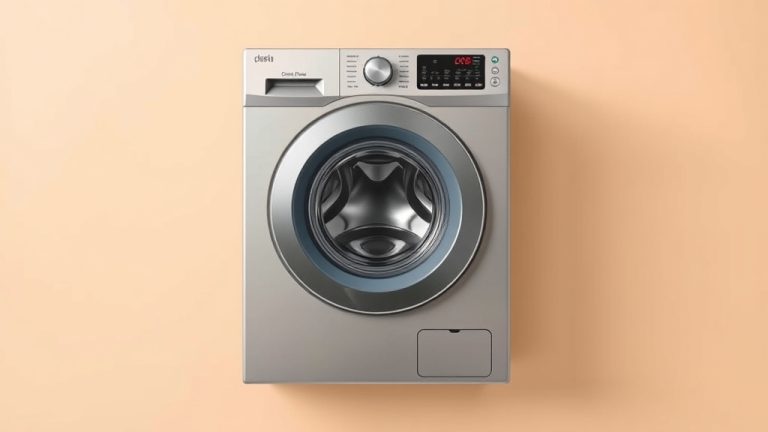
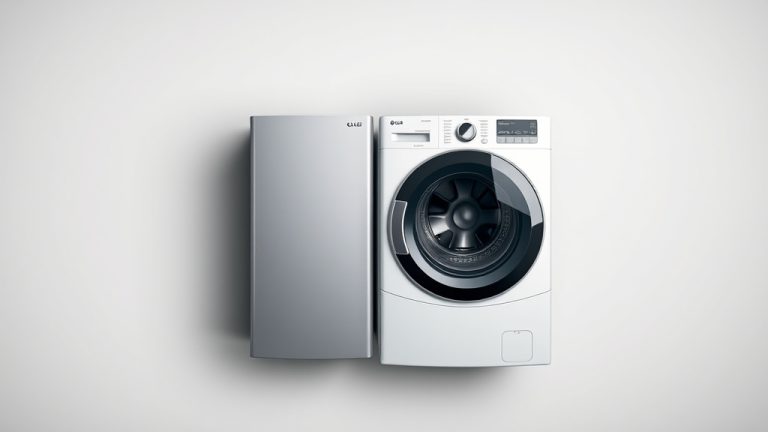
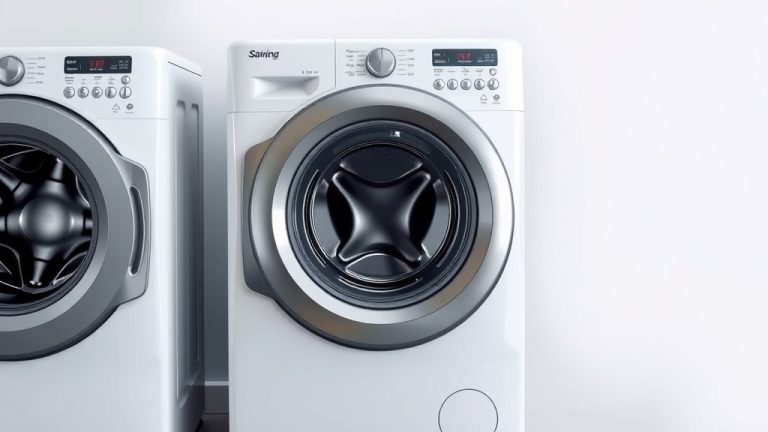
Front Load vs Top Load Washing Machine in India: Key Differences
For most Indian homes, top-load washing machines win on convenience and budget, while front-loaders win on cleaning and water efficiency. Your choice really comes down to where you live, how much you want to spend upfront, and whether you hate bending down to load laundry. We found that this simple trade-off is the core of the “washing machine top vs front loading India” debate.
Both types get your clothes clean, but they work differently. Top-loaders are cheaper, quicker, and easier to maintain, which makes them a massive hit in India. Front-loaders are gentler on fabrics, use far less water, and are better for dense apartments where every drop counts. But they cost more and take longer per wash cycle.
- Top-loaders are cheaper — you can get a good semi-automatic one for under ₹10,000.
- Front-loaders save water — they use roughly half the water of a top-loader.
- Top-loaders are faster — a full wash finishes in 30-40 minutes, versus 1.5-2 hours.
- Front-loaders clean better — they’re gentler on delicate clothes and remove tough stains more effectively.
- Maintenance matters — front-loaders need regular cleaning to prevent mold, while top-loaders are basically set-and-forget.
Below, we break down everything you need to know about picking the right washer for your home. We’ll walk you through costs, space requirements, water pressure issues, and the real-world experience of living with each type in India.
Choosing Between a Top Loader and Front Loader for Indian Homes
We get it — the washing machine top vs front loading India comparison can feel overwhelming when you are staring at showroom floors. You want a machine that fits your budget, survives power cuts, and actually gets your clothes clean. The short version? Your water supply and back strength matter more than brand loyalty.
We found that most Indian families switch to front-loaders for the water savings, but many switch back to top-loaders for the sheer convenience. Let us break down the real differences that affect your daily life.
The Upfront Cost Reality Check
Your wallet will feel the difference right away. Top-loaders cost significantly less than front-loaders across every brand. A decent semi-automatic top-loader starts around ₹8,000 to ₹10,000. A fully automatic top-loader sits between ₹15,000 and ₹25,000.
Front-loaders, on the other hand, start around ₹25,000 and go up to ₹60,000 or more for premium models. We found that the price gap shrinks when you compare energy ratings, but the initial cash outlay still hurts.
Hidden Costs of Each Type
Front-loaders often need special low-suds detergent. That costs more than regular powder. You may also need to buy a stand to raise the machine, so you do not bend too much. Top-loaders just sit flat and work with any detergent.
Many experts say the long-term detergent costs add up. Over five years, that extra cost could buy you a new mixer or an air fryer. Remember that when you compare price tags.
Water Usage: The Big Indian Factor
Water scarcity is real in many Indian cities. Municipal supplies often run for just a few hours a day. We found that front-loaders use roughly 40-50% less water than top-loaders per cycle. That is a huge difference when you are storing water in overhead tanks.
A typical top-loader uses about 100-150 liters per full wash. A front-loader uses only 50-70 liters. Building research and appliance guidelines suggest this difference matters most in apartments with limited tank capacity (Energy Star).
Low Water Pressure Troubles
Here is a catch you might not expect. Front-loaders need a minimum water pressure to fill properly. If your home has weak pressure, the machine may take forever to fill or throw error codes. Top-loaders are far more forgiving, especially semi-automatic ones where you control the water manually.
If you live on a top floor or in an area with frequent low-pressure complaints, research which models have better pumps. We found that some budget front-loaders struggle with this more than premium ones.
Cleaning Performance and Fabric Care
Now, the real reason you buy a washing machine — to get clothes clean. Front-loaders tumble your clothes in a gentle rolling motion. This cleans deep and is much gentler on fabrics. Top-loaders use an agitator (or a pulsator) that rubs clothes against each other aggressively.
We found that front-loaders handle silk, wool, and delicate cottons much better. If you have expensive sarees or formal wear, a front-loader is the safer bet for fabric longevity.
Stain Removal: Who Wins?
For tough stains like turmeric, engine oil, or ink, front-loaders often win. The soak cycle combined with rolling motion lifts stains without heavy scrubbing. Many experts note that front-loaders have better stain removal because of this mechanical advantage.
Top-loaders with an agitator can still get the job done. You just need to pre-treat tough stains or run a longer wash. The pulsator-only top-loaders are gentler than agitator ones, but they still use more water.
Wash Time and Cycle Options
Time is money, right? Top-loaders finish a regular wash in about 30 to 40 minutes. Front-loaders take 1.5 to 2 hours for the same load. That is a big difference when you are rushing between work and school pickup.
We found that front-loaders have a “quick wash” mode (around 15-30 minutes), but it is not as thorough as the full cycle. If you wash clothes daily, the longer time might frustrate you.
Physical Ergonomics and Space Planning
This is where the debate gets personal. Top-loaders require you to bend and reach down to load and unload clothes. For older adults, people with back pain, or pregnant women, that is a daily struggle. Front-loaders are mounted higher, so you only bend slightly to reach the drum.
On the flip side, front-loaders have a door that opens outward. You need clear floor space in front of the machine to load and unload. That could be a problem in small Indian bathrooms or balconies where space is tight.
Height and Installation Options
You can install a front-loader on a sturdy platform or a washing machine stand. That raises the drum to waist height, which is wonderful for your back. But that stand needs to be solid, or the machine will vibrate heavily during the spin cycle.
Top-loaders, meanwhile, are usually placed on the floor or on a low platform. They rarely need a special stand. If you want to stack a dryer on top, you are better off with a front-loader, as most top-loaders block that option.
Maintenance, Mold, and Durability
Let us talk about the “yuck” factor. Front-loaders need regular cleaning because the rubber door gasket traps moisture and lint. If you ignore it, mold builds up and your clothes start smelling musty. You have to wipe the gasket, leave the door open, and run a cleaning cycle monthly.
Top-loaders are practically set-and-forget. You can leave the lid open after a wash, and they dry out naturally. There is no rubber seal to worry about. For busy Indian families, that simplicity is a big win.
Repair Costs and Lifespan
Front-loaders have more complex parts — heaters, pumps, and electronic controls. When they break, repairs cost more and need a skilled technician. We found that front-loaders have a slightly longer lifespan (10-12 years) compared to top-loaders (8-10 years), but only if you maintain them properly.
Top-loaders are mechanically simpler. A local mechanic can usually fix them cheaply. That matters in smaller towns where brand-authorized service centers are far away.
The Power Cut Problem in India
Power cuts are a reality in many parts of India, even in metro cities during summer storms. Semi-automatic top-loaders are the best survival machines for this. You can fill them with a bucket, wash, and drain manually, even with no power. Front-loaders are fully dependent on electricity.
If your area has daily power cuts, a front-loader will leave you with a drum full of wet clothes at random moments. You cannot pause a wash mid-cycle easily without risking a drain failure. Many experts say families in small towns should stick with top-loaders for this reason.
Quick Comparison Table for Your Shortlist
Here is a clean side-by-side view so you can compare at a glance.
| Feature | Top-Loader | Front-Loader |
|---|---|---|
| Starting price in India | ₹8,000 – ₹15,000 | ₹25,000 – ₹40,000 |
| Water per wash cycle | 100 – 150 liters | 50 – 70 liters |
| Average wash time | 30 – 40 minutes | 1.5 – 2 hours |
| Bending required | Yes, to reach down | Minimal with a stand |
| Mold risk | Very low | High without maintenance |
| Works during power cuts | Semi-auto models do | No |
| Fabric gentleness | Good, but harsher | Excellent |
The Real-Life Urban vs Rural Divide
Where you live heavily influences the right pick. In metro cities like Mumbai, Bengaluru, or Delhi, water pressure is usually fine, and space is tight. Front-loaders win for compact flats with good plumbing. As long as you budget for detergent and maintenance, they are a solid choice.
In smaller towns or areas with hard water, top-loaders survive better. Hard water creates scale buildup in front-loaders, especially inside the heater. You would need water softeners or descaling agents regularly. That is an extra hassle and cost you might not want.
What About Semi-Automatic vs Fully Automatic Top-Loaders?
If you pick a top-loader, you still have a sub-decision. Semi-automatic models have two drums (one for washing, one for spinning). They are cheaper and use less water, but you must move wet clothes between drums manually. We found that semi-auto machines are the most budget-friendly option for large families with flexible time.
Fully automatic top-loaders handle everything with one drum. They are more convenient, but they use more water and cost more. For most city dwellers, fully automatic is the default. For rural areas, semi-auto is still king because it works even with bucket filling.
Heart of the Matter: Which Should You Buy?
Let us be direct. If you live in a city with reliable electricity and good water pressure, and you have the budget, a front-loader is the better all-round cleaner. It uses less water, is gentler on clothes, and keeps your utility bills lower over time.
If you live in an area with power cuts, low water pressure, or a tight budget, get a fully automatic top-loader. It is affordable, quick, and low-maintenance. The only real compromise is water usage and slight fabric wear.
Checklist Before You Hit “Buy”
- Check your home’s water pressure — if weak, pick a top-loader.
- Measure your laundry area — front-loaders need door clearance in front.
- Ask yourself who loads the clothes — if anyone over 60, prefer a raised front-loader or a tall top-loader.
- Count the daily wash load — front-loaders save water, but take longer.
- Check local service center availability for the brand you like.
- Set a budget that includes detergent costs, not just the machine price.
Conclusion
So, which washer wins the washing machine top vs front loading India battle? It really depends on your home. We found that your water pressure, budget, and daily routine matter far more than brand hype.
If you want the fastest, most budget-friendly machine that survives power cuts, get a top-loader. If you want superior fabric care and massive water savings, a front-loader is worth the higher price tag.
Here is your final step: grab a tape measure and check your water pressure today. That simple check will point you to the right machine faster than any spec sheet.
Frequently Asked Questions
Do front-load washing machines actually save money on electricity bills?
Yes, they typically use less electricity than top-loaders. That is because they heat water more efficiently and spin clothes faster, so drying time in the sun is shorter.
You will also use less detergent and water with a front-loader. Those savings add up over a year, but the higher upfront price takes time to recover.
Can I install a washing machine on a balcony in India?
You can, but you need to protect it from rain and direct sunlight. A top-loader is usually safer on a balcony because it has fewer exposed electronic parts.
For front-loaders, you need a sturdy, level platform and a cover. Check that your balcony has a water connection and proper drainage before buying.
Why does my front loader smell even when I clean it regularly?
That smell often comes from leftover detergent buildup in the rubber gasket. You need to wipe the gasket dry after every wash and leave the door open for a few hours.
Run a hot water cycle with washing machine cleaner once a month. If the smell persists, check the drain pump filter for trapped lint or coins.
Is a 6 kg washing machine enough for a family of four in India?
A 6 kg capacity works for a family of four if you wash daily. You can fit around 30 cotton shirts or 6 full-size bed sheets in one load.
If you have kids and wash bulky items like blankets often, consider a 7 kg or 8 kg model. Go for 8 kg if you prefer washing every other day instead of daily.
Should I buy an extended warranty for my washing machine?
We recommend it for front-loaders because they have more complex parts that fail over time. A repair for a circuit board can cost as much as a new budget top-loader.
For top-loaders, skip the extended warranty if the brand offers a standard 2-year plan. Their mechanics are simpler and local repair shops can fix most issues cheaply.