Washer Dryer Space Needs: How Much Room Do You Really Need
You need at least 30 inches of width and 60 inches of depth for a standard washer and dryer setup. This space accommodates the machines themselves, plus clearance for opening doors and vents. Getting the measurements right prevents future headaches and ensures your laundry area functions smoothly. Proper spacing is key for safe and efficient operation.
Beyond the basic dimensions, think about the flow of your laundry room. You’ll want enough room to fold clothes comfortably and move around without feeling cramped. Many homeowners forget to account for the dryer vent hose, which needs space to connect properly. Considering ventilation is just as important as machine size for optimal performance.
- Standard washer and dryer needs about 30 inches width and 60 inches depth.
- This includes space for opening doors and ventilation hookups.
- Don’t forget room for folding and general movement.
- Proper airflow is essential for dryer efficiency.
Let’s walk through exactly how much space your laundry setup requires, looking at the key measurements you’ll need to consider.
Fitting Your Laundry Machines: Essential Space Requirements
Wondering how much room you really need for your washer and dryer? Getting the measurements right is more important than you might think. It ensures everything works smoothly and safely. We’ve broken down the key dimensions you’ll need to consider for a comfortable and functional laundry space.
Standard Washer and Dryer Footprint
Let’s start with the basics: the machines themselves. A typical washing machine and a standard dryer aren’t tiny appliances. You’ll need to budget space for their depth and width. If you’re considering a top-loading washing machine, our guide covers the best-rated models.
Width Considerations
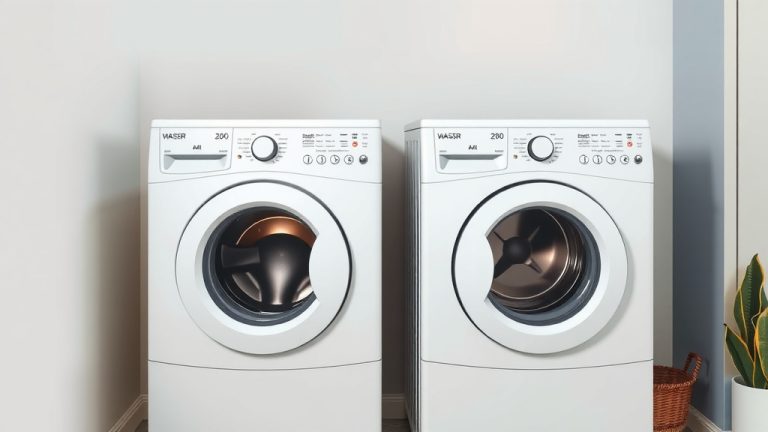
Most standard-sized washers and dryers measure around 27 to 30 inches wide. For a pair, you’ll want at least 60 inches of total width. This gives you a little breathing room between the machines. Sometimes, appliances can be slightly wider, so always check the exact specs of your chosen models. This width allows for simple stacking or side-by-side placement.
Depth Needs
When it comes to depth, a standard washer or dryer usually comes in around 30 to 34 inches deep. However, this is just for the appliance itself. You need to account for more than just the boxy dimensions. Think about the doors and any connections on the back.
Front-Loaders vs. Top-Loaders
Front-load washers typically have doors that swing out. These doors require additional space to open fully. You’ll want at least 15-20 inches clear in front of the machine for the door to swing open without hitting anything. Top-loaders need clear space above them for the lid to lift. This means you can’t place shelves directly over a top-load washer.
The Back of the Machines
Don’t forget the back! This is where hoses and vents connect. We found that 4-6 inches of clearance is generally recommended behind each appliance. This space is vital for proper airflow and to prevent kinks in your hoses. Kinked hoses can lead to leaks or reduce water flow. It also makes maintenance and cleaning much easier.
Total Space Calculation: Bringing It All Together
So, how do we add all this up? For a side-by-side setup, you’re looking at a minimum requirement. We recommend calculating this based on the widest appliance plus some buffer.
The Ideal Footprint
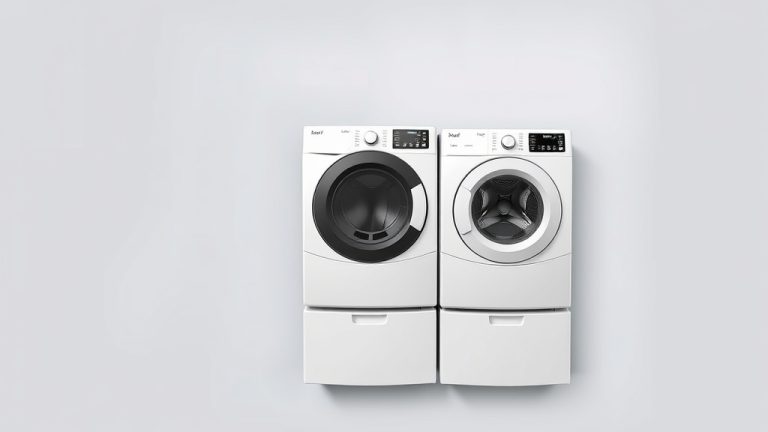
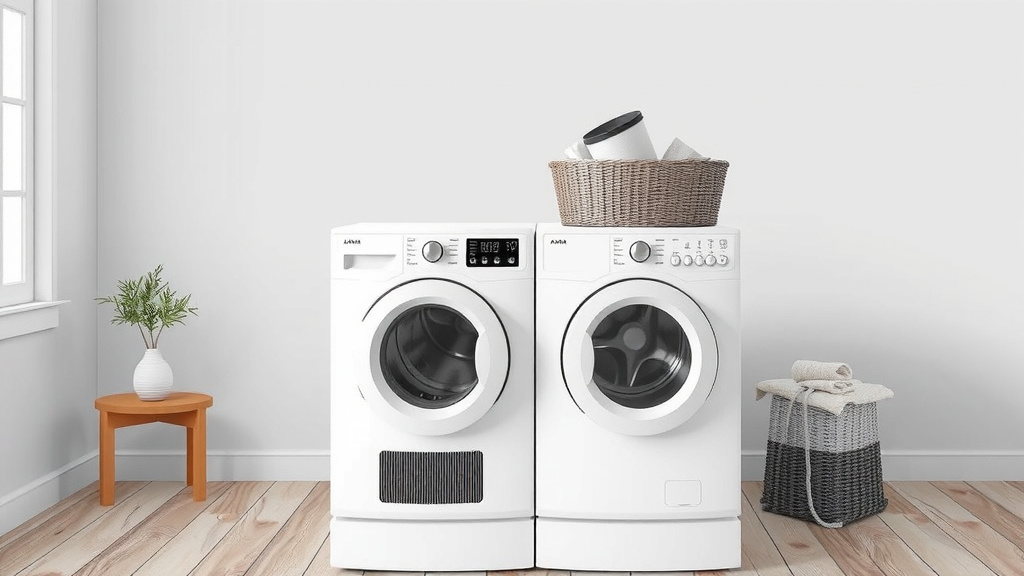
To comfortably fit a standard washer and dryer side-by-side, along with their operational needs, you’ll need a space that is approximately 60 inches wide and at least 60 inches deep. This depth accounts for the appliances, plus the necessary clearance for doors and rear connections. Some sources suggest up to 70 inches of depth to allow for easy movement and folding space.
Stacked Units: A Space-Saving Solution
If space is tight, stacking your washer and dryer is a fantastic option. This significantly reduces the floor space needed. You’ll still need the width of one machine, usually around 30 inches. The depth requirement is also similar to a single machine’s depth, about 30-34 inches. However, you need to factor in the height of both machines plus a stacking kit. Ensure your ceiling height can accommodate this taller unit. We found that an 8-foot ceiling is usually sufficient for most stacked pairs.
| Setup Type | Minimum Width | Minimum Depth | Notes |
|---|---|---|---|
| Side-by-Side | 60 inches | 60 inches | Includes clearances for doors and rear hookups. |
| Stacked | 30 inches | 34 inches | Requires sufficient ceiling height. |
| Single Unit (Washer or Dryer) | 30 inches | 34 inches | Factor in door swing and rear clearances. |
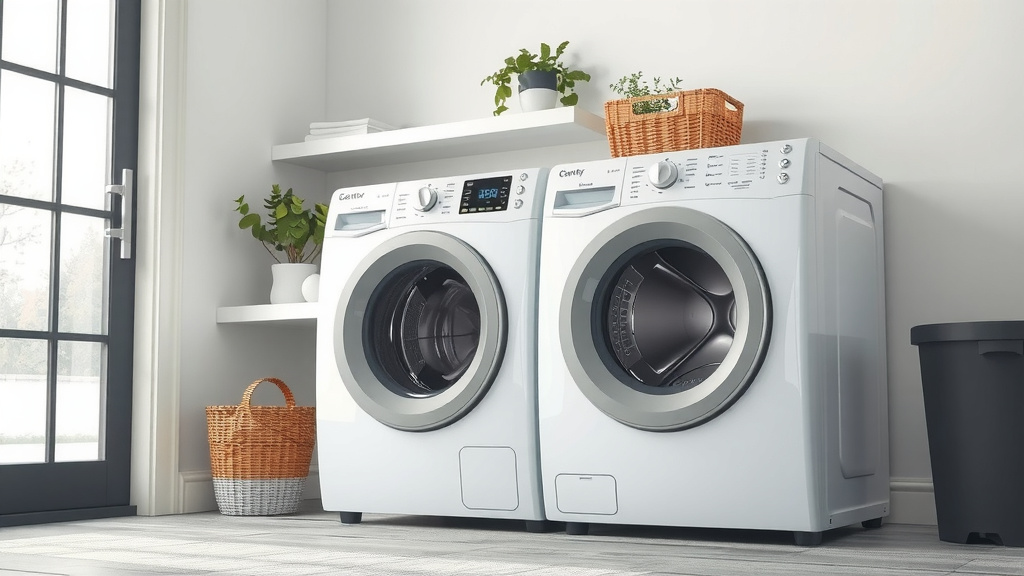
Beyond the Machines: Functionality and Flow
It’s not just about fitting the appliances. Your laundry area needs to be practical. You need room to actually use the space effectively.
The Laundry Room Workflow
Think about how you do laundry. You bring clothes in, sort them, load the washer, transfer to the dryer, then fold. Each step needs space. We found that a minimum of 3 feet of clear space in front of your machines is ideal for comfortable movement. This allows you to stand, sort, and fold without feeling like you’re in a cramped closet.
Folding Space
Where will you fold your clean clothes? Many people use the top of their machines. If you do this, ensure you have enough width and depth for this task. If you have a separate counter or table, you’ll need space to access that as well. Even a small laundry nook benefits from a dedicated spot for folding.
Ventilation and Utilities: Don’t Forget These!
Proper ventilation is absolutely critical for your dryer. A dryer vent hose needs space to connect without being crushed. Experts at the U.S. Fire Administration (USFA) remind us that clogged vents are a fire hazard.
Dryer Vent Clearance
The dryer vent hose itself can add a few inches to the total depth. It needs to connect securely and shouldn’t be bent sharply. We recommend ensuring there’s at least 6 inches of clearance behind the dryer specifically for the vent hose. This allows for a straight or gently curved connection. Some flexible hoses can be up to 4 feet long, so they don’t need a lot of room unless they’re compressed.
Water and Power Access
Make sure your washer hookups (hot and cold water, drain) and dryer power source (gas or electric outlet) are easily accessible and not blocked by the machines. You’ll need space to connect and disconnect these. We found that having at least 12 inches of open space to the side of the water hookups is helpful.
Checklist for Your Laundry Space
To make sure you haven’t missed anything, use this quick checklist:
- Measure your chosen appliances accurately.
- Add space for doors and lids to open fully.
- Account for rear clearances (hoses, vents, power).
- Consider at least 3 feet of clear floor space for movement.
- Ensure adequate ceiling height if stacking.
- Confirm easy access to water, drain, and power connections.
Conclusion
Fitting your washer and dryer correctly is all about smart planning. You’ve learned that standard pairs need about 60 inches wide and 60 inches deep, factoring in door swings and rear clearances. Stacked units are a great space-saver, needing just 30 inches wide and about 34 inches deep, but watch your ceiling height! Remember to also consider that essential 3 feet of clear space for comfortable movement and folding. Don’t forget vital dryer vent space to keep things safe and efficient. Take these measurements and your appliance specs to your laundry space. Plan your layout carefully to ensure your laundry routine flows smoothly!
Frequently Asked Questions
How much space do I need for a compact washer and dryer?
Compact washers and dryers are smaller, typically around 24 inches wide and 27 inches deep. You’ll still need to add about 4-6 inches of clearance behind each for hookups and venting. Also, ensure there’s enough room for the door or lid to open fully, usually an extra 15-20 inches for front-loaders.
Can I put my washer and dryer in a closet?
Yes, you can often place washer and dryer units in a closet, but careful measurement is key. You’ll need enough width for both machines (or one if stacked), depth for the appliances plus rear clearances, and enough height if stacking. Proper ventilation for the dryer is non-negotiable for safety.
What’s the minimum space required for a single washing machine?
For a single standard-sized washing machine, plan for at least 30 inches in width and 34 inches in depth. Crucially, you need to account for the door swing (15-20 inches for front-loaders) and about 4-6 inches of clearance behind the unit for water hoses and the drainpipe.
Do I need extra space around my dryer for heat?
While dryers do produce heat, the main clearance needed is for ventilation and access. The 4-6 inches behind the dryer is primarily for the vent hose and airflow. Ensuring your dryer vent is clear and unobstructed is the most important factor for safe operation and heat dissipation.
Can I vent my dryer through a wall instead of the back?
Yes, wall venting is common. The space needed behind the dryer might be less if you can route the vent directly through the wall. However, you still need to ensure the vent hose isn’t sharply bent or crushed where it connects to the dryer. The length and flexibility of your vent hose will influence the exact clearance required.