How to Check Temperature of Water: A Complete Guide for Every Situation
Ever wondered why some people seem to always get their water temperature just right while others end up scalding their tongue or shivering through a cold shower? The secret isn’t magic—it’s knowing how to check water temperature properly. Whether you’re brewing the perfect cup of tea, preparing a baby’s bath, or checking your hot tub, understanding water temperature is more important than you might think.
In this comprehensive guide, I’m going to walk you through everything you need to know about checking water temperature. You’ll discover multiple methods, learn which tools work best for different situations, and understand why accuracy matters more than you’d expect. Let’s dive right in.
Understanding Water Temperature Basics
Why Water Temperature Matters
Think of water temperature as the pulse of any water-related activity. Just like a human body needs to maintain a specific temperature to function properly, water needs to be at the right temperature for its intended purpose. Too hot, and you risk burns or damage to sensitive items. Too cold, and your activity might be completely ineffective or uncomfortable.
Water temperature affects everything from how quickly tea leaves steep to how effectively your dishwasher cleans your dishes. It determines whether your pool is refreshing or uncomfortably chilly, and it can be the difference between a perfectly cooked pasta and a mushy, overcooked mess.
Common Temperature Ranges You Should Know
Understanding standard temperature ranges helps you know what you’re aiming for. Here are the temperatures you’ll encounter most often:
- Room temperature water: approximately 68-72°F (20-22°C)
- Lukewarm water for baby baths: 90-100°F (32-37°C)
- Comfortable shower temperature: 98-104°F (36-40°C)
- Hot tub temperature: 102-104°F (39-40°C)
- Ideal coffee brewing water: 195-205°F (90-96°C)
- Boiling water: 212°F (100°C) at sea level
- Sterilization temperature: 160°F (71°C) and above
Method 1: Using a Thermometer
The Most Reliable Approach
If you want accuracy, nothing beats using a proper thermometer. This is the gold standard for checking water temperature, and it’s honestly not as complicated as some people think.
Types of Thermometers for Water Temperature
Several types of thermometers work wonderfully for checking water temperature. The dial thermometer, also called an analog thermometer, features a circular face with a needle that points to the temperature. These are durable, affordable, and don’t require batteries, making them reliable companions in any kitchen.
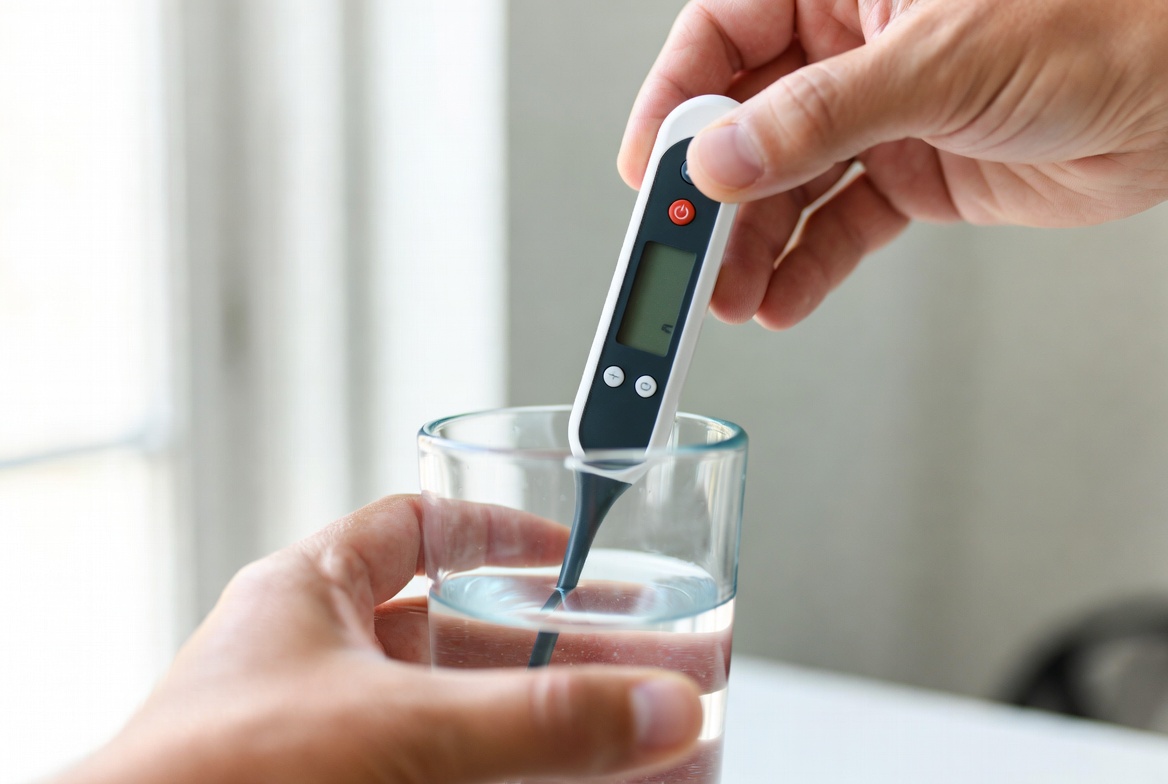
Digital thermometers have become increasingly popular because they display temperature in easy-to-read numbers on a small screen. They’re quick, precise, and often include features like automatic shutoff. Instant-read thermometers, a subset of digital thermometers, are designed specifically to give you readings in just a few seconds.
Infrared thermometers represent another option, though they’re technically measuring surface temperature rather than the water temperature itself. They’re useful when you need a quick check without touching the water, but they’re not always as accurate for liquid temperature.
How to Use a Thermometer Correctly
Using a thermometer might seem straightforward, but technique matters. First, make sure your thermometer is clean before inserting it into the water. This prevents contamination and ensures accuracy.
Submerge the thermometer’s sensor portion fully into the water. If you’re only halfway submerging it, you might get readings influenced by the air temperature rather than the actual water temperature. Leave it in the water for the amount of time specified in your thermometer’s instructions—typically 30 seconds to 2 minutes depending on the type.
Position the thermometer away from the sides and bottom of the container if possible. Water near the edges often reads differently than water in the center because it’s influenced by the container’s temperature. For the most accurate reading, place it in the middle of your water sample.
Read the temperature when the needle or digital display stabilizes. Don’t pull the thermometer out and keep watching—the reading will change as it cools down or warms up outside the water.
Method 2: The Hand Test and Elbow Method
When You Don’t Have a Thermometer
What happens when you’re without a thermometer? Parents have been checking baby bath water temperatures for generations using simple body awareness, and while not scientifically precise, these methods provide surprisingly useful estimates.
The Hand Immersion Technique
Your hand is actually a decent temperature sensor. Submerge your elbow or inner wrist into the water for about 10 seconds. Your inner wrist is more sensitive than your fingertips, making it better for detecting subtle temperature changes.
Here’s what you’re feeling for: if it feels uncomfortably hot to hold, you’re likely above 104°F (40°C). If it’s pleasantly warm but you can keep your hand in indefinitely, you’re probably in the 98-104°F (36-40°C) range. If it feels lukewarm, you’re looking at 85-95°F (29-35°C).
The Elbow Method for Baby Baths
The elbow method became popular for a reason—the skin on your elbow is thinner and more sensitive than your hands. It’s particularly useful when preparing baby bathwater because it helps you quickly identify if the water is safe.
Dip your elbow into the water. The water should feel pleasantly warm, not hot. If you need to pull your elbow out quickly because it’s too hot, the water is definitely too hot for a baby. If it feels cool or cold, it’s too chilly.
Limitations of the Hand Test
I want to be honest about this method’s limitations. Your perception of temperature varies based on your own body temperature, how long your hands have been exposed to different temperatures, and even your mood and stress levels. Two people can test the same water and perceive different temperatures.
For critical applications—especially anything involving babies, elderly individuals, or those with reduced temperature sensitivity—the hand method shouldn’t be your only check. It’s a helpful backup or quick estimate, but it’s not a replacement for actual temperature measurement.
Method 3: Kitchen Equipment You Already Own
Repurposing Common Items
Did you know you might already have tools in your kitchen that can help estimate water temperature?
Using a Meat Thermometer
Most households have a meat thermometer somewhere in their kitchen drawers. These work perfectly for checking water temperature. Just make sure it’s clean before use, and remember that probe thermometers designed for meat often have a larger sensor area than dedicated water thermometers, so readings might take slightly longer.
Candy or Deep-Fry Thermometers
If you enjoy cooking or baking, you probably have a candy thermometer. These are actually excellent for checking water temperature because they’re designed to read temperatures in the range you’re likely to encounter. Deep-fry thermometers work similarly and often have a wider temperature range.
The advantage of these specialized kitchen thermometers is that they’re built to handle the exact temperature ranges you need. They read faster than many general-purpose thermometers and are usually quite durable.
Method 4: Visual and Auditory Cues
Reading Water’s Signals
Water itself sends signals about its temperature through visual and auditory cues. Paying attention to these can give you ballpark estimates without any tools.
Steam and Bubble Formation
When water starts producing visible steam, you’re getting close to boiling temperature. However, steam can start appearing at temperatures as low as 160°F (71°C), so visible steam doesn’t mean the water is at boiling point.
Gentle, tiny bubbles forming on the bottom and sides of your container indicate water around 160-170°F (71-76°C). A rolling boil with vigorous bubbling means you’re at or very near 212°F (100°C) at sea level.
The Sound Test
Listen to your water. Water beginning to heat produces subtle crackling sounds as it warms. As it gets hotter, these sounds become more pronounced. A gentle simmering sound indicates water around 180-195°F (82-90°C), while a rolling boil creates vigorous, continuous bubbling sounds.
When Visual Cues Fall Short
The problem with relying solely on visual and auditory cues is that they’re highly subjective and influenced by many factors. The type of pot you’re using, the amount of water, and even ambient light in your kitchen affect what you see and hear. These methods work as rough estimates but shouldn’t be your primary method for applications requiring precision.
Method 5: Smart Technology Solutions
Modern Tools for Temperature Checking
Technology has revolutionized how we check water temperature. If you’re willing to invest in smart devices, you have some exciting options.
Smart Water Thermometers
Modern smart thermometers connect to your smartphone via Bluetooth or WiFi. These devices are incredibly convenient because they send temperature readings directly to your phone, allow you to set alerts for specific temperatures, and often include features like recipe recommendations or historical data tracking.
Some smart thermometers work wirelessly, meaning you can monitor water temperature from across the room. Others are designed to float in water, making them perfect for monitoring pool or hot tub temperatures continuously.
Smart Home Integration
If you have a smart home setup, some water heaters and shower systems now include temperature sensors that integrate with your home automation system. You can check water temperature, adjust it remotely, or set schedules for automatic temperature adjustments.
The Cost-Benefit Analysis
Smart thermometers range from moderately expensive to quite pricey. For occasional use, they might be overkill. However, if you regularly need accurate temperature readings—perhaps you’re a serious home brewer, a passionate cook, or managing a hot tub—the convenience and precision might justify the investment.
Specific Situations and How to Check Temperature
Checking Shower and Bath Water Temperature
For showers and baths, most people rely on the hand or elbow test simply because it’s impractical to use a thermometer. However, the safest approach is adjusting your water heater to appropriate temperatures and then relying on tested experience with your specific shower setup.
If you’re concerned about safety—particularly for elderly family members or young children—consider installing a mixing valve that automatically maintains water at a safe temperature. These devices mechanically blend hot and cold water to prevent dangerously hot water from flowing directly from the tap.
Checking Water for Baby Care
When preparing water for baby baths, the consensus from pediatricians is clear: use a proper thermometer. Ideal baby bath water temperature is between 90-100°F (32-37°C). A dedicated baby bath thermometer is inexpensive and worth having on hand.
Never rely solely on the elbow test for a baby’s bath. Always verify with a thermometer before placing your baby in the water. This takes just seconds and provides crucial safety confirmation.
Checking Cooking and Brewing Water
Different beverages require different temperatures. Black tea typically brews best at 200-212°F (93-100°C), while green tea prefers 160-180°F (70-80°C), and white tea does well at 140-160°F (60-70°C).
For cooking pasta, rice, and other foods, boiling water at 212°F (100°C) at sea level is standard. However, if you’re at high altitude, water boils at lower temperatures, which affects cooking times.
A simple instant-read thermometer kept in your kitchen drawer makes achieving these temperatures foolproof. It’s especially helpful when you’re brewing specialty teas where temperature significantly affects flavor.
Checking Pool and Hot Tub Temperature
Pools and hot tubs benefit from continuous temperature monitoring. Floating thermometers, designed specifically for this purpose, are affordable and reliable. They float on the water’s surface and provide constant temperature readings without requiring submersion.
For hot tubs, most people prefer temperatures between 102-104°F (39-40°C). Some prefer slightly cooler water, while others like it hotter. A good floating thermometer helps you dial in your preferred temperature and monitor changes throughout the day.
Common Mistakes People Make When Checking Water Temperature
Not Waiting Long Enough
Patience matters when using a thermometer. Many people pull the thermometer out too quickly and read an incomplete temperature. The thermometer needs time to reach thermal equilibrium with the water. Waiting feels unnecessary, but those extra 30 seconds make the difference between an accurate reading and a guess.
Checking Near the Surface or Edges
Water temperature varies throughout a container. The surface might be cooler than water in the middle, and water near the edges can be influenced by the container’s temperature. Always check in the middle and at appropriate depth for your application.
Using Dirty or Uncalibrated Thermometers
A thermometer contaminated with food residue or mineral deposits can give inaccurate readings. Similarly, thermometers drift out of calibration over time. If your thermometer is old, considers having it calibrated or replacing it.
Assuming All Thermometers Are Accurate
Budget thermometers sometimes sacrifice accuracy for cost. If precision matters for your application, invest in quality. Check reviews and choose thermometers known for reliability.
Safety Considerations When Checking Water Temperature
Protecting Yourself from Burns
When checking very hot water, be careful not to burn yourself. Steam can scald, so avoid placing your face directly over hot water. If you’re using the hand test for hot water, dip quickly and pull away. Never use your palm for very hot water—use your inner wrist instead, as it’s less prone to reflexive injury.
Ensuring Safe Water for Vulnerable Populations
People with reduced temperature sensitivity—including elderly individuals, those with neuropathy, and young children—need extra protection. For these populations, mechanical solutions like mixing valves are superior to relying on perception or testing. Temperature-limiting shower heads can also prevent dangerously hot water from being accessible.
Conclusion
Checking water temperature is one of those everyday skills that seems simple on the surface but has surprising depth when you dig in. Whether you’re using a reliable thermometer, tapping into your body’s thermal sensing abilities, or reading visual cues from the water itself, you now have multiple methods at your disposal.
The best method for you depends on your specific situation. For critical applications involving babies or vulnerable individuals, a proper thermometer isn’t optional—it’s essential. For everyday cooking and beverage preparation, a simple instant-read thermometer transforms your ability to achieve consistent results. And for quick estimates in casual situations, the hand and elbow tests serve you well when actual measurement isn’t practical.
The key takeaway is this: understand why temperature matters for your specific application, choose an appropriate checking method, and don’t hesitate to invest in proper tools when precision matters. Your