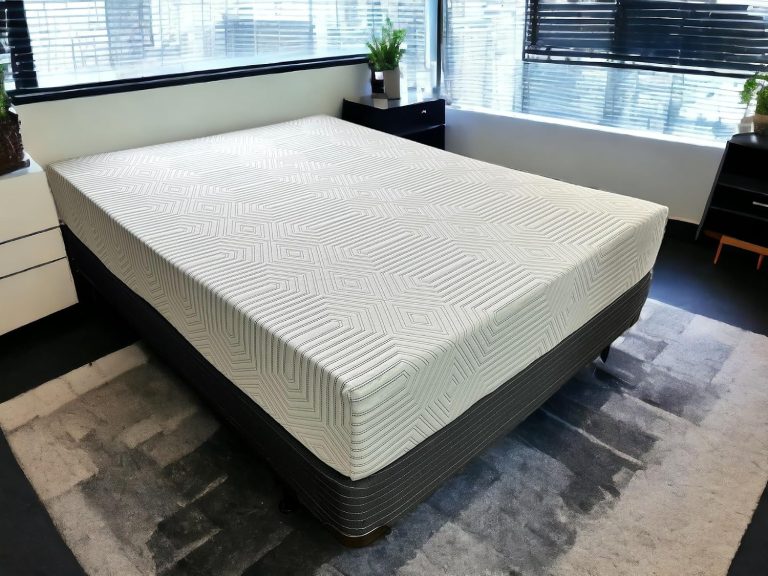
Mattress Types and Sizes Explained: Your Complete Guide
Choosing the right mattress comes down to two things: size and type. Your size determines if it fits your room and body, while the type (memory foam, innerspring, hybrid, or latex) controls your comfort and support. We found that most sleepers need to pick their size first, then match a type to their sleeping position.
That might sound like a lot, but it’s simpler than you think. A queen mattress fits most couples, while a twin or full works best for kids and single sleepers. As for types, memory foam hugs your body, innerspring feels bouncy, and hybrids offer a balance of both.
- Size matters first: Measure your room and think about who sleeps in the bed.
- Memory foam: Great for pressure relief and motion isolation.
- Innerspring: Bouncy, cool, and budget-friendly.
- Hybrid: The all-rounder for most sleepers.
- Latex: Durable, natural, and responsive.
Below, we break down every mattress size and type in plain English, so you can finally pick the right one without second-guessing yourself.
Matching Mattress Dimensions to Your Bedroom and Body
Before you fall in love with a specific mattress type, you need to lock in the size. We found that most people bounce between a queen and a king, but your room size and sleeping habits should drive the decision.
Grab a tape measure. You want at least 24 inches of walking space around the bed. Also, think about who shares the bed. A restless partner needs more width to avoid the dreaded middle-of-the-night shove.
Twin and Twin XL: The Space-Savers
A Twin mattress measures 38 inches by 75 inches. It is the go-to for kids’ rooms, bunk beds, and small guest spaces. If you are an adult over 6 feet tall, you will likely find the standard twin too short.
The Twin XL solves that problem. It offers the same width but adds five inches of length (80 inches total). Dorm rooms love this size. It gives tall teens and college students the legroom they need without taking up extra floor space.
Full and Queen: The Middle Ground
A Full mattress (54 x 75 inches) is a fine upgrade from a twin for a single sleeper who wants to spread out. But for two adults, a full is a tight squeeze. You will get about 27 inches of personal space each. That is less room than a crib gives a baby, so we do not recommend it for couples.
The Queen mattress is the most popular size in the US for a reason. At 60 x 80 inches, it fits standard master bedrooms and gives each partner 30 inches of space. We found that most couples are happy here. It balances footprint and comfort well.
King and California King: The Luxury Spread
A standard King mattress is 76 inches wide and 80 inches long. That gives each partner the width of a twin XL. Families with kids or pets who love to cuddle will appreciate the extra real estate.
The California King is narrower but longer. It measures 72 x 84 inches. Tall sleepers (over 6’2″) often prefer this because of the extra vertical space. Keep in mind, though, that California King sheets and bedding can be pricier and harder to find in stores.
Quick Size Comparison Table
| Mattress Size | Dimensions (inches) | Best For |
|---|---|---|
| Twin | 38 x 75 | Kids, single sleepers, small rooms |
| Twin XL | 38 x 80 | Tall teens, college dorms |
| Full | 54 x 75 | Single adults who want space |
| Queen | 60 x 80 | Most couples, master bedrooms |
| King | 76 x 80 | Couples with kids or pets |
| California King | 72 x 84 | Tall couples, narrow rooms |
Choosing a Mattress Construction That Supports You
Once you have your size, the real fun begins. The type of mattress you pick controls how your spine aligns overnight. We broke down the four main categories so you can match one to your body weight and sleep position.
Memory Foam: The Contouring Cocoon
Memory foam is famous for that slow-sinking, hug-like feel. It responds to your body heat and molds to your curves. This makes it a top pick for side sleepers who need pressure relief on their hips and shoulders.
There is a downside, though. Traditional memory foam can trap heat. Many experts say that if you sleep hot, you should look for foam infused with cooling gel or copper. Also, couples will love the motion isolation. You will barely feel your partner roll over at 3 a.m.
Innerspring: The Classic Bounce
Innerspring mattresses use steel coils for support. They are bouncy, breathable, and easy to move around on. If you like that traditional hotel bed feel, this is your match.
We found that innerspring beds are often the most budget-friendly option upfront. The trade-off is that they may not last as long as foam or latex. They also transfer motion more easily. If you toss and turn, your partner might feel the shakes.
Hybrid: The Best of Both Worlds
A hybrid mattress combines a coil support core with comfort layers of foam or latex on top. This gives you the bounce of springs and the pressure relief of foam in one package.
Our research suggests hybrids are the safest bet for most people. They work well for combination sleepers who change positions during the night. They also tend to sleep cooler than all-foam mattresses because the coils allow more airflow.
Inside a Hybrid Structure
Think of a hybrid like a really good sandwich. The bread on the bottom is the sturdy coil base. The meat and cheese in the middle are the transition foam layers. The top bun is the soft comfort layer that touches your body.
Latex: The Resilient Natural
Latex mattresses are made from either natural rubber tree sap or synthetic materials. They offer a responsive, buoyant feel that is bouncier than memory foam but not as bouncy as innerspring.
Latex is a champion for durability. Many experts say a high-quality latex mattress can last 15 to 20 years or more. It is also naturally resistant to dust mites and mold, making it a smart choice for allergy sufferers. The only real downside? The price tag. Latex sits at the premium end of the market.
Final Steps Before You Commit
You have the size and the type dialed in. Now you just need to seal the deal. Here is a quick checklist we use when evaluating any mattress before purchase.
- Check the return policy. You need at least a 90-night trial to truly break in a bed.
- Measure your doorways and stairs. A king-sized mattress will not fit down a narrow spiral staircase.
- Verify the foundation. Make sure your bed frame or box spring is compatible with the mattress type.
- Consider online vs. in-store. Online brands often have lower prices, but you cannot test them first.
- Read the warranty. Look for at least a 10-year warranty that covers sagging and manufacturing defects.
- Check the weight limit. Heavier sleepers might need a firmer hybrid or latex to avoid sinking to the coils.
We found that taking a few extra minutes on these details saves you from a massive headache later. Nobody wants to fight with a return truck because the bed does not fit up the stairs.
When you finally narrow it down, remember that your sleep position matters. Side sleepers generally do better with softer foam or hybrid beds. Back sleepers need medium firmness. Stomach sleepers should always lean toward firmer options to keep the hips from sinking.
Listen to your body. Research and found that you will know within a few nights if your spine feels aligned and your pressure points feel at ease. If you wake up without back pain, you have nailed it.
Conclusion
You now have the full picture on mattress sizes and types. Start with the dimensions that fit your room and your sleep habits. Then match a construction to your sleeping position and comfort needs.
Getting this right changes everything. With a proper queen or king, you stop fighting for space. With the right foam, coil, or latex layer, your pressure points stop screaming by morning.
So here is your final move: measure your room, pick your top two sizes, and test out one hybrid and one memory foam model. You will know within a few nights which one feels right. Trust your body over the marketing, and you will sleep better for years to come.
Frequently Asked Questions
What is the best mattress size for two adults?
A queen is the starting point for most couples, giving each person about 30 inches of width. If you or your partner toss and turn, or if kids and pets join you, a king gives you that extra breathing room. For tall couples, a California King may be the better fit.
How long does a memory foam mattress actually last?
Most quality memory foam mattresses last between 7 and 10 years with regular use. The lifespan depends on the foam density and how well you support the bed with a proper foundation. Watch for visible sagging or a permanent body impression as signs it is time to replace.
Can I use a box spring with a hybrid or latex mattress?
You can, but you may not need to. Many modern hybrids and latex beds work fine on a slatted frame or platform base. If you do use a box spring, make sure it is a low-profile option that allows the coils to function properly without excess bounce.
What mattress type is best for heavy people?
Heavier sleepers generally do better with hybrid or latex mattresses for their coil support and durable comfort layers. High-density foam can also work if it is firm enough to prevent sinking. Look for beds with reinforced edges and a weight limit that comfortably covers your body weight.
Is a firmer mattress always better for back pain?
Not always. Research and found that medium-firm mattresses often work best for lower back pain because they offer support without creating pressure points. A bed that is too firm can push against your hips and shoulders, causing misalignment. Consider your sleep position to find the right balance.