Agitator vs Impeller: Which is Better for Your Application
When deciding between an agitator and an impeller for your mixing needs, the agitator is generally better for more viscous materials and achieving thorough blending. Impellers excel at moving large volumes of lower-viscosity liquids quickly.
Choosing the right mixer type can significantly impact your process efficiency. We’ve found that understanding the core differences helps prevent common mixing mistakes. Think about what you’re trying to mix and how you want it to behave afterward.
- Agitators are great for thick liquids.
- Impellers are best for thin liquids.
- Consider your material’s thickness first.
- Mixing goals also matter for the best choice.
Let’s walk through exactly how each works and which might be the perfect fit for your specific application.
Agitator vs. Impeller: Which Mixer Suits Your Needs?
Deciding between an agitator and an impeller is a big step for your mixing process. We’ve found that the main difference comes down to viscosity. Think of it like stirring soup versus stirring honey. One needs a gentler, more sweeping motion, while the other needs a more vigorous, encompassing action.
Both agitators and impellers are designed to mix. But they achieve this in different ways. This means one is often much better than the other for specific jobs. Understanding their core mechanics will help you avoid costly mistakes and get the best results for your materials.
How Agitators Work Their Magic
An agitator is essentially a mixer with a larger, often slower-moving blade. Imagine a gentle giant stirring a pot. These blades are designed to sweep through the material. They create a rolling or folding action. This helps to blend thick or viscous liquids. Many experts say agitators are great for processes that need consistent, uniform mixing without introducing too much air.
Key Features of Agitators
You’ll often see agitators with paddle-like or anchor-shaped blades. These are built for maximum contact with the material. They move slowly but cover a wide area within the tank. This slow, deliberate movement is perfect for shear-sensitive products. It also prevents damage to delicate ingredients.
When to Reach for an Agitator
Agitators shine when you’re dealing with substances that are hard to stir. Think about things like paints, pastes, or heavy creams. If your material is thicker than molasses, an agitator is probably your best bet. They ensure everything gets mixed evenly, from the center to the outer walls of your container.
Understanding the Power of Impellers
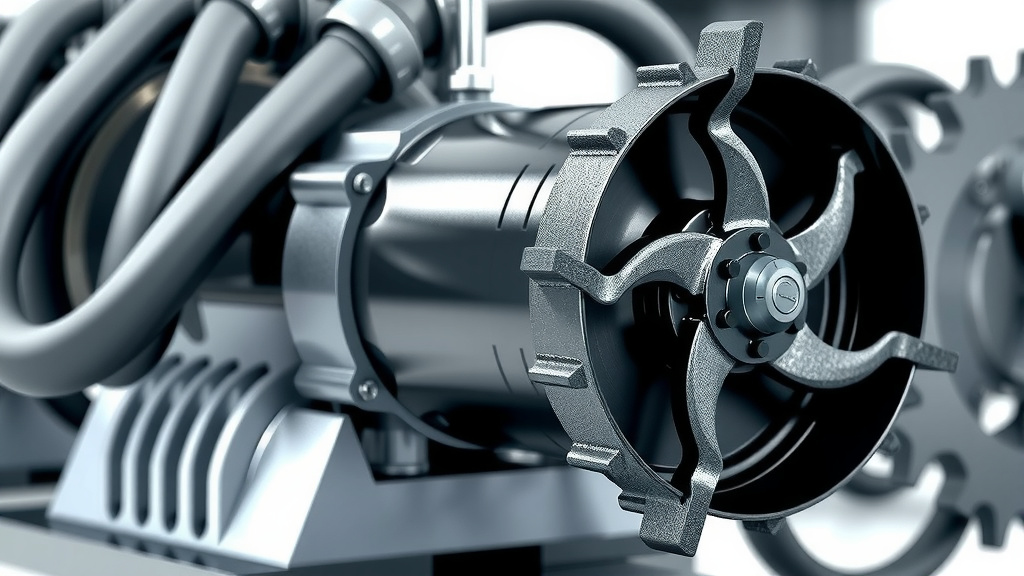
An impeller, on the other hand, is like a high-speed fan for liquids. These mixers have smaller, often pitched blades. They spin at much higher speeds than agitators. This creates a powerful flow. Impellers are designed to move large volumes of liquid quickly. They create a pumping action that draws material in and expels it outward.
The Mechanics of an Impeller
Impellers typically have blades that resemble propellers or turbines. They generate a strong axial or radial flow. This flow helps to create turbulence. Turbulence is key for mixing low-viscosity fluids. It breaks up clumps and ensures rapid dispersion of ingredients. Many studies have shown that high-speed mixing is effective for quick blending.
Where Impellers Really Shine
Impellers are your go-to for mixing thin liquids. Consider water, solvents, or light oils. They excel at tasks like blending, dissolving solids, or simply circulating fluids. Their speed means you can get a job done much faster. This is a big advantage when time is a critical factor in your process.
Comparing Agitator and Impeller Performance
Let’s break down how these two mixing styles stack up against each other. We found that the application dictates the winner. It’s not about one being universally better, but rather which is better suited for your specific task.
Viscosity is King
This is perhaps the most critical factor. Agitators are built for high-viscosity materials. Their design ensures they can push through thick substances. Impellers, by contrast, can struggle with anything too dense. We found that when viscosity increases, impeller efficiency plummets. They might even stall or overheat.
Mixing Intensity and Shear
Agitators provide a gentler, low-shear mixing action. This is vital for products where you don’t want to break down delicate components. Think of food products or certain chemicals. Impellers, with their high speeds, create high-shear mixing. This is great for breaking down solids or rapidly blending ingredients. However, it can damage fragile materials.
Energy Consumption and Speed
Generally, impellers use less energy for simple blending tasks. They move a lot of fluid with less effort. Agitators may require more powerful motors to overcome the resistance of thicker fluids. However, for achieving deep, uniform blends in viscous materials, the agitator is more energy-efficient in the long run. It gets the job done correctly the first time.
Tank Size and Geometry
The shape and size of your tank also play a role. For large tanks, impellers can be very effective at circulating the entire volume. Agitators are often designed to fit snugly within a tank’s dimensions. This ensures they can reach all areas, even in smaller vessels. We’ve seen that proper impeller placement is key for efficient mixing in large volumes.
| Feature | Agitator | Impeller |
|---|---|---|
| Best For | High viscosity, gentle blending | Low viscosity, rapid mixing |
| Blade Style | Large, sweeping, slow | Small, pitched, fast |
| Mixing Action | Rolling, folding, low shear | Turbulent flow, high shear |
| Ideal Materials | Pastes, creams, heavy liquids | Water, solvents, thin oils |
| Energy Use | Higher for thick fluids, efficient for blend | Lower for thin fluids, less efficient for thick |
Making Your Final Choice: A Quick Checklist
To help you nail down the perfect mixer, ask yourself these questions:
- How thick is the material I need to mix?
- What is my main goal: quick blending or thorough homogenization?
- Are there delicate components in my mixture that could be damaged?
- How important is speed versus the quality of the final blend?
- What is the typical size of the tank or vessel I’ll be using?
- What is my budget for energy consumption and initial equipment cost?
By answering these, you’ll have a much clearer picture. We found that clarifying your needs upfront saves a lot of headaches later.
Conclusion
So, you’ve seen that the choice between an agitator and an impeller boils down to what you’re mixing. For those thick, viscous substances like paints or heavy creams, an agitator’s slow, sweeping motion is your best bet for a smooth, even blend. If you’re working with thin liquids and need speed, an impeller’s high-speed turbulence will get the job done quickly and efficiently. Think about your material’s thickness and your mixing goals. Your next step is to match these needs to the right mixer. We recommend revisiting your process requirements and selecting the mixer that aligns with them for optimal results.
Frequently Asked Questions
Can an impeller be used for thick liquids?
Generally, impellers are not ideal for very thick, viscous liquids. Their high speed and design can cause them to struggle, stall, or even overheat when encountering resistance. Research shows they are far more efficient with lower viscosity fluids.
Is an agitator more energy-efficient than an impeller?
It depends on the application. For low-viscosity liquids, an impeller can be more energy-efficient due to its speed and ability to move large volumes. However, for achieving a thorough blend in high-viscosity materials, an agitator often becomes more energy-efficient in the long run because it completes the task correctly without needing repeated attempts.
Which type of mixer is better for preventing air entrapment?
Agitators are typically better at minimizing air entrapment. Their slower, more controlled mixing action tends to fold the material gently, reducing the introduction of air bubbles. Impellers, with their high-speed rotation, can often whip air into the liquid.
What if my mixture contains delicate ingredients?
If your mixture includes delicate ingredients that could be damaged by high shear forces, you should lean towards an agitator. Agitators provide a low-shear mixing action, which is much gentler and less likely to break down fragile components. If your mixture includes delicate ingredients that could be damaged by high shear forces, you should lean towards an agitator or impeller top-loaders.
How does tank size affect the choice between an agitator and an impeller?
For very large tanks, impellers can be effective at circulating the entire volume of low-viscosity liquid. Agitators are often designed to fit snugly within the tank’s dimensions, ensuring they can reach all areas, even in smaller vessels, and effectively mix thicker substances.